


Analysis of 19m flights between 2019 and 2023 reveals 50% rise in emissions, condemned as ‘gratuitous waste’
Get Started for FREE
Sign up with Facebook Sign up with X
I don't have a Facebook or a X account


 Your new post is loading...
 Your new post is loading...
Your new post is loading...
 Scoop.it!
Analysis of 19m flights between 2019 and 2023 reveals 50% rise in emissions, condemned as ‘gratuitous waste’ 
No comment yet.
Sign up to comment
Scoop.it!
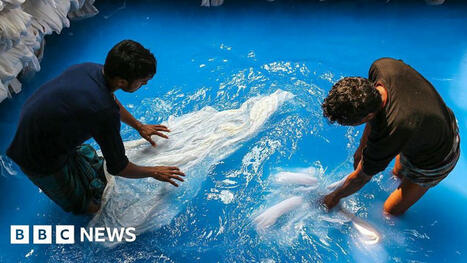
Start-up firms are looking for ways to dye clothes using less water and heat.
Graham Watson's insight:
This article highlights how traditional methods of dying clothes have a detrimental effect on the environment, and how this has incentivised firms to look for environmentally-friendly methods of dying fabrics, reducing the resource intensity of dying, fixing and so on.
In particular, the use of water in dying fabrics, has long been an environmental concern.
Scoop.it!

Ministers say the move is intended to prevent environmental damage and protect children's health.
Graham Watson's insight:
The government has announced plans to ban disposable vapes from June, both to protect children's health - because the vapes are seen as a way of enticing children to start vaping - and because of the adverse environmental effects associated with their disposal; they leak harmful waste and also use an awful lot of lithium as the article notes "In 2022, vapes were discarded containing a total of more than 40 tonnes of lithium, enough to power 5,000 electric vehicles".
Scoop.it!

The company building it accepts fish will be killed in its system, but wants to create new habitats.
Graham Watson's insight:
A negative externality, the death of a number of fish - although the net effect of this seems negligible relative to the benefit generated by the nuclear power station.
I can scarcely imagine what motivates people to protest over things like this.
Scoop.it!
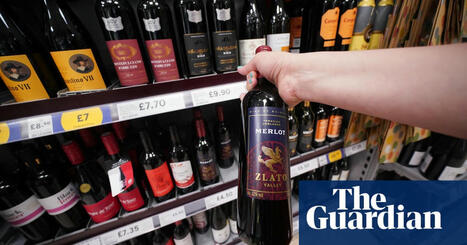
Big names including Majestic and Laithwaites hope to head off price rises whereby drinks will be taxed on ABV
Graham Watson's insight:
A change in alcohol duties - seeing the number of tax bands increase from one to thirty, depending upon the ABV of wine is due to come into force next year. Clearly this will increase the costs and complexity of the system, and doesn't sit very easily with Adam Smith's canons of taxation.
However, it might be argued that the stronger the wine, the greater the associated negative externalities, so whether or not such a move is good economics or not is complicated.
Scoop.it!
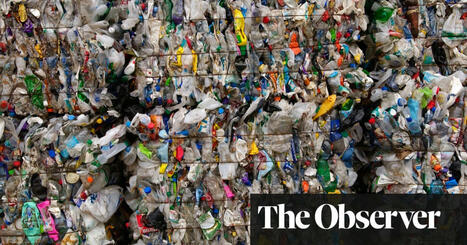
New scheme to improve recycling rates and tackle pollution was pushed back by Tories after industry complaints
Graham Watson's insight:
Proof that turkeys rarely vote for Christmas, with the Observer reporting that food companies lobbied the previous government to defer a tax on plastic packaging. No surprises there.
Of course, the tax is an attempt to tackle the negative externalities associated with plastic packaging.
Scoop.it!

Premier League fans exposed to almost 30,000 messages in one weekend despite restrictions, research finds
Graham Watson's insight:
It seems as though attempts to rein in gambling advertising in the Premier League haven't worked, with research finding "that the opening weekend of the Premier League season..." [saw] "29,145 gambling messages on TV, radio and social media during six live games." The same methodology suggests that this was nearly three times the number that appeared last year.
Apart from highlighting the law of unintended consequences, it also creates the fear that it might encourage vulnerable individuals, notably children to think of gambling as an essential part of a sporting experience, with problem gambling generating negative externalities.
Scoop.it!

Campaigners criticise decision to scrap tax introduced in 2018 amid rise of ‘flight shame’ movement
Graham Watson's insight:
Unusual news from Sweden, traditionally one of the most environmentally-friendly economies, in that the current centre-Right government is cutting the tax on flying, and seemingly encouraging more people to take to the skies increasing air pollution and generating more negative externalities.
Scoop.it!

Research says flat-fee train travel would bring economic and health benefits as well as simplifying ticket fares
Graham Watson's insight:
Greenpeace is arguing that there should be a new fee structure on the railways, proposing a flat fee, subscription-type model charging a fixed fee per month and then a top-up for express trains and popular services, such as in and around London.
The thinking is that the net benefits of such a scheme, not least environmentally, would outweigh the costs. However, given that the article suggests that "it would be likely to result in a loss of revenues to the railways of between £45m and £637m, depending on the uptake", you can see why a government might be reluctant to implement it.
Scoop.it!
‘I want them all crushed’: the council poised to ban ‘dangerous’ Lime bikes | Cycling | The Guardian
In Brent, local people are upset with abandoned green bikes creating a hazard and teenagers speeding along pavements
Graham Watson's insight:
It seems as though the adoption of Lime bikes by Brent Council, in an attempt to increase cycling and reduce the negative externalities associated with motoring appears to have created other negative externalities: increased danger to pedestrians and littering the street of North London. As a result, the council are on the brink of banning them.
Scoop.it!
Online gambling industry has negative impact on UK economy, says thinktank | Gambling | The Guardian
Campaign for Fairer Gambling report claims betting ‘had the effect of reducing economic activity by £1.3bn per year’
Graham Watson's insight:
The Campaign for Fairer Gambling has claimed that the online gambling industry imposes significant negative externalities on the UK economy. Indeed, it suggests that the sector imposes a social cost of £1.3bn per year.
Scoop.it!

New legislation gives regulators more powers to tackle water pollution in England and Wales.
Graham Watson's insight:
Economics is about incentives, they say, so my response to this is "about time". That said, is it the best solution? Probably not - the best solution requires water company executives with integrity.
One potential downside to this, which will be pointed out by free market economists is that the risks associated with being a water company executive have increased and the rewards might have decreased, so this implies that you'll get a worse class of executive. I'd disagree: the present system seems to have failed to align the interests of executives with the wider public and some change is required.
Scoop.it!

Campaign group says firms such as Uber should reveal data on driver miles to help boost wages
Graham Watson's insight:
This article highlights both the gig economy and the importance of information in enhancing economic efficiency.
Campaigners in the US believe that Uber needs to reveal data on driver miles, because the think that the app effectively creates an over-supply of drivers to keep wages down and that this means that the negative externalities associated with the sector are also higher than they need to be.
|
Scoop.it!
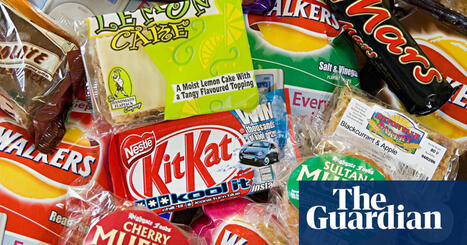
Health and children’s groups urge UK ministers to impose levies on products containing too much salt or sugar
Graham Watson's insight:
One to set libertarians teeth on edge: campaigners are calling for the taxing of unhealthy foods to tackle obesity which, superficially, looks like a good thing right? Clearly the over-consumption of certain types of foods generates negative externalities.
However, there are a number of problems with this: in the first place, who defines what is an "unhealthy food" - many ostensibly "healthy" items, such as cereal bars are, on closer inspection, less than healthy. Then, there's the issue of "over-consumption": why should someone with an extremely healthy lifestyle be denied the occasional pleasure? And would we want to tax things like birthday cakes?
So, whilst obesity generates negative externalities, simply taxing certain products might not represent good economics.
Scoop.it!
Global efforts to tackle climate change are wildly off track, the UN has said, as new data shows that warming gases are accumulating faster than at any time in human existence. The update came as a separate report showed that greenhouse gases have risen by over 11% in the last two decades, with atmospheric concentrations surging in 2023.
Graham Watson's insight:
This BBC World clip highlights recent data released that suggests that there's a singular failure to achieve our climate change targets, with the concentrations of greenhouse gases in the atmosphere rising, and there also being some suggestion that the world's forests are losing their ability to soak up carbon.
Scoop.it!

Anti-waste charity Wrap wants ban on 21 items including tomatoes, apples, potatoes, bananas and carrots
Graham Watson's insight:
Anti-waste charity, Wrap, is calling for legislation banning plastic packaging being used on 21 grocery items, to reduce the amount of plastic waste generated by the sector.
It's noticeable that we are far worse than continental Europe in packaging these items; according to the article "in 2022 an average of 19.4% of fresh produce sales was loose, with the proportion by retailer varying from 2% to 30%. By comparison, in mainland Europe it is 50%." So any reduction in this is likely to help reduce the negative externalities associated with plastic waste.
That said, you should also note that this is a net effect - rather than a simple welfare gain: "Plastic packaging had resulted in less store waste, simpler production lines and tidier shelves".
Scoop.it!

Rachel Reeves urged to levy ‘double whammy’ on firms’ £1bn annual profits to fund measures to end smoking
Graham Watson's insight:
The anti-tobacco lobby is calling for the government to introduce further measures to tackle the negative externalities associated with smoking, in this case a windfall tax on tobacco firms and a levy on the profits of the industry. As is often the case they're recommending that the tax revenues be hypothecated for the healthcare issues that smoking generates.
Scoop.it!

Health leaders tell government to follow Scotland and Wales on cost of cheap booze after Darzi report on death toll
Graham Watson's insight:
The Darzi report into the state of the NHS has highlighted an increase in the amount of alcohol-related illness. Consequently, there are calls for the government to introduce a minimum price for alcohol to reduce consumption, as has been done in Scotland and Wales.
The empirical evidence from Scotland suggests that the measure has reduced alcohol-related deaths, and as the article notes "the Institute of Alcohol Studies put the cost of alcohol harm in England at £27.4bn, with a cost to healthcare of £4.91bn. It said alcohol tax revenue raises just £12.5bn a year."
Scoop.it!
MRU explains negative externalities with a real-world example: overuse of antibiotics leading to the evolution of “superbugs.” Antibiotic users benefit from the drugs, while society at large bears the added cost (and risk) of increased antibiotic resistance leading to hard-to-treat infections.
Graham Watson's insight:
This MRU looks at the negative externalities associated with the overuse of antibiotics, something they originally looked at nearly a decade ago.
It's a clear explanation of how negative externalities arise because of the divergence between marginal social cost and marginal private cost, which results in the over-consumption of antibiotics
Scoop.it!
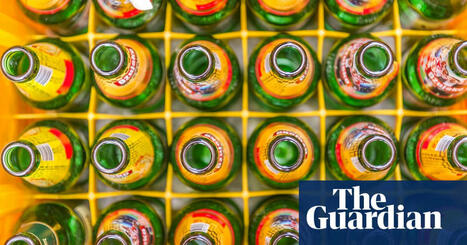
Cost of soft drinks, beer and kettles likely to increase as a result of scheme that shifts recycling fees to manufacturers
Graham Watson's insight:
At face value, a tax on packaging is likely to reduce the negative externalities associated with it, but at the same time it's going to increase production costs - at least initially. This will feed into inflation but it will also be a regressive tax, so there's a more nuanced case for such an intervention.
Scoop.it!
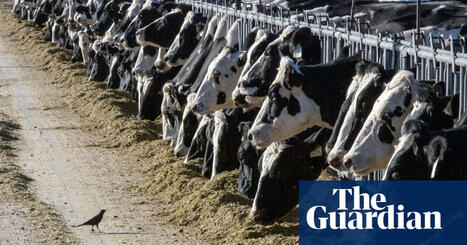
Food campaign Bite Back says 10 firms account for more carbon emissions globally than aviation industry
Graham Watson's insight:
Campaigners have highlighted the fact that 10 food producers, responsible for a great deal of UK food production, emit more carbon emissions than the aviation industry.
Remarkable though it may seem, the food industry is responsible for 30% of all emissions, with large MNCs the worst offenders. And in the case of three of them - Ferrero, Kraft Heinz and PepsiCo - their emissions increased in 2022.
Scoop.it!

Oxfam says ‘commonsense solution’ would reduce emissions and raise urgently needed climate finance
Graham Watson's insight:
And taxing modes of transport favoured by the super-rich, such as superyachts and private jets could also help reduce carbon emissions at the margin, according to Oxfam.
The fact that it's also a wealth tax - or just the politics of envy - might also be worth consideration.
Scoop.it!

Transport Secretary Louise Haigh promises to deliver a "bus revolution" that will save vital routes.
Graham Watson's insight:
It seems as though the new government as going to renationalise buses across the country, copying the moves made by areas with metro mayors, where previously privately-operated services are being taken back into public control.
The new form of bus franchising sees private firms operate the buses, but the local council determines things like routes, timetables and so on.
Clearly, it's likely to lead to situations where some, if not many, routes will be loss-making but is this a price worth paying in terms of encouraging people to use public rather than private transport?
Scoop.it!

Lime, Dott and Tier Mobility licences to be cancelled from October due to issues with circulation and parking
Graham Watson's insight:
For all the potential positive effects arising from the introduction of e-scooters in Madrid, the city's mayor has threatened to revoke the licenses of the three providers - Lime, Dott and Tier Mobility - because of problems with their clients circulation and parking, presumably which are generating negative externalities.
Scoop.it!
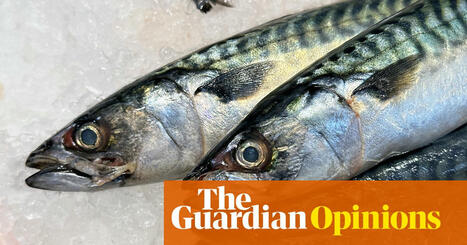
The new government must use its landslide majority to mend the damage to jobs and fish populations caused by neglect
Graham Watson's insight:
Charles Clover highlights how the UK fishing industry is still at unsustainable levels, in large part because of the 2020 Fisheries Bill which has allowed overfishing and large supertrawler owners to stockpile quota at the expense of smaller inshore vessels.
To add to the difficulties associated with this area, it is intertwined with the issue of Brexit, where management - or mismanagement of Britain's fish stocks was given a prominent role in negotiations.
|





Carbon emissions from private jets rose by 50% between 2019 and 2023, with campaigners seeing this as a "gratuitous waste" - so should we increase aviation taxes on these flights to tackle the associated negative externalities?