


What practical steps can employers take to help ensure women earn as much money as men?

 Your new post is loading...
 Your new post is loading...
Your new post is loading...
 Scoop.it!
What practical steps can employers take to help ensure women earn as much money as men?
Graham Watson's insight:
This BBC article looks at nine possible ways that the gender pay gap could be tackled, and yet doesn't make a point that I'm fond of. I don't deny that the issue merits tackling but it is also prone to the law of diminishing marginal returns. Logically, it should be easy to tackle the structural things that cause the gender pay gap, but it will be harder to tackle attitudinal factors. And sometimes, coverage of the issue overlooks this. No comment yet.
Sign up to comment
Scoop.it!

The Tories finally deliver on Osborne’s living wage promise, but this is a masterclass in political deceit
Graham Watson's insight:
The National Minimum Wage - one of the great 'triumphs' of George Osborne's Chancellorship - might not be all that it seems according to the Observer. The paper argues that although nominal wages have risen, wages are still 6% below their pre-crisis level, and thus workers are worse off than they were.
Scoop.it!

Government funding delay for £1.3bn scheme may force company to lay off staff within weeks
Graham Watson's insight:
The Swansea Bay tidal lagoon scheme is on the brink of stalling: in the absence of governmental agreement, it seems that the company behind the project are likely to have to lay off workers.
Scoop.it!

Most businesses have faced late payments from customers in the past 12 months, making life difficult for small and medium-sized companies in particular.
Graham Watson's insight:
An unusual aside, highlighting the ability of large firms to abuse their position - exploiting their monopsony power. In this instance, the Institute of Directors, report that the majority of firms have experienced late payments from large firms and this is seen as unfair, and rightly so.
Scoop.it!

A new breed of adult-focused soft drinks is providing alternatives to traditional alcoholic tipples.
Graham Watson's insight:
Non-alcoholic gin. Whatever next? A reflection of changing consumer tastes.
Scoop.it!
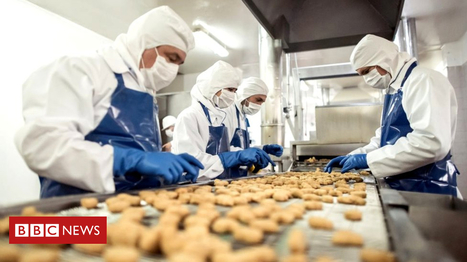
Far fewer jobs are at high risk of being lost than had previously been claimed, says an OECD study.
Graham Watson's insight:
The OECD has investigated the impact of artificial intelligence on employment and concludes that despite earlier surveys predicting that the effect on US and UK jobs would be severe, the threat is over-estimated. The OECD view is that AI will affect around 10% of American jobs and 12% of UK jobs. Of course, the important fact to bear in mind is that the impact of AI is a net one - substitution if they replace workers, but also complementary, in that workers are required to operate the new technology.
Scoop.it!

Repeat of shareholder revolt of two years ago is unlikely after oil firm’s strong 2017 performance
Graham Watson's insight:
More on executive pay - one of my favourite subjects. Is anyone worth $13.4m per year? Bob Dudley doesn't tweet and I'm fairly sure he doesn't have a Scoop It! board either. But he earns more than I do in a little over two days. He must be worth every penny.
Scoop.it!

Shareholders back an £8bn offer after a bitter fight for control of Britain's biggest engineering firm.
Graham Watson's insight:
The end of a 1980s style merger - with engineering giant GKN having been taken over by Melrose Industries, which views itself as a specialist in turning around mismanaged firms. The merger has been controversial - with a number of parties, notably the government taking an interest in the merger and eliciting a number of guarantees about Melrose's future conduct of the firm.
Scoop.it!

The Gaviscon maker has cut Rakesh Kapoor's pay by 18% to £12.5m after the firm underperformed.
Graham Watson's insight:
A rare instance of executive pay going down as well as up? But wait a minute, admirable though Rakesh Kapoor's pay cut might be, he's still getting total compensation of £12.5m in 2017. That works out at £260,000 per week or £37,000 per day. Is anyone really worth that sort of money?
Scoop.it!

Deal, worth up to £1.3bn, shows Waymo’s ambition in developing driverless ride-hailing service
Graham Watson's insight:
The battle for two markets is encapsulated in this Guardian article: the market for electric cars and the market for self-driving vehicles. It looks like the deal between Waymo and Jaguar is good for both parties - however, is there really first-mover advantage and might others benefit from some spillover effects of this - or is the intellectual property involved tightly protected by intellectual property rights, Additionally, what are the efficiency implications of all of this? Lots to ponder, particularly given survey data this week that has revealed that many people are opposed to giving up their petrol engines.
Scoop.it!

The plastics industry says a deposit return scheme would mean consumers would have to pay more for drinks.
Graham Watson's insight:
Another article which looks at a policy designed to tackle waste. Apparently, the UK is considering a Scandinavian-style deposit return scheme. However, not everyone is enthusiastic about the scheme: there's an opportunity cost of installing 'reverse vending machines' and it's likely to be producers that are going to have to meet this cost. Of course, they are then likely to pass this on to consumers, who are probably going to pay more for their drinks. Lots of good evaluative angles here - relating to the possibility of government failure, who bears the burden of the scheme and whether or not, ultimately, it enhances efficiency or not.
Scoop.it!

Across Great Britain, adults are drinking less often. So how are tastes changing and why are they cutting back?
Graham Watson's insight:
The over-consumption of alcohol is a demerit good, but equally the drinks industry is facing many challenges of its own, not least a decline in the number of pubs. This article is an interesting primer that looks at how patterns of alcohol consumption have changed over time and the implications of this.
Scoop.it!
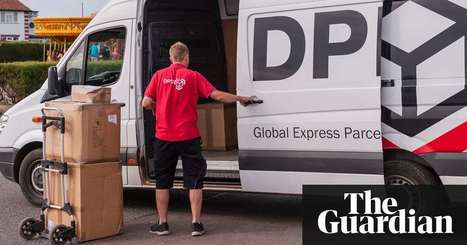
Delivery firm to offer 6,000 drivers right to be classified as workers in wake of Don Lane’s death
Graham Watson's insight:
Is this a turning point, one of many in the gig economy, with courier DPD offering self-employed couriers the right to be classified as workers in the wake of a worker's death. Additionally, they are starting to offer sick pay and the £150 daily fine levied if workers were unable to find cover in the event that they were going to be absent. The latter, in particular, strikes me as cruel. |
Scoop.it!

More than 10,000 companies publish gender pay gap data ahead of Wednesday's midnight deadline.
Graham Watson's insight:
This BBC article summarises the latest on the gender pay gap, as firms have declared their gaps. The article summarises the average pay gap, the firms with the highest pay gap and those with a negative pay gap. It's fascinating, if slightly uncomfortable reading.
Scoop.it!

The big firms have raised tariffs to within a pound of the prepayment-meter maximum. What price government promises of savings now?
Graham Watson's insight:
The first part of Sunday's Observer Business leader is excellent, highlighting the fact that the threat of a price cap has prompted an unintended consequence, with energy firms raising the tariff for pre-payment meters to exceptionally close to the proposed price cap. Proof that legislating to promote efficiency is harder than we might sometimes think.
Scoop.it!

Government urged to protect holiday pay and minimum wage for workers in supply chains
Graham Watson's insight:
The issue of paying the National Minimum Wage (NMW) is in the news - with the TUC arguing that not all workers receive the benefit of governmental protection under the scheme.
Scoop.it!
The FT's Rob Armstrong looks at how Donald Trump's trade tariffs could impact the global economy.
Graham Watson's insight:
The FT's Rob Armstrong looks, in wry fashion, at the logic behind President Trump's steel tariffs arguing that there's little rationale to them. Not only will it have an adverse effect on the US economy, but it will have negligible effect upon China, which exports little steel to the US. Additionally, he argues that the subsequent round of tariffs on Chinese goods are also likely to be counter-productive.
Scoop.it!
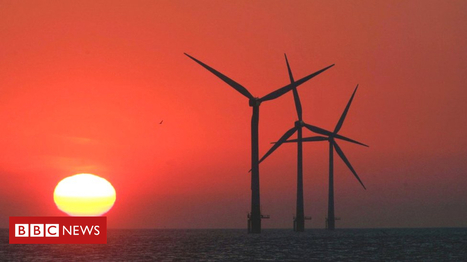
Wind power capacity is growing thanks to giant offshore turbines, but can they get much bigger?
Graham Watson's insight:
A lovely example of how renewables are growing cheaper, in part as a result of economies of scale that have permitted wind turbines to grow to a remarkable size, lowering costs, and reflecting technological development in new materials.
Scoop.it!

21st Century Fox says it would sell Sky News to Disney in an effort to ease its proposed acquisition of Sky.
Graham Watson's insight:
The 21st Century Fox - Sky merger is still alive, although Rupert Murdoch appears prepared to accept that he might have to sell Sky News to facilitate the deal. One wonders if, even then, that will be enough for the regulator - however, I suspect that he's got a number of big hitters, notably several members of the Cabinet, doing his bidding in this regard. Will it go through, or does it still represent too much of the threat to media plurality?
Scoop.it!
As employers with 250+ workers approach the deadline for reporting their gender pay gap data, the FT analyses the key figures so far, and highlights the best and worst sectors.
Graham Watson's insight:
A brief FT summary of the gender pay gap as revealed by the UK requirement for firms with more than 250 workers to reveal their gap. As of 27th March, the overall median gap is 9.9%, which effectively means that women work for free after 30th November. A fascinating little insight.
Scoop.it!

Thousands of high street outlets have closed in the last decade, leaving behind a wasteland of betting shops. But one community in York has found a simple way to reverse the decline. Could their model be used nationwide?
Graham Watson's insight:
Just a beautiful article. Jane Jacobs eat your heart out. What makes a high street thrive? Bishopthorpe Street in York might have the answer.
Scoop.it!
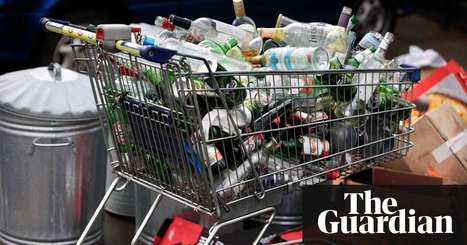
Major supermarkets express support for government’s plan but key issues, including who would pay for it, remain unclear
Graham Watson's insight:
Following on from the earlier 'scoop' about the deposit return scheme, the Guardian highlights the costs involved, noting that whilst supermarkets announced a willingness to work with the Environment Secretary, Michael Gove - and few do that - there's little detail in relation to the scheme and questions about its cost.
Scoop.it!
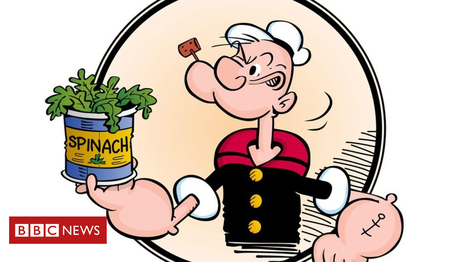
Advertisers are the experts at persuading us to eat burgers, crisps and fizzy drinks. But what if they tried to sell us something healthier?
Graham Watson's insight:
We're all aware of the power of advertising, but can it be used to popularise vegetable consumption? Popeye did wonders for spinach sales, but will this also work for other vegetables. It's interesting to see an top adman confess that 'happiness' not 'health' sells, and it's to be hoped that this will inform the advertising and make it less paternalistic. Nevertheless, one wonders what Christopher Snowden would make of it.
Scoop.it!

House prices falling in almost half of all postcodes in the capital, figures reveal
Graham Watson's insight:
An interesting little article that highlights the changing nature of the London housing market. The falling house prices in half of all postcodes reflects the changing D&S conditions in the capital.
Scoop.it!

Oil firm says gas could account for 10% of global energy consumption by end of century
Graham Watson's insight:
If even Shell are endorsing hydrogen cars, then it seems that the end of the petrol engine is nigh. This article details the fact that the oil company believes that, apart from the growth of battery-electric vehicles, these cars are going to be the way in which we meet our climate change commitments.
|





