


GambleAware also finds traffic to online casino and bingo sites popular with women peaks in winter
Get Started for FREE
Sign up with Facebook Sign up with X
I don't have a Facebook or a X account


 Your new post is loading...
 Your new post is loading...
Your new post is loading...
 Scoop.it!
GambleAware also finds traffic to online casino and bingo sites popular with women peaks in winter 
No comment yet.
Sign up to comment
Scoop.it!

Those living in the coastal city of Chimbote say the industry pollutes the air and water, makes their children sick and has put local fishers out of work
Graham Watson's insight:
A good introduction to negative externalities, with the fishmeal industry, located in the Peruvian coastal town of Chimbote, seemingly responsible for air and marine pollution. The effects of this are worsening healthcare outcomes for the local population and fewer jobs for local fishermen, who are being driven out of business by overfishing.
Scoop.it!
Parts of the ocean are being starved of oxygen by chemical pollution from land. These so-called “dead zones” not only decimate marine life, but are contributing to climate change.
Graham Watson's insight:
This Economist clip looks at the most extreme forms of marine pollution which result in 'dead zones' - with parts of the ocean starved of oxygen. This phenomenon can kill almost all marine life - in this case, in Turkey - and is the result of the negative externalities often associated with sewage and the overuse of fertiliser and pesticides in agriculture.
Scoop.it!
A new law in Scotland will ban single-use plastic straws, plastic cutlery and polystyrene food containers.It’s estimated around half of all plastic products produced are not recyclable, so it is hoped the new legislation will greatly reduce the millions of items of plastic that end up in Scotland’s natural environment every year.
Graham Watson's insight:
Scotland is adopting legislation to outlaw the use of single use plastics from this summer, with all sorts of single use items, including food containers, presumably for deep fried Mars bars.
However, whilst ostensibly this is a good thing, and will reduce the economy's carbon emissions, is it necessarily good economics. Evaluating the policy will require assessment of the opportunity cost, risk of government failure and distributional issues associated with the intervention.
Scoop.it!
New Zealand will ban the sale of tobacco to its next generation, in a bid to eventually phase out smoking. Anyone born after 2008 will not be able to buy cigarettes or tobacco products in their lifetime, under a law expected to be enacted next year.
Graham Watson's insight:
This New Zealand proposal to ban tobacco consumption has got a lot of airtime today. It represents a drastic attempt to deal with the imperfect information in the market, but as I've already suggested, is it good policymaking?
Certainly smoking generates negative externalities, but is this the right way to tackle them. Smoking also generates considerable economic welfare, and an outright ban simply ignores this. This clip is hard to watch - it suggests that the optimal number of smoking deaths is zero? And extrapolating from that the same should also be true of alcohol consumption or motoring.
Scoop.it!
New Zealand plans to ban young people from ever buying cigarettes in their lifetime in one of the world's toughest crackdowns on the tobacco industry, arguing that other efforts to extinguish smoking were taking too long.
Graham Watson's insight:
Wow! New Zealand has announced that it is going to ban cigarettes - meaning that young people may never be able to legally purchase them in their lifetimes.
However, is this draconian measure good economics? I'm sceptical. Think in terms of the opportunity cost - in terms of lost economic welfare, which smokers and tobacco companies derive from the activity and lost tax revenues. As a result, isn't this likely to result in government failure? It would seem so.
And what about the distributional consequences? There seem to be more losers than winners. I await the libertarian response, notably from Christopher Snowden, but might then start to wonder about the wider implications. What next? Banning sales of alcohol?
Scoop.it!

Overload of chicken and dairy cow manure has left some catchments critical, says author of book on issue
Graham Watson's insight:
The environmental costs of intensive farming are made clear in this article which suggests that some water catchments are being endangered by the quantities of manure being dumped into them.
As a result, the Environment Agency might have to intervene and reduce livestock numbers to tackle the problem. However, the bottom line is that if consumers value cleaner rivers, they are also going to have to face up to higher food prices in all probability.
Scoop.it!

Report shows raw sewage spillages into coastal swimming waters increased by more than 87% in 12 months
Graham Watson's insight:
The headline statistic is incredible, there was an 87% rise in the number of raw sewage spills into coastal swimming water in the last year, and recent legislation will have done little to stop this. Southern Water is, by far and away the worst offender, and far from being a result of exceptional circumstances, it seems that for some firms it's become habitual.
Scoop.it!
UK’s Hochschild fights Peru’s plans to close mines over environmental impact | Mining | The Guardian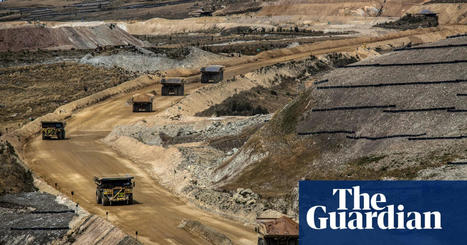
London-listed firm says it will ‘vigorously defend’ plan to continue mining gold and silver
Graham Watson's insight:
It seems as though mining firm Hochschild is going to take on the Peruvian government over the plan to close some of its gold and silver mines because of their environmental impact.
The implication that mining activity generates negative externalities isn't novel; however, it is unusual for a government to intervene in this fashion.
Scoop.it!

Last week, the companies responsible for polluting our waters were once again let off the hook by the government. But the fightback is growing
Graham Watson's insight:
And whilst Britain chaired the last round of climate change talks, our parliament voted to continue to permit our water companies to pollute our seas. Strange isn't it.
However, this article looks at whether popular opinion may do more to shape this policy area than legislation. Certainly it might bring about limited change but I think that ultimately only appropriate legislation and regulation will be able to halt marine pollution.
Scoop.it!

With delegate after delegate stating there were no more deals to come, the future remains uncertain
Graham Watson's insight:
The COP26 agreement dissected by the Observer. Again, the editorial position is similar to mine. Limited progress, and as expected little prospect of a major breakthrough to follow.
Scoop.it!
Many of the countries worst affected by climate change have contributed least to the emissions that cause it.
Graham Watson's insight:
This is the crux of climate change - how do the richest members of society compensate the poorest for the adverse effects of climate change? And how can we compensate for historical emissions?
It seems that the developed world has fallen short in this regard.
Scoop.it!

Data prompts warnings about millions of children’s potential exposure to betting promotions
Graham Watson's insight:
To what extent are the externalities associated with problem gambling the result of imperfect information? This article wonders whether the fact that gambling is heavily advertised during the school run might contribute to young people starting to gamble.
|
Scoop.it!

Analysis from Greenpeace finds deserted flights are generating millions of tons of harmful emissions
Graham Watson's insight:
The notion of 'ghost flights' raises fears that Europe's airlines might be forced into flying deserted flights merely to keep hold of valuable landing slots. This is far from efficient, bad for the environment and surely there are better solutions to determining who retains these slots?
Scoop.it!

Wood pellets are touted as a 'green' way to make electricity, but many reject these claims.
Graham Watson's insight:
The complexity of environmental policy is laid bare in the first part of this investigation into the green credentials of burning wood pellets as an a energy source. This BBC article reveals that the production of biomass generates air pollution, its classification as renewable is open to question and it's also less efficient that burning gas for example.
One to ponder.
Scoop.it!
The development of easily understandable nutrition labelling is essential for empowering and facilitating consumers to make healthier food choices. The Global Action Network on Nutrition Labelling - composed of more than 19 countries in 2021- was formed in 2019 to exchange country experiences and good practices, and to encourage countries to accelerate efforts around nutrition labelling. This video was developed by the World Health Organization and the Global Action Network on Nutrition Labelling.
Graham Watson's insight:
This WHO clip looks at the importance of nutritional labelling in the market for food, not so much in terms of obesity but cardiac disease. However, the issue of making healthy food choices revolves around one thing - providing consumers with perfect information.
Any shortcomings in this regard will worsen the operation of food markets and potentially generate negative externalities.
Or will it? From a Theory of Knowledge perspective, you might ask about the extent to which this has been quantified.
Scoop.it!

Permits for UK and EU vessels will hinder efforts to protect marine life and may break habitats directive, conservation group warns
Graham Watson's insight:
Another example of a negative externality in fishing with Oceana suggesting that UK fishing licences for bottom-trawling could be illegal because of the damage that they cause to marine environments.
Scoop.it!

Firm illegally discharged about 360,000 litres of raw sewage from Worcestershire treatment plants in 2018
Graham Watson's insight:
Water companies illegally discharging sewage? Surely not?
Severn Trent have been fined £1.5 million for doing so - a slap of the wrist, and scarcely noticeable. A lovely prompt to think about why, in the present environment, it might be economically rational for water companies to undertake this sort of activity, using marginal analysis. The other thing to bear in mind is that because of the market structure, any damage to the 'brand' has no effect; it's not as if Severn Trent's customers can vote with their feet. and as long as they're making a sizeable profit shareholders are unlikely to mind.
Scoop.it!

Exclusive: Consortium of energy firms and universities says underground storage of hydrogen can also be investigated
Graham Watson's insight:
An interesting aside - with a number of energy firms and universities - looking at using old oilwells in testing carbon capture and storage technology. Out of an environmental 'bad' could a 'good' - of a sort - result?
Scoop.it!
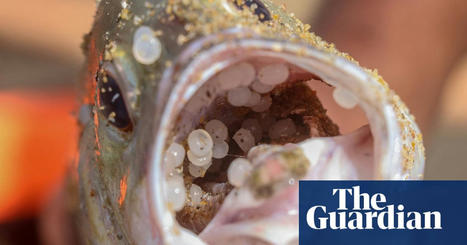
Billions of these tiny plastic pellets are floating in the ocean, causing as much damage as oil spills, yet they are still not classified as hazardous
Graham Watson's insight:
The sinking of the X-Press Pearl container vessel off the coast of Sri Lanka in the Indian Ocean has created an environmental catastrophe. It's not so much the oil that spilled into the sea that's caused the damage but the 87 containers of nurdles - little plastic pellets that are the problem.
The article details what they are and why they've proved so toxic, and such a threat to marine life.
Scoop.it!

While the industry has an important role to play in moving to low-carbon economies it’s also hugely carbon intensive and predicted to become more so
Graham Watson's insight:
The Guardian article highlights the heavily polluting nature of the global chemicals industry, noting that the sector consumes 10% of the world's fossil fuels in a year.
It also outlines how it might go about reducing its carbon footprint by utilising cleaner energy sources and simplifying its products.
Scoop.it!
New data showed deforestation in Brazil's Amazon rose to the highest level since 2006. Brazil's space research agency INPE recorded 5,110 square miles of deforestation in the world's largest rainforest, an area nearly 17 times the size of New York City
Graham Watson's insight:
So much for pledges made at COP26: the Amazon is being deforested faster than at any time since 2006, and this flies in the face of the Brazilian pledge to halt all deforestation by 2028, and that pledge was made with the government in possession of this data at the time it made the pledge.
Much sound and fury signifying nothing?
Scoop.it!
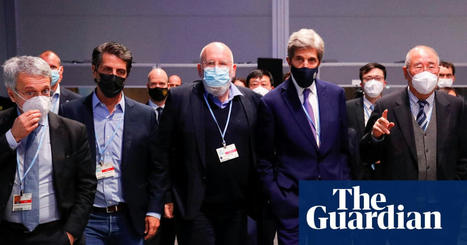
Analysis: Cop26 delegates made progress on emissions cuts and climate adaptation but fell short on coal
Graham Watson's insight:
And a summary of what actually was achieved...
Scoop.it!
World leaders and environmental experts have welcomed a UN climate deal that for the first time targets fossil fuel as the key driver of global warming. However many expressed disappointment with the agreement and warned that the world was still on course for disastrous warming.
Graham Watson's insight:
Has the COP26 agreement fallen short? Yes - this is the BBC News coverage of the agreement, with particular focus on India and China insisting upon a rewrite to temper the language in relation to coal.
Lots of words, and plenty of unbuttered parsnips - and little prospect of limiting global warming to 1.5C.
Scoop.it!
World leaders and scientists have stressed the need to limit global warming to 1.5 degrees Celsius. The 2015 Paris Agreement commits countries to limit the global average temperature rise to well below 2°C above pre-industrial levels, and to aim for 1.5°C. But what is the difference between 1.5°C and 2°C of warming?
Graham Watson's insight:
COP26 has re-emphasised the need to keep the global temperature rise to 1.5 degrees Celsius. But why 1.5 degrees Celsius? What does this mean for climate change and the negative externalities associated with this?
It's also a lovely ToK question? Why this specific number? Reuters investigates.
|





A reminder of the scale of the negative externalities associated with problem gambling with gambling charity, GambleAware highlighting the fact that the number of women seeking its help has doubled in the last five years.
However, it seems as though the government are preparing to introduce stricter legislation to tackle this sort of thing.