


The supermarkets follow Iceland in cutting the cost of formula after the manufacturer cut prices to retailers.
Get Started for FREE
Sign up with Facebook Sign up with X
I don't have a Facebook or a X account


 Your new post is loading...
 Your new post is loading...
Your new post is loading...
 Scoop.it!
The supermarkets follow Iceland in cutting the cost of formula after the manufacturer cut prices to retailers. 
No comment yet.
Sign up to comment
Scoop.it!

Several supermarkets are reducing the cost of milk in a sign that inflation could be easing.
Graham Watson's insight:
I nearly scooped this the other day - just looking at D&S and the price of milk. However, this is a more interesting article that looks at the implications of the oligopolistic market structure, in that after Sainsbury's and Tesco have cut milk prices, the discounters have followed.
The implication is that the cost of milk production have fallen to such an extent that instead of the market generating price stability, it's enough to see the price of the product fall across the sector.
Scoop.it!
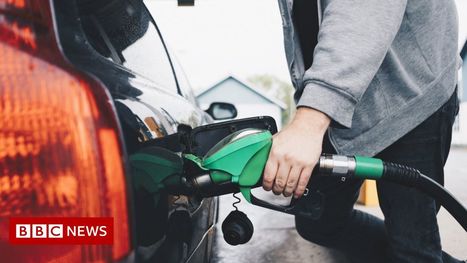
Fuel retailers are charging unnecessarily high prices for petrol, the motoring organisation says.
Graham Watson's insight:
The RAC have accused petrol retailers of profiteering as petrol prices stayed high, despite significant falls in global oil prices. In particular, they suggest that supermarket petrol may have even increased in price at the same time that oil prices fell.
Well, it's exactly what economic theory would predict. The oligopolistic market structure that characterises the industry often leads to price stability, and as Keynes suggested wages and prices are sticky in a downwards direction.
Equally, petrol retailers forward buy petrol so a fall in oil prices is unlikely to be matched by a simultaneous fall in prices at the pump.
Lastly, I'd argue that the RAC can't have it both ways - during the recent fuel crisis prices could have risen significantly higher than they did and yet petrol retailers didn't exploit the opportunity to profiteer to the extent that they could have done.
Scoop.it!

Asda, Morrisons and Sainsbury's cut petrol and diesel prices as wholesale prices fall.
Graham Watson's insight:
A nice article looking at the nature of the fuel market: supermarkets are cutting prices, in response to a fall in wholesale prices. Thus, you could look at the ways in which falling costs affect the equilibrium price of petrol.
However, the article also notes that many commentators are quick to point out that the price of fuel could have fallen quicker - suggesting that the supermarkets have a degree of market power in the market - allowing you to consider whether it's an oligopoly and the possibility that it's best described by the kinked demand curve.
Scoop.it!

Supermarket reduces price caps at its 318 filling stations amid fall in wholesale costs
Graham Watson's insight:
An interesting aside in the fuel market: Asda is cutting prices - something that Keynes would suggest doesn't happen very often, and similarly, oligopoly theory would also suggest that this is rare.
However, models like the kinked demand curve don't deny the possibility that a period of price stability might be followed by price cuts - however, there needs to be a significant fall in costs. And that is something that the article highlights has happened in the wholesale market.
Scoop.it!

One million customers will see their annual dual fuel bills rise by an average of £64.
Graham Watson's insight:
Energy pricing: like the grieving process, in many regards. The oligopolistic nature of the market means that when one of the 'Big Six' raises their prices, the others are likely to follow. The trick is waiting a 'decent' amount of time, choosing a slightly different rate of increase but, broadly speaking, keeping price rises in line with that of the other major players.
All about decorum, and exactly how oligopolistic models predict firms behave - you might think about price leadership, the kinked demand curve, tacit collusion and so on.
Scoop.it!

The increase follows that imposed by British Gas this week and will affect 1.3 million customers.
Graham Watson's insight:
See my earlier post about British Gas increase their energy prices: classic oligopoly market behaviour. I'm always minded of the nursery rhyme, 'Three Blind Mice' at this point. Look at the other members of the Big Six - and see how they run in due course.
|
Scoop.it!
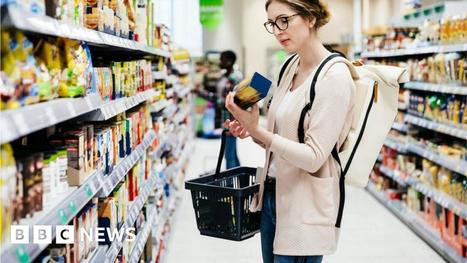
Basic items are to be discounted as retailers face pressure to help ease the cost of living.
Graham Watson's insight:
Classic oligopoly theory - with Morrisons and Marks and Spencer cutting the price of basic items in response to similar cuts by Tesco, Sainsburys and Aldi.
It's a classic example of how an oligopoly. In general, there's price stability but when prices change, they tend to go to in the same direction. It might be that this is the result of collusion, or price leadership, but, it's economically rational for firms to follow the herd.
Scoop.it!

Exclusive: Consumers would save £600m if EE, Vodafone, O2 and others kept to increases in line with inflation
Graham Watson's insight:
Are mobile phone companies about to launch a round of huge price rises, no doubt arguing that the cost of living crisis has driven up their costs. However, to what extent is this true or are they taking advantage of the cost of living crisis to price gouge and increase their profits.
It's also worth noting that the market structure of the industry is such that when one company raises its prices, others will follow. However, this doesn't necessarily imply collusion between them.
Scoop.it!
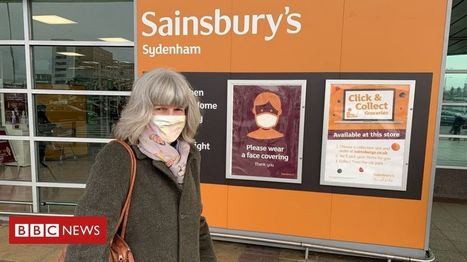
The UK's second-largest supermarket joins Tesco in promising to price-match German discounter Aldi.
Graham Watson's insight:
A fascinating change in tenor in the grocery retail sector with established brands Tesco and Sainsbury's both looking to take on the discounters with a price-match scheme focused on targeting Aldi.
This suggests that the sector has entered a period where there's likely to be price competition, and not stable prices as traditional models of oligopoly would suggest.
However, even more surprisingly, I think is the fact that it seems to mark an end to the notion of discrete market segments - such as discounters, the mid-range supermarkets - such as Tesco and Sainsbury's - and high-end retailers like Waitrose and M&S Foods.
So, it's not as simple as it might first appear - and it will be interesting to see how the established chains get on - the last such venture, the launching of Tesco's Jacks brand proved singularly unsuccessful.
Scoop.it!
The energy supplier is increasing prices by 6% for dual fuel customers, following a rise in April.
Graham Watson's insight:
More price rises in the energy sector - with EDF further increasing dual fuel prices, after an April rise. The company suggests that a 13% increase in wholesale prices are to blame - but I wonder whether energy prices will fall in line with wholesale prices in the months ahead.
Scoop.it!

Customers using both electricity and gas will pay an average of £55 more a year from August.
Graham Watson's insight:
Filed under 'classic behaviour in an oligopoly', this article on E.On raising its duel fuel price rise reflects upon the fact that the 'Big Six' have all announced price rises in the last few months.
Proof of a general rise in costs, or a lack of competition allowing them to get away with a co-ordinated increase in prices, possibly signalled by a price leader. One thing of note - watch to see if prices fall when wholesale costs also fall. I know what Keynes might be thinking about this...
Scoop.it!
The move follows recent increases announced by energy giants EDF Energy and British Gas.
Graham Watson's insight:
And still they come: the drip, drip of energy companies raising their prices, trying to imply that there's no form of collusion whatsoever between them.
This time, it is Scottish Power's turn to increase prices - after EDF and British Gas. Of course, the companies will all say that price increases represent changing cost conditions alone. But as good economists, you might have other explanations of firm behaviour in this oligopolistic market.
|





Just a great article which makes clear the oligopolistic nature of this market, with a price cut by one of the firms, Iceland, eliciting a response from Asda and Tesco, and others, no doubt, about to follow suit. You might model this using the kinked demand curve, but it would also be worth thinking about whether there are any other models of oligopoly that you might apply too.