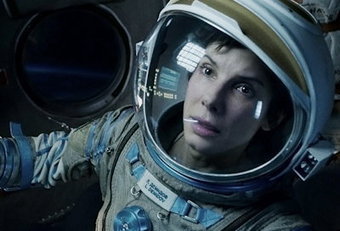
"Finding ways to maintain that optimal zone where we are neither under- or over-stimulated allows us to use our minds to respond rather than to react. The greater access you maintain to yourself, the richer and broader your array of creative tools.” Psychologist Cheryl Arutt
- See more quotes, books, articles and sites to improve your emotional balance and enhance your creative life.
"Sundance 2014: Writer Maya Forbes set aside her fears to turn her '70s childhood with a bipolar father into 'Infinitely Polar Bear.' She directed it too." "Forbes said as a parent she has encouraged her children not to be timid. "I was always telling them, 'You have to be bold. You have to take risks. You have to put yourself out there.' But she realized that, because she couldn't commit to turning her childhood into a movie, as she had promised herself, she was failing to lead by example. So Forbes set aside her fears and started writing, and the terrors and joys of her upbringing spilled out."
One of many of my related posts: "Living With Extreme Mental States" - As she noted at the start of her blog (in 2005), writer Liz Spikol “struggles with mental illness, specifically bipolar disorder and OCD." http://talentdevelop.com/361/
"We might say that both the artist and the neurotic bite off more than they can chew, but the artist spews it back out again and chews it over in an objectified way, as an external, active, work project..." - Ernest Becker
Related article: “Madness and creativity: do we need to be crazy?” Scott Barry Kaufman, Ph.D. comments: “I do believe that If the mental processes associated with psychosis were evaporated entirely from this world, art would suck. But so would a lot of other things that require imagination.” http://talentdevelop.com/3423/madness-and-creativity-do-we-need-to-be-crazy/
Feelings that are frozen can create many different problems: emotional and physical. Learn to unfreeze, process and integrate the message of your feelings.
"Highly sensitive people and severely abused people need to be aware that they can accept and take charge of their healing process by finding therapeutic practices and groups that will let them forgive and let go of the past. Engaging in such practices helps minimize the potential for long term destructive addiction and therefore is valuable for all people."
Trauma takes many forms, and has different sources and levels of impact for each of us. See quotes by and about many well-known artists such as Sarah Polley, Halle Berry, Lady Gaga, will.i.am, Jennifer Lawrence, Jonathan Safran Foer and many others, in my article "Creative People, Trauma and Mental Health" - which includes a number of videos, book quotes, programs and other resources: http://talentdevelop.com/6550/creative-people-and-trauma/
Jean-Paul Sartre is one of many artists who apparently believed in the "tortured artist" mythology, and said: “Suffering is justified as soon as it becomes the raw material of beauty.”
Cheryl Arutt, Psy.D., a psychologist specializing in creative artist issues, says “Many creative people carry the belief that their pain is the locus of their creativity, and worry that they will lose their creativity if they work through their inner conflicts or let go of suffering.”
Musician Sting says, "I only know that people who are getting into this archetype of the tortured poet end up really torturing themselves to death."
"She was in pain all her life. It often happens, of course, that people who had traumatized childhoods turn into very good children’s authors." Emma Thompson, about portraying P. L. Travers, author of the Mary Poppins books. //
We cannot have the extraordinary without the ordinary. Just as the supernatural is hidden in the natural. In order to fly, you need something solid to take off from. It’s not the sky that interests me but the ground. . . . When I was in Hollywood the [script] writers said, surely Mary Poppins symbolizes the magic that lies behind everyday life. I said no, of course not, she is everyday life, which is composed of the concrete and the magic.
—P. L. Travers, author of Mary Poppins (in Lawson, 1999, p. 161)
Clearly, there is something special about Mary Poppins that captures the collective imagination, yet the goal of this essay is not to apply the analytic lens to better understand the character of Mary Poppins, but to utilize Mary Poppins as an analogical tool to better understand the character of depth psychologists.
Depth psychologists believe that within our unconscious lies a wealth of material that expands our capacity to understand, accept, release, and repair aspects of ourselves, that can lead to a more developed sense of wholeness and connection. Such information reveals itself through symbols, metaphors, dreams, imagery, intuition, synchronicity...
UN INVESTISSEMENT des plus sérieux et des plus humanistes . PAYEZ UN OU PLUSIEURS PANNEAUX SOLAIRES....des professionnels s'occuperont de l'exploitation et de la maintenance ; vous aurez 20% d’intérêt durant 20 ans; car ce panneau restera le votre durant 20 ans et en plus il est assuré auprès de l'une des meilleures sociétés d'assurance au monde pendant toute sa durée de vie. Possibilité de visite. http://home.worldgn.com/lang/fr/?u=belgouche
San Diego—Would we have Poe’s Raven today if the tormented author had taken lithium to suppress his bipolar illness? Not likely, considering the high frequency of ...
You wrote "Cured of their mental illness, such artists and writers would be gutted of their creativity and stripped of the means to realize it." This idea of madness and creativity being intertwined is dangerous mythology. Cognitive psychologist Scott Barry Kaufman notes some kinds and degrees of pathology may help creative thinking: "Everyone engages in psychosis-related thought any time they use their imagination." But, he adds, "Too much psychosis and one is at high risk of going mad." Creativity researcher Dean Keith Simonton notes, “Few creative individuals can be considered truly mentally ill." And psychologist Judith Schlesinger (author of the book 'The Insanity Hoax: Exposing the Myth of the Mad Genius') says “A careful look at the so-called 'landmark' studies in the field—the work by psychiatrists Nancy Andreasen and Arnold Ludwig, and psychologist Kay Redfield Jamison—reveals gaping holes in their design, methodologies, and conclusions.” Musician Sting comments, “I only know that people who are getting into this archetype of the tortured poet end up really torturing themselves to death.” - From my article "Madness and creativity: do we need to be crazy?" http://talentdevelop.com/3423/
By Leslie Johnson. "The image of the "mad genius" has stayed with us because many of the qualities attributed to highly successful people have been crazy or insane."
This is definitely something that I can associate with. It's strangely motivating. The thought that even with debilitating mental disorders people can still be hugely successful is nearly awe inspiring; that a disorder may create greatness. If you read Leslie Johnsons article listing off those of a successful career who are indeed victims of mental disorders one thing you will notice is the specific mental disorder that seems most apparent among these few. Depression. Depression seems to be a sort of amplifier for these few. Boosting their creativity or rather giving them a new perspective to view from. another one of the illnesses repeated is bipolar disorder. Bipolar disorder is definitely linked with depression; it’s been known as manic-depressive disorder. Bipolar disorder is classified by dramatic mood swings such as swinging into severe depression. Knowing this just makes me wonder; are we great because of our inhibitions? or do we have these inhibitions because we are great? only we can know.
Introduced by Neseret Bemient, host of The Mental Health Telesummit, creativity coach and therapist Eric Maisel, PhD talks about "official" attitudes of many health professionals about some forms of human experience, such as depression, that get labeled as mental illness.
He thinks “There is something profoundly wrong with the way that we currently name and treat certain human phenomena." [From article "Rethinking Creativity and Depression" http://depressionandcreativity.org/139/ ]
In this brief audio clip he talks about ideas he also presents in his book "Rethinking Depression: How to Shed Mental Health Labels and Create Personal Meaning". http://goo.gl/J77pc
Get his full-length [almost an hour] interview as part of the Mental Health Telesummit package of recordings by 12 presenters. More information at http://talentdevelop.com/MHT
Trigger Warning: This post contains the description of sexual assault and may be triggering to survivors.I’ve been hearing a lot of talk about comparing Miley Cyrus’ sexual antics to Madonna’s thought-provoking ways of the 1980s.
Trauma takes many forms, and has different sources and levels of impact for each of us. See quotes by and about Sarah Polley, Halle Berry, Lady Gaga, will.i.am, Jennifer Lawrence, Jonathan Safran Foer and many others, in my article Creative People and Trauma http://talentdevelop.com/6550/
Many people experience unwanted sexual contact, rape and other forms of sexual abuse and help deal with the aftermath through creative expression.
The painting is a self portrait by Artemisia Gentileschi (1593-1653). An article notes she was raped by an art tutor of hers...“The trauma of the rape and trial impacted on Artemisia’s painting. Her graphic depictions were cathartic and symbolic attempts to deal with the physical and psychic pain."
Engaging in regular meditation or another spiritual practice is linked to a thickening of the brain cortex, according to new research published in JAMA
This is great news for people who already have a spiritual life, but what about those that don't I hear you ask. Well mindful meditation can help here. Problem is, most people don't make the time to learn this discipline until it's way too late, then when they really need it, the discipline isn't there. Ask anyone who hasn't made time for 'time out' in their lives, and they might tell you that it didn't seem necessary. Well depression in the aged is at an all time high in this modern age. Perhaps we should consider teaching this stuff in elementary school. What are your thoughts around depression? Most people I speak to tell it sucks. Here is a worthwhile way of avoiding it - take the time to learn about, and be comfortable with your right hemisphere, it's actually a nice place to visit because when you leave it, you feel better all over.
The mythology of the mad artist continues in various forms, supported to some extent by research. For example, there are studies indicating writers are more susceptible to depression.
“Being more intentional, grounded and grateful is not just a good thing to do for the holiday season. It’s a way to live all year long. And not only that, it’s the quickest way to transform your life from ordinary to extraordinary.” Carrie Contey, Ph.D.
"If you aren’t intentional about how you want the holidays to go, you’ll be swept up in the rapids this time of the year." Lisa Byrne.
“Here come the holidays and the New Year. Give yourself a gift by remembering to do this time of year your way." Elaine Aron, PhD.
By Rose Haywood. "Social media has provided us new ways to come together, but it may also contribute to feelings of isolation and even depression.
"According to a recent study from the University of Michigan, frequent use of Facebook in particular was identified as having a negative impact on one’s sense of well-being."
By Eric Maisel, Ph.D. - 'The mental disorder business, where folks sit around a table and turn “symptom pictures” into “mental disorders,” rests on the Orwellian conceit that the average person is gullible enough to believe that there is a clear meaning to the word “normal” and a clear meaning to the word “abnormal.” Anyone willing to give the matter a second’s thought would see that these words have so many usages as to empty them of meaning.'
Related: “I hope I’m becoming more eccentric. More room in the brain.” Musician Tom Waits - From post: Being eccentric and creative http://developingmultipletalents.com/101/
Pretty much all of us experience some kind of trauma in life. How does creative expression help people deal with it, to heal and recover? And how do people make use of traumatic experiences in their creative work?
Gaining more control of our emotions and thinking can release creativity. See full video and read about the work of Morty Lefkoe on changing limiting beliefs, in article: How Our Strong Feelings Get Conditioned http://talentdevelop.com/3488/how-our-strong-feelings-get-conditioned/
To get content containing either thought or leadership enter:
To get content containing both thought and leadership enter:
To get content containing the expression thought leadership enter:
You can enter several keywords and you can refine them whenever you want. Our suggestion engine uses more signals but entering a few keywords here will rapidly give you great content to curate.


 Your new post is loading...