A broad selection of articles, talks and ideas for Maths teachers from the Internet, brought to you courtesy of the Rondebosch Boys' High School Library (If you would like to receive a weekly newsletter of the latest items in this Scoop just mail me at library@rondebosch.com)
Published on Feb 27, 2018 If you needed to tell someone what numbers are and how they work, without using the notion of number in your answer, could you do it?
Published on Feb 20, 2018 Robotics is another of HM Governments eight great technologies. Is it possible that in a few years we might have machines with artificial intelligence? In this lecture I will describe the mathematics of machine learning and explain its applications to robotics. In particular I will show how the modern ideas of deep learning allow a robot to make sense of the world it exists in, including the ideas behind speech and face recognition. I will also address the important (at least to mathematicians!) question of whether a robot will ever replace a mathematician.
There are so many fun and exciting resources available to help you engage students in your math classroom. These are some of the most popular math resource posts from Free Technology for Teachers from the last couple of years.
Published on Feb 15, 2018 What shape do you most associate with a standard analog clock? Your reflex answer might be a circle, but a more natural answer is actually a torus. Surprised? Then stick around.
Published on Jan 10, 2018 We live in an information age, with vast amounts of data constantly sent around the world. This lecture will introduce you to the mathematics of information. I will explain how data is transmitted and received over vast distances by using carefully designed codes, and how work by a young French mathematician in the 19th century plays a vital role in this. I will then show how a huge amount of information is encoded in your genes and how maths can make sense of it.
Published on Nov 20, 2017 Space science is one of HM Governments eight great technologies. In this lecture I will explain the mathematics behind satellites, showing how they are controlled, how they are sent to distant planets and how they transmit and receive data over vast distances. I will also explain how GPS systems work and show how General Relativity plays a vital role in making GPS systems so accurate. I will finish by showing a link between space science and Origami.
Published on Nov 11, 2017 Doodling has many fun mathematical aspects: patterns, shapes, numbers, and more. But surprisingly, there is often sophisticated mathematics buried inside common doodles, too. While doodling may look and feel like play, it actually reflects what mathematics is really about: finding patterns in nature, explaining them, and extending them. Join Ravi Vakil, Stanford professor of mathematics, and doodle your way through some important notions in geometry, topology, and physics, some fundamental ideas guiding the development of mathematics over the last century, and even some ongoing work that continues today.
Published on Oct 31, 2017 This years event will focus on the beauty of Mathematical Relationships. The main speaker, Professor Robin Wilson will discuss Pi and e, and the most beautiful theorem in mathematics, preceded by shorter presentations by Professor John Barrow on Zero is a Hero and by Professor Raymond Flood on Just Imagine: The Tale of i.
Published on Oct 23, 2017 Many of us have been in a medical scanner and benefited from its use in medical diagnostics. But how many of us have considered how it works? The maths behind modern medical imaging (showing how CAT, MRI and Ultrasound scanners work) will be explained, showing how mathematics done in 1915 is now saving countless numbers of lives. Recent advances in mathematics are leading to much better images for doctors to use for their diagnoses; and similar methods and ideas are used in diverse applications such as remote sensing, oil prospecting, crime detection, studying bees and saving the whales.
Published on Feb 28, 2018 Lots of people find mathematical equations intimidating because they don't make sense. But they are not hard to understand if you follow a few steps, anyone can learn to read them. And it is well worth it because they are so incredibly useful to describe everything in math and physics. If you already know I'm sure you know someone who might like this video, I'm going to send it to my family who are less mathematically inclined than me.
Published on Mar 1, 2018 In the physical world, many seemingly basic things turn out to be built from even more basic things. Molecules are made of atoms, atoms are made of protons, neutrons, and electrons. So what are numbers made of?
Published on Feb 26, 2018 Eulers pioneering equation, the most beautiful equation in mathematics, links the five most important constants in the subject: 1, 0, , e and i. Central to both mathematics and physics, it has also featured in a criminal court case, on a postage stamp, and appeared twice in The Simpsons. So what is this equation and why is it pioneering?
Published on Feb 16, 2018 Is it possible to divide a king's land among four heirs so that each heir's land shares a boundary with every other heir's land? What about five heirs? On a land with two lakes, it’s impossible to construct a circular path that winds the lakes multiple times without crossing itself…but it is possible with three or more lakes. Join mathematician Moira Chas as we explore the world of curves, crossings, surfaces, and more!
The way I learned to teach mathematics was not that different from the way teachers learned to teach other subjects. But in the years since then, we've begun to realize that this one-way delivery of information may set students up for frustration and failure, especially when they're faced with challenging problems they haven't been taught how to solve. An alternative model that I call upside-down teaching can better prepare students to be strong, flexible problem solvers. In this model, teachers don't wait to assign a problem until they've taught students how to solve it. Instead, upside-down teaching starts with a problem or task that students may not already know how to solve
Published on Feb 15, 2018 In her Mathematics Research Center Public Lecture, “Breaking Codes and Finding Patterns,” Professor Susan Holmes will discuss what we can learn from the master codebreakers who solved the intricacies of the Enigma encryption machine during World War II and how to leverage patterns using mathematics and statistics.
Published on Jan 17, 2018 Fewer than half the 90 million inhabitants of Bihar can sign their own name, and only one in ten lives in a house with electricity.
Yet each year, a small number of impoverished Bihari children gained entry to a highly intensive tutoring programme preparing them to seek admission to some of the toughest universities in the world, the elite Indian Institutes of Technology (IIT) where 60 hopefuls apply for each place.
This series is about the vision of Anand Kumar, a brilliant mathematician, and Abhayanand, a senior police officer. These unlikely visionaries share the belief that poverty, caste and religion should be no barrier to opportunity.
Published on Nov 20, 2017 The pricing of airline tickets might seem like a mystery but it’s actually an algorithm. Airline companies use a dynamic pricing algorithm that takes many factors into account, things like supply and demand and historical trends. That’s why your holiday flights will always cost and an arm and a leg.
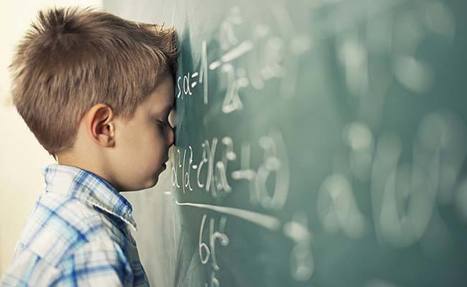
I love math, but I know that I’m unusual. Math anxiety is a rampant problem across the country. Researchers now know that when people with math anxiety encounter numbers, a fear center in the brain lights up — the same fear center that lights up when people see snakes or spiders. Anxiety is not limited to low-achieving students. Many of the undergraduates I teach at Stanford University, some of the most successful students in the nation, are math traumatized. The problem is the performance culture in our schools, more present in math than in any other subject. Students believe that the purpose of math class is to demonstrate that they can quickly find the answers.
Published on Oct 31, 2017 This years event will focus on the beauty of Mathematical Relationships. The main speaker, Professor Robin Wilson will discuss Pi and e, and the most beautiful theorem in mathematics, preceded by shorter presentations by Professor John Barrow on Zero is a Hero and by Professor Raymond Flood on Just Imagine: The Tale of i.
To get content containing either thought or leadership enter:
To get content containing both thought and leadership enter:
To get content containing the expression thought leadership enter:
You can enter several keywords and you can refine them whenever you want. Our suggestion engine uses more signals but entering a few keywords here will rapidly give you great content to curate.


 Your new post is loading...
 Scoop.it!