A broad selection of articles, talks and ideas for Maths teachers from the Internet, brought to you courtesy of the Rondebosch Boys' High School Library (If you would like to receive a weekly newsletter of the latest items in this Scoop just mail me at library@rondebosch.com)
Johannes Kepler, one of the world's great mathematicians, decided to marry in 1611. He made a list of 11 women to interview, and he wanted, of course, to choose the best. Here's the formula.
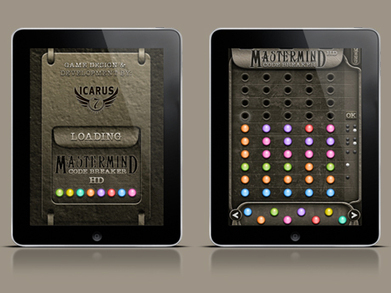
Though video games hold a lot of promise I am here to promote a third option that is easier and more affordable - tablet-based apps derived from classic thinking games, puzzles, and problems in recreational mathematics. Puzzle apps are fantastic tools for training students to be creative mathematical thinkers.
Nonprofit Mind Research Institute is trying to get students to rethink how to express the math standards they learned this year through its new "game-a-thon," a K-12 contest that challenges students to create a video describing a game featuring creative or unusual solutions to math problems.
What's in a matrix? Enter the world of linear systems as mathematician Dr. Tim Chartier shows how matrices open the door to a diverse array of topics, from creating a March Madness bracket, to analyzing a car's aerodynamics, to rendering cinematic special effects.
Pi Day is the annual celebration of the mathematical constant pi! It happens every year on March 14, since the numbers match the first three digits of pi. Is there anything better than pi? Tara joins Trace to discuss whether or not tau is better than pi.
One of the most conspicuous examples of big data in action is Google’s data-aggregating tool Google Flu Trends (GFT). The program is designed to monitor flu cases around the world based on Google searches that match terms for flu-related activity. There’s just one problem: as a new article in Science shows, when you compare its results to the real world, GFT doesn’t really work. GFT overestimated the prevalence of flu in the 2012-2013 and 2011-2012 seasons by more than 50%.
Published on Mar 11, 2014 Ready to dance in your seat? Drummer Clayton Cameron breaks down different genres of music—from R&B to Latin to pop—by their beats. A talk that proves hip hop and jazz aren't cooler than math—they simply rely on it.
Mathematician John A. Adam reveals unusual insights into how cities work, and the important role maths plays in underpinning the metropolitan landscape and shaping modern urban life.
What can math tell us about going faster, higher, further? How does math affect athletes from high jumpers to high-wire walkers, from swimmers to soccer stars, and from rowers to runners? Sprint toward greater understanding of the relationships between math and sports with UK author John D. Barrow, as he demonstrates how math can improve our appreciation of sports—and even our performance—and how sports can enliven the study of mathematics.
There is more than one way to reach a correct answer in mathematics. Vedic math, an ancient Indian method, sidesteps traditional computations in a manner that provides a shortcut, while being fun to use and to learn. At TEDYouth 2012, to ooh's and aah's from the amazed crowd, Gaurav Tekriwal demonstrates the magic of Vedic math.
When you hear the word symmetry, you might think generally of triangles, butterflies, or even ballerinas. But defined scientifically, symmetry is "a transformation that leaves an object unchanged." Huh? Colm Kelleher unpacks this abstract term and explains how animal's distinct symmetries can tell us more about them -- and ourselves.
To help keep students’ skills sharp during the summer, a new math initiative is offering free access to a cloud-based secondary math curriculum to summer school programs across the country.
Highlander is moving to a 'mastery-based' approach toward math. Students are tested. If they are working at a third-grade level, they are placed in third-grade-level math, regardless of their actual grade or age.
"None of this could be possible without the introduction of technology, a model called blended learning because it mixes teacher-led instruction with online learning."
In Josh Yother's classroom, students can spend more than 40 minutes on a single math problem. Yother tells his fourth-graders: Johnny feeds his dog for 15 minutes every day. He also walks his dog every day. How much time each day does he spend caring for his dog? Students must write formulas with variables representing the unknowns: how much time Johnny spends walking his dog and how much time in all he spends caring for the dog each day. Some choose subtraction, others addition. One even chooses multiplication.
Prominent Spanish painter Salvador Dalí was fascinated by mathematics, and his 1954 painting "Corpus Hypercubicus" features an unfolded four-dimensional hypercube. Where did he find his inspirations and how did he construct his paintings? Join mathematician Tom Banchoff as he describes a series of yearly encounters with Dali starting in New York City in 1975, featuring polyhedral models, computer animations of surfaces, stereoscopic oil paintings, distorted perspective, and catastrophe theory.
Published on Mar 18, 2014 Grahamstown, March 17 - Traditional beadwork has gone way beyond simply beautifying objects. At SciFest Africa, workshop participants were taught how to use mathematical concepts to create beaded Zulu love letters.
Scientists in Russia plan to use DNA to help them solve one of the perennial "back to school" problems: how to match up students, with classes and available teachers. The research team explains how timetabling is a so-called NP-complete problem. Such problems are complex and have many possible solutions, some of which are near-perfect others not so much.
A study by economic researchers has found that both men and women hold biases against women's math abilities. In their paper the researchers describe a study they undertook using volunteers posing as either employers or job seekers and how it revealed biases that likely lead to fewer women being hired for jobs that require math abilities.
Poor performance in public schools is likely to accelerate the growth of private education.
The teaching of mathematics in South African schools is among the worst in the world. In 2011, the Trends in International Mathematics and Science Study (Timss) showed that South African learners have the lowest performance among all 21 middle-income countries that participated in the study. A recent Centre for Development and Enterprise (CDE) report further underlined the issue in its finding of rapid increases in enrolments in private extra mathematics classes, which was partly in response to poor teaching in public schools.
Math is invisible. Unlike physics, chemistry, and biology we can't see it, smell it, or even directly observe it in the universe. And so that has made a lot of really smart people ask, does it actually even EXIST?!?! Similar to the tree falling in the forest, there are people who believe that if no person existed to count, math wouldn't be around . .at ALL!!!! But is this true? Do we live in a mathless universe? Or if math is a real entity that exists, are there formulas and mathematical concepts out there in the universe that are undiscovered? Or is it all fiction? Whew!! So many questions, so many theories
Without math, would our seafaring ancestors ever have seen the world? Great mathematical thinkers and their revolutionary discoveries have an incredible story. Explore the beginnings of logarithms through the history of navigation, adventure and new worlds.
To get content containing either thought or leadership enter:
To get content containing both thought and leadership enter:
To get content containing the expression thought leadership enter:
You can enter several keywords and you can refine them whenever you want. Our suggestion engine uses more signals but entering a few keywords here will rapidly give you great content to curate.


 Your new post is loading...