|
Rescooped by
Jess Chalmers
from Digital Delights for Learners
November 27, 2011 3:04 PM
|


No comment yet.
Sign up to comment
Get Started for FREE
Sign up with Facebook Sign up with X
I don't have a Facebook or a X account


 Your new post is loading...
 Your new post is loading...
Your new post is loading...
 Scoop.it!
No comment yet.
Sign up to comment
Scoop.it!
Hangman and other word games that can be customized to use your own word lists.
... Via Ana Cristina Pratas
Scoop.it!

Low levels of workplace literacy and numeracy are the major, under recognized problem at places where everyone in the workforce can read and write. Workplace literacy can be explained as the ability to participate ...
Scoop.it!
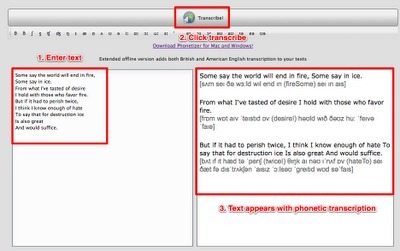
I always believe that the best sites and web tools are the simplest, and this is certainly the case with Phonetizer. It's a really easy to use tool that takes and text and adds the phonetic spelling below it. Via Nik Peachey

Ivan Barrachina Beltrán's curator insight,
March 23, 2014 6:28 AM
Now I'm the king of the swingers
Scoop.it!
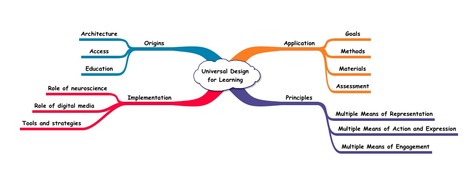
Once we understand that our students with learning difficulties incite better instructional design for all students, we begin to see that the curriculum itself also needs to be re-evaluated - It cannot continue to be a "one size fits most" approach (Rose, Meyer, Hitchcock, 2005). Via Smaragda Papadopoulou, Kathleen McClaskey
Scoop.it!
"Like it or not, knowing how to make use of online tools without being overloaded with too much information is an essential ingredient to personal success in the twenty-first century. But how can we use digital media so that they make us empowered participants rather than passive receivers, grounded, well-rounded people rather than multitasking basket cases? In Net Smart, cyberculture expert Howard Rheingold shows us how to use social media intelligently, humanely, and, above all, mindfully. Mindful use of digital media means thinking about what we are doing, cultivating an ongoing inner inquiry into how we want to spend our time. Rheingold outlines five fundamental digital literacies, online skills that will help us do this: attention, participation, collaboration, critical consumption of information (or "crap detection"), and network smarts. He explains how attention works, and how we can use our attention to focus on the tiny relevant portion of the incoming tsunami of information. He describes the quality of participation that empowers the best of the bloggers, netizens, tweeters, and other online community participants; he examines how successful online collaborative enterprises contribute new knowledge to the world in new ways; and he teaches us a lesson on networks and network building." Via Howard Rheingold
Scoop.it!

"Welcome to Literacy in the Common Core—the community devoted to supporting Writing Projects they respond to the opportunities and challenges of the Common Core State Standards (CCSS). Our goal is to create a place where we can find each other and where we can aggregate/point to content about CCSS generated across NWP Connect. No endorsements—just information!" Via Karen LaBonte
Scoop.it!

Thousands of free audio books that you can download in mp3, iPod and iTunes format for your portable audio player.
Via Gust MEES
Scoop.it!
Using New Literacy Studies to Understand Participation in Online Social Networking SystemsRoyce Kimmons...
... Via Ana Cristina Pratas
Scoop.it!
"We are in the midst of a highly visual, highly multimodal communication time. Becoming sophisticated readers of picture books and graphic novels supports visual literary and literacy development. Learning to create a graphic novel supports the ability to transform verbal ideas and narratives to visual ideas, displays and narratives." Via dilaycock
Scoop.it!

"Computers are getting faster every year based on something called Moore’s Law. This is an observation that for the same money, you can buy a computer with about twice the computing power every 12-18 months (it used to be 24 months). The side effect of this is that a given level of performance gets cheaper each year. If you think this is about to end then stop reading this post."
"If a teacher is just for broadcast of information then they deserve to be replaced by a computer." Via k3hamilton
Scoop.it!

A blog devoted to clear writing for a purpose (RT @cbuckie: New blog post: Transliteracy, #plainlanguage & post-structuralism http://t.co/2UDuRWRT...)...
Via Sue Thomas
|
Scoop.it!

Improbable as the 40% figure may seem it comes from in-depth surveys of adult literacy, language and numeracy skills conducted in New Zealand and 11 other OECD countries. On a positive side, many businesses have ...
Scoop.it!

Cert. in Adult Language, Literacy and Numeracy Practice. TAE70311 Voc. Grad. Cert. in International Education Services. Addition of new qualifications: TAE50111 Diploma of Vocational Education and Training; TAE50211 ...
Scoop.it!
In this presentation I revisit the 'role of the educator' discussion I offered last year for the same course, offering a point of view stressing a new approach......
Via suifaijohnmak
Scoop.it!

"Increasingly, as we ask our learners to engage with social media as a part of their study, we are also asking them to leave a trace of themselves on the Web. Whether it is writing a blog, posting a video on YouTube, working collaboratively on a wiki, or simply bookmarking a site on Diigo or Delicious, students are leaving their digital footprints - evidence of their presence - all over the internet. And there may be ethical issues attached. Digital footprints are persistent, with artefacts and traces remaining visible and searchable for many years. Should we therefore be more careful about what we ask students to do and where we ask them to go on the Web? These questions were addressed by Dr Jenny Waycott, of the University of Melbourne, who was our final speaker today at the Inaugural Technology for Learning and Teaching Forum." Steve Wheeler Via k3hamilton
Scoop.it!
This resource will help parents understand how their child's Numeracy, Health and Wellbeing and Literacy skills can be developed through thoughtful conversations and their everyday experiences . They are seeking the ...
Scoop.it!

As the mother of a preschooler who is just now learning to read, the idea of digital books both delights and terrifies me. Via kcalderw
Scoop.it!

"Liberating Structures are simple methods that make it easy for groups of people to liberate their energy, tap into their collective intelligence, be creative, adaptable, build on each other's ideas, and get results." Via Howard Rheingold
Scoop.it!

"From Spectronics in Australia, Greg O'Connor has compiled a comprehensive list of apps for reading, writing, etc. along with a description, video and comments on each app. Share this far and wide." Via Kathleen McClaskey, John Evans

Kathleen McClaskey's comment,
November 3, 2011 3:10 PM
Comprehensive list of apps with video to support literacy.
Scoop.it!

“What has been will be again,what has been done will be done again;there is nothing new under the sun.”Ecclesiastes 1:9Scott’s recent post was about ideas and whence they came. There ...
Via Sharon Hartle
Scoop.it!

Did you know that rock, rap and pop music could be used as a teaching and learning tool? This doesn't mean you have to stand in front of your class belting out the rules of reading, writing and arithmetic either.
Educators, teachers, and school administrators could all use music as a way to reach students and make learning more fun, interactive, and memorable. Rock music can even be used very effectively as a tool in whole brain learning and multicultural learning.
See some examples here: http://knol.google.com/k/gust-mees/event-knol-tutankhamun-exhibition-in/vdujwtjyx3uq/214#Funny_Learning_For_Kids(2C)_With_Music(2D)Videos(2C)_Enjoy_(3B)(2D)(29) Via Gust MEES

Gyuri Moon's curator insight,
November 6, 2014 8:35 PM
Even though this education using pop music and rock music to teach students may be effective to young children, there would be negative consequences for teenagers especially in Korea. |