Your new post is loading...

|
Scooped by
Romain
August 5, 2020 2:34 AM
|
|
|
Scooped by
Romain
July 30, 2020 2:08 AM
|
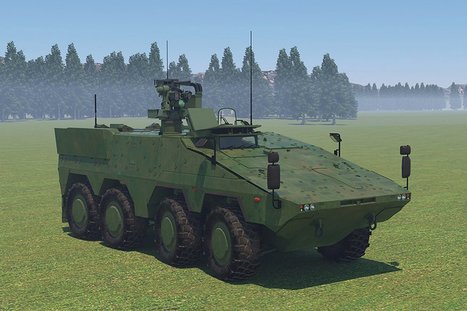
Hensoldt Sensors announced on 28 July that it is supplying the third generation of its Spexer 2000 3D radar to system integrator Kongsberg Defence & Aerospace, for inclusion in a C-UAS system based on the Protector RWS.
Protector and Spexer 2000 will be mounted on an armoured GTK Boxer vehicle.
Ten ...
|
|
Scooped by
Romain
July 23, 2020 1:10 AM
|
US DOD plans to spend at least $404 million on counter-UAS research and development and at least $83 million on C-UAS procurement during FY 2021
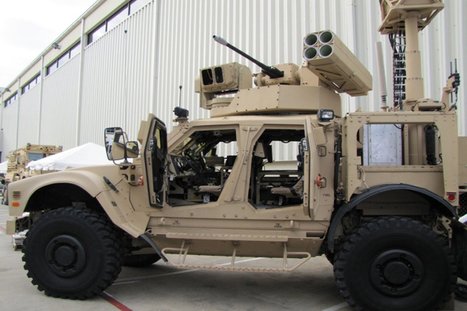
The US Army has selected the tactical radar of RADA Electronic Industries from Netanya, Israel, for its Counter-Small Unmanned Aircraft Systems (C-sUAS) systems. The Army has defined four C-sUAS categories: fixed/semi-fixed systems, mounted/mobile system, handheld systems, and command & control.
RADA’s radars are the incumbent radar system in the L-MADIS platform which was selected as the mounted/mobile system, and are incorporated in part of the recommended fixed solutions, along with other fixed solutions deployed across the US. While not relevant to handheld systems, RADA’s radars are compatible with the recommended command and control systems.
Next-generation Tactical Radars
Dov Sella, RADA’s CEO, said that the US Army preferred not only the most up-to-date existing technologies, but those new and emerging technologies currently in development. “We are in advanced development stages of our next-generation tactical radars that aim to address future challenges at highly affordable performance-to-price points.”
According to the Congressional Research Service (CRS), in FY2021, the Department of Defense (DOD) plans to spend at least $404 million on counter-UAS (C-UAS) research and development and at least $83 million on C-UAS procurement. In December 2019, DOD streamlined the Department’s various counter-small UAS (C-sUAS) programs, creating a the Joint C-sUAS Office (JCO). On June 25, 2020, Maj. Gen Sean Gainey, director of the JCO, announced that seven C-sUAS defensive systems and one standardized command and control system are to be further developed.
How to Tackle Drones
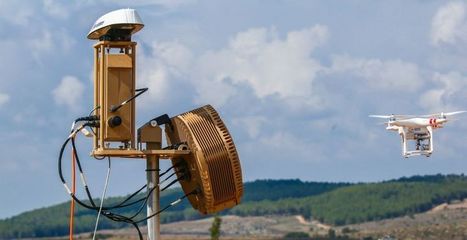
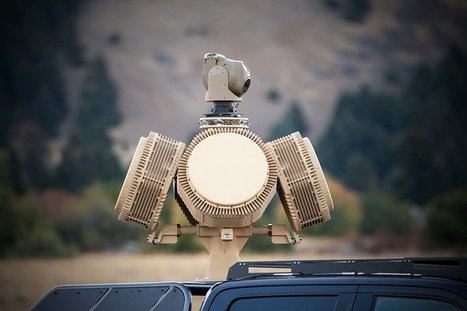
C-UAS can employ a number of methods to detect the presence of hostile or unauthorized UAS. The first is using electro-optical, infrared, or acoustic sensors to detect a target by its visual, heat, or sound signatures, respectively. A second method is to use radar systems. However, these methods are not always capable of detecting small UAS due to the limited signatures and size of such UAS.
A third method is identifying the wireless signals used to control the UAS, commonly using radio frequency sensors. These methods can be—and often are—combined to provide a more effective, layered detection capability. Once detected, the UAS may be engaged or disabled. Electronic warfare “jamming” can interfere with a UAS’s communications link to its operator.
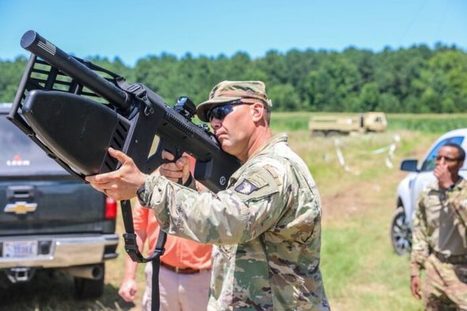
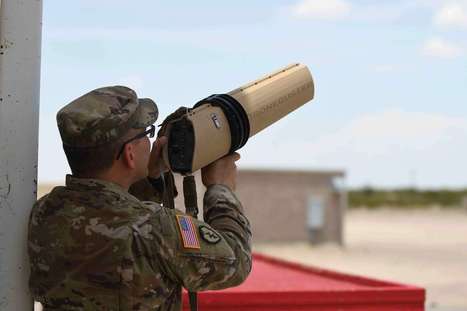
Jamming devices can be as light as 5 to 10 pounds and therefore man-portable, or as heavy as several hundred pounds and in fixed locations or mounted on vehicles. UAS can also be neutralized or destroyed using guns, nets, directed energy, traditional air defense systems, or even trained animals such as eagles. DOD is developing and procuring a number of different C-UAS technologies to try to ensure a robust defensive capability.
|
|
Scooped by
Romain
July 22, 2020 1:12 AM
|
Northrop Grumman has selected Epirus, Inc.’s Leonidas Electromagnetic Pulse (EMP) capability for integration into its Counter-Unmanned Aerial System (C-UAS) systems-of-systems solution. The inclusion of Leonidas will enhance Northrop Grumman’s advanced end-to-end counter-drone swarm capabilities, and specifically supplements the company’s suite of non-kinetic C-UAS effects.
Leonidas is designed for both static and mobile counter-drone defense, using solid-state commercial semiconductor technology to substantially reduce the system’s size and weight. This enables increased stand-off ranges and speed-of-light engagements that do not suffer from issues with magazine depth and capacity. When fired, Leonidas creates an EMP that can be steered for precision engagements, or adjusted to cover a volume of terrain or sky, creating a force-field effect.
Northrop Grumman’s end-to-end counter-drone solutions are built upon layered architecture with a full complement of kinetic and non-kinetic effects, aerial and ground sensors and the field-proven Forward Area Air Defense Command and Control (C2) system, recently selected by the U.S. Army as the interim C2 system for counter-small-UAS capabilities.
Kenn Todorov, vice president and general manager of combat systems and mission readiness at Northrop Grumman, commented: “UAS threats are proliferating across the modern battlespace. By integrating the Epirus EMP weapon system into our C-UAS portfolio, we continue maturing our robust, integrated, layered approach to addressing and defeating these evolving threats.”
Bo Marr, chief technology officer at Epirus, stated: “We’re excited to work closely with the Northrop Grumman team to support their C-UAS systems-of-systems solution offering. Our unprecedented EMP capabilities will complement this offering as we continue to look to the future to understand how asymmetric threats will evolve.”
|
|
Scooped by
Romain
July 17, 2020 12:45 AM
|
|
|
Scooped by
Romain
July 16, 2020 1:21 AM
|
Citadel Defense on 14 July announced the release of new AI-powered software and networking solutions for autonomous protection against 98% of COTS drones.
By securely networking multiple units of its Titan system, Citadel claimed, a large airbase can achieve round-the-clock protection via through a single interface and the click ...
|
|
Scooped by
Romain
July 15, 2020 1:27 AM
|
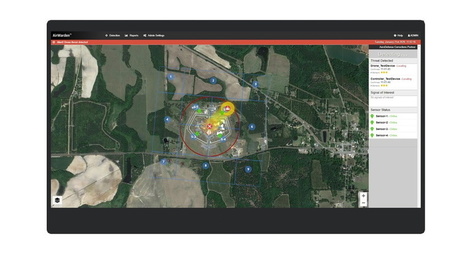
AeroDefense has introduced a new mobile deployment version of its AirWarden drone detection system, which provides simultaneous detection an
|
|
Scooped by
Romain
July 10, 2020 1:22 AM
|
Northrop Grumman Corporation’s Forward Area Air Defense Command and Control (FAAD C2) system has been selected by the U.S. Department of Defense (DOD) as the interim command and control system for future Counter-Small Unmanned Aerial System (C-sUAS) procurements.
|
|
Scooped by
Romain
July 1, 2020 1:43 AM
|
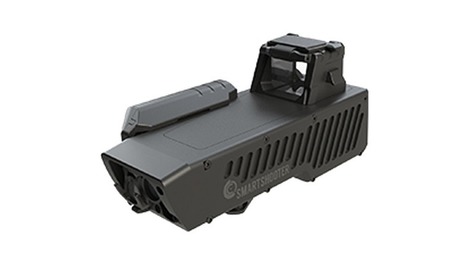
With a "One Shot – One Hit" capability, Smart Shooter’s Fire Control Solutions allow the operator to quickly and effectively neutralize any manned or unmanned threat
|
|
Scooped by
Romain
June 30, 2020 12:36 AM
|
Israel Aerospace Industries (IAI) and Iron Drone today announced that they have entered a collaboration agreement for the integration of interception capabilities into IAI’s advanced anti-drone system, Drone Guard. Iron Drone’s UAS interception system comprises a docking station that hosts several ready-to-use drones, operable by day or at night. The system can deploy several intercepting drones simultaneously, thus addressing multiple threats or swarms. IAI’s Elta Systems division has developed the Drone Guard to detect, identify, and disrupt the operation of malicious drones. Since Elta Systems launched the Drone Guard’s over 100 units were sold.
The Drone Guard comprises a radar, SIGINT, and Electro-Optical sensors to detect, track, classify and localize drone targets at range, and intercept those targets at a combat-effective distance from their target. To date, IAI’s Drone Guard anti-drone systems employed drone countermeasures utilizing electronic warfare (jamming and deception) or hard kill. With yet another ‘hard kill’ interception that relies on physical engagement with minimal collateral effects, compared to kinetic or directed energy means, Drone Guard can be used in areas where other countermeasures are limited by environmental or safety factors like in airports, populated areas, power plants, sensitive facilities, and other infrastructures.
The Iron Drone offers additional means of response. Its patent-pending drone interception technology allows complete elimination of any drone threat. ELTA’s collaboration with Iron Drone is part of its strategy to collaborate with startups to leverage their innovative technologies for their existing systems to improve performance.
“The combination of Drone Guard’s advanced capabilities with Iron Drone’s steering and homing excellence result in a significant business and technological venture.” CEO of Iron Dron Matan Melamed commented, adding, “Unlike radio-based solutions, our technology doesn’t rely on the link between the hostile drone and its operator. Therefore, the Iron Drone interceptor can eliminate targets that are flying a pre-programmed mission or using secure radio links.”
The advanced radar integrated with Drone Guard detects drones as they enter the defended airspace. Once targets are detected the intercepting drones are launched and steered to the target, directed by the radar. The Iron Drone interceptor uses sensors and Artificial Intelligence (AI) based computer vision to home and locks on the target and homes-in up to the physical contact, leading to the neutralization of the suspected attacker. The entire engagement is autonomous. According to Iron Vision, their system is designed to engage the target with pinpoint accuracy due to its sophisticated computer vision, situational awareness, flight planning, and precision maneuver.”
|
|
Scooped by
Romain
June 22, 2020 2:23 AM
|
AeroDefense has partnered with the United States Air Force (USAF) to develop a rugged, rapidly deployable mobile drone detection system that will be able to detect and locate both drones and pilots simultaneously. The company has contracted with Joint Base McGuire-Dix-Lakehurst’s 621st Contingency Response Squadron (CRS) and 87th Security Forces Squadron (SFS) through a Small Business Innovation Research grant sponsored by the Air Force Research Laboratory (AFRL).
The new solution will build on AeroDefense’s AirWarden technology, which identifies and classifies radio frequency (RF) drone and controller signatures, using these signals to locate both devices simultaneously. Detected signals are analyzed and filters to confirm that they are drone or controller signals, and location is calculated by trilateration using data from multiple sensors.
AirWarden is the only technology of its kind to receive a U.S. Department of Homeland Security (DHS) SAFETY Act award, meaning that it can be operated without the need to obtain prior legal authorization. The new adaptation of this technology will add vehicle-mounted and portable capabilities to increase speed of deployment. Real-time alerts will inform the operator of the need to ready the portable device and look up.
Lieutenant Colonel Guarini of the 621st CRS commented: “When deploying to an allied country, we need equipment that operates within their regulatory environment, so AeroDefense technology will be crucial in protecting our troops.”
Master Sergeant Kologinsky of the 87th SFS stated: “We thoroughly evaluated the drone detection market, and AeroDefense’s unique ability to find the pilot fills a critical gap in our ability to defend against unauthorized small unmanned aerial systems.”
Linda Ziemba, founder and CEO of AeroDefense, said: “AeroDefense is honored the USAF selected us to provide airspace awareness US troops need to monitor emerging drone threats at home and abroad.”
|
|
Scooped by
Romain
June 17, 2020 2:38 AM
|
Les Marines ont publié une RFI (request for information) visant à identifier plusieurs systèmes de lutte anti-drones capables de répondre à leurs besoins.
Faire face à la menace drone.
Le corps des Marines américain a rendu public une RFI, ou bien demande d'informations, dans le domaine de la lutte anti-drones. Cette première étape, qui ne donnera pas lieu à un contrat dans ce cadre spécifique, vise principalement à identifier des solutions de lutte anti-drones permettant de répondre aux besoins et s'inscrivant dans un cadre opérationnel propre à celui des Marines. A l'issue de cette RFI, le Marine Corps Systems Command évaluera l'offre industrielle et pourra à terme passer commande pour 6 à 10 systèmes, dans le cadre d'une RFP (request for proposal ou appel d'offres).
Caractéristiques techniques.
Afin de pouvoir aiguiller les industriels, le corps des Marines a spécifié ses besoins et ses attentes envers les systèmes de lutte anti-drones. Tout d'abord, une attention particulière sera portée aux capacités de surveillance aérienne et ainsi les phases de détection, reconnaissance, classification et identification devront être effectuées via le système. Un volet interception et neutralisation est également demandé, lequel peut s'appuyer sur différentes solutions telles que le brouillage, les lance-filets, le laser, les projectiles ou encore l'emploi d'énergie dirigée. Enfin, afin de faciliter la mise en œuvre du système, les Marines demandent à ce qu'une seule personne soit nécessaire pour l'opérer. Quant à l'intégration de la solution anti-drones, les Marines semblent pour le moment ouverts à une solution fixe, mobile ou encore intégrée dans un véhicule. Les participants ont jusqu'au 26 juin pour répondre à cette RFI.
|
|
Scooped by
Romain
June 16, 2020 3:56 AM
|
Liteye Systems has formed a new Field Operations division to provide consultation, fielding, training, services, and support operations for all of the company’s counter-UAS (unmanned aerial system) activities. Liteye has deployed numerous anti-drone solutions worldwide, and this new division has been built on the experience of supporting the combat-proven Anti-UAS Defense System (AUDS), which has been in use with the US military since 2016.
The services provided by the new division will include 24/7 technical field support, hardware/software installation, on-site service, maintenance, and red team tactical support. The Field Operations Team will also provide on-site tactical surveys, training for rapid deployment and surge support for maintenance and system operation.
Liteye has been providing mission-critical equipment to the US Government for over 20 years and AUDS has been proven on the battlefield with over 1000 defeats of enemy drones, protecting airfields, government installations and critical infrastructure across the US Government.
Kenneth Geyer, CEO and Co-Founder of Liteye Systems, commented: “Our team has combat support experience and has seen enemy tactics and techniques first-hand. They know the intricacies of AUDS, electronic warfare and the combined arms approach to fighting this threat. I place tremendous value in having this team as part of Liteye.”
Zac Neumayr, VP of Strategic Accounts and Field Operations Division at Liteye Systems, said: “As Liteye systems continue to be deployed down range, we felt it essential to establish a division that is focused solely on meeting the needs of the system operators. In addition to routine maintenance and repair, our talented group of former downrange operators and Field Service Representatives (FSRs) will ensure that our system operators are effectively trained and informed of technology advancements allowing them to stay ahead of the rapidly evolving threats. This is a significant investment by Liteye to ensure that these complex, highly capable, multi-mission systems are fully utilized and maintained to support the missions for years to come.”
A senior Field Operations Manager at Liteye stated: “We have a robust training program to certify our FSRs and we are the only ones that can provide that service. We also have the clearances and certifications to travel anywhere our system is deployed. We’re dedicated to ensuring our customers can perform their mission.”
|
|
|
Scooped by
Romain
August 3, 2020 1:54 AM
|
DroneShield a remporté un contrat avec l'US Air Force visant à protéger la base aérienne de Grand Forks contre les drones.
Lutte anti-drones.
DroneShield a annoncé le 23 juillet avoir décroché un contrat avec l'US Air Force. Dans ce cadre, l'industriel fournira des solutions de lutte anti-drones pour protéger la base aérienne de Grand Forks, située dans le Dakota du Nord. Une option dans le contrat pourrait également permettre à l'USAF de se doter de systèmes supplémentaires.
Solution.
L'USAF a opté pour le système DroneSentry, permettant de détecter et neutraliser des drones intrus. Celui-ci se base sur une technologie d'analyse des radiofréquences afin de pouvoir identifier la position du drone. Un système de contremesures électroniques basé sur du brouillage permet par la suite de neutraliser l'aéronef.
Premier déploiement.
L'industriel a annoncé que ce contrat représentait le premier déploiement opérationnel de technologies DroneShield par l'USAF, qui remporte de nombreux succès commerciaux. Ainsi le 24 juillet, l'entreprise a annoncé avoir remporté une commande pour son système portable RadarZero de la part d'une armée européenne.
|
|
Scooped by
Romain
July 29, 2020 2:05 AM
|
by Gerrard Cowan
DroneShield’s first contract win with the US Air Force (USAF) was driven by its use of artificial intelligence (AI) in its counter-unmanned aircraft systems (C-UAS) products, with plans to further develop the technology across its range in the coming years, the company has told Janes.
DroneShield’s DroneSentry C-UAS system will be installed at Grand Forks Air Force Base. (DroneShield)
DroneShield’s DroneSentry C-UAS system will be installed at Grand Forks Air Force Base. (DroneShield)
The C-UAS specialist announced in late July that it had secured a deal to provide its DroneSentry C-UAS system for use at Grand Forks Air Force Base, with the potential for additional systems to be acquired after the initial deployment.
The system comprises the passive RfONE radio-frequency (RF) direction-finding sensors and DroneCannon soft-kill countermeasure systems, which forces intruding UASs into a fail-safe mode from which they either hover or slowly descend.
The systems will be deployed and operated at the base by the USAF’s 319th Security Forces Squadron (SFS). The use of AI appealed to the customer because of the limited impact that it has on manning while supporting UAS detection, according to DroneShield CEO Oleg Vornik.
AI provides several advantages when used with an RF-based system in UAS detection, Vornik told Janes. As RF is essentially a motion tracker and can pick up objects such as birds and moving trees, it may not detect a non-moving target such as a hovering UAS. He explained that AI provides “a smart way of analysing the RF spectrum” to assist with the identification of UASs.
The company will roll out AI across its suite of RF products in the short term, Vornik added, having already installed the technology in other parts of its range.
|
|
Scooped by
Romain
July 22, 2020 1:30 AM
|
The US Army has awarded Leonardo DRS Sustainment Systems another contract to develop, produce, deploy and support a mobile system that protects troops from UAV attacks.
Under the latest $189.83 million contract, work on the Mobile-Low, Slow, Small Unmanned Aircraft System Integrated Defeat System is to be completed by ...
|
|
Scooped by
Romain
July 21, 2020 2:39 AM
|
U.S. Army Soldiers train regularly to counter the potential threats drones can offer.
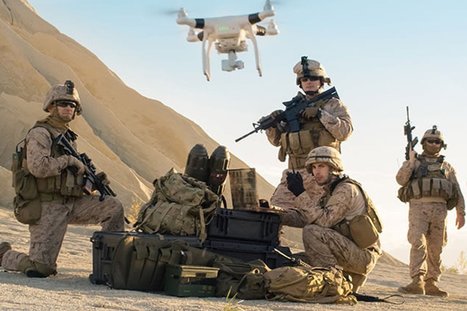
Soldiers from 1st Brigade Combat Team, 101 st Airborne Division (Air Assault), trained to fight and win July 9 by learning to defeat drones with new anti-drone weapon system during brigade certification, affectionately titled Bastogne Phoenix, according to Fort Campbell Courier.
Bastogne Brigade Soldiers are currently training in multiple areas to prepare themselves for their upcoming fall rotation to the Joint Readiness Training Center-Fort Polk. Louisiana.
The unit will not only be training to win a ground war but will exercise different methods to fight an enemy that uses drones and other various modern technology to disrupt U.S. operations.
To assist with these challenges the Counter Unmanned Aerial Surveillance team partnered with 1st BCT to teach Bastogne Soldier on the ground how to defeat these stealthy enemy tactics.
Richard Lamonica, counter UAS training integrator, worked with these Soldiers and provided hands-on training with practical exercises to show how to defeat the enemy’s technology from the sky.
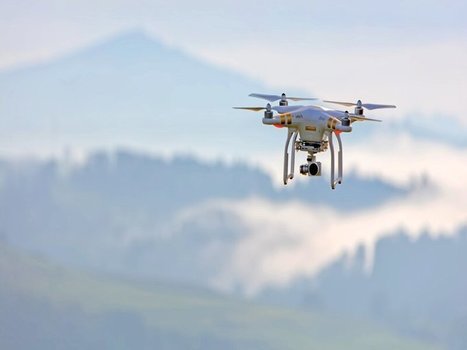
“I came to train 1st BCT on the effects of control measures that can be used on enemy UAS systems,” Lamonica said. “Most of the Soldiers know, who deployed last year, what ISIS can do with a Phantom 4 drone system.These systems I’m training them on today can take that weapon out of the enemy’s hands.”
Pulling weapon systems from Pelican cases that appeared straight out of a science fiction movie, Lamonica gave practical exercises and explained that any Soldier on the ground can disrupt, jam and even knock an enemy’s drones out of the sky.
Photo by Fort Campbell Courier
The course employed common drones the enemy uses, as well as, fixed-wing drones launched by the company as a practical exercise for Soldiers to gain confi dence and trust how the counter UAS weapons work.
Private Ryan Barquet, signal support specialist, C Company, 326th Brigade Engineer Battalion, 1st BCT, works with various technology daily. Barquet is in charge of retransmitting signals ensuring his unit can effectively communicate from long distances in a field environment. Working in a communications field with a science, technology, engineering and math background, he appreciated the course.
“This is was a pretty neat course,” Barquet said. “I think the age we’re in now this is a legit threat. I’m glad I got to train on it. In my job I keep two units able to talk to each other. I’m glad there is more I can do to keep it that way.”
Bastogne Soldiers may see many of the drones while training at JRTC, Lamonica said. These drones do not just impact infantryman but also can inflict damage on support Soldiers and leaders in the rear controlling and supporting the main effport.
“At JRTC the drones will sometimes come out in swarms [on Soldiers], they use multiple drones at one time,” he said. “They will come out on friendly forces at the brigade TOC [tactical operations center] or BSA [brigade support area] and they can lose massive systems if they don’t engage.”
Soldiers of every job description came to learn how to use the counter UAS weapon systems and defend their battlespace from enemy drones.
During JRTC or a real-world mission, the Soldiers of Bastogne will be ready to defeat and even destroy these enemy assets to accomplish their mission.
|
|
Scooped by
Romain
July 16, 2020 1:29 AM
|
The Army has come up with an list of the best counter drone technologies to destroy quadcopters and other unmanned systems.
|
|
Scooped by
Romain
July 15, 2020 1:27 AM
|
The U.S. Department of Defense (DOD) has selected Northrop Grumman’s Forward Area Air Defense Command and Control (FAAD C2
|
|
Scooped by
Romain
July 15, 2020 1:06 AM
|
L'Armée de l'Air va aller encore plus loin dans la lutte anti-drone à l'occasion des célébrations du 14 juillet.
Contrer des essaims de drones
L’Armée de l’Air va aller encore plus loin dans la lutte anti drone (LAD), à l’occasion du défilé du 14 juillet. L’édition parisienne, qui concentre tous les hauts personnages de l’État, ce qui n’arrive qu’une fois dans l’année, nécessite un très haut niveau d’assurance pour parer une attaque terroriste, y compris complexe, à base d’essaims de drones. Cette menace directe a été rencontrée en opérations extérieures, les moyens de la contrer ont donc été particulièrement travaillés.
L'Armée de l'Air emprunte à Aéroports de Paris
La base du command and control (C2) utilisé par l’Armée de l’Air encore cette année est le BASSALT, un système développé par Aéroports de Paris pour ses propres plateformes aéronautiques, permettant de distinguer le bon grain de l’ivraie, et des faux échos. Le système a bien progressé en un an, constate le général Laurent Lherbette, numéro 2 du CDAOA, et à ce titre, en charge du défilé aérien et de la bulle qui protège ses participants au sol. La portée a également été notablement augmentée, révèle un des experts de la LAD, issu de la défense sol-air de l’Armée de l’Air. Comme l’an dernier, BASSALT est bien visible sur l’arc de Triomphe, avec des briques du système Hologuarde et un système optronique de surveillance braqué côté Champs Elysées.
Fusils brouilleurs
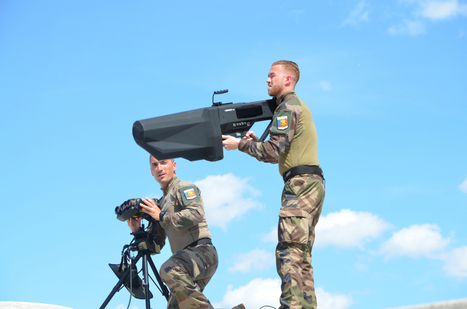
Des fusils brouilleurs Nerod F5, présentés l’an dernier au président en début de défilé, constituent un des modes de neutralisation. Toute information précise sur les portées et les capacités est un atout donné à l’attaquant, aussi l’Armée de l’Air se contente d’expliquer qu’elle voit ce qui vole des deux côtés de l’Arc de Triomphe. En bas, sur la place de la Concorde, c’est le dispositif de la préfecture de police (PP) qui assure la protection de la tribune présidentielle. Pour la première fois, le PC LAD de l’Armée de l’Air et celui de la PP échangeront en temps réel leurs informations, y compris les données vidéo et radar des capteurs. Il n’est pas à exclure que d’autres acteurs soient également présents, notamment pour la protection rapprochée présidentielle. Comme évoqué au dernier salon Milipol, le RAID assure des prestations, dans ce domaine, comme la SPAD de la gendarmerie nationale.
|
|
Scooped by
Romain
July 2, 2020 4:30 AM
|
by Yaakov Lappin
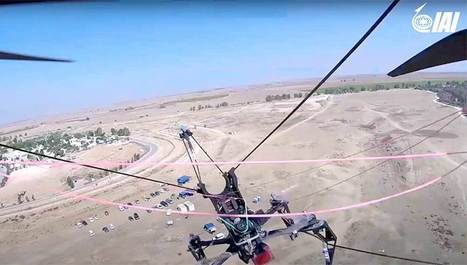
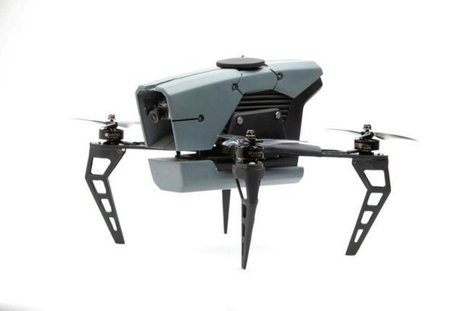
Israel Aerospace Industries (IAI) has integrated unmanned aerial vehicles (UAVs) as interceptors in its Drone Guard counter-UAV system after signing an agreement with Iron Drone.The Iron Drone interceptor UAV that has been integrated with IAI’s Drone Guard
The Iron Drone interceptor that has been integrated with Drone Guard without the wires that help it entangle its target. (Israel Aerospace Industries)
The Iron Drone interceptor that has been integrated with Drone Guard without the wires that help it entangle its target. (Israel Aerospace Industries)
The intercepting drone can be launched during day or night from a docking station that hosts several ready-to-use drones,” the two companies said in a joint statement released on 29 June. “Several intercepting drones can be launched simultaneously to address several targets or swarms.
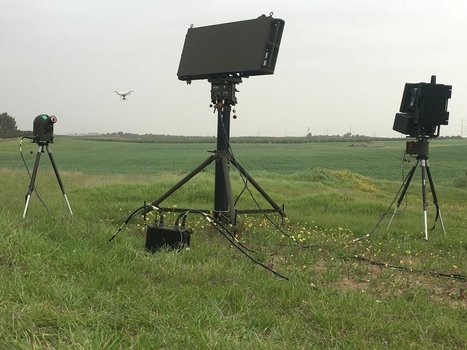
Developed by IAI’s ELTA division to counter small, commercial UAVs that intrude into controlled airspace or carry explosive devices, Drone Guard uses radar and electro-optical (EO) systems to detect and track threats, with radio-frequency jammers disrupting their communications and GPS signals. IAI says that more than 100 Drone Guards have already been sold worldwide.
Now customers have the option of adding Iron Drone UAVs that home in on and crash into the target. They deploy wires to ensure both UAVs become entangled and fall to the ground. “This way, we make sure there is no chance that the target drone can continue to fly, Iron Drone CEO Matan Melamed told Janes.
Our drone is connected to ELTA's system. As soon as the operator decides to activate it, a button is pressed, and the drone takes off in the direction of the target. It gets target information from Drone Guard's radar and other sensors. As it flies to the target, it uses its own day-and-night EO sensor to lock on and continues with high accuracy until it strikes the target, he added.
|
|
Scooped by
Romain
June 30, 2020 12:37 AM
|
Israel Aerospace Industries (IAI) has teamed up with Iron Drone for the integration of interception capabilities into IAI’s advanced anti-drone system, Drone Guard.
Each drone can be launched from a docking station at any time of day or night. Several targets or swarms can be intercepted by multiple interception ...
|
|
Scooped by
Romain
June 22, 2020 2:24 AM
|
US-based privately held, woman-owned company AeroDefense has been contracted to develop a drone detection system for the US Air Force (USAF).
As part of the contract, the company will partner with the 87th Security Forces Squadron (SFS) and 621st Contingency Response Squadron (CRS) to produce the system.
The company’s rapidly deployable and rugged system will be designed to track drones and pinpoint their pilots across the installation. It will defend its users against drone-borne attacks and unauthorised surveillance.
The company was selected in the Small Business Innovation Research (SBIR) programme. It is managed by AFWERX, Air Force Innovation team and the Air Force Research Laboratory (AFRL).
USAF 621st CRS lieutenant colonel Guarini of said: “When deploying to an allied country, we need equipment that operates within their regulatory environment, so AeroDefense technology will be crucial in protecting our troops.”
The company will adapt its existing drone detection technology, AirWarden, and add vehicle-mounted and drone detection sensors.
USAF 87th SFS master sergeant Kologinsky said: “We thoroughly evaluated the drone detection market, and AeroDefense’s unique ability to find the pilot fills a critical gap in our ability to defend against unauthorized small unmanned aerial systems.”
|
|
Scooped by
Romain
June 19, 2020 2:13 AM
|
UAS have evolved in recent years to pose an increasing threat to military installations and critical national infrastructure, prompting defence and security agencies to pay closer attention to countermeasures.
Focusing on the need to access dual-use C-UAS technology, the European Defence Agency (EDA) has issued a call for industry ideas, before its second ‘Countering Unmanned Airborne Systems (C-UAS) Workshop’ scheduled for 15 September.
An EDA spokesperson explained to Shephard that the event will focus on potential collaborative C-UAS development efforts, ‘in line with avenues of approach identified to implement the related agreed EU priority'.
The official added: ‘The objective is to reach a common understanding amongst participants of possible requirements and solutions.'
C-UAS capabilities comprise three types of subsystem, for detection, identification/classification and neutralisation/destruction.
EDA is looking for a solution that integrates all subsystems into a single C2 'system of systems', the spokesperson said, 'taking into account the civilian air traffic management system'.
C-UAS development programmes in Europe tend to involve national homeland security authorities as well as MoDs. With this in mind, the spokesperson added: ‘Seeking and exploiting the synergies between civilian and military projects will be beneficial to both.'
A first C-UAS workshop was jointly organised by EDA and the EU Military Staff last February, with the participation of member states, the European Commission and other institutional stakeholders.
It aimed to identify existing solutions that could be used in support of ongoing Common Security and Defence Policy operations and missions.
Now, in the second workshop, EDA is placing an emphasis on future capabilities. It is inviting companies of all sizes as well as academic bodies, research institutes and associations or groupings of industrial suppliers.
The EDA is asking companies to answer a questionnaire about their technological developments and their views on the C-UAS market and industry.
Representatives of companies will be invited to present their contributions to EDA member states, based on the topics included in the call for papers, and to make comments and suggestions for further work.
The European Defence Procurement Special Report forms part of Shephard Media’s drive to provide readers with free-to-view content previously served by cancelled or postponed events.
Focusing on and promoted to specific markets, our Special Reports include a dedicated microsite with a range of editorial features, video production, email marketing, social media exposure and branding opportunities.
|
|
Scooped by
Romain
June 16, 2020 8:10 AM
|
by Staff Writers
Tel Aviv, Israel (SPX) Jun 15, 2020
Eclipse operates automatically according to pre-defined parameters, removing the requirement for real-time decision making.
NSO Group, a leading technology developer that licenses software solutions to governments and law enforcement agencies to investigate and prevent terror acts, fight crime and increase public safety, has launched Eclipse, an innovative drone defense system.
Eclipse is the premier cyber counter-drone platform designed to automatically detect, take over and safely land unauthorized commercial drones in a designated zone.
Eclipse deploys an autonomous end-to-end cyber solution to detect activity within a designated perimeter, identify the presence of drones, take over control of drones which present a threat, and land them safely.
An NSO spokesperson said: "NSO Group is committed in everything it does to saving lives and creating a better, safer world. We are proud to launch Eclipse, the first of our new suite of products, NSO Shield, aimed at countering emerging threats to public safety.
"The increasing availability of affordable drones, which can be fitted with advanced offensive capabilities, has the potential to create life-threatening situations. Eclipse helps counter rogue drones before they become a threat."
The system offers a threat mitigation capability for dense urban environments, stadiums, critical infrastructure, airports, landmarks, and private enterprises, with smooth integration connecting to existing infrastructure.
Eclipse operates automatically according to pre-defined parameters, removing the requirement for real-time decision making.
Furthermore, Eclipse is designed not to jam existing communications platforms, with no impact on wireless communications and GPS signals. It is the only drone defense system that is FCC, CE and CB compliant.
|



 Scoop.it!