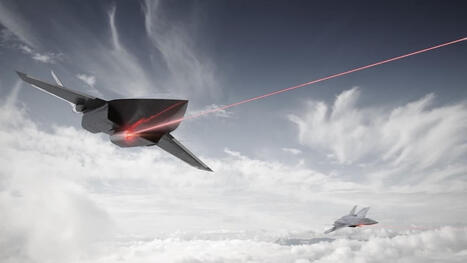
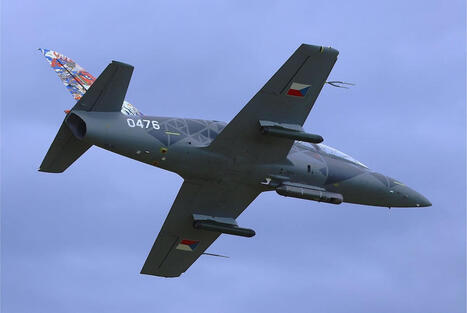
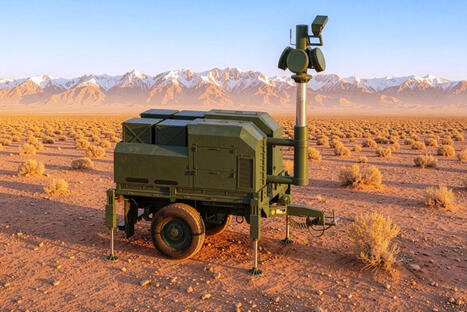
Lockheed Martin’s experts have revealed details of directed energy and laser weapon system programs.
Directed energy and laser weapon systems are a proven solution that effectively addresses tech-driven threats with more accurate, flexible and affordable performance than offered by traditional ballistics.
“They’re designed to be precise, to yield minimal collateral damage and, in essence, offer an endless magazine,” said Dr. Rob Afzal, Lockheed Martin senior fellow, Laser and Sensor Systems. “As long as you have power, you can shoot—that’s a critical capability when you have to take on a large number of low-cost distributed threats such as a swarm of drones, each carrying a small explosive.”
Today’s directed energy weapon systems have decades of research behind them. Industry leader Lockheed Martin has spent 40 years designing and developing electromagnetic energy systems and elevating their power to create directed energy defense systems.
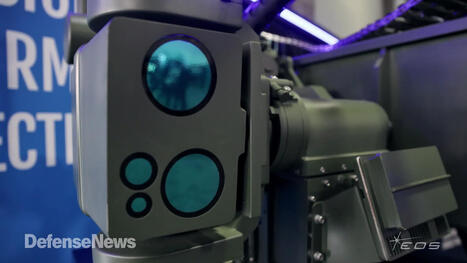
Powered by batteries, generators or pre-existing power sources, Lockheed Martin’s technology is a Spectrally Beam Combined fiber laser—small, powerful and extremely accurate. It uses beam-control optics and software algorithms to focus a stream of multiple kilowatt fiber lasers into a single high-quality beam.
The energy travels via mirrors, lenses and windows and can be adjusted for any atmospheric distortions on the way to its target. Normal ballistic challenges such as wind and gravity aren’t a factor, and the beam can disable a truck engine, burn through a rubber boat or bring down a drone.
“You can’t actually see the laser light, it’s invisible. The enemy wouldn’t know where the laser is coming from, they wouldn’t be able to target back. Of course, lasers travel at the speed of light,” said Sarah Reeves, vice president, Missile Defense Programs at Lockheed Martin.
Directed energy weapons’ unique characteristics change the defense equation both tactically and financially. Troops in the field needn’t worry about transporting heavy ammunition. The “ammunition” is merely the power supply, and the magazine is limitless. Their stealthy operation makes them ideal for surprise engagements—the enemy never sees it coming—and they can track and eliminate targets at both short- and long-range.
And as the Patriot missile incident illustrates, directed energy weapons offer huge potential cost savings and value added in any tactical scenario. Traditional weapons cost thousands or millions of dollars per shot and are limited by availability. As long as they have power available, laser weapons are infinitely renewable.
“The upfront cost is offset by the fact that the energy source, be it fuel, oil or a nuclear reactor, is often already in place,” Afzal said.
But laser weapon technology is meant to complement existing defense platforms, not replace traditional kinetic ballistic systems.
“They’re designed to act as an additional layer of defense that provides an advantage as they protect troops and critical assets,” said Reeves.
Lockheed Martin is ready to deploy and integrate directed energy technology by 2021. It’s the first company to bring laser weapon systems out of the lab and put them into the hands of soldiers, sailors and warfighters across all branches.
“It’s time for these systems to start moving into the field,” said Steven Botwinik, director, Sensors & Global Sustainment Advanced Programs at Lockheed Martin. “They’re ready now.”
Lockheed Martin’s research and development experience provides the knowledge needed to integrate such weapons across every defense platform.
“There are obviously different priorities for each branch,” Reeves said. “All of the services have the same need to find a target and defeat it—and the fundamental technologies are the same—but there are differences in how they might apply them in terms of tactics and target sets.”
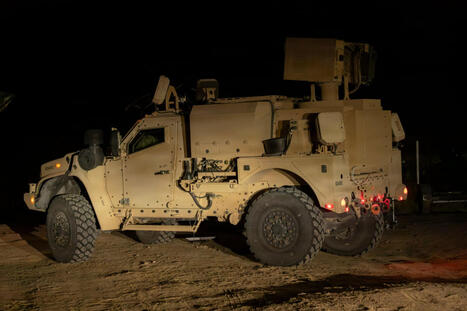
Lockheed Martin’s ATHENA system, which is a prototype transportable, ground-based system designed to defeat close-in, low-value threats, is helping transform other defense platforms. The company provides the laser weapon system for the U.S. Navy’s HELIOS program, which has been retrofitted for a DDG-51, and delivers key subsystems for the U.S. Air Force’s SHiELD program, an aircraft-mounted high-power laser.
“We can put our laser weapon system into any existing architecture. Our systems are being designed to plug and play into any military system,” said Reeves.
Once implemented, directed energy weapons will become a defensive norm.
“We excel not only at efficiently producing tactical electro-optical systems like these but also sustaining them over time,” Botwinik said. “We’re building laser systems that must be able to perform repeatedly in war-fighting environments. We have the logistics and sustainment experience to maintain these systems anytime and anywhere in the world, for years and decades to come.”
NATO has launched the Counter-Unmanned Aircraft Systems (C-UAS) marketplace to accelerate the acquisition of counter-drone technologies. It’s part of Drone
Five US federal departments have agreed an expanded approach to coordinating counter-uncrewed aircraft system operations, including a process for evaluating technologies before their deployment.
Safran and MSI-Defence Systems highlighted their new counter-drone turret partnership at Euronaval 2026, securing a C-UAS contract for a European NATO navy.
Framework contracts and leasing options aim to shorten acquisition timelines, while manufacturing partnerships could help suppliers scale production to meet allied demand.
Slovenian company Valhalla Turrets has finished several days of live-fire testing of its ASGARD counter-drone turret armed with a Dillon Aero M134D 7.62 mm Gatling gun, firing thousands of rounds during the trials, the company said on social media. The
BAE Systems has launched a new family of naval guns, which provide capability to conduct counter-uncrewed aerial system (c-UAS) self-defence activities including onboard smaller naval vessels.
Leonardo DRS will supply the power, cooling and vehicle integration hardware for the U.S. Army's first production laser weapon, after AeroVironment picked the company as a subcontractor on the Enduring-High Energy Laser program, DRS announced on Nov. 2. The work
En mer depuis 15 ans, au-dessus de l’Île Longue en 2025, et ces derniers jours au-dessus de la base navale de Toulon - qui plus est durant un exercice de protection multi-menaces : les drones mènent la vie dure à la Marine nationale, qui arrive à trouver des parades pour les menaces les plus complexes, pas forcément pour les plus frustes.
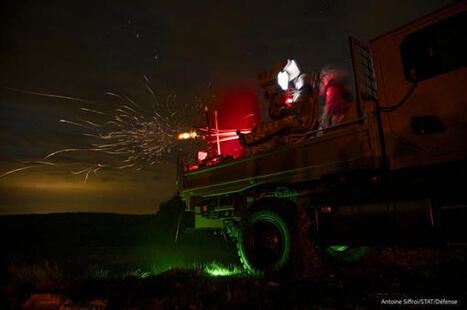
En janvier 2025, la Section technique de l’armée de Terre [STAT] présenta le Proteus, un système de lutte antidrone [LAD], mis au point par son groupement «Artillerie», dans le cadre d’un projet lancé quelques mois plus tôt. «L’objectif de ce développement est double : fournir une réponse opérationnelle rapide tout en anticipant les évolutions du champ de bataille moderne», avait-elle alors expliqué, alors que l’usage de drones FPV [à pilotage immersif] était en train de se généraliser en Ukraine.
Pour rappel, le Proteus associe un vieux canon antiaérien de 20 mm monté sur un affût tracté 53T2 à une caméra thermique SANDRA [Système d’arme Alternant les visions Nocturne et Diurne pour la Recherche d’Aéronefs] ainsi qu’à un ordinateur. Le tout est monté sur un camion TRM 2000. Du moins était-ce le cas pour le standard 1 de ce système.
Développé par l’ex-GIAT dans les années 1970, le canon antiaérien affiche une portée de 1 500 mètres et une cadence de tir de 700 coups par minute.
Sans tarder, la STAT se mit à l’ouvrage pour développer le standard 2 du Proteus, avec le concours de l’Agence ministérielle de l’intelligence artificielle de défense [AMIAD]. Il s’agissait alors de lui intégrer une nouvelle caméra pour améliorer sa capacité de détection ainsi que des algorithmes d’IA censés permettre d’anticiper la trajectoire d’une cible potentielle et, ainsi, de déterminer le moment le plus opportun pour déclencher un tir. Le tout en tenant compte de la vitesse de l’appareil à abattre et des conditions météorologiques.
Dans ce nouveau standard, le Proteus mis en œuvre depuis le PALADIN [pour Porteur Adapté à la Lutte Anti-Drone Intérimaire], un véhicule aérotransportable conçu par Scania à partir du V3P «Vampire».
La Loi de programmation militaire [LPM] 2024-30 actualisée a confirmé que l’armée de Terre serait dotée de cinquante systèmes Proteus à l’horizon 2030.
Mais un troisième standard est d’ores et déjà en cours de développement. C’est en effet ce qu’a fait savoir la STAT, via le réseau social LinkedIn, cette semaine.
«Face à l’évolution de la menace des drones, le projet PROTEUS mise sur une approche pragmatique : moderniser un système d’arme existant et éprouvé pour renforcer progressivement ses capacités face aux nouveaux enjeux opérationnels», a-t-elle d’abord souligné.
Et d’ajouter : «Lancé en avril 2024, le projet s’inscrit dans une démarche d’évolution incrémentale, articulée autour de plusieurs standards successifs. De l’amélioration des équipements à l’intégration de nouvelles technologies, chaque étape vient compléter les capacités existantes et préparer les évolutions suivantes».
Ainsi, les améliorations envisagées pour ce standard 3 du Proteus porteront sur l’électrification de l’affût et sur l’asservissement de ses mouvements à la solution de tir. En outre, il est question d’optimiser les algorithmes d’IA et d’intégrer de nouveaux capteurs de détection, dont la nature n’a pas été précisée par la STAT.
Probablement que, parmi ces nouveaux capteurs, figurera le radar tridimensionnel qui, conçu par FLIR Systems, équipe déjà le Véhicule de l’avant blindé ARLAD [pour adaptation réactive pour la lutte antidrone], également développé par la STAT.
Le mode opératoire actuellement suivi par le 35e Régiment d’Artillerie Parachutiste [LPM], unité référente en matière de LAD, implique un VAB ARLAD pour la détection des cibles, un fusil brouilleur NEROD pour les «fragiliser» et le système Proteus pour leur donner le coup de grâce.
Photo : Antoine Siffroi – Section technique de l’armée de Terre
Belgian weapon manufacturer FN unveiled a new sea- or land-based counter-unmanned aerial vehicle (C-UAV) system at the Euronaval 2026 exhibition, held in Paris fro
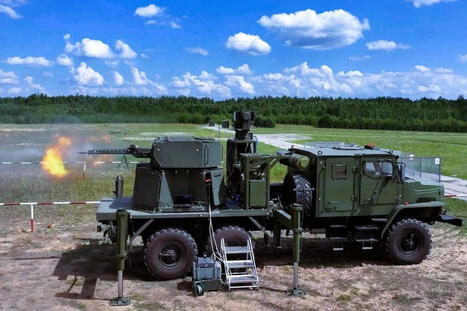
Russia's state defense conglomerate Rostec has shown a mobile version of its Tsitadel anti-aircraft gun system, with the weapon and its sensors mounted on a truck chassis, the company said. Until now, Tsitadel had been fielded as a stationary system
Turkish defence company MKE displayed a stabilised naval version of its Tolga twin 20 mm revolver cannon system at the Euronaval 2026 exhibition, held in Paris fro
Embarquez à bord du porte-hélicoptères amphibie (PHA) Tonnerre de la Marine nationale lors de l'exercice de lutte contre les drones Wildfire 2026, organisé au large des îles d'Hyères. Cet entraînement prépare les équipages à faire face aux nouvelles menaces asymétriques telles que les UAV et USV, en intégrant directement le retour d'expérience des récents combats en mer Rouge.
=====================
00:53 Interview du Capitaine de Vaisseau Bolelli, Commandant du PHA Tonnerre : Présentation de cet exercice interorganique mobilisant des frégates, un bâtiment ravitailleur de force, l'aéronautique navale et la DGA pour faire évoluer les tactiques face aux attaques multidomaines.
3:53 L'analyse du Commandant Adjoint Opérations (COMOPS) : Explication du scénario d'appareillage sous alerte depuis Toulon et mise en œuvre du "Smoker", une nouvelle munition navale téléopérée de la DGA servant à l'entraînement et à l'autodéfense.
08:40 L'expérimentation du système Rempart : Arnaud, responsable Rampart chez Naval Group, détaille les tests en conditions réelles de ce nouveau système de lutte antidrone. Opérant de manière autonome vis-à-vis du système de combat du navire, le Rampart a été testé avec des roquettes de 68 mm (guidées laser et non guidées) et une maquette de missile Piorun de PGZ Mesko, avec l'appui des moyens d'illumination de Safran.
NAVAL NEWS is fully focused on naval topics. We cover the latest naval defense shows & events. We also report on naval technology from all over the world. Navalnews.com is updated daily with in-depth features, industry, and naval forces news round-ups, event coverage, video reports and more. Our top of the line site is responsive across all mobile and desktop devices.
Counter-drone missile maker Perseus Defense has released video of one of its small, low-cost interceptors climbing into the sky and hitting a hovering multirotor drone, which the company's chief executive described as the first time an "attritable" missile has shot
Germany’s defence procurement agency has awarded MBDA Deutschland a contract to build an airborne laser demonstrator, laying the technical groundwork for potential laser weapons aboard aircraft.
The U.S. military has deployed high-energy laser weapons around President Donald Trump's Mar-a-Lago estate in Palm Beach, Florida, as part of a counter-drone shield set up at the request of the Secret Service, a military spokesperson told the directed-energy news
France has fielded its own answer to the American APKWS, a low-cost guided rocket intended to spare expensive air-to-air missiles in the fight against one-way attack drones.
To get content containing either thought or leadership enter:
To get content containing both thought and leadership enter:
To get content containing the expression thought leadership enter:
You can enter several keywords and you can refine them whenever you want. Our suggestion engine uses more signals but entering a few keywords here will rapidly give you great content to curate.


 Your new post is loading...