Your new post is loading...

|
Scooped by
cdt.fr
Today, 1:36 PM
|
De la guerre à la paix, et au spirituel: le pape Léon XIV, dans sa visite argentine, recevra en cadeau un calice préparé depuis des mois par un célèbre orfèvre argentin
|
|
Scooped by
cdt.fr
Today, 1:33 PM
|
WASHINGTON, Oct 30 (Reuters) - Richmond Federal Reserve President Tom Barkin said on Friday that with high inflation and the economy solid, the path of US monetary policy was "straightforward," but with an open question about the pace of any future rate increases."Inflation's high, demand is solid, unemployment is relatively low. So I think the direction of travel is pretty straightforward," Barkin said on SiriusXM's Business Briefing when asked if the Fed would need to raise rates again. "The question, though, is pace ... We signaled a gradual approach. Gradual makes sense when you're not much behind the curve, where you want time to learn."At this point, however, Barkin said that businesses in his mid-Atlantic and southeastern district report both rising cost pressures and a willingness to pass those costs along, with booming investment in artificial intelligence boosting demand and an array of prices."There are a lot of cost pressures that are hitting American businesses," from diesel fuel to computer chips or the wages for skilled labor, Barkin said. "In the context of four or five years of elevated inflation I think it is just easier to make the argument... We are going to have to" raise prices."That lived experience of inflation does affect future inflation, unless of course the Fed does something about it."The next step could come as soon as the Fed's December 8-9 meeting when investors expect policymakers to approve another quarter-point rate hike.The Fed held rates steady at its meeting this week, but in a new policy statement said "the accumulation of more information" would help decide the path of policy. The new language was taken by many analysts as a signal of rate hikes to come, absent some unexpected drop in inflation that is proving more persistent than many policymakers had expected.Data this week showed recent economic growth and recent inflation both stronger than anticipated.Barkin is not a voter this year on interest rate policy, but will become a voter next year when the Fed is expected to continue raising borrowing costs. Investor views of the extent of hiking have shifted however, alongside a recent drop in equity markets that could influence future consumer spending and ease cost pressures.Reporting by Howard Schneider; Editing by Tomasz Janowski and Andrea Ricci
|
|
Scooped by
cdt.fr
Today, 1:33 PM
|
(Kitco News) – The Federal Reserve will only need to deliver one more rate hike this cycle before a combination of falling oil prices, easing tariff impacts and slowing growth will lower inflationary pressures, according to Natixis.Economists Christopher Hodge and Selin Aker wrote in the wake of the Fed’s rate decision on Wednesday that one of the dissenters in the FOMC’s 10-2 vote to hold was Lisa Cook, who registered her first dissent since taking office in 2022.“Surprisingly two erstwhile hawks, Dallas Fed President Lorie Logan and Minneapolis Fed President Neel Kashkari, who both dissented when the Fed held rates steady in July, did not again dissent in favor of a hike,” they said. “The pause in this meeting follows through on the implicit suggestion from NY Fed President Williams and Vice Chair Jefferson that consecutive hikes are not urgent at this time. Still, inflation remains a problem, growth remains solid, and the unemployment rate is stable – and a hike in December is now likely a foregone conclusion, absent a truly significant shift in the data.”Parsing the official statement, the economists noted that the Fed “upgraded its assessment of growth from solid to strong,” while adding that “the accumulation of more information will help the Committee determine the policy stance appropriate to ensure a timely return of inflation.”“This suggests that today’s pause will give the FOMC time to see if the recent higher-than-expected inflation print in September was a one-time increase or the start of a new upward trend,” they said.Turning to Warsh’s press conference, Hodge and Aker said the Fed Chair “touted stronger trend growth, record capex, and low unemployment,” while reaffirming their “responsibility to get inflation down,” adding that while financial conditions had tightened somewhat, they remained loose on balance.“The highlight of his prepared remarks was the planned changes to the FOMC meeting schedule,” they said. “The FOMC will continue to hold eight meetings per year, and Chair Warsh wants to keep it that way. However, in 2027, one of the eight meetings will focus exclusively on monetary policy strategy, with no vote or statement. Similarly, in 2028, two meetings will be dedicated to strategy, while six will focus on setting policy.”During the Q&A, Warsh failed to provide a definitive answer on why the Fed didn’t raise rates at this meeting. “He was also skeptical of the view that AI spending is insensitive to interest rates,” they said. “He noted that market participants were becoming more selective about AI-related credit, with some spreads widening, but added that capex strength had extended beyond AI over the past few quarters.”Looking ahead, Natixis expects the Fed to remain focused on inflation in the near term, but the economists see slower growth in an environment of lower energy prices and waning tariff effects to reduce price pressures, and they see one additional rate hike in December before the current cycle ends. “[B]ut that call is contingent on encouraging inflation data in the coming months and additional concerns about the growth outlook.”See live precious metals prices for gold, silver, platinum and palladium — in USD, CAD and 12 more currencies.
|
|
Scooped by
cdt.fr
Today, 1:31 PM
|
Gold fell to a one-year low on Friday and silver slid below US$50 an ounce for the first time since November 2025 as higher energy prices and persistent inflation concerns strengthened expectations that US interest rates will stay high.
|
|
Scooped by
cdt.fr
Today, 1:30 PM
|
Fed Rate Forecast: BofA Moves Hikes to December and March as Banks Split
|
|
Scooped by
cdt.fr
Today, 1:26 PM
|
The Treasure of Villena is one of the most spectacular Bronze Age gold hoards in Europe. Among the gold were two dull, corroded objects. A chemical analysis published at the end of 2023 points to where their metal came from.
|
|
Scooped by
cdt.fr
October 27, 2:39 PM
|
Selon le rapport World Exploration Trends 2026 de S&P Global Market Intelligence, la Côte d’Ivoire a attiré 186 millions USD
|
|
Scooped by
cdt.fr
October 27, 2:38 PM
|
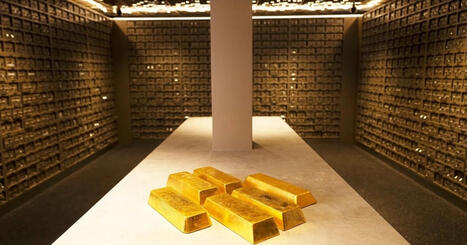
(Journal Dan Tri) - Inquiets de la flambée de la dette publique et de la volatilité mondiale, les riches Occidentaux se précipitent pour transporter des centaines de tonnes de lingots d'or à Singapour pour les mettre en sécurité, poussant les coffres-forts souterrains au bord de la saturation.
|
|
Scooped by
cdt.fr
October 27, 2:35 PM
|
L'or est-il simplement en phase de correction ou assiste-t-on aux premiers signes d'un changement plus profond ?
|
|
Scooped by
cdt.fr
October 27, 2:34 PM
|
|
|
Scooped by
cdt.fr
October 26, 3:47 AM
|
Gold and silver are getting hammered again this week, with gold heading for its biggest weekly decline in more than four months and silver suffering even steeper losses. But while short-term traders are running for the exits, some prominent analysts see an opportunity.
|
|
Scooped by
cdt.fr
October 26, 3:42 AM
|
Trois bracelets en or de l'âge du bronze dormaient sous un champ anglais, et le premier a failli finir dans une poche sans examen.
|
|
Scooped by
cdt.fr
October 26, 3:39 AM
|
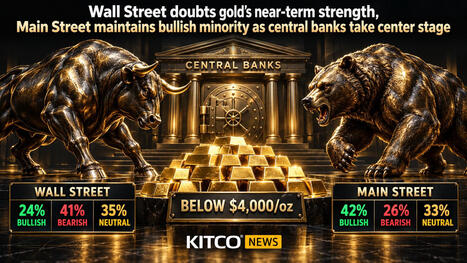
(Kitco News) – Gold prices suffered another sharp weekly decline as rising oil prices, persistent inflation fears, and expectations for further Federal Reserve tightening overwhelmed safe-haven demand, while Thursday's technology-led equity selloff triggered another wave of liquidations that pushed the precious metal back below $4,000 per ounce.Spot gold kicked off the week trading at $4,164.69 per ounce on Sunday evening, and the yellow metal managed to eke out some early gains as traders continued to assess renewed U.S.-Iran tensions and the inflationary impact of disruptions around the Strait of Hormuz. But the rally quickly stalled, with gold setting its weekly high of $4,190.17 per ounce early Monday morning before sellers took control as rising energy prices and elevated Treasury yields reinforced expectations that the Fed would maintain their restrictive monetary policy.The selling accelerated through Monday and Tuesday trading, with gold breaking below $4,150 as markets continued to digest the previous week's hotter-than-expected CPI and PPI reports. The yellow metal attempted to stabilize on Wednesday as Treasury yields eased, but the recovery proved short-lived as traders remained focused on the risk of another Fed rate hike before year-end.Gold prices plunged Thursday as a sharp technology-led equity selloff triggered broader market liquidations, even as Treasury yields and the dollar weakened. Renewed concerns about the AI sector and speculation about possible intervention in the Japanese yen added to the uncertainty, while renewed Middle East tensions pushed oil prices higher. The selling carried over into Friday, with gold set its weekly low of $3,975.10 per ounce – its lowest level since early June – around an hour after the North American open, and prices oscillated on both sides of $4,000-per-ounce heading into the weekly close.The latest Kitco News Weekly Gold Survey showed Wall Street pessimism on the rise after gold’s steep slide, while Main Street saw more silver lining despite the yellow metal’s recent underperformance.“Gold, basis spot, was sold to a new three-month low before the weekend, slightly below $3990,” said Marc Chandler, managing director at Bannockburn Global Forex. “It recovered but the technical tone still looks weak. The momentum indicators are not rising and the five- and 20-day moving averages are falling. Initial resistance is seen in the 4065-4075 area.”“Half of the G10 central banks meet next week and only the RBNZ is likely to hike,” Chandler added. “Still, the others, including the Fed, will keep the door open to hikes before the end of the year.”“Unchanged,” said Adrian Day, president of Adrian Day Asset Management. “More back and forth, but still think $4,000 will hold, or maybe just a little below.”“Up,” said James Stanley, senior market strategist at Forex.com. “The $4k test has held so far, and while it may take a bit for the tide to turn, I think the case is still strong for $4k support – unless something breaks in the US economy which could lead to a risk aversion run. But even in that backdrop, I’m biased towards longer-term accumulation.”“Up,” said Rich Checkan, president and COO of Asset Strategies International. “The sell-off in the stock market this week triggered margin calls. As always, investors seeking liquidity to meet those margin calls turned to THE most liquid asset on earth… gold. The selling pressure took gold back below $4,000 per ounce.”“I do not expect gold to remain below $4,000 very long,” Checkan said. “Barring any surprises from next Wednesday’s interest rate announcement from the Federal Open Market Committee, I would expect gold to bounce off these lows as bargain hunters snatch up as much cheap gold as they are able.”Kevin Grady, president of Phoenix Futures and Options, said gold continues to trade inversely to interest rates, but there’s also broader concerns impacting the yellow metal.“We're all thinking about rates, and I know we're following daily yields and things like that,” he said. “But it's also the long-term picture that people are looking at and seeing that there is a crack in the bond market, and even historically, that rates are higher.”It's hard to see, because you're not really getting a lot of color,” Grady said. “A lot of commercials have decreased their trading. You're not seeing the volumes that we've had in the past. I think it's one of those things where gold has been trying to see the next leg up, and we just haven't had it.”Grady said that a number of longs came into the market as gold posted its recent gains, and they were waiting for a good exit, but it didn’t come, and now they have no choice but to exit at lower prices and into thin liquidity.“When you look at daily volumes at 129,000 contracts, that's what we used to do in open outcry! Once the markets went electronic, we were doing over 400,000 easily,” he said. “I think what's happening now is that it's very thin, and when you see people start to get out, it's just exacerbated the moves.”Grady said that between the Iran war’s renewed threats of escalation, Russia-Ukraine getting worse, the risk of a hawkish Fed next week, and the looming midterm elections, people are wary of putting their money into the markets – any markets.“That move [on Thursday], I think scared a lot of people away from saying, ‘Hey, let me go in right before a big meeting or a big decision where I don't know where it's going to be, and let me take a position.’ Because getting out of that position can be deadly.”“I think that move yesterday is going to put a lot of people on the sidelines.”Turning to Wednesday’s Fed meeting, Grady said that even if markets are pricing in a hold, under current conditions, they really can’t be sure“What is the Fed going to do? The market's saying, no, he's not going to raise rates, but maybe he tries to shock people,” he said. “I don't think he should, but you just don't know. There's just too much uncertainty. A lot of people, especially professional traders, are saying, ‘This isn't trading right now, it's guessing.’”“I was speaking with a friend of mine yesterday who's a big trader on the floor with me, in gold, and we were talking about [this],” he said “It isn't just that you’re a trader and you're putting on positions. As a trader, you're a risk manager. And if you're not a good risk manager, you're not going to be a successful trader. I think right now, when you look at the upside or downside to putting on a trade, what are the odds of this trade working? Markets have gotten so thin… I just think the upside is not worth it.”Grady said that if gold does see a break below $4,000, we’ll soon be approaching levels where prices held during earlier selloffs.“But I will tell you, underneath those levels is going to be stops, and everyone knows that,” he said. “Being long in front of those… it's always nice to buy in front of the support level, but when it breaks that support level, it could be dangerous. So I think people have to really watch out.”This week, 17 analysts participated in the Kitco News Gold Survey, with the largest portion of Wall Street sentiment sliding into the bearish camp after gold’s precipitous drop below $4,000. Four experts, or 24%, expect to see gold prices gain ground during the week ahead, while seven, representing 41%, see the yellow metal declining further. The remaining six analysts, 35% of the total, said they couldn’t predict gold’s direction, or expected sideways trading next week.Meanwhile, 161 votes were cast in Kitco’s online poll, with Main Street investors considerably more bullish than their professional counterparts despite gold’s late-week slide. 67 retail traders, or 42%, looked for gold prices to rise next week, while 41 others, or 26%, predicted the yellow metal would lose more ground. The remaining 53 investors, representing 33% of the total, expected to see consolidation during the week ahead.Central banks will dominate next week’s economic news, with rate decisions from the Federal Reserve, European Central Bank, Canada and Japan, but markets will also have a raft of growth, consumer and housing data to digest.The U.S. calendar kicks off Tuesday morning with Durable Goods Orders, Consumer Confidence, and New Home Sales.Then on Wednesday morning, the Bank of Canada will issue its monetary policy decision, followed by the Federal Reserve’s monetary policy decision in the afternoon.Thursday morning will see the ECB’s monetary policy decision, along with Advance US Q3 GDP and PCE, and weekly jobless claims, with the Bank of Japan’s monetary policy decision coming overnight to cap the week’s key data.Sean Lusk, co-director of commercial hedging at Walsh Trading, said the Iran conflict – and its impact on oil prices, inflation expectations, and Fed rate projections – continues to cap gold’s potential gains.“It's just an impediment to any rally in gold,” he said. “Now, there could be an 11th hour deal over the weekend for a ceasefire, but I don't know… It looks like the market, at least the energy space, is really priced in that this thing is going to escalate in the near term. Big time.”Lusk said he’s optimistic about productivity gains from AI, but the broader economy won’t do well for a while.“Bond yields aren't coming off anytime soon, which means housing prices are still going to decline – obviously there's going to be winners and losers in that space – but if you do have declining home values, where the sellers far outpace buyers by a wide margin, I don't think gold in that context is still at $4,000 an ounce. It's still rather elevated here.”“A couple things have to happen [for gold to resume its uptrend],” he said. “The strait has to be reopened, and these wars have to end. It doesn't look like either of those things are going to happen anytime soon. And it could get really ugly here before it does.”Lusk said he wouldn't be surprised if gold sold off further in the near term, though he expects buyers to be enticed back into the market in that scenario.“I think you're going to have some buying down there below $4,000, and below $50 in silver, which we're a stone's throw from,” he said. “I think after the smoke clears, you’re hoping if you’re a buyer that silver does get down to $48, and gold gets down to $3,500, and then come back in and buy,” he said. “That's what I'm thinking may happen. But I can't speak to that. You don't know what's going on behind the scenes.”Alex Kuptsikevich, senior market analyst at FxPro, expects gold prices to rise off their lows next week.“Since the start of October, gold had been receiving consistent support as it declined towards the $4,100 level, but on Thursday this trend was broken when we saw a virtually simultaneous sell-off in Bitcoin, gold and the NASDAQ-100,” he said. “However, the rules of the game have not changed fundamentally, and gold continued to attract buyer demand after a brief dip below $4,000. For over a year now, solid demand in the 3,950–4,100 range has been driving the price higher. Of course, things may turn out differently this time, and the decline may continue. However, in the short term, the downward move appears excessive, suggesting at least a corrective rebound in the coming days.”“We note that gold has lost its inverse correlation with oil, whilst expectations regarding the Fed’s key interest rate have ceased to tighten,” Kuptsikevich added. “Indeed, we are increasingly seeing a reassessment of expectations towards a slower pace and a reduction in the scale of key interest rate rises.”Michael Moor, founder of Moor Analytics, expects gold prices to slide further next week.“LOWER unless we break back above the formation mentioned below,” he wrote. “In a Higher time frame: I cautioned on 8/16/18 the break above $1,183.0 warned of renewed strength. We have seen $4,443.1. These are OFF HOLD. We held exhaustion with a 56268 high and rolled over $1,651.1. This is ON HOLD. On a medium timeframe basis: The trade below 52554 projected this down $740 (+)—we attained $1,300.0. The trade below 52036 brought in $1,248.2 of pressure. The trade below 51606 brought in $1,205.2 of pressure. These are ON HOLD. We held exhaustion with a 49177 high after a pullback and rolled over $962.3. The break below 48185 projected this down $185 (+)—we attained $863.1. The trade below 47923 projected this down $205 (+)—we attained $836.9. These are ON HOLD. We held macro exhaustion with a 39554 low and bounced $799.6—if we continue in a bona fide bullish correction, the minimum target is 49636. We held macro exhaustion with a 39554 low and bounced $799.6—if we continue in a bona fide bullish correction, the minimum target is 49636. This is ON HOLD.”“On a lower timeframe basis: We held exhaustion with a 40190 low and bounced $736.0. This is ON HOLD,” Moor said. “The break below 46369 brought in $636.0 of pressure. The break below 45886 projected this down $205 (+)—we attained $587.7. The trade below 44227 projected this down $65 min, $500 (+) max—we attained $421.8. The break below 43582 brought in $357.3 of pressure. These are OFF HOLD. The break back below the 42183 and 42167 lines brought in $217.4 and $215.8 of pressure respectively. The break back below 41979 (-4.6 tics per/hour) brought $197.0 of pressure. The trade below 41014 (+.3 of a tic per/hour) projects this down $120 (+)—we have attained $100.5, but decent trade back above where this comes in today will warn of decent strength.”At the time of writing, spot gold last traded at $3,995.81 per ounce for a loss of 4.12% on the week and 0.71% on the day.See live precious metals prices for gold, silver, platinum and palladium — in USD, CAD and 12 more currencies.
|
|
|
Scooped by
cdt.fr
Today, 1:35 PM
|
Responsable du développement des formations et de l’alternance à l’UFR Arts, Lettres et Langues de Nancy, Matthieu Morand vient de valider un master en musicologie avec mention très bien, vingt ans après avoir interrompu son cursus universitaire. Prochaine étape : un doctorat consacré au lien entre musique metal et musique classique. Un rendez-vous manqu
|
|
Scooped by
cdt.fr
Today, 1:33 PM
|
(Kitco News) - Gold and silver continue to struggle in the face of persistent inflation pressures and higher bond yields, but while gold has managed to hold critical support around $4,000 an ounce, silver has fallen to fresh year-to-date lows. According to one research firm, the grey metal could face further selling pressure as weakening investment demand and improving physical market liquidity weigh on prices.In their latest precious metals report, analysts at Metals Focus said that silver's underperformance has pushed the gold-silver ratio above 76 for the first time since December 2025, up from a range of 60 to 70 through much of the summer.Although the ratio remains below its 2020-2025 average of 82, the analysts said there is room for it to move higher as silver continues to face significant headwinds. The gold-silver ratio has rallied more than 11% so far this year.Spot silver last traded at $52.06 an ounce, down more than 3% on the day; at the same time, spot gold last traded at $4,015.60 an ounce, down more than 1% on the day.The analysts explained that silver's higher volatility relative to gold has amplified the broader selling pressure across precious metals as the ongoing war in Iran drives energy prices higher and fuels inflation concerns.Although the Federal Reserve left interest rates unchanged Wednesday, it maintained its tightening bias as policymakers remain focused on bringing inflation back to the central bank's 2% target.According to the CME’s FedWatch Tool, markets are pricing in an 80% chance of a 25-basis-point rate hike in December, followed by at least two additional increases in 2027. The prospect of higher interest rates and rising bond yields continues to raise the opportunity cost of holding non-yielding precious metals.Between the two precious metals, Metals Focus noted that gold has been better insulated from these headwinds because of its monetary characteristics and continued safe-haven demand.The analysts said that central bank purchases and long-term investors seeking protection against geopolitical and macroeconomic uncertainty have helped support gold prices. Silver, meanwhile, remains more exposed to industrial demand and speculative investment flows.Beyond the challenging macroeconomic environment, Metals Focus said that weakening physical market demand is also weighing on silver prices.The analysts noted that the severe liquidity constraints that helped drive silver to record highs in 2025 and early 2026 have largely disappeared.They pointed out that by the end of September, silver inventories in London vaults had risen to 932 million ounces, their highest level in nearly four years.More importantly, available inventories, excluding metal held in physically backed exchange-traded products, have increased to approximately 267 million ounces, nearly double their October 2025 lows.The increase in available supply comes as investment demand continues to weaken.According to Metals Focus, global silver-backed exchange-traded products have seen holdings decline by approximately 60 million ounces since the start of the year, releasing previously unavailable metal back into the physical market.The analysts said that while initial outflows reflected profit-taking after silver reached record highs, a lack of investor conviction has prevented meaningful new investment.Speculative interest has also weakened significantly. The report noted that net managed money long positions in CME silver futures have fallen to just 17 million ounces, their lowest level since February 2024.Physical bullion demand has provided little support.According to the firm's survey of leading mints, primary silver bullion coin sales plunged more than 80% in the second quarter compared with the first three months of the year, falling to their lowest quarterly level since the survey began in 2010.Although sales recovered modestly in the third quarter, they remained 22% below year-earlier levels.Looking ahead, the research firm expects silver's physical market fundamentals to remain weak as elevated prices weigh on jewellery and silverware consumption.At the same time, industrial demand is facing growing pressure as manufacturers reduce silver usage or substitute other materials, particularly in the photovoltaic sector.As a result, Metals Focus expects the global silver market deficit to narrow further this year before shifting into a surplus in 2027.The changing supply-and-demand outlook suggests that silver is unlikely to experience another significant physical market squeeze in the near term.Despite the bearish outlook, Metals Focus does not expect silver's underperformance against gold to last indefinitely.The analysts said that silver will likely continue taking its direction from gold over the next 12 months, with higher interest rates and bond yields creating further downside risks in the near term.See live precious metals prices for gold, silver, platinum and palladium — in USD, CAD and 12 more currencies.
|
|
Scooped by
cdt.fr
Today, 1:32 PM
|
(Kitco NewsWire) – Spot gold and silver prices were sharply lower in early U.S. trading Friday, as renewed attacks on commercial shipping in the Strait of Hormuz pushed crude oil prices higher and reinforced inflation concerns despite fresh evidence of moderating U.S. wage growth. Precious metals remained under selling pressure following Thursday's declines, with gold slipping below $4,000.00 an ounce and silver falling to its lowest levels of the year. Spot gold was trading near $3,958.80 an ounce, down $61.34, or 1.32%, while spot silver was trading near $50.080, down $2.120, or 4,06%. Gold was heading toward a second consecutive monthly decline, while silver continued to underperform amid concerns about industrial demand and restrictive monetary policy.The latest U.S. employment cost figures provided some evidence that labor-related inflation pressure is moderating, although wage growth remains elevated. The employment cost index increased 0.8% in the third quarter, matching expectations and slowing from 0.9% in the second quarter. Wages and salaries increased 0.7%, compared with 0.9% in the previous quarter, while benefit costs rose 0.9%, down from 1.0%. Total compensation costs increased 3.4% from a year earlier, unchanged from the annual rate recorded in June, while wages and salaries rose 3.1% and benefit costs increased 3.9%. The slowdown in quarterly wage growth provides some relief from concerns about persistent labor-cost inflation, although annual compensation growth remains above levels consistent with the Federal Reserve's longer-term inflation objective.The employment report followed Thursday's stronger-than-expected third-quarter gross domestic product figures and another increase in the Federal Reserve's preferred inflation gauge. The U.S. economy expanded at a 3.4% annualized pace in the third quarter, accelerating from 2.2% in the second quarter, supported by resilient consumer spending and business investment. September headline personal consumption expenditures inflation increased 0.5% on the month and 3.6% annually, while core PCE inflation rose 0.3% and 3.1%, respectively. The combination of accelerating economic growth and persistent underlying inflation continues to complicate the case for easier monetary policy, even as Friday's wage figures suggest some moderation in labor costs.Market positioning remains focused on the possibility of another Federal Reserve interest rate increase in December following Wednesday's decision to leave the benchmark federal funds target range unchanged at 3.75% to 4.00%. The Federal Open Market Committee voted 10-2 to maintain rates, with two policymakers favoring an immediate 25-basis-point increase. Futures markets assigned approximately an 83% probability to a December increase following Thursday's GDP and inflation releases, with the latest wage data providing some counterweight to those expectations. The benchmark 10-year Treasury yield declined 7 basis points Thursday to approximately 4.98%, as weakness in major technology shares encouraged demand for government bonds. However, gold continued to fall despite lower yields, reflecting the influence of persistent inflation concerns, expectations for further tightening and broader precious metals liquidation.The Strait of Hormuz and U.S.-Iran situation deteriorated further Friday following another attack on a commercial tanker in the strategic waterway, highlighting the continuing risks to Middle Eastern energy supplies. Maritime security authorities confirmed that a tanker was struck by explosive devices attached to its hull by a small boat, although responsibility for the incident had not been established. The attack came amid persistent threats to regional shipping and uncertainty about the prospects for renewed negotiations between Washington and Tehran. Diplomatic initiatives involving Qatar and other regional mediators have yet to produce an agreement, while disagreements over sanctions, maritime security and the broader conflict continue to prevent a lasting settlement.Crude oil prices rose sharply following the latest attack, with December Brent futures climbing toward $117.15 a barrel and WTI advancing to approximately $103.79. Brent was heading toward a monthly gain of approximately 13%, while WTI was on course for an increase of around 15%, reflecting sustained concerns about Gulf energy supplies and the possibility of further military escalation. The risk of renewed confrontation has become particularly important ahead of the Nov. 3 U.S. midterm elections, with uncertainty surrounding the next phase of U.S.-Iran relations adding to the geopolitical premium embedded in crude prices. Although alternative export routes have helped mitigate some of the disruption to Gulf petroleum shipments, continued tanker attacks and elevated maritime security costs remain significant obstacles to restoring normal commercial flows through Hormuz.For gold, the continuing confrontation supports defensive demand, but the inflationary consequences of elevated crude oil prices have reinforced expectations that the Federal Reserve may need to maintain restrictive monetary policy for longer. The metal's continued decline despite geopolitical instability and lower Treasury yields suggests that liquidation pressure and the interest rate outlook remain dominant influences on near-term price action. Silver has suffered significantly greater losses as the broader precious metals decline coincides with concerns about industrial demand, elevated energy costs and restrictive borrowing conditions. Its break below previously established technical support has added to selling pressure, leaving the metal increasingly vulnerable to further liquidation.Global equity markets were weaker before the U.S. open as disappointing corporate earnings and renewed concerns about artificial intelligence investment weighed on technology shares. S&P 500 futures declined approximately 1.0%, while Nasdaq futures dropped 2.3% and Dow futures were little changed. Alphabet's sharp decline Thursday was followed by additional pressure on major technology companies after cautious earnings guidance from Amazon and Intel. European equity markets were mixed, while Asian markets were mostly lower as investors assessed corporate earnings, higher energy prices and the outlook for global monetary policy. The combination of rising crude prices, elevated financing costs and uncertainty surrounding large-scale artificial intelligence investment continued to undermine risk appetite, although the resulting demand for government bonds provided limited support for precious metals.The key outside markets see Nymex WTI crude oil prices higher and trading near $103.79 a barrel, while December Brent crude futures were near $117.15, reflecting renewed concerns about Gulf energy supplies. The yield on the benchmark 10-year U.S. Treasury note was trading near the 5.0% area following Thursday's decline. The U.S. dollar remained comparatively firm, while persistent expectations for additional Federal Reserve tightening and elevated energy prices continued to limit gold's ability to benefit from geopolitical uncertainty. (Kitco Global Index shows how much of today's gold move is the dollar versus the gold market itself.)Technically, spot gold bulls' next upside price objective is to push prices back above the $4,015.00 to $4,039.00 resistance zone, with a sustained move above the upper boundary needed to ease the prevailing bearish technical pressure. Bears' next near-term downside price objective is a break below $3,975.00, with a deeper downside target at $3,943.00. First resistance is seen at $4,015.00 and then at $4,039.00. First support is seen at $3,975.00 and then at $3,943.00.Spot silver bulls' next upside price objective is to drive prices back above the $52.690 to $54.680 resistance zone, with a sustained recovery through that area needed to improve the near-term technical outlook. The next downside price objective for the bears is a break below $50.710, with a deeper downside target at $49.510. First resistance is seen at $52.690 and then at $54.680. Next support is seen at $50.710 and then at $49.510.See live precious metals prices for gold, silver, platinum and palladium — in USD, CAD and 12 more currencies.
|
|
Scooped by
cdt.fr
Today, 1:30 PM
|
Gold Forecast: BofA Sees Higher 2027 Averages as OCBC Warns on Selling Risk
|
|
Scooped by
cdt.fr
Today, 1:26 PM
|
The World Gold Council sees enormous potential for digital gold, but questions about security, accessibility, and trust could determine whether it gains widespread acceptance.
|
|
Scooped by
cdt.fr
October 27, 2:40 PM
|
L'or recule avant la réunion de la Fed, un analyste met en garde sous ce niveau
|
|
Scooped by
cdt.fr
October 27, 2:39 PM
|
Pendant plusieurs saisons, le doré s’est imposé comme la couleur phare de nos boîtes à bijoux. Chaînes imposantes, créoles sculpturales, bagues fines accumulées ou bracelets dorés, le métal jaune est devenu un incontournable pour réchauffer une silhouette et lui insuffle
|
|
Scooped by
cdt.fr
October 27, 2:37 PM
|
Les pressions inflationnistes et la perspective de hausses de taux d'intérêt pèsent sur le prix mondial de l'or.
|
|
Scooped by
cdt.fr
October 27, 2:35 PM
|
Après la suspension de l’exploitation aurifère à petite échelle, le Gabon retire des dizaines de permis. Cette opération s’inscrit dans une
|
|
Scooped by
cdt.fr
October 26, 3:48 AM
|
Gold price today: why bullion fell below $4,000 and $3,900 is in focus
|
|
Scooped by
cdt.fr
October 26, 3:44 AM
|
|
|
Scooped by
cdt.fr
October 26, 3:41 AM
|
La jeune pousse peu connue de San Francisco Marathon Fusion affirme avoir transformé du mercure en or stable à un rythme 10 fois supérieur au record du CERN, relançant une vieille question du commerce du diamant : l'or de synthèse fera-t-il chuter le prix du métal extrait ?
|


 Scoop.it!