


Twenty-four percent of K-12 schools ban cell phones altogether, and 62 percent allow phones on school grounds but ban them in the classroom, according to the most recent national data available.

 Your new post is loading... Your new post is loading...
 Scoop.it!
Twenty-four percent of K-12 schools ban cell phones altogether, and 62 percent allow phones on school grounds but ban them in the classroom, according to the most recent national data available. 
No comment yet.
Sign up to comment
Scoop.it!
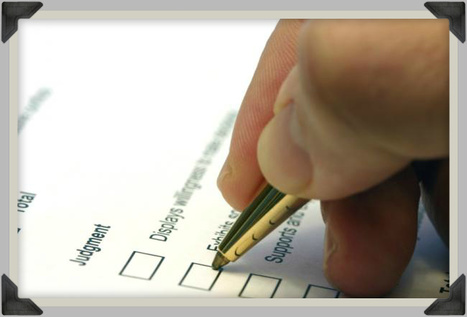
With all the column space devoted these days to fixing the evaluation of teachers, it's easy to lose sight of how important (perhaps even more important) it is for us to fix principal evaluation as well. Two reports out this month provide some useful guidance.
Scoop.it!

Developed as part of the Australian government's cyber-security initiative, Budd:e is a free website aimed at creating a safer, more secure online environment for all children. It takes students through the process of identifying risky sites, viruses and malware, and teaches them about what information is deemed public and what should remain private. It also covers cyber-bullying in great detail and helps students differentiate between reputable sources of information and content that is unreliable.
Scoop.it!

Scholastic and the Bill & Melinda Gates Foundation invite you to join them for the launch of the largest-ever national survey of America's public school teachers.
Scoop.it!

While some educators embrace social media as an effective learning tool, others argue that it's disruptive and ultimately hinders learning and instruction. Social media is already on campus--but does it belong in the classroom?
Scoop.it!
|

|
Scooped by
Steven Engravalle
March 30, 2012 12:20 PM
|
Scoop.it!

In Maryland, new rules specify how school districts are to identify gifted students, provide programs, and monitor their progress.

The article is written by Julie Rasicot and published on an education blogging website discussing the youngest age at which one can determine if a child is gifted. According to the Maryland State Board of Education, different school districts use their specific county rules to identify if a student is gifted as early as age three. As I continued reading about how school districts plan to determine whether or not a child is gifted, I came across a quote said by Maryland State Del. Ana Sol Gutierrez, “We already think second grade is too early. We're trying to do away with that in Montgomery County. . . . When you label kids, you have winners and you have losers, and the losers are black, Hispanic and low-income.” She doesn’t like the idea of labelling children into different catagories, but what shocked me is the quote itself. She said that the “losers are black, Hispanic, and low-income,” which basically tells me that she believes that African Americans, Hispanics, and low-income students cannot be gifted and talented. I’m personally offended because when I first moved to America, for the first few years, my family was considered low-income and I have many friends who are low-income, African American, and Hispanic who placed into the gifted and talented programs. I don’t feel that a gifted and talented student fits a certain social category.
Lastly, the article ends with stating that giftedness can be seen in test scores or classroom performance, but as children become adults, “achievement and high levels of motivation in the domain become the primary characteristics of their giftedness.” So, I’m wondering if this quote is saying that all gifted students are high achievers and have high levels of motivation, or if you are a high achiever and have high levels of motivation, then you are gifted. The debate continues as to what giftedness really is.

This blog was written by Julie Rasciot and published on Edication Week. This is a site where collections of educational writings can be found. This article raises the question of how young children can be identified as being gifted. This article was written in 2012 so the facts may be a tad dated but it stated that children could be identified as early as Pre- Kindergarten. Even if these facts are dated, the article went on to describe concerns coorelated with tracking children from such a young age. Many people feel as though labeling the children at such a young age will create tension, stress and a "winner" and "loser" setting. This blogs states that children are constantly developing and developing giftedness so it is unfair to state that they are gifted at such a young age. I understand their arguments and concerns, but I feel like it should vary based on the specific child. Some children develop faster than others, so I bleive that it is only right to identify them and begin their services at that time, no matter how young or old they may be. We are supposed to be meeting children where their needs are and I do not believe this should be based on age. Its not that hard to faze a child out of a gifted program if they in fact develop to not be gifted. But I truly believe that early intervention is key and while this article gives some great support as to why identifying children at a young age is best, I still believe that it would be a disservice to not.
Rasicot, J. (2012, March 1). How Young Is Too Young to Be Identified as Gifted and Talented? Retrieved February 15, 2016, from http://blogs.edweek.org/edweek/early_years/2012/03/how_young_is_too_young_to_be_identified_as_gifted_and_talented.html ;
|
|
Scooped by
Steven Engravalle
March 30, 2012 11:42 AM
|
Scoop.it!

Getting started with teaching tips and step-by-step guides for popular teacher tasks is easy and free. Use these teacher guides to learn ways to inspire your students and to better use new tools and technologies in class.
|
|
Scooped by
Steven Engravalle
March 29, 2012 3:45 PM
|
Scoop.it!
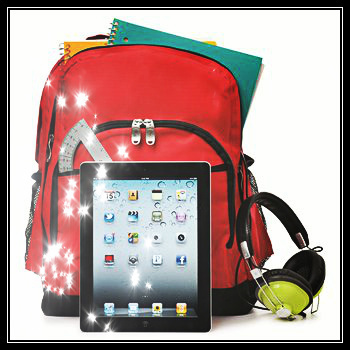
Until recently, student electronic devices, from cell phones to iPods to laptop computers, were the forbidden fruit in schools. But with technology budgets languishing and such devices becoming more powerful, affordable and omnipresent in students’ lives, district technology leaders are now eyeing a welcome educational harvest through bring-your-own-device (BYOD) programs.

This article looks at BYOD implementation from a network administration perspective. It discusses the importance of network capacity and network security. It is important to note that while a school or district might save a lot of money in not purchasing devices it can be very cost prohibitive to upgrade your network to accommodate all the new devices being used.
|
|
Scooped by
Steven Engravalle
March 29, 2012 3:36 PM
|
Scoop.it!
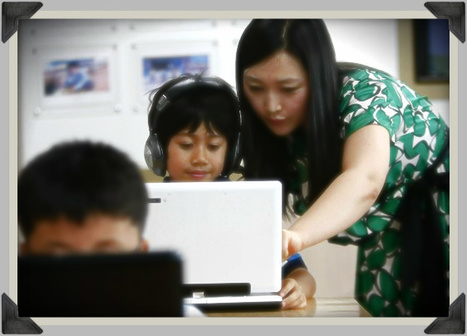
The newest thinking calls into question a tenet that technology automatically brings progress.
|
|
Scooped by
Steven Engravalle
March 29, 2012 3:14 PM
|
Scoop.it!

"We need to do everything we can to ensure every single child has an effective teacher every day, which means we need to identify who are the most highly effective teachers, and we should recognize and reward them for the incredible professionals that they are." Well said...
|
|
Scooped by
Steven Engravalle
March 29, 2012 1:46 PM
|
Scoop.it!

At Ariel Community Academy, in Chicago, the financial-literacy curriculum provides real-world context for learning and helps students directly connect school with their future goals.
|
|
Scooped by
Steven Engravalle
March 29, 2012 1:21 PM
|
Scoop.it!

These days, with the power of social media and the advent of blogs and the digital footprint, we all need to know what makes us special online and off so that we can reach the right audience. How do you stand out from the crowd amidst a sea of screaming Me-Me’s? How do you make that first impression in a way that makes you not only memorable while having an impact?
|
|
Scooped by
Steven Engravalle
March 30, 2012 5:30 PM
|
Scoop.it!
NAESP and the National Association of Secondary School Principals (NASSP) are launching the Principal Evaluation Initiative to develop guidelines to determine how, when and why principals should be evaluated—and to ensure that such systems are informed by the best research.
|
|
Scooped by
Steven Engravalle
March 30, 2012 5:23 PM
|
Scoop.it!


“Middle school students are not yet grown,” Davis-Dyke said. “Don’t think that they don’t require support and guidance. They may speak more maturely. They (may) have a grown attitude and sassiness. They may be man-ish and woman-ish, but they are still children who need guidance, love, modeling, and support.”
|
|
Scooped by
Steven Engravalle
March 30, 2012 5:14 PM
|
Scoop.it!
An infographic is a visual representation of information, and it can be a good tool for either formative or summative assessment for students.
|
|
Scooped by
Steven Engravalle
March 30, 2012 5:01 PM
|
Scoop.it!

Between the cat images and celebrity porn, the Internet actually manages to boast educational potential.
|
|
Scooped by
Steven Engravalle
March 30, 2012 4:53 PM
|
Scoop.it!

Four-year, $1.4 million plan will put iPads in the hands of all students grades 6-12 and make Lyndhurst an all-Apple district.
|
|
Scooped by
Steven Engravalle
March 30, 2012 12:00 PM
|
Scoop.it!

The most important thing is that P-Tech students will graduate with not only a high school diploma but an associate’s degree too. That’s crucial, since 63% of American jobs will require post-secondary training by 2018. The U.S. economy will create more than 14 million new jobs over the next 10 years but only for people with at least a community–college degree. Those jobs—positions like dental hygienist, medical-laboratory technician, electrician, aircraft mechanic and entry-level software engineer—will allow millions entry to the middle class. Many of them will require serious technology skills.
|
|
Scooped by
Steven Engravalle
March 30, 2012 11:24 AM
|
Scoop.it!
The tools that Cheryl Oakes uses in the classroom help students like Morgan make technology work for them.
If you ever feel that the work you do to promote the integratation of technology in education is not important just watch this video, and read the story.
|
|
Scooped by
Steven Engravalle
March 29, 2012 3:44 PM
|
Scoop.it!

Teachers have one of the most difficult jobs out there. As an educator, you have to manage a classroom of boisterous students, organize heaps of data, stay up–to–date with current events and plan lessons day in and day out. In today’s technologically linked world, the ability to use web applications is at your advantage as an educator, and we are here to tell you the best tools to use. From Early Childhood Education apps to Business Management apps, here is a collection of 100 web and iPhone tools that make the grade for tech–savvy teachers:
|
|
Scooped by
Steven Engravalle
March 29, 2012 3:31 PM
|
Scoop.it!

News, Articles and Community for district-level decision makers in K-12 education. Magazine published monthly, with daily news and blogs and online content. Archives available.
|
|
Scooped by
Steven Engravalle
March 29, 2012 2:47 PM
|
Scoop.it!
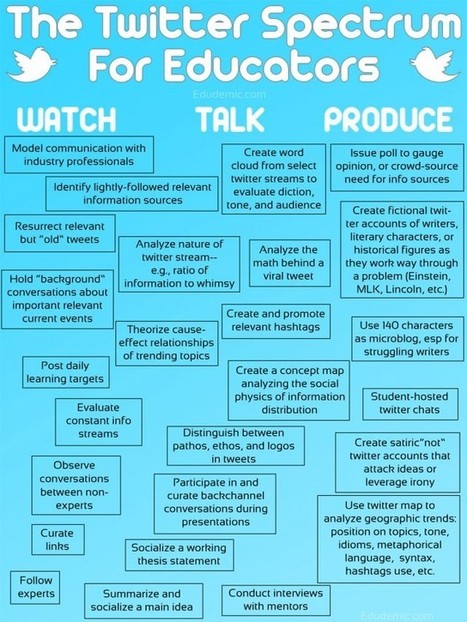
Organized by the categories WATCH (easiest degree of difficulty, TALK (moderate), and PRODUCE (highest degree of difficulty), the Twitter Spectrum offers 25 different ways teachers can incorporate Twitter into the classroom.
|
|
Scooped by
Steven Engravalle
March 29, 2012 1:25 PM
|
Scoop.it!

Timeline, created by Zach Wise, a multimedia journalist and journalism professor, was developed in partnership with the Knight News Innovation Lab at Northwestern University, where Wise teaches. The interactive tool allows users to generate timelines on the web by curating content from Twitter, YouTube, Flickr, Vimeo, Google Maps and SoundCloud.



![Career of the Future: Data Scientist [INFOGRAPHIC] | iSchoolLeader Magazine | Scoop.it](https://img.scoop.it/OmeUG4iYX2Y-BHXYCuRNcjl72eJkfbmt4t8yenImKBVvK0kTmF0xjctABnaLJIm9)


