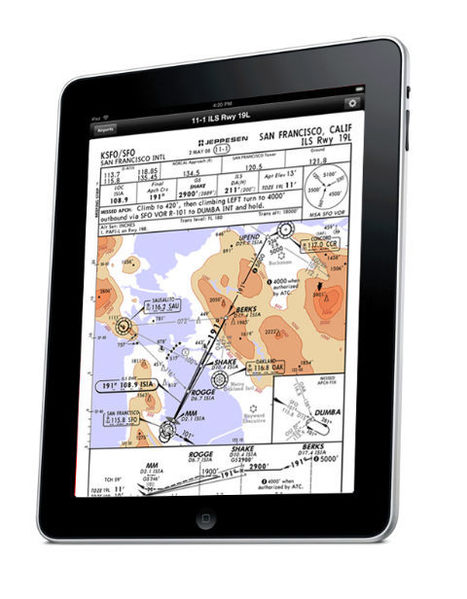
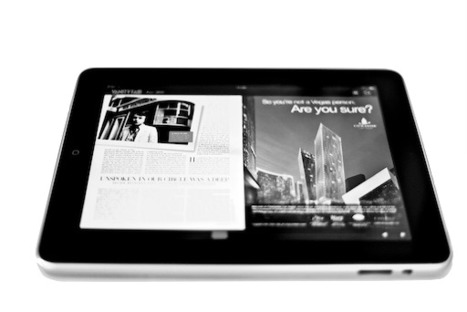
"Executive Jet Management will soon be ditching paper in favor of the Apple iPad for their in-flight map needs. The private company has been approved after months of testing by the Federal Aviation Administration (FAA) to use the 9.7-inch Apple iPad and a map application titled “Mobile TC” for flight maps."
I admit that I bought my iPad for the wrong reasons. I got one because it seemed like everyone I knew had gotten one for Christmas and, well, I felt left out. I didn't think about how it would fit in with the gadgets I already owned (laptop, Kindle, iPhone
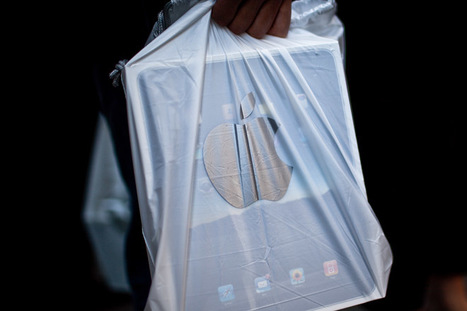
2010 was a breakout year for Apple's iPad. When it first came out, we dared to question it, but one year later the device is undoubtedly a success. ...
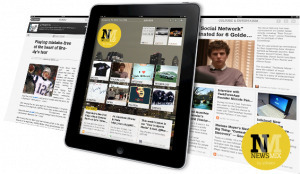
According to Flipboard's Mike McCue, journalists lost their souls chasing page views:
"What I mean is, journalists are being pushed to do things like slide shows -- stuff meant to attract page views. Articles themselves are condensed to narrow columns of text across 5, 6, 7 pages, and ads that are really distracting for the reader, so it's not a pleasant experience to 'curl up' with a good website."
Can the tablet "hit the reset button on the presentation of content to readers" and fix that for good?
Social, Real-time and local: the magic formula according to Erik Schonfeld from TechCrunch.
"Ever since the iPad came out, print media companies have been feeling their way in this new medium, but so far they've just been stumbling over themselves. They are latching onto the iPad as a new walled garden where people will somehow magically pay for articles they can get for free in their browsers. But if they want people to pay, the experience has to be better than on the Web, and usually it's not. [...] Replicating a dead-tree publishing model on a touchscreen is a recipe for obsolescence."
I've actually seen a demo of this App and it looks really good. For all those who like longform journalism, I think this will be the App of choice on tablets.
Interesting to see journalism re-invent itself and focus and what makes it really unique in an online world.
Following a bright start and lots of expectations, iPad magazines sales seem to be disappointing.
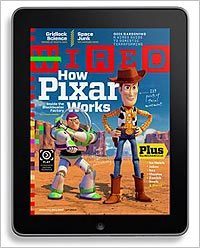
As an example, from over 100,000 digital magazines for Wired's first digital iPad issue in June, sales slumped to 31,000 digital copies in September, followed by 22,000 in October and 23,000 in November, per WWD.
The decline in iPad magazine sales is all the more alarming, considering the rapid expansion of the potential market over the same period. The total number of iPads sold jumped 565% from 2 million at the end of May to an estimated 13.3 million by the end of the year. Yet iPad magazine sales have not only failed to scale up in comparable fashion -- they have declined, often by double digits.
While many have speculated that the iPad is going to replace printed newspaper and magazines, it is already changing the way we read online content too.
(...)
Aside from a quick lunch hour at their desk, iPad owners are no longer doing the majority of their reading on their computers. They are saving it for their personal prime time, when they can relax comfortably, iPad in hand and burn through the content they found during the day.
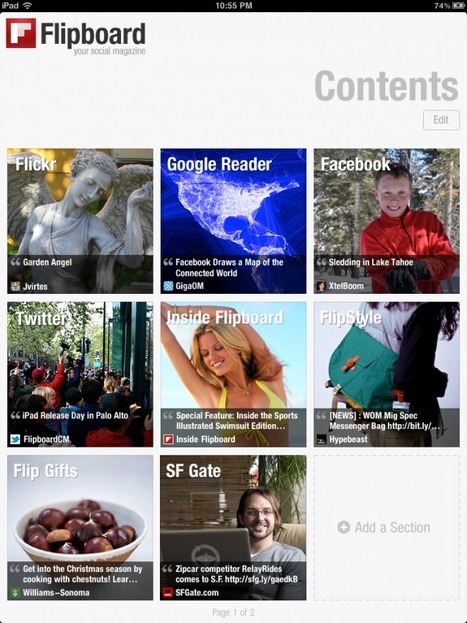
“We love magazines,” says Evan Doll, co-founder of Flipboard. “There’s something great in terms of the graphic design, typography and emphasis on the visual side. And there’s also the fact you have editorial — someone filtering down the new stuff, telling you what’s important, interesting and worthwhile. Both those things we wanted to try to marry with social.”
"When Steve Jobs introduced the iPad last January, the biggest surprise wasn't the actual product. (...) It was the price: Just $500."
Interesting analysis on how controlling retail and the whole product design from A to Z gives Apple a competitive advantage over other tablet manufacturers.
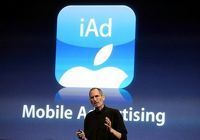
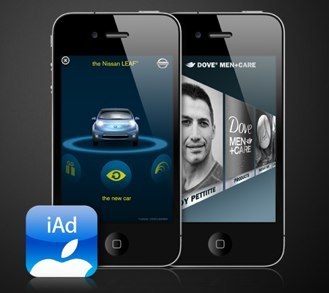
Apple set the bar high for its debut in the mobile advertising business, demanding a minimum spend of $1 million from advertisers looking to hawk their wares from its iAd platform. It was a daunting premium for a nascent system, and one that limited its appeal to big-name companies. Now, with the first run of iAd campaigns ended, Apple is lowering its minimum spend to court the smaller-scale advertisers who originally couldn’t afford the platform.
(by | John Paczkowski | Digital Daily | AllThingsD)
To those who care intensely about this kind of stuff--which would be pretty much everyone in the tech ecosystem--Apple will hold its much-anticipated event on March 2, where the tech giant seems poised to unveil a new version of its hugely successful iPad, according to multiple sources. As in, iPad 2! Or, as BoomTown is now officially nicknaming it: iPad Too! According to several sources close to the situation, the Wednesday date in a little more than a week is firm and will take place in San Francisco, the scene of many such Apple events.
The arguments developed in that Techcrunch article against the new position taken by Apple to take a 30% cut on all subscription sales are painfully reminding of what Apple became: a walled garden of its own in the Mobile space.
5 years ago, we all complained about carriers' dictatorships, lack of flexibility and unjustified cuts in revenue-share deals.
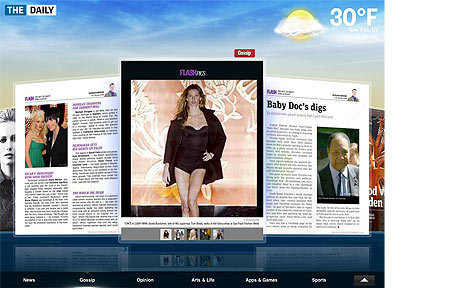
"I've had a few hours with The Daily, Rupert Murdoch's iPad-only newspaper. One thought strikes me above all others: if this is the best that journalism's brightest brains can do, given a huge budget and input from Apple itself then we're in worse trouble than I thought." says author Shane Richmond
Apple Moves to Tighten Control of App Store per the New York Times.
"Some application developers, including Sony, say Apple has told them they can no longer sell e-books within their apps unless the transactions go through Apple’s system. Apple rejected Sony’s iPhone application, which would have let people buy and read e-books from the Sony Reader Store."
“We have not changed our developer terms or guidelines,” Trudy Muller, an Apple spokeswoman, nuanced Tuesday. “We are now requiring that if an app offers customers the ability to purchase books outside of the app, that the same option is also available to customers from within the app with in-app purchase.”
“This sudden shift perhaps tells you something about Apple’s understanding of the value of its platform,” said James L. McQuivey, a consumer electronics analyst at Forrester Research. “Apple started making money with devices. Maybe the new thing that everyone recognizes is the unit of economic value is the platform, not the device.”
Interesting negotiations ahead... Reminds me of the Music Industry and iTunes.
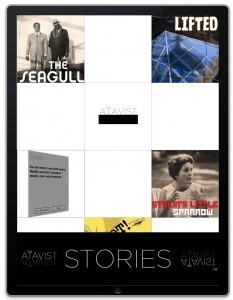
Very interesting analysis by Frédéric Filloux about how Apple is changing the game to favor small independent publishers or new initiatives from groups of journalists (maybe like The Atavist -see previous post).
At the expense of large media which go ballistic against its new commercial model for iPad publishing.
It reminds me of Google's ad strategy which was built focusing on long-tail small advertising with low bargaining power.
In a call to iPad publishers to "switch to v2.0" in the light of ailing sales figures of iPad titles (see previous post on this very topic), Filloux from Monday Note explains what they should do to succeed on tablets.
To get content containing either thought or leadership enter:
To get content containing both thought and leadership enter:
To get content containing the expression thought leadership enter:
You can enter several keywords and you can refine them whenever you want. Our suggestion engine uses more signals but entering a few keywords here will rapidly give you great content to curate.


 Your new post is loading...