


Cheek Cheek Chin and Nose
It was short
the way you spoke
you up on a pillar
me sitting down low
the flow
of your words clipped
as you shot a rhyme
after a passing ambulance.

 Your new post is loading...
 Scoop.it!
It was short 
No comment yet.
Sign up to comment
Scoop.it!

Ciaran Carson, reading ‘Fée’, ‘Snow’ and ‘As I Roved Out’ from In the Light Of
Scoop.it!

The sycamore is weeping leaves of fire;
their fallen skirts away. Bride? Bullfighter?
Scoop.it!

Peter Fallon, poet and publisher, is the John J. Burns Visiting Scholar in Irish Studies for the 2012-2013 academic year. Fallon lives in Loughcrew, County Meath, Ireland. He is an Honors Graduat...
At the age of eighteen, Fallon founded The Gallery Press , which has published more than four hundred books of poems and plays by Ireland’s preeminent writers. Included in this distinguished group are Seamus Heaney, Paul Muldoon, Derek Mahon, John Montague, Nuala Ní Dhomhnaill, Ciaran Carson, Medbh McGuckian, John Banville, Eiléan Ní Chuilleanáin and Michael Hartnett.
Scoop.it!

I
Scoop.it!

VETERAN Irish novelist Jennifer Johnston will be awarded the Lifetime Achievement Award at this year's Irish Book Awards in the RDS on November 22.
Scoop.it!

THE BOOK OF KELLS:In the contemporary world the illuminated manuscript on display at Trinity College Dublin now stands as a founding classic, as ripe to nonreligious readers as it is to people of faith.
The Isle of Iona is close to Ireland, and it has always mattered to me, a Scot with an Irish name, that our common literature begins in that fertile place. This summer I took Seamus Heaney and some other friends to visit Iona, and we agreed that the atmosphere on the island is unmistakable. Dr Johnson and James Boswell felt the same way when they stepped off the boat in the autumn of 1773 and spontaneously hugged one another. “It’s some place,” said Heaney as we walked through the renovated cloisters of the abbey by the sea. “Can you hear the wind?”
Scoop.it!

Colin Graham talks to Gail McConnell about the poetry of Sinéad Morrissey.
Scoop.it!

The Seamus Heaney Centre Digital Archive (SHCDA) records, collates and preserves recordings of public poetry performances. It was created to contribute to the Seamus Heaney Centre’s research facilities. The Centre is part of the School of English at Queen’s University Belfast.
Scoop.it!

Robert Berry’s comic adaptation of the 1922 edition of James Joyce’s epic novel, ULYSSES accompanied by a page-by-page reader’s guide and dramatis personae. The reader’s guide is enhanced with discussion groups and links to online information sources, photos, videos, and other assorted bric a brac allowing you to dive as deep as you like into the world of Ulysses. If you’ve always wanted to read ULYSSES, but have been intimidated by its size and density, this is a great way in and is a great new way in its own right to experience ...
Scoop.it!

”You get the sense from the best short story writers that they almost weigh the words, or that they let them alight and rest on the tongue or the heart, to taste them or test them, before finally settling on them.’
Mary Costello has been compared with the likes of every Irish literary giant from John McGahern to John Banville and with her debut collection of short stories having been nominated for the Sunday Independent Newcomer of The Year Award at the Irish Book Awards and the Guardian First Book Award, it seems that after years of chipping away at literary success, Mary is now well on her way. She took time out of what has become an increasingly busy schedule to talk to the DBF about what inspired The China Factory and what it means to be an ‘Irish’ writer.
Scoop.it!

With his shock of silver-gray hair, his face etched by time with the lean expressiveness of a Giacometti sculpture and his soulful eyes registering every fleeting hurt and happiness, John Hurt bears a striking resemblance to Samuel Beckett in the distinguished British actor's magnificent rendition of "Krapp's Last Tape" at the Kirk Douglas Theatre.
For anyone needing a reminder that theater can be an art (and not just a scrappy entertainment), this beautifully mounted production of Beckett's play, directed by Michael Colgan of Dublin's Gate Theatre, is not to be missed.
Scoop.it!

Irish playwright Jimmy Kerrs House Strictly Private was a standout of the recent First Irish Theatre Festival...
Two Irish playwrights emerged from the recent 1st Irish Theatre Festival in New York, and it's time to mark their achievements. Playwright Jimmy Kerr is already well known to the Irish community here for his successful run of Ardnaglass on the Air, a knockabout rural comedy which played at the Manhattan Theatre Source in 2010, directed by actress Geraldine Hughes. But House Strictly Private, a pitch-black comic drama, is an unexpected follow up to Kerr's rollicking festival debut.
|
Scoop.it!

Next year's Spring/Summer season at the Abbey Theatre will feature two new Irish productions, which will be staged back-to-back.
The historic venue will continue its ongoing commitment to young and up-and-coming Irish writers with debuts for Drum Belly and Shush. Richard Dormer's Drum Belly, which will run from April 10 to May 11, is set at the time of the first moon landing and centres on the Irish mafia in Brooklyn, New York.
Scoop.it!

The Fabulists, my first novel, was originated by The Lilliput Press, Dublin, in October, 1994. It won the inaugural Kerry Ingredients Novel of the Year, (now the Kerry Group Irish Fiction Award), as part of Listowel Writers’ Festival, 1995.
Scoop.it!
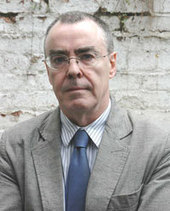
To appreciate where his love of language and etymology originates from, it is perhaps worth considering Carson’s formative years growing up on the streets of Belfast. Born in 1948, Carson was raised in a house on Raglan Street, off the Falls Road in the west side of the city.
‘We spoke Irish before English, which I later learned off the street,’ Carson recalls. ‘Increasingly, it does seem that this bilingual upbringing does matter. My name is a paradigm of opposition: Ciaran, very Irish – meaning little dark-haired one – and Carson, the same name as the putative founding father of the state of Northern Ireland [Edward Carson].
‘We can never be wholly one thing or another, and ambiguity is essential to all poetry. Any proper poem divulges different meanings at different times. Even one’s own poems, which we think we know, mean different things each time we read them.’
Scoop.it!

Lecturer's rendition of a famous Irish poem is judges' unanimous choice.
Dr Kaarina Hollo of Sheffield university has won an award for doing a rather marvellous thing: giving fresh life to a famous poem through the form of a new translation.
Irish Gaelic speakers, at ease with one of the oldest languages still used in the British Isles, have long enjoyed the work of Derry O'Sullivan, but that has been less easy for those us with English only, and maybe a smattering of something to help on holidays.
Scoop.it!

If all of this author’s works are masquerade acts, this time the alter ego does the more convincing job...
John Banville’s most exciting work mixes opulence with pulp. The Irish novelist, winner of the 2005 Man Booker Prize, is best known for his virtuosic style, its baroque irony and painterly eye. But his painting is figural, never abstract. Images from the underworld — murder, theft, espionage — give him his subject matter. They also supply metaphors for what is at stake in his style: problems of perception, dissimulation and identity. So it was not that surprising when, several years ago, Banville began penning crime novels under the alias “Benjamin Black.” Vengeance, released in August, is the fifth such novel
Scoop.it!

FICTION:Maeve Binchy’s final novel, about an Irish woman returning from decades in the US to a small town on the Atlantic coast, brings her career full circle...
When serious critics turn their attention to popular fiction, being a good storyteller is often depicted as a sort of mildly impressive talent, like being able to scramble eggs perfectly. The ability to simply tell a story well and straightforwardly is, it’s frequently implied, clearly inferior to other literary skills. But creating and, more importantly, managing a plot are, as anyone who has ever tried to write a novel knows, extremely difficult. Creating an engaging cast of characters and deftly manoeuvring them through long, winding yet carefully paced stories in a way that leaves the reader desperate to find out what happens next, as Maeve Binchy repeatedly did over the course of her long career as a novelist, is a very rare skill indeed.
Scoop.it!

This isn’t your mother’s Mother Mary. Forget the Annunciation or the Virgin Birth. The only Assumption here is that Mary is a troubled woman, haunted by Golgotha, hunted by assassins, waiting for death.
Scoop.it!
Dr Kaarina Hollo, lecturer in Irish at the University's School of English Literature, Language and Linguistics, has been honoured with The Times Stephen Spender Prize for Poetry in Translation. Dr Hollo, who is an expert in the literary culture of early medieval Ireland, was presented with the prestigious award at a special ceremony in London today (13 November 2012) for her translation of Marbhghin 1943: Glaoch ar Liombo (Stillborn 1943: Calling Limbo) from Irish Gaelic into English. The poem, written by Bantry-born author Derry O'Sullivan, is widely considered one of the best Irish-language poems of the 20th century and this is the first time a translation from Irish to English has won the critically acclaimed award. O'Sullivan, 68, has won numerous awards for his work and now lives in Paris.
Scoop.it!

DBF You grew up in the West of Ireland and indeed studied there. How much does the element of place infiltrate your writing? MMC Place is fundamental to my work. It is the generative ground of what I do and I am speaking about West Mayo and Galway – the villages, the fields and bogs of Mayo are a huge part of my imaginative landscape so too are the narrow streets of Galway. I would like to think that this deep rootedness and immersion in this landscape enables me to explore universal ideas of the human condition. It is both fount and ground.
Scoop.it!
An interview with poet Medbh McGuckian on the differences between her first full-length collection "The Flower Master", published by Oxford University Press (1982), and her revised "The Flower Master and Other Poems", published by Gallery Press (1993). Recorded at Queen's University Belfast on the 10th of September, 2012. Interviewer: Donald Givans. Recording/Editing: Jamie Kelly.
Scoop.it!

The importance of libraries during periods of economic difficulty was underlined today at the launch of a week-long celebration of libraries and librarians.
Library Ireland Week, now in its seventh year, will see libraries across the State hosting hundreds of events to promote literacy and the role of libraries in the community. Appropriately, the country’s most recognisable library, Trinity College Library's Long Room, hosted the launch, where Margaret Hayes, Dublin city librarian, said visitor numbers for all libraries are “going through the roof”. A lot of that is down to the facilities’ ability to embrace new technology and changing times. Libraries are “healthy and adapting”, according to Georgina Byrne, South County Dublin librarian. “If you’re not adapting you’re not healthy.”
Scoop.it!

Taking place until November 17th, The Red Line Book Festival fringe events kicked off with a sugar rush start with The Great Red Line Book Bake-off with so many wonderful entries to get your mouth watering! We also took to the streets of Tallaght with poet Stephen James Smith, who recited poetry to unsuspecting audiences in odd places!
|




