Your new post is loading...

|
Scooped by
Gerard Beirne
August 6, 2018 9:04 PM
|
Matthew Sweeney, a poet whose work had been honoured by the Aosdána, recently died of motor-neurone disease.Shortlisted for the T.S.Eliot prize...
|
|
Scooped by
Gerard Beirne
August 6, 2018 9:03 PM
|
Winner of the Molly Keane Short Story Award and Cootehill Poetry Prize, second in the Michael McLaverty Short Story Award, Pat Jourdan has written three short story collections and three novels, plus five collections of poetry.
|
|
Scooped by
Gerard Beirne
August 6, 2018 9:02 PM
|
W.H Auden’s poetry is often compared with the work of figures like T.S Eliot and Ezra Pound, but the voice and the influence of Irish literary giant W.B Yeats is evident in some of his most iconic prose – even though Auden refers to Yeats as ‘silly,’ according to Professor Colin Graham, Head of English at Maynooth University. In particular, we can identify Yeats’s ‘Easter 1916’ as having a strong influence on Auden’s’ ‘September 1, 1939’, with both poems expressing the authors’ reactions and reflections on the political conflicts of their time. Examining Auden’s ‘September 1st, 1939’, Prof Graham explains that critics tend to compare the poem to T.S Eliot’s ‘The Wasteland’, as both poems begin with the poet observing a city and its inhabitants. However, Prof Graham argues that Auden’s poem has considerably more in common with Yeats’s ‘Easter 1916’, as the two have an important date as their titles and both begin with the first person ‘I’ – framing the writer as an observer of history at a moment of calm before cataclysmic changes to come. The title of Yeats’s poem references the 1916 Easter Rising, the failed armed insurrection that would ultimately lead to Ireland’s independence from Britain and radical changes in Yeats’s world, while Auden references the date that Adolf Hitler invaded Poland and the start of the Second World War. Both poets are writing at the beginning of a conflict, before they can possibly know exactly what is to come. Both poems lament looming war, but cannot offer clear and coherent responses to the violence. In 1939, Auden wrote an essay in which he imagines a fictional court trying to decide on the legacy of Yeats where the prosecutor comments that it was an achievement for Yeats, in writing ‘Easter, 1916’ to offend neither the Irish Republican or the British Army – an acknowledgment and criticism of the sense of ambiguity evident in Yeats’s work at the time of the Irish revolution. ‘September 1, 1939’, however, offers much of the same sense of ambiguity. Reflecting on the tumultuous world around him and the “unmistakable odour of death” he describes as being in the air, Auden can only offer “ironic points of light” rather than a concrete answer to the violence of World War II. Prof Graham says: “Auden realised, perceptively early, that ‘Easter 1916’ was not a celebratory poem, a national poem, nor a poem of contrition on Yeats’s part, but a twisting rhetorical strategy to reposition Yeats’s voice. ‘Easter 1916’ reverberates inside ‘September 1, 1939’, so that when Auden’s poem ends with its “ironic points of light” that irony calls on the ambiguity of the end ‘Easter 1916’.” In looking at the relationship between Auden and Yeats’s work, it is impossible to ignore Auden’s poem ‘In Memory of W.B Yeats.’ It is in this poem where he refers to Yeats as being “silly”, but more importantly, “silly like us”. Prof Graham says: “When he uses the word ‘silly’ about Yeats, Auden is not just dismissing Yeats. He is referencing his role as a complex, almost paternal, figure that in some ways Auden rejects, but also recognises as someone that tried to comprehend the patterns of history via the language of politics and the private self – navigating all the ambiguities and ‘silliness’ that this entails. If Auden’s Yeats is silly, he is silly like Auden. He is silly to try to contain and comprehend history.” Notably, Auden wrote this poem about Yeats in a way that mimics and even pays homage to the Irish poet’s own style of writing. For example, it has a sectioned structure, with each section adopting a different verse form and tone, just like Yeats’s poem ‘The Tower’. W.H Auden may have been critical of ‘silly’ Yeats and his legacy at times, but Yeats’s poetry and his attempts to understand and frame history through prose had a clear influence on much of Auden’s poetry, particularly as the latter tried to negotiate the social and political conflicts of his own time. Professor Colin Graham, Head of the Maynooth University Department of English discussed this in his lecture, Just Auden’s Silly Yeats, on Monday, 14 May, as part of the University’s 2018 series of Professorial Lectures.
|
|
Scooped by
Gerard Beirne
August 6, 2018 9:01 PM
|
James O’Sullivan reviews collections by Roisin Kelly, Annemarie Ní Churreáin, and Elaine Cosgrove.
|
|
Scooped by
Gerard Beirne
August 6, 2018 2:57 PM
|
I have used words like incredible, transformative, inspiring, engaging and amazing to describe the week’s delicious and immersive cultural timetable but in reality the John Hewitt Society Summer School is all that and more.
|
|
Scooped by
Gerard Beirne
August 5, 2018 7:41 PM
|
|
|
Scooped by
Gerard Beirne
August 5, 2018 7:26 PM
|
As he launches his latest collection of poetry at Cork World Book Fest, Matthew Sweeney tells Colette Sheridan about his attitude to life and creativity while also grappling with motor neurone disease.
|
|
Scooped by
Gerard Beirne
August 5, 2018 7:18 PM
|
Headline Tributes paid to Cork poet Matthew Sweeney who died this morning...
|
|
Scooped by
Gerard Beirne
August 4, 2018 9:19 AM
|
Boyne's latest novel A Ladder to the Sky is inspired by the literary world and the writer's experience of an "unhealthy" crush on a fellow writer
|
|
Scooped by
Gerard Beirne
August 2, 2018 10:00 AM
|
Step Into Writing That Short Story In this all-day short story workshop you’ll find out how to write that crucial opening and understand why it's essential to the success of your story. After many examples, discussions and exercises, you’ll write an opening and get tips on staying focused on your story and how to make…
|
|
Scooped by
Gerard Beirne
August 2, 2018 9:32 AM
|
Sligo’s reputation as a hub for the literati continues this weekend. ‘Poetry by the Weir’ is a poetry reading event which is organised by Sligo based author Gerard Beirne and will take place this week in Osta Cafe on Sunday, August 5. At this reading, audiences will be treated to poems from local author and …
|
|
Scooped by
Gerard Beirne
August 1, 2018 8:27 PM
|
Our intitial poll has put more than 140 novels in contention. We need your learned opinions to winnow this down to a shortlist next week
|
|
Scooped by
Gerard Beirne
August 1, 2018 6:42 PM
|
Niamh MacCabe Ailm Elm The river wanders past alder, past willow, past hazel. Carrying detritus, untethered fingerlings, soil. Stealing and gifting, past holly, past elm, past rowan. River. Other. Cold. Own. Bridge. Beith Birch A shadow hunkers inside the giant concrete pipe under the bridge. River water flows through, drifting under a narrow road…
|
|
|
Scooped by
Gerard Beirne
August 6, 2018 9:03 PM
|
Gordon Ferris is a Dublin writer living in Donegal for the past thirty-six years. He has had poetry and short stories published in A New Ulster, Hidden Channel and The Galway Review. Most in A New Ulster.
|
|
Scooped by
Gerard Beirne
August 6, 2018 9:03 PM
|
While I was shawling the strawberrieswith fine green netting, you told meabout the cow that swam to the islandto stand there mooing until the sealscame in close to add their own …...
|
|
Scooped by
Gerard Beirne
August 6, 2018 9:02 PM
|
A PHP Error was encountered Severity: Notice - Message: Undefined index: video_mode - Filename: widget/video_player.php - Line Number: 3 A PHP Error was encountered Severity: Notice - Message: Undefined index: video_mode - Filename: widget/video_player.php - Line Number: 17 A PHP Error was encountered Severity: Notice - Message: Undefined index: video_mode - Filename: widget/video_player.php - Line Number: 21 A PHP Error was encountered Severity: Notice - Message: Undefined index: video_mode - Filename: widget/video_player.php - Line Number: 38
|
|
Scooped by
Gerard Beirne
August 6, 2018 7:13 PM
|
Sinn Féin ex-president tells festival recipes are peace process’s ‘best-kept secrets’
|
|
Scooped by
Gerard Beirne
August 6, 2018 1:52 PM
|
Collection taken in 1970s and returned by ‘anonymous’ was spotted by John Kelly
|
|
Scooped by
Gerard Beirne
August 5, 2018 7:33 PM
|
A short story by Louise Nealon
|
|
Scooped by
Gerard Beirne
August 5, 2018 7:19 PM
|
John Boyne has created an irresistible protagonist in this story of an aspiring young writer who will stop at nothing to succeed...
|
|
Scooped by
Gerard Beirne
August 5, 2018 7:07 PM
|
‘One of the finest poets of his generation, a craftsman of the highest achievement’
|
|
Scooped by
Gerard Beirne
August 2, 2018 10:03 AM
|
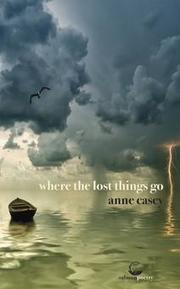
Anne Casey is a writer, lyricist and poet with over 25 years' experience in print and electronic publishing, creative writing, media communications, social media and business development.Writing, poetry, lyrics, articles, social change, humanitarian, Australia, Sydney, faith, hope, love, loss, grief,...
|
|
Scooped by
Gerard Beirne
August 2, 2018 9:57 AM
|
A sneak preview of Saturday’s books pages
|
|
Scooped by
Gerard Beirne
August 1, 2018 8:33 PM
|
Stephanie Conn’s second full collection of poems is a heartfelt homage to place and ancestral lore. The book opens with a striking piece entitled ‘On Finding an Old Photograph in a Drawer’, which immediately struck this
|
|
Scooped by
Gerard Beirne
August 1, 2018 7:39 PM
|
This post was placed joint third in the Conul Training and Development Library Assistant Blog Award 2018. This post is by Laura Ryan
|


 Scoop.it!