Your new post is loading...

|
Scooped by
Jim Lerman
December 18, 2011 10:18 PM
|
Now in its 13th year, the Calgary Science School has had a consistent focus on problem-based and inquiry-based teaching and learning. Authentic, student-centered learning is embedded across all subject areas, and much of the learning is supported by innovative and powerful uses of technology and outdoor education.
|
|
Rescooped by
Jim Lerman
from future school
December 18, 2011 9:37 PM
|
So you have heard about blogging with your students and you are considering taking the plunge but just not sure what or how to do it? I am here to tell you; blogging with my students has been one of the most enriching educational experiences we have had this year, and that says a lot. So to get you started, here is what I have learned
Via Nik Peachey, Steve Wheeler
|
|
Scooped by
Jim Lerman
December 18, 2011 7:50 PM
|
Every few years sees the job market changing and the educational market change along with it. As the new hot career comes up, there is always a degree or program to go with it. But did you know that there are essential skills that every student, graduate, and job candidate needs to have to give him or her the best chance at landing a job? Below, we have gathered a list of just ten of the must-haves every college student should be thinking about during their studies
|
|
Scooped by
Jim Lerman
December 18, 2011 1:14 PM
|
This year, I have been conflicted. I made a conscious decision to back off with my immersion. I still truly value my network, and continue to find it the place where I am energised and excited about possibilities. But what I have found is that I have reconnected with those in my immediate sphere, my close friends and family. I value the time I spend with them, and remain present for longer periods than I did in the past. The sky hasn’t fallen, my connection with an already established network is still strong, and I feel more at peace with my world.
|
|
Scooped by
Jim Lerman
December 18, 2011 1:07 PM
|
Creativity is the ability to make something original, to imagine things that don't exist, and to come up with new ideas. Creativity is not to be confused with talent, skill, or intelligence. Creativity is not about doing something better than others, it is about thinking, exploring, discovering, and imagining. Creative thought is found in all aspects of a growing child's life. Creativity is marked by the ability or power to create-to bring into existence, to invest with a new form, to produce through imaginative skill, to make or bring into existence something new.
|
|
Scooped by
Jim Lerman
December 18, 2011 1:03 PM
|
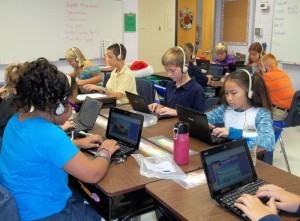
Recently I got an email from my elementary division head. Our school is piloting a 1:1 netbook program this year, and our administration is interested in how the program is going and the different ways the netbooks are being incorporated into our curriculum. I started putting together a list, and even surprised myself at how much the availability of wifi-ready technology engages my students and supports instruction during the course of a regular school day.
|
|
Scooped by
Jim Lerman
December 18, 2011 12:58 PM
|
You're never too old to make your mind agile, flexible, self-aware, and able to see patterns and connections that more rigid minds miss...
|
|
Scooped by
Jim Lerman
December 18, 2011 12:48 PM
|
They aren’t just demanding something different. They are willing to experiment with how to organize themselves and to evaluate if it worked or not. Owning the learning AND owning the learning environment are two separate things. I believe having both perceptions in play is essential for students to maximize the learning potential.
|
|
Scooped by
Jim Lerman
December 18, 2011 4:07 AM
|
18 teachers "speak out" on their vision of where they are and how they want to grow with their students.
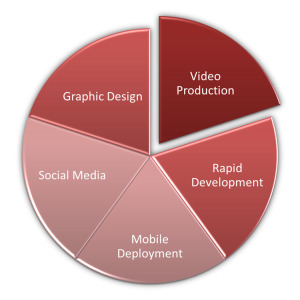
What are the skills you need to land an elearning job?
Working in elearning taps into many skill sets. Designing or developing elearning requires experience in training and project management as much as audio and video production.
Via Donna Clark
|
|
Scooped by
Jim Lerman
December 18, 2011 2:55 AM
|
Forty years after he and his wife, Heidi, set the world alight with Future Shock, Alvin Toffler remains a tough assessor of our nation's social and technological prospects. Though he's best known for his work discussing the myriad ramifications of the digital revolution, he also loves to speak about the education system that is shaping the hearts and minds of America's future. We met with him near his office in Los Angeles, where the celebrated septuagenarian remains a clear and radical thinker.
|
|
Rescooped by
Jim Lerman
from Digital Presentations in Education
December 18, 2011 2:08 AM
|
Learn screen capture video best practices, including screen capture software, microphone recommendations, and tips for better screen capture videos.
Via Baiba Svenca
|
|
Scooped by
Jim Lerman
December 18, 2011 2:02 AM
|
The most well established K-12 online learning programs are more than ten years old, and many programs have between five and ten years of operating experience. The newest programs are building on the expertise of those early adopters, as well as the experience of online learning in postsecondary institutions and the corporate world. A body of knowledge, skills and practices has been developed by individual programs, in collaboration with practitioners, researchers, and policymakers. Because there are so many types of online programs (full-time, supplemental, stateled, district-level, consortium), there are also many different approaches to teaching, student support, professional development, and other issues.
|
|
|
Rescooped by
Jim Lerman
from Online Collaboration Tools
December 18, 2011 10:06 PM
|
|
|
Scooped by
Jim Lerman
December 18, 2011 8:10 PM
|
Nice way to present a lot of ideas quickly. All of them can be helpful in stimulating cretivity.
|
|
Scooped by
Jim Lerman
December 18, 2011 1:16 PM
|
I teach in an inquiry, project-based, technology embedded classroom. A mouthful, I know. So what does that mean? To begin with, I don’t lecture. My students don’t take notes, at least not in the traditional sense, and we don’t read a novel and simply answer the questions. It means my classroom is a place where my students spend time piecing together what they have learned, critically evaluating its larger purpose, and reflecting on their own learning. It also means my students don’t acquire knowledge just for the sake of acquiring it. They need to do something with it — that’s where “project-based” comes into play.
|
|
Scooped by
Jim Lerman
December 18, 2011 1:11 PM
|
In Corrogue there is silence. This is a silence I have absolute confidence in. This is the silence of rural Ireland far from the maddening crowd. It is a place of retreat far from the noise and haste of this 21st Century living. Let me share with you seven benefits of silence that you can practice no matter where you live.
|
|
Scooped by
Jim Lerman
December 18, 2011 1:05 PM
|
Is there a connection between creativity, self-reflection and silence? I believe there is. Tony Cuckson’s article Enjoy The Silence: The 7 Powers of Silence states that creativity and silence go hand and hand. Silence allows the mind to quiet enough to make connections in ways that we’ve never made before (and perhaps that no one has made before). I know for me, those creative surges come when I sit long enough and I am quiet enough to perceive something out of the ordinary. If creativity is such an important aspect of 21st century learning, then we as educators must teach our students how to be silent and still. Our students must learn to value the rewards of unplugging from the never-ending datastream and creating moments where we can listen to ourselves.
|
|
Scooped by
Jim Lerman
December 18, 2011 1:00 PM
|
Haven’t heard of Odyssey? I encourage you to take a look http://www.odysseyofthemind.com/. If you haven’t yet noticed, one of the greatest things about Odyssey of the Mind is that it is right in line with the skills we are cultivating in our 21st Century Learners. Innovation – Creative Thinking – Problem Solving. These are the skills that will make our students successful in the real world.
|
|
Scooped by
Jim Lerman
December 18, 2011 12:56 PM
|
“Discovery consists of seeing what everybody has seen and thinking what nobody has thought.”
|
|
Scooped by
Jim Lerman
December 18, 2011 4:08 AM
|
Edith Cowan University's Center for Teaching and Learning has great Academic Tip Sheets available online. One of my favorites is, "Blogs, Journals et al."
Today I introduced Scoop.it to Ms. Lester's Advanced Grammar and Composition students who are working on senior research projects. Several of our students were immediately smitten with the eas...
Via Donna Clark
|
|
Scooped by
Jim Lerman
December 18, 2011 3:24 AM
|
The first Ultrabooks have started to appear from top laptop makers, including Lenovo, Acer, ASUS, and HP. While these initial models have been able to meet the hardware criteria laid out by Intel, the “around $1,000″ has been a sticking point. To be fair, models of the MacBook Air with decent configurations sell at prices higher than the $999 entry-level configuration. Ultrabooks prove that Steve Jobs was right with the introduction of the MacBook Air. Given the choice between a boxy laptop and a thin ultraportable, many will choose the thin and light Air. As prices continue to drop, as they usually do over time, the Ultrabook will be in a position to give the Air a run for the money. Laptop makers will be chasing the MacBook Air, just as tablet makers are chasing the iPad.
|
|
Rescooped by
Jim Lerman
from future school
December 18, 2011 2:52 AM
|
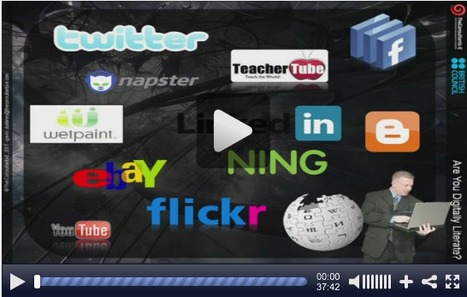
The latest recording from the British Council Seminars series is about digital literacy. What is digital literacy, and what is its significance to you as a teacher?
Via Nik Peachey, Steve Wheeler
|
|
Rescooped by
Jim Lerman
from gpmt
December 18, 2011 2:06 AM
|
|