


Innovation isn't a matter of will.
Like most things worth creating, critical ingredients pre-exist the product. In the case of innovation in education, many of those necessary ingredients are simple
Via Gust MEES

 Your new post is loading...
 Scoop.it! Innovation isn't a matter of will. Via Gust MEES 
Scoop.it!

by Merris Stansbury
"Though quantitative and rigorous qualitative data on flipped learning is limited, a recent literature review based on teacher reports, course completion rates, and supported methodology research indicates that flipped learning is more than just a fad for bored teachers and students—it’s improving student achievement in classrooms across the country."
Jim Lerman's insight:
Good synthesis of the topic. Free registration required to read the article.
Scoop.it!

by Emily Short
"Interactive fiction is increasingly being used in junior high and high school classrooms to encourage reading and teach problem-solving skills; it is also approached critically in college and graduate courses on digital and new media studies, and used as an example project in courses on computer programming and game design.
"What follows is just a short list of the courses I know about; there may be more out there."
Scoop.it!

"If you plan on selling a Mac or transferring it to a new owner, you will want to take a few very important steps beforehand rather than just handing the machine off as is. We will walk through exactly what you should do before ever changing ownership of a Mac, including backing up all of your files and data, deauthorizing the computer through iTunes, securely erasing all data so that no future owner can access your old stuff, and finally, reinstalling OS X as clean so that the Mac boots into the initial setup menus as if it was brand new."
Scoop.it!

Description by Internet Scout Project
"Science teachers looking to enhance their curriculum with stimulating online content will be sure to find the Howard Hughes Medical Institute's Educational Materials website quite useful. One of the main offerings here, HHMI's Biointeractive, provides a wealth of resources including animations, videos, interactive resources, teacher's guides, podcasts, and more. Topics include health, anatomy, genetics, biotechnology, and careers in science. As if that weren't enough to entice instructors, the full text of the HHMI bulletin is also available on the main section of the site. Back issues date to 2007 and may be viewed online or downloaded in PDF format. Overall, this is an excellent website with many useful and interesting resources for researchers, instructors, and students alike."
Jim Lerman's insight:
Outstanding resource for teachers of science
Scoop.it!
"Keynote speaker Dr. Alec Couros took us on a journey to examine how we are currently exiting the age of personal computer and entering a new mobile reality. Emerging technologies now provide us with the tools to drastically transform our learning environments, and for the first time in history, learners now have the technical ability to learn anywhere, anytime, and with anyone. Yet, transitioning away from our industrial model of education will not be easy, and leaves us with many questions. What does it mean to be literate? How can social networks and new media be used to support student learning? How do we deal with digital identity & citizenship? This presentation outlined our new technological reality, featured examples of how social networks can transform learning environments, and guided FUSION attendees in examining the potentials and pitfalls of 21 century learning. "Couros is a professor of educational technology and media and the Coordinator of Information and Communications Technology at the Faculty of Education, University of Regina. "
Scoop.it!

by Med Kharbach
"While I was leafing through some of the articles on Social Intelligence it dawned on me to do a quick write up to share with you some very useful tools teachers and educators can use to tap into the full potential of Pinterest.
Scoop.it!

by Betty Ray
"For many people, Twitter conjures up the worst of the internet: disjointed, meaningless phrases, unrecognizable abbreviations, and endless drivel about where someone's getting their double mocha today. So, Why Tweet?!?!For the inquisitive educator, there are some jewels herein that can lead to stimulating discussions, new resources, and an ongoing supportive network. You just have to know where to look."
Scoop.it!

by Steven W. Anderson
"...there are loads of great educational hashtags that have been created that you can search out and see what folks are posting. Are you a Social Studies teacher or need history resources? Check out #sschat. Maybe English is your thing. So there is #engchat. Perhaps you are looking for just general education resources. Then you should do a search for #edchat.
Jim Lerman's insight:
Very helpful for those who want to learn about hashtags and using them effectively
Scoop.it!

by Steven W. Anderson
"When you save to Diigo your saves go anywhere because they are saved to the cloud. Sounds mystical doesn't it? The social part is because you can make your saves public and share the wealth of knowledge with others. Say you are a science teacher. Your fellow science colleagues can go and view your saves because you have made them public.
Scoop.it!
Oh, summer--that glorious time of exploration and experimentation. Now is the time to put all those ideas (and yes, hype) about edtech to the test
Jim Lerman's insight:
The EdSurge newsletter maintains a list of free and freemium tech tools available for trial by interested educators. If you have the time and interest, this is a great spot to poke around in. More than 100 tools are available. Read the fine print closely to avoid disappointments.
Scoop.it!

There hasn't been much of a place for Wikipedia in the classroom. But that could soon change after you check out these few learning tips!
|
Scoop.it!
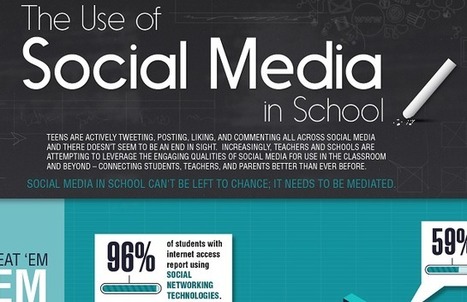
Teachers and schools are attempting to leverage the engaging qualities of social media for use in the classroom and beyond.
Jim Lerman's insight:
Quite an informative infographic...perhaps a bit long. Might have been better as a slide deck or a Prezi.

Sandra Carswell's curator insight,
July 31, 2013 10:34 AM
A few ideas of how to use social media in school or reasons to use it. I'm going to use this in my presentation to teachers to implement Edmodo this year.
Scoop.it!

posted by Jeff Dunn
"Here’s a quick look at some of the skills you’ll learn in the free online course over at Modern Lessons. It’s a fun little side project I’ve built in an effort to make learning about education technology a bit more organized. Right now, most people stick to Google searches, social media chats, and follow some edtech blogs (like Edudemic!) to stay on top of things. But I thought it was time to go a step further and help teachers, students, parents, and anyone else learn how to effectively use technology to improve their lives. Hopefully this course helps you do just that.
"The iPad Skills You’ll LearnHow to create ePubs from web-based content on an iPadHow to create and annotate PDFs on an iPadHow to record audio using your iPadHow to screencast from your iPadHow to curate teacher and student content from the iPad"
Jim Lerman's insight:
Good skills to learn and add to one's repertoire
Scoop.it!
by Emily Short
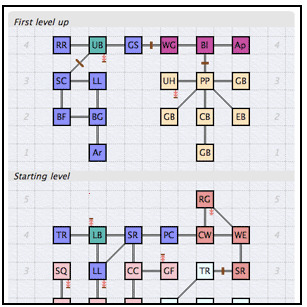
"Inform 7 is an interactive fiction authorship system. It’s not the only one out there (see the other resources on Writing IF for how to choose a system), but it’s the one I use; I’ve also been quite closely involved in its development."
Scoop.it!

description by Internet Scout Project
"Are you looking to create beautiful and elegant RSS and social feeds? Feeder Ninja can make this happen in just a few steps. On the Features section, visitors can learn about how to create attractive feed widgets for their site, along with details about how to insert the necessary code. The Examples area contains a host of recently crafted feeds and there's a helpful FAQ area. This version is compatible with all operating systems, including Linux"
Scoop.it!

by Conor Friedersdorf
"Can you guess what word he used most in his annual State of the Union addresses?"
"The artist Luke DuBois, who presented several interesting pieces at the Aspen Ideas Festival, once did an installation that displayed the frequency with which words were used in State of the Union addresses. "The address is in many ways the best original source material for elucidating the concerns and anxieties apparent in the national zeitgeist for a given time," DuBois argued.
"So he took the addresses delivered by a given president, analyzed the words that appeared most frequently, and displayed them in the style of those charts that eye doctors use to test your vision."
Scoop.it!

by Ben Lovegrove
"While most educators and teachers are aware of the benefits that can arise in the classroom through the use of iPads and tablets, budgetary constraints can often limit the way that technology can be used to augment learning activities in smaller schools (or school districts).
"In many cases, schools find that the money required to buy iPads for an entire class would be better spent on other equipment or products but this doesn’t mean that the classroom should be an iPad free zone. There are countless benefits to be gained from having one or two iPads in the classroom a single device can still be a useful asset for your classroom for lesson planning and supporting curriculum.
"There are several ways that teachers can make effective use of a small number of iPads in a classroom here are some ideas to get you started."
Scoop.it!

"Even the best writers from among us are prone to the odd mistake. Slick Write is an online tool which helps to correct and even improve your writing on a number of levels. "Slick Write enables you to evaluate the stylistic features and potential flaws of your work, as well as giving you the ability to identify spelling errors and grammatical mistakes. Interestingly, the tool gives you an insight into the structure of your content, breaking up paragraphs and sentences in a unique, informative way. "You can analyse the flow of your work, and assess some of the statistics which Slick Write provides for you. When using all the features in unison, it becomes relatively easy to turn an average piece of text, and turn it into a literary masterpiece.

Bart van Maanen's curator insight,
July 28, 2013 12:35 PM
Lijkt een mooie tool te ziijn, helaas alleen beschikbaar voor Engelse teksten en voor WordPress. 
Krysta Hammond's curator insight,
September 19, 2013 4:35 PM
Will be a great addition to my lower level writing class who struggle with grammar or ideas. Passing this on to other Writing teachers in my division as well, thank you!
Scoop.it!

by Stephen Downes
"Let me explain why we take this approach and what connectivism is. At its heart, connectivism is the thesis that knowledge is distributed across a network of connections, and therefore that learning consists of the ability to construct and traverse those networks. Knowledge, therefore, is not acquired, as though it were a thing. It is not transmitted, as though it were some type of communication.
"What we learn, what we know -- these are literally the connections we form between neurons as a result of experience. The brain is composed of 100 billion neurons, and these form some 100 trillion connections and it is these connections that constitute everything we know, everything we believe, everything we imagine. And while it is convenient to talk as though knowledge and beliefs are composed of sentences and concepts that we somehow acquire and store, it is more accurate -- and pedagogically more useful -- to treat learning as the formation of connections."
Scoop.it!

Jim Lerman's insight:
Outstanding collection of links to a multitude of resources related to storytelling. Figa is an Assistant Professor at the University of North Texas School of Library and Information Sciences. It would be great if she could add a one-sentence description for each of the resources. List is regularly updated, so it is definitely current.

Stephanie Diamond's comment,
July 25, 2013 4:15 PM
Oh! I could have sent it to you. There are editions 2 or 3 avail now. If you don't have the most recent version of the software, get edition 2. Love to talk!
Scoop.it!

by Steven W. Anderson
A useful introductin to Edmodo for lthose wishing to learn about it.
Scoop.it!
Jim Lerman's insight:
Anderson is one of the most prolific sharers on the web and an ed tech leader in Winston-Salem, NC. This LiveBinders binder is set up just for English teachers.
Scoop.it!

We have learned lots of easy ways to show presentations and to record videos, we used these to describe all the apps we have talked about this year during club.
Jim Lerman's insight:
Hershey Middle School in Hershey, PA has a BYOT club where students gather to share apps and discuss technology. The students created 1-minute videos to describe some of their preferred apps. Very interesting to see the quality of their video work and the clarity of their explanations. Apps addressed include:
Quizlet Dragon Dictation Prezi Google Drive Edmodo Socrative Evernote Skitch QR Reader symbaloo EDU Study Blue
|







A MUST read!!!
Good list of qualities required to be a innovative educator or trainer
#education #business #training http://goo.gl/BRqvr0