
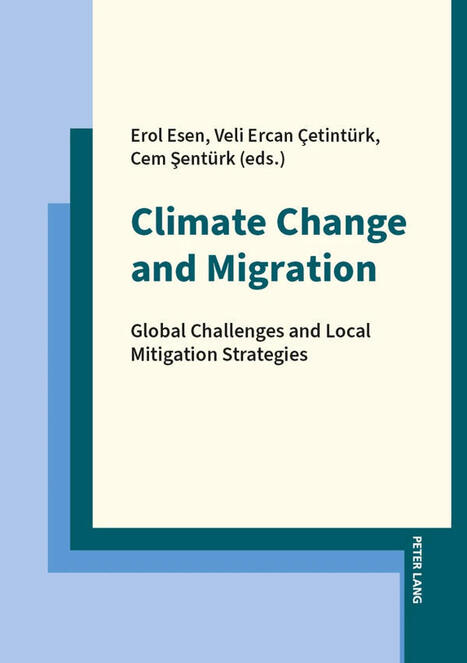
This volume explores the complex intersection of climate change and migration from interdisciplinary and international


|
Scooped by
heather dawson
onto International development September 14, 6:36 AM
|
 Scoop.it!
This volume explores the complex intersection of climate change and migration from interdisciplinary and international


 Your new post is loading...
Scoop.it!
From
www

severe funding cuts are pushing refugee support andprotection structures towards breaking point in the world’s maindisplacement situations, forcing UNHCR, the UN Refugee Agency, to scale back core programmes, leaving millions without the support they need to stay safe.
Scoop.it!
Scoop.it!
From
www
To better understand and prepare for complex risks, the United Nations has conducted a risk perception survey on 1,300 stakeholders across 155 countries.
Scoop.it!

This guidance note outlines practical approaches to strengthening information integrity within risk communication–before, during, and after disasters. Preparing for and managing information risks is an integral part of disaster risk reduction efforts.
Scoop.it!

From
voxdev
Using AI to analyse 120 years of newspaper coverage produces a new index of uncertainty about a country's core institutions, and in the countries studied, nearly every major shift in democracy happened when this index was high. Because it detects slow-building uncertainty that other risk measures miss, the index could serve as an early warning of institutional fragility.
Scoop.it!
From
apo
Lowy Institute for International Policy The Southeast Asia Aid Map is a comprehensive database tracking official development finance flows to Southeast Asian nations from 2015- 2024. Nations covered are: The research covers Brunei, Cambodia, Indonesia, Laos, Malaysia, Myanmar, Philippines, Singapore, Thailand, Timor Leste and Vietnam. It is possible to read a report of cross compare nations. Methodology provided.
Scoop.it!

Explore how local humanitarian actors are using AI, the opportunities and risks of its adoption, and what this means for locally led humanitarian action.
Scoop.it!
Research Routes 2026/27 - Records of Human Experience: The Value & Vulnerability of Refugee ArchivesRefugee and citizenship archives preserve some of the most important records of human experience, documenting displacement, resilience, and identity. They are invaluable resources for researchers, archivists, activists, policymakers, and refugee communities themselves. Yet these collections are often vulnerable.
Scoop.it!
Over half of the world’s land surface is rangelands: vast landscapes covered by grass, shrubs, woodlands and other hardy plants. In our collective imaginations, these places are often seen as empty. But for 500 million pastoralists, rangelands are anything but a void. This International Year of Rangelands and Pastoralists is an opportunity to reflect on our decisions and actions in rangelands and to spotlight the champions behind the efforts to sustain them into the future. In this publication, we celebrate these landscapes and people, and share key insights and pathways towards sustainable, resilient and inclusive development for healthier rangelands and thriving pastoral communities, drawn from decades of collaboration between UNDP, national governments and local communities, supported by various bilateral and multilateral financing partners.
Scoop.it!
From
unu
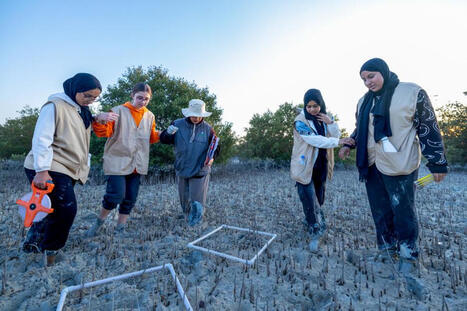
This book highlights initiatives across the Global RCE Network that advance meaningful youth engagement and leadership.
Scoop.it!

Latest news We have published our review of the UK Department of Health and Social Care’s aid-funded global health research and innovation. This awards a green-amber score and makes five recommendations.
Scoop.it!

Since 1984, Development Alternatives with Women for a New Era (DAWN) has been a key force in feminist scholarship, activism, and advocacy from the global South. Marking its 40th anniversary, this timeline traces four decades of feminist movements through DAWN’s lens: in blue, key moments shaping women’s rights and feminist agenda in the global South; […]
|
Scoop.it!
From
wmo
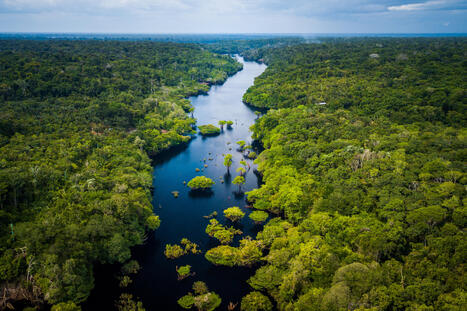
Rivers across the globe in 2025 had one of the driest years in more than three decades. The WMO State of Global Water Resources Report shows a continuation of the long-term decline in Earth’s freshwater storage and in glacier retreat.The water cycle has also become more erratic and unpredictable, swinging between too little or too much. The past seven years have seen the fewest rivers with “normal” flows since 1991.Asia and Africa together accounted for at least half of all recorded water-related extreme events and more than 80% of reported associated deaths over the past five years, it says.The report provides a comprehensive, science-based assessment of the entire water cycle loop, including river discharge, groundwater, evapotranspiration, land water storage, and snow and ice, as well as high-impact events.
Scoop.it!
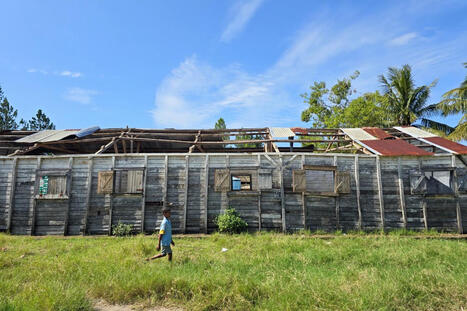
Global Snapshot on Climate-related School Disruptions in 2025
Scoop.it!
October 2026 Authors HAG, Carbon H, GLOW Consultants, Kateryna Korenkova, NSDation VIEW & DOWNLOAD Download Playbook on Equitable Risk Sharing Risk sharing is ultimately a test of power and partnership.
Scoop.it!

The General Assembly Digital Handbook on Peace and Security
Scoop.it!
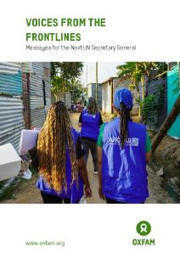
This report, produced as part of Oxfam’s engagement for the UN General Assembly, brings together the personal testimonies of civil society leaders living and working on the frontlines of conflict. Their voices come from the Democratic Republic of Congo, Ukraine, Lebanon, the Occupied Palestinian Territory, Colombia, Yemen, Syria, South Sudan and Ethiopia. Through these testimonies, […]
Scoop.it!
A review assessing the relevance of UK aid for energy transition in low- and middle-income countries from 2021-22 to 2025-26.
Scoop.it!

From
voxdev
VoxDevLits are living literature reviews that summarise the evidence base on policy-relevant topics related to development economics in an accessible manner
Scoop.it!
From
www
This new WHO and UNICEF report reveals significant gaps in essential water, sanitation, hygiene and environmental health services in health-care facilities worldwide. Despite notable gains since 2015, only four in ten facilities meet basic sanitation standards and fewer than six in ten achieve basic environmental cleaning standards such patient rooms and wards, operating theatres, examination and treatment areas, toilets and sanitation facilities, leaving patients and health workers exposed to preventable health risks. The report provides the clearest global picture yet of these essential services in health-care facilities.
Scoop.it!
From
www
Global youth unemployment is rising as stagnant economic growth and weak job creation increase barriers to job entry for young people and push more of them outside employment, education or training, according to this new report from the International Labour Organization (ILO). The Global Employment Trends for Youth 2026: Back to the future report shows that the global youth unemployment rate rose to 12.4 per cent in 2025, equivalent to 67 million unemployed people aged 15 to 24 years. At the same time, the share of young people not in employment, education or training (NEET) increased slightly to 20 per cent, affecting more than 257 million people. Some of the sharpest rises in youth unemployment have been in higher-income economies, frustrating the aspirations of millions of young people at the start of their working lives.
Scoop.it!
This volume explores the complex intersection of climate change and migration from interdisciplinary and international
|




