"A concept map is a picture of our understanding of something. It is a diagram illustrating how sets of concepts are related. Concept maps are made up of webs of terms (nodes) related by verbs (links) to other terms (nodes). The purpose of a concept map is to represent (on a single visual plane) a person’s mental model of a concept.
Concept maps provide a useful contrast with essays. With a concept map, a viewer can see both the forest and individual trees. The big picture is clear because all the ideas are presented on one surface. At the same time, it’s easy to see details and how they relate."
"If you moderate or participate in tweet chats, you know how frantic they can be. In a lively discussion, you can get a constant firehose of tweets pouring at you over the course of the chat, often an hour or so.
Capturing the full flood of Twitter chat is no easy task. There are workarounds (eg, copy tweets and paste periodically into a text editor, or use Storify) yet most if not all are pretty manually intensive.
As a continuing advocate and lover of RSS feeds, it’s great to learn of a simple and easy way to use RSS to automatically capture all tweets in a chat, and in a way that gives you the rich wholeness of a tweet: links to content and to the tweeter’s profile.
"Managing resources is one of the most important skills for students (people!) to master. I started blogging in 2000 and have spent a significant amount of time trying to devise an information management system that I can use to make sense of a topic or discipline. I've attached an image below that highlights the process and tools that I use." (George Siemens)
"KBucket as a platform is designed to be a search site for curated content. Each search term will give you tens of possible curated and researched pages on the topic of your interest. Our vision for KBucket is a Wikipedia type platform curated and clustered by humans . This video explains our vision."
"Is all talent innate, or can it be learned? A look at true geniuses shows that specific training methods and good, old-fashioned practice go a long way. What are the methods that smart people use to learn faster? Across a variety of learning theories and mnemonic tricks, one broad generalization stands out: Smart people learn through connections."
"I started thinking and drawing about the many & varied ways I store, share, create and consume media and information. So this map emerged and it has provided me with a simpler ‘way’ of doing stuff this year."
"My work in the area of mobile technology and my experience using mobile devices in the classroom gives me some strong reservations with the idea that our devices are luring us away from a deep connection with each other and with our spaces. While our device can and do pull us away from a deep engagement with people and spaces, this doesn’t have to be the default mode for the ways we use our mobile media. Instead, if used in a dynamic way that addresses the medium’s strengths, mobile media can actually get us to engage with each other and with the spaces we move through in deep, meaningful, and context-rich ways."
"Do you love Chrome, but miss having live RSS feeds in your bookmark toolbar and menus? Foxish brings this famous Firefox feature to Chrome, and it’s only a click away. Firefox has, for ages, offered built-in support for RSS feeds. Showing up essentially as folders in Firefox’s bookmark menu and toolbar, RSS feeds in Firefox make it easy to keep up with blogs and other websites that regularly update. So it was strange when Google Chrome launched and they didn’t include this feature. Four years later and this hasn’t changed. Open an RSS feed with Chrome and you’ll be offered a variety of web-based RSS readers, like Google Reader, but not the option to add the feed to your bookmarks. Many people think this was a bad move by Google and the Chrome team, even if they switched from Firefox to Chrome. Do you agree with them? If so, then you’re in luck! Foxish, an extension for Chrome, lets you put your feeds where you want them – with your bookmarks."
"The reason is that if we allow ourselves to blame the technology for distracting us from our children or connecting with our communities, then the solution is simply to put away the technology. We absolve ourselves of the need to create social, political, and, sure, technological structures that allow us to have the kinds of relationships we want with the people around us. We need to realize that at the core of our desire for a Sabbath isn't a need to escape the blinking screens of our electronic world, but the ways that work and other obligations have intruded upon our lives and our relationships.
We can begin by mimicking the Sabbath in small, by recognizing that by dedicating time to one activity or one person, without interruption from gadgets, work, or other people, will help us slow down and connect. We can use our gadgets to do this -- a long talk on the phone is the most obvious way -- or we can leave them out of it.
Such minimal steps won't build something profound like Heschel's "palace in time." They'll result in something smaller -- something more like little forts in time. And there, in these forts, we can take shelter, replenish our resources, and gear up for the battles of the week ahead."
"As people who are designing/developing and/or managing web projects, we usually pay a lot of importance to metrics and their trends -website statistics, Twitter follower numbers, the number of sales of a product and so- to better analyze if things are performing as expected.
All these data are usually behind different applications/interfaces; Google Analytics keeps the stats, the number of comments are in the WordPress admin, leads can be viewed from SalesForce or invoices are in Freshbooks. And, there can be some others like the data in custom apps.
Logging into each of them to get a snapshot of everything usually takes a lot of time. And, this is what Cyfe is about.
Cyfe is a hosted dashboard with a simple and good-looking interface that allows us to view any data from a single place."
"We all spend time every day looking for information in our email, yet we know little about this refinding process. Some users expend considerable preparatory effort creating complex folder structures to promote effective refinding. However modern email clients provide alternative opportunistic methods for access, such as search and threading, that promise to reduce the need to manually prepare."
Improving Mental Focus IQ Matrix takes a detailed look at how you can develop your ability to focus more effectively on your goals, tasks and routines in order to boost your productivity and concentration throughout the day.
"I promise, for at least 18 months, to not bring this topic up again. But I do feel the need to report to all you RSS lovin’ freaks out there that the combined interactions on my two posts – 680 and still counting – have exceeded the reach of my RSS feed (which clocked in at a miserable 664 the day I posted the first missive).
And as I said in my original post:
If I get more comments and tweets on this post than I have “reach” by Google Feedburner status, well, that’s enough for me to pronounce RSS Alive and Well (by my own metric of nodding along, of course). If it’s less than 664, I’m sorry, RSS is Well And Truly Dead. And it’s all your fault."
"The article begins with a definition: media literacy is the ability to access, analyse, evaluate and create messages across a variety of contexts. This four-component model is then examined for its applicability to the internet. Having advocated this skills-based approach to media literacy in relation to the internet, the article identifies some outstanding issues for new media literacy crucial to any policy of promoting media literacy among the population. The outcome is to extend our understanding of media literacy so as to encompass the historically and culturally conditioned relationship among three processes: (i) the symbolic and material representation of knowledge, culture and values; (ii) the diffusion of interpretative skills and abilities across a (stratified) population; and (iii) the institutional, especially, the state management of the power that access to and skilled use of knowledge brings to those who are ‘literate’."
I bought and read the book. Good one. Recommended. "The Principle of Relevance
The Essential Strategy to Navigate Through the Information Age
“What will you pay attention to?”
How many emails do you receive? How often do you find yourself in information overload? Have you lost control of your time to a constant flood of emails and digital messages?
Today’s competitive edge is no longer based on availability of information, but rather on the ability to navigate through a flood of high speed data and select, access, use and respond to the information that is most relevant.
The Principle of Relevance trains your mind to become aware of its information processing habits and become more effective in processing digital information without succumbing to information overload."
"How can we use digital media so that they help us become empowered participants rather than passive consumers? In Net Smart, I show how to use social media intelligently, humanely, and, above all, mindfully. Download the table of contents (PDF) here.
Mindful use of digital media means thinking about what we are doing, cultivating an ongoing inner inquiry into how we want to spend our time. I outline five fundamental digital literacies, online skills that will help us do this: attention, participation, collaboration, critical consumption of information (or "crap detection"), and network smarts. I explain how attention works, and how we can use our attention to focus on the tiny relevant portion of the incoming tsunami of information. I describe the quality of participation that empowers the best of the bloggers, netizens, tweeters, and other online community participants; I examine how successful online collaborative enterprises contribute new knowledge to the world in new ways; and I present a lesson on networks and network building.
There is a bigger social issue at work in digital literacy, one that goes beyond personal empowerment. If we combine our efforts wisely, it could produce a more thoughtful society: countless small acts like publishing a Web page or sharing a link could add up to a public good that enriches everybody."
Robin Good: A great video animation introducing some of the key ideas, dreams and concepts behind content curation.
From the video: "One of the most beautiful things about the Internet is this sort of radical discovery, where you start in a place that you are familiar with, that you trust, and then you drill down and down and chase the white rabbit and then you end up in some wonderland you didn't know existed."
The clip includes thoughts from some unique curators, picked and selected by Percolate, the company sponsoring this video.
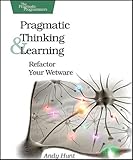
"In this book by Andy Hunt, you'll learn how our brains are wired, and how to take advantage of your brain's architecture. You'll learn new tricks and tips to learn more, faster, and retain more of what you learn.
You need a pragmatic approach to thinking and learning. You need to Refactor Your Wetware."
"From the data, it seems that a growth mindset, whereby you believe that intelligence can improve, lends itself to a more adaptive response to mistakes – not just behaviorally, but also neurally: the more someone believes in improvement, the larger the amplitude of a brain signal that reflects a conscious allocation of attention to mistakes. And the larger that neural signal, the better subsequent performance. That mediation suggests that individuals with an incremental theory of intelligence may actually have better self-monitoring and control systems on a very basic neural level: their brains are better at monitoring their own, self-generated errors and at adjusting their behavior accordingly. It’s a story of improved on-line error awareness—of noticing mistakes as they happen, and correcting for them immediately…."
"I was taken to task yesterday for limiting the list of software recommended in Best tools and practices for concept mapping. This morning I did some research and came up with a credible list of the ten most-recommended tools for mind mapping and concept mapping (out of fifty listed at least once). I eliminated titles that had not been updated in the past two years or were neither cross-platform nor web-based. The items are listed alphabetically."
"http://informationdiet.com -- Introduction to the concepts behind The Information Diet, a new book by Clay Johnson. The Information Diet makes the case that it's time we started being as selective with the information we consume as we are the food that we eat, then describes what a healthy diet and healthy habits look like."
"The modern human animal spends upwards of 11 hours out of every 24 in a state of constant consumption. Not eating, but gorging on information ceaselessly spewed from the screens and speakers we hold dear. Just as we have grown morbidly obese on sugar, fat, and flour—so, too, have we become gluttons for texts, instant messages, emails, RSS feeds, downloads, videos, status updates, and tweets.
We're all battling a storm of distractions, buffeted with notifications and tempted by tasty tidbits of information. And just as too much junk food can lead to obesity, too much junk information can lead to cluelessness. The Information Diet shows you how to thrive in this information glut—what to look for, what to avoid, and how to be selective. In the process, author Clay Johnson explains the role information has played throughout history, and why following his prescribed diet is essential for everyone who strives to be smart, productive, and sane."
PersonalBrain Webinar registration: Frebruary 15, 2012, 11 AM -12:00 PM
"We’re all connected to a vast sea of information: twitter, email, news and social networking sites, blogs and corporate portals …But with all this information at our fingertips it begs the question: are we getting smarter with all this data or just bogged down?
With PersonalBrain you can create large networks of information that match your style of thought, finally putting you in control of the deluge of information, instead of it controlling you.
In this must see webinar we’ll cover strategies to master information overload so you can actually leverage relevant information sources and capture your best knowledge."
"This useful Firefox addon will automatically display some of the most known citation indices (h-index, g-index, e-index) for any author, when querying on Google Scholar."
"According to a study by LexisNexis, 57% of U.S. workers say that since the economic downturn, the amount of information they have to process has significantly increased. Another 73% report that search engines give them access to huge amounts of information but don’t help them prioritize their work. And even when workers aren’t sifting through search results, they’re under a barrage of other information competing for their attention. News and updates are constantly pushed to workers over the Internet, whether they like it or not. A study at Temple University found too much information leads people to make stupid mistakes and bad choices due to a drop in activity in the dorsolateral PFC region of the brain. The study also found that “the brain’s emotion regions — previously held in check by the dorsolateral PFC — run as wild as toddlers on a sugar high,” causing anxiety and frustration."
To get content containing either thought or leadership enter:
To get content containing both thought and leadership enter:
To get content containing the expression thought leadership enter:
You can enter several keywords and you can refine them whenever you want. Our suggestion engine uses more signals but entering a few keywords here will rapidly give you great content to curate.


 Your new post is loading...