


|
Rescooped by
michel verstrepen
from Connectivism
January 31, 2014 1:24 AM
|
 Scoop.it!


No comment yet.
Sign up to comment

 Your new post is loading...
Scoop.it!
No comment yet.
Sign up to comment
Scoop.it!

Mikko Hakala's curator insight,
January 27, 2014 2:47 AM
Guides for: Forms, Docs, Drawing, Slides, Sheets, Offline work
Scoop.it!

Scoop.it!
Much of the information students use in their research papers come from internet and be it a blog post, an email, or wiki entry, students need to properly cite and document their sources as is recommended by the citation format embraced by their professor or teacher. MAL and APA are two of the most frequently used citation styles but most high schools use MLA. In the present post I am sharing with you a simplified guide on how to cite online information using MLA style. I have also created a visual poster that goes along with this guide. You can use the poster with your students in class or share it on your blog as long as you do not charge people for it and as long as you credit Educational Technology and Mobile Learning as being the original source.
Scoop.it!

Scoop.it!
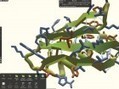
"FOLDIT IS PART of a growing trend toward citizen science: enabling ordinary people, often without formal training, to contribute to scientific research in their spare time. The range of involvement varies. Some citizen scientists donate idle time on their home computers for use in solving problems large in scale (the search for intergalactic objects, as in Einstein@home) or small (folding proteins). Other projects encourage participants to contribute small bits of data about themselves or their environments. The Great Sunflower Project, for instance, provides a platform for logging and sharing observations of pollinators like bees and wasps. Still other efforts enlist laypeople to tag and analyze images: Eyewire, for example, a game developed by Sebastian Seung ’86, Ph.D. ’90, a professor of computational neuroscience at MIT, involves participants in mapping neurons in the brain." Via Howard Rheingold 
Howard Rheingold's curator insight,
January 26, 2014 1:58 PM
Citizen science, enabled by inexpensive but highly accurate sensors and the use of digital media and networks to aggregate and qualify citizen-gathered data, is a form of augmented collective intelligence with a potentially rich future. This Harvard Magazine article is a good contemporary summary. For an in-depth look at this potential, I recommend the book Reinventing Discovery. 
Chad Gaffield's curator insight,
January 27, 2014 8:34 AM
The full blossoming of `citizen science` has a long history in the social sciences and humanities that is now becoming much more important thanks to enabling digital technologies. One major example is the ways in which genealogists and academic researchers have collaborated to study demographic change by using sources such as church parish registers to track births, marriages and deaths. The former paper methodology now involves sophisticated digitization, computation and visualization that underpins both academic research and global businesses such as Ancestry. Other examples include public participation in developing museum exhibits and scholarly editions of significant texts.
Scoop.it!

Explee is a cloud-based presentation software that allows you to create amazing and mind-blowed animated videos. Select animations that fit with your speech and produce your video. The result: a beautiful and efficient video presentation. Via Kathleen Cercone, Yasemin Allsop 
dipumphrey's curator insight,
January 26, 2014 4:54 PM
gtimthmykmknmnmkmnkmymknmh bkkkmkmknkgooongn,ho,g
g,kkmhm n,nhnh
Scoop.it!

ContentsPerspectives on TheoryIntroduction: An overview of theory in communication studyTheorists and Approaches to CommunicationUncertainty Reduction: Charles Berger, Richard CalabresePropaganda and the Public: Walter Lippmann, Harold D. Lasswell, Edward Bernays, and Jacques EllulUses and Gratifications: Herzog, Katz, and friendsThe Frankfurt School: Max Horkheimer and Theodor AdornoCommunicative Action: Habermas CommentarySemiotics and Myth: Roland BarthesOrality and Literacy: Walter OngDiffusion of Innovations: Gabriel Tarde, Everett RogersSocial Systems: Niklas LuhmannNetwork Society: Manuel CastellsNonverbal Communication Via Manuel Pinto
Scoop.it!

The handy infographic below takes a look at different methods of online research, and gives a flowchart flush with a number of different web search options for you to try out.
Scoop.it!

rossignol.j's curator insight,
January 25, 2014 6:05 PM
36 videos en lien avec CERISE : tutoriel en recherche documentaire
Scoop.it!

“ Le public veut des infos plus constructives et une approche plus positive de l’actualité, nous dit cette semaine le baromètre annuel de La Croix. C’est justement la recette gagnante des nouveaux si...” Via Maxime Vaudano, CLEMI - Centre de Liaison de l'Enseignement et des Médias d'Information |
Scoop.it!

Comment écrire un bon article qui sera lu et diffusé sur les médias sociaux ? Un texte attrayant et cohérent ? Voici quelques conseils issus de mon expérience de journaliste... et qui devraient v... Via Gilles Le Page, Fabrice, massimo facchinetti, Arobasenet 
Muriel Pichon's curator insight,
January 30, 2014 5:53 AM
Le plus de cet article : la carte mentale l'accompagnant.
Scoop.it!

Personnellement, je suis un accro des moteurs de recherche, dès que je trouve une alternative à Google, je le teste pendant quelques jours pour savoir s’il correspond à mes besoins de marketeur averti :-). Via Frédéric DEBAILLEUL, DV 
Katelm's curator insight,
January 26, 2014 5:30 AM
Sortir de google est importat pour la recherche d'info. 
gawlab's curator insight,
January 26, 2014 10:55 AM
élargissez vos horizons dans la recherche sur le web, il n'y a pas que google et yahoo ;)
Scoop.it!
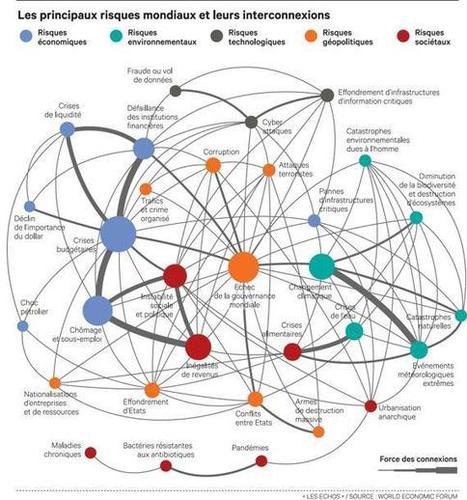
La carte de ces interconnexions fait apparaître un danger central : l'échec des instances de gouvernance mondiale à traiter les défis qui se présentent à l'humanité. La crise de 2009, l'explosion des dettes, le ralentissement des pays émergents ont accéléré la tendance des pays à se replier sur eux-mêmes et la défiance à l'égard des institutions internationales. Via Solange Hémery 
Bethlehem Hickman's curator insight,
January 22, 2014 9:04 PM
Crise de l'eau et changement climatique figurent parmi les 5 risques les plus préoccupants au même rang que le chomage une raison d'esperer. 
Christophe CESETTI's curator insight,
January 26, 2014 5:22 PM
Pearltree "Crise systémique & chaos économique" http://pear.ly/Zkt5 avec notamment cette carte sur l'interconnexion des dettes http://pear.ly/gJGwi
Scoop.it!
17/01/2013 - Pour Bertrand Paul, "le bon sens voudrait que les collectivités locales donnent toutes accès à leur données sur la même plateforme publique. Hélas, il n’en est rien." Via Pascale Bouton
Scoop.it!

Tice, B2i, C2i, école, collège, lycée, TNI, TBI, education, numérique, quizz, tablettes, tactiles, actualités tice, tni, tbi, quizz, cahiers d'activités, test, ressources, exercices, réseaux sociaux, twitter, facebook... Via clamy_65
Scoop.it!

Google+ est en train de bouleverser les modalités traditionnelles de référencement web. Retour sur une révolution qui ne dit pas (encore) son nom. Via Pierre Verdickt
Scoop.it!

Plusieurs d’entre vous m’ont demandé des conseils et des outils pour mieux gérer au quotidien leurs comptes Twitter. Via Elena Pérez
Scoop.it!

"Consciousness is information integration across sensory modalities. The information is transferred by waves riding waves...riding waves. If you think of a wave as a cyclical event then you can start with your biological waves(cycles) like your circadian rhythm and work your way up to other waves like light and sound. Radio, for example is a sound wave hitch hiking on a light wave to get that information to your device. The brain works on a set of activation and inhibition waves riding on a set of noise waves for amplification. When your attention tunes to a specific wave you become aware of the information in that particular wave by the adjustment of your sensory apparatus."
Via ddrrnt
Scoop.it!

Lors de la sixième édition du FIC ( Forum International de la Cybersécurité), le ministre de l'Intérieur Manuel Valls s'est exprimé en faveur d'un encadrement plus strict des réseaux sociaux sur Internet, et notamment du réseau Twitter.
Scoop.it!

This article provides detailed guidance on the use of a step-by-step process for using Excel as a tool to support the analysis of qualitative data for research or evaluation purposes. Via DfID Evaluation Department, Rui Guimarães Lima
Scoop.it!

This infographic chronicles the history of feed formats, from its humble search engine origins to the dominance of feed-based news readers and networks. Via catspyjamasnz 
FrancoisMagnan's curator insight,
January 26, 2014 5:01 AM
Une infographie, et un point de vue sur l'histoire récente des "feeds"" ou flux d'information, qui des flux RSS à Twitter métamorphosent notre consommation de l'information. A titre personnel, j'ai un peu de mal à considérer de la même manière les formats libres des RSS qui me permettent de suivre sur les flux de mon choix sur les outils libres, et les flux des réseaux sociaux disponibles sur des plateformes propriétaires, mais sans doute de nombreux usagers voient tout cela d'un seul tenant.
Scoop.it!

It’s an open secret in the education community. As we go about integrating technology into our schools, we are increasing the risk and potential for plagiarism in our tradition-minded classrooms. |






