Your new post is loading...

|
Rescooped by
michel verstrepen
from DigitAG& journal
July 11, 2016 4:44 PM
|
Futurist experts have estimated that by the year 2030 computers in the price range of inexpensive laptops will have a computational power that is equivalent to human intelligence.
Via Andrea Graziano
“ Qu’est-ce qu’un manager digital ? Quels sont les principes à suivre pour manager avec les outils numériques ? Est-ce que le digital redéfinit le rôle du ma”
Via Atisy Joëlle
|
|
Rescooped by
michel verstrepen
from Pôle Régional Numérique
July 11, 2016 7:58 AM
|
Seulement une requête sur deux du Web provient d’un des 3,4 milliards d’internautes de la planète. Le reste du trafic est l’œuvre de robots.
Via Pôle Régional Numérique
|
|
Scooped by
michel verstrepen
July 11, 2016 7:56 AM
|
La directive pour renforcer la cybersécurité a été adoptée par le Parlement européen. Il s'agira d'harmoniser l'approche des opérateurs de services essentiels.
|
|
Rescooped by
michel verstrepen
from Pause Digitale
July 11, 2016 7:53 AM
|
Sébastien Haas est vice-président Stratégie et marketing du cabinet de conseil en ressources humaines ADP.
Il a commenté les résultats d'une étude sur l'avenir du travail dans les dix ans qui viennent.
Les Français y apparaissent plutôt optimistes, voyant notamment dans le numérique une occasion de faire un travail plus intéressant. Mais, pour cela, le management devra suivre.
Via Fadhila BRAHIMI
|
|
Scooped by
michel verstrepen
July 10, 2016 4:10 PM
|
Open Visual Trace Route vous permet de tracer le chemin de votre connexion Internet, lorsque vous tapez une adresse web dans votre navigateur, plus précisément, le chemin pour...
|
|
Scooped by
michel verstrepen
July 10, 2016 4:02 AM
|
Better Notes est une application pour iOS qui permet de prendre des notes à la volée avec une étonnante facilité.
Une appli de prise de notes simple et efficace.
|
|
Rescooped by
michel verstrepen
from Raspberry Pi
July 10, 2016 3:57 AM
|
In this article you will getting started with Arduino using Node.js.
Via F. Thunus
|
|
Scooped by
michel verstrepen
July 9, 2016 3:07 PM
|
This is the only suitcase in the world that able to follow you autonomously, even if in crowded situation and this is the most beautiful but simple suitcase you need for you comfort in travel
TL;DR: Many models of the future exist. Several are relevant. Hyperbolic model is strongest, but too strange.
Our need: correct model of the futureDifferent peo
Via juandoming
Software piracy is most rampant in China, but the value of pirated software in the US is higher.
Via Marylene Delbourg-Delphis
L'algorithme devient incontournable. Le numérique est partout. C'est une révolution avec ses clichés qu'il faut dépasser et une science informatique qu'il faut enseigner. Le passeur et informaticien, Gérard Berry nous dit "Pourquoi et comment le monde devient numérique" (leçon du 17 janv[...]
Via Elena Pérez
|
|
Rescooped by
michel verstrepen
from Disruptive Influencers
July 7, 2016 5:30 AM
|
We stand on the brink of a technological revolution that will fundamentally alter the way we live, work, and relate to one another. In its scale, scope, and complexity, th
Via Peter Thompson
|
“ Exit les stéréotypes, place à la créativité qui donne un sens à l'image ! C'est la nouvelle esthétique de la communication des marques relevée par Kantar Media. Quatre tendances de fond, venant chacune répondre à quatre attentes des consommateurs. Des évolutions suivies de près par Fotolia by Adobe. ”
Via Atisy Joëlle
|
|
Rescooped by
michel verstrepen
from Ressources humaines 2.0
July 11, 2016 7:57 AM
|
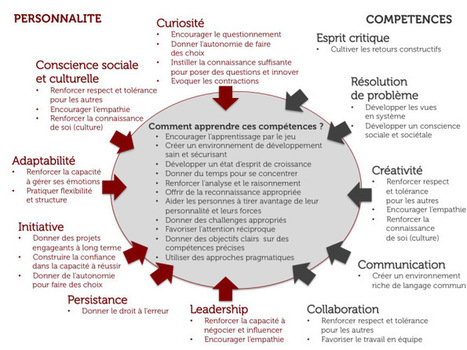
Aucun doute, le futur nous intéresse. Et comme le dit Woody Allen, nous avons plutôt intérêt… puisque c’est là que nous allons passer le reste de notre vie. Le Peoplesphere de février 2016 vous emmène dans les méandres des impacts de l’évolution socio-démographique sur nos organisations à l’horizon 2030. Le Forum Economique Mondial quant à lui a publié ce 10 mars un article particulièrement intéressant sur les compétences-clés dans le monde de demain. Les conclusions résultent de l’analyse de 213 enquêtes sur les nouveaux modes d’apprentissage des étudiants et de la mise en perspective avec les enseignements du dernier Forum Economique de Davos qui a eu lieu en janvier 2016. Morceaux choisis.
Via Edouard Siekierski, Geemik Maria Açucena Da Silva, Fabrice Landois
|
|
Scooped by
michel verstrepen
July 11, 2016 7:55 AM
|
Depuis 5 ans, l’Otan renforce sa politique de cyber-sécurité, la semaine dernière encore lors du sommet de Varsovie.
|
|
Rescooped by
michel verstrepen
from All About Coaching
July 10, 2016 4:11 PM
|
Listening and accountability are just some examples of small traits that make a big difference. These five soft skills can make or break your career.
Via Ariana Amorim
|
|
Rescooped by
michel verstrepen
from Moodle and Web 2.0
July 10, 2016 4:10 PM
|
Do you know the answer to the next simple question? "What do you know about web 2.0 technology?" What's so interesting about this video, is the simple fact that none of these so called digital natives are familiar with the term web 2.0. Although they never had a life without technology, they just don't know…
Via Ramiro Aduviri Velasco, Lynnette Van Dyke, Juergen Wagner
Interview de Valérie Peugeot, spécialiste des usages numériques et des biens communs, commissaire à la CNIL et ancienne vice-présidente du Conseil National
Via association concert urbain
|
|
Rescooped by
michel verstrepen
from SI & Technologies Web
July 9, 2016 5:56 PM
|
L'internet des objets (IdO) est un marché croissant d'objets physiques qui peuvent se connecter à l'Internet. Faire interagir ces objets dits communicants peut s'avérer très compliqué si l'on n'est pas informaticien ou bien tout simplement si le fabricant a la très mauvaise idée de ne pas permettre à son produit de participer à l'avancée de l'IoT en rendant possible l'interconnexion avec d'autres systèmes. Depuis de ombreuses années le service en ligne IFTTT apporte sa pierre à l'édifice non seulement en rendant ces échanges possibles entre objets connectés mais en leur permettant d'être simples.
Via Oziard Claude
|
|
Rescooped by
michel verstrepen
from Semantic Gnosis Web
July 9, 2016 5:52 AM
|
The technical potential for automation differs dramatically across sectors and activities.
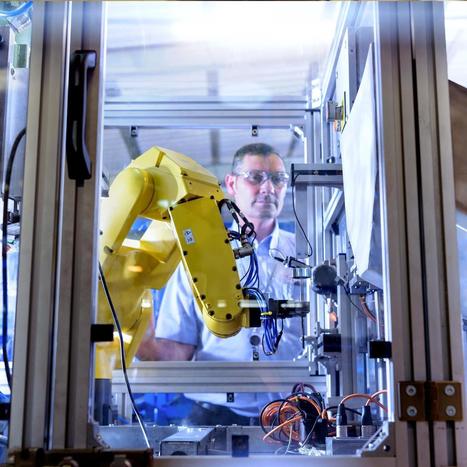
As automation technologies such as machine learning and robotics play an increasingly great role in everyday life, their potential effect on the workplace has, unsurprisingly, become a major focus of research and public concern. The discussion tends toward a Manichean guessing game: which jobs will or won’t be replaced by machines? In fact, as our research has begun to show, the story is more nuanced. While automation will eliminate very few occupations entirely in the next decade, it will affect portions of almost all jobs to a greater or lesser degree, depending on the type of work they entail. Automation, now going beyond routine manufacturing activities, has the potential, as least with regard to its technical feasibility, to transform sectors such as healthcare and finance, which involve a substantial share of knowledge work. From science fiction to business fact Video From science fiction to business fact McKinsey’s Michael Chui explains how automation is transforming work. These conclusions rest on our detailed analysis of 2,000-plus work activities for more than 800 occupations. Using data from the US Bureau of Labor Statistics and O*Net, we’ve quantified both the amount of time spent on these activities across the economy of the United States and the technical feasibility of automating each of them. The full results, forthcoming in early 2017, will include several other countries,1 but we released some initial findings late last year and are following up now with additional interim results. Last year, we showed that currently demonstrated technologies could automate 45 percent of the activities people are paid to perform and that about 60 percent of all occupations could see 30 percent or more of their constituent activities automated, again with technologies available today. In this article, we examine the technical feasibility, using currently demonstrated technologies, of automating three groups of occupational activities: those that are highly susceptible, less susceptible, and least susceptible to automation. Within each category, we discuss the sectors and occupations where robots and other machines are most—and least—likely to serve as substitutes in activities humans currently perform. Toward the end of this article, we discuss how evolving technologies, such as natural-language generation, could change the outlook, as well as some implications for senior executives who lead increasingly automated enterprises. Understanding automation potential In discussing automation, we refer to the potential that a given activity could be automated by adopting currently demonstrated technologies, that is to say, whether or not the automation of that activity is technically feasible.2 Each whole occupation is made up of multiple types of activities, each with varying degrees of technical feasibility. Exhibit 1 lists seven top-level groupings of activities we have identified. Occupations in retailing, for example, involve activities such as collecting or processing data, interacting with customers, and setting up merchandise displays (which we classify as physical movement in a predictable environment). Since all of these constituent activities have a different automation potential, we arrive at an overall estimate for the sector by examining the time workers spend on each of them during the workweek. Exhibit 1 Technical feasibility is a necessary precondition for automation, but not a complete predictor that an activity will be automated. A second factor to consider is the cost of developing and deploying both the hardware and the software for automation. The cost of labor and related supply-and-demand dynamics represent a third factor: if workers are in abundant supply and significantly less expensive than automation, this could be a decisive argument against it. A fourth factor to consider is the benefits beyond labor substitution, including higher levels of output, better quality, and fewer errors. These are often larger than those of reducing labor costs. Regulatory and social-acceptance issues, such as the degree to which machines are acceptable in any particular setting, must also be weighed. A robot may, in theory, be able to replace some of the functions of a nurse, for example. But for now, the prospect that this might actually happen in a highly visible way could prove unpalatable for many patients, who expect human contact. The potential for automation to take hold in a sector or occupation reflects a subtle interplay between these factors and the trade-offs among them. Even when machines do take over some human activities in an occupation, this does not necessarily spell the end of the jobs in that line of work. On the contrary, their number at times increases in occupations that have been partly automated, because overall demand for their remaining activities has continued to grow. For example, the large-scale deployment of bar-code scanners and associated point-of-sale systems in the United States in the 1980s reduced labor costs per store by an estimated 4.5 percent and the cost of the groceries consumers bought by 1.4 percent.3 It also enabled a number of innovations, including increased promotions. But cashiers were still needed; in fact, their employment grew at an average rate of more than 2 percent between 1980 and 2013.
Via Jan Bergmans
|
|
Scooped by
michel verstrepen
July 8, 2016 1:19 AM
|
Why do most people use social media at work? The most popular answer (34 percent) was to take a mental break, according to a new study by Pew Research Center.
Mental breaks were followed by:
Connecting with friends and family, 27 percent.
Making or supporting professional connections, 24 percent.
Getting information that helps solve problems at work, 20 percent.
Building or strengthening personal relationships with co-workers: 17 percent.
Learning about someone they work with: 17 percent.
Asking work-related questions of people outside of their organization: 12 percent.
Asking work-related questions of people inside their organization: 12 percent.
Unemployment rates in Spain and Italy have improved in recent months, but are still among the highest in the eurozone: 19.8% and 11.5% respectively in May, according to the latest Eurostat data. Youth unemployment is also definitely significant in those countries (43.9% and 36.9%), suggesting that the younger generations are [...]
Via Marylene Delbourg-Delphis
"L’enjeu du développement numérique des territoires invite aussi à repenser l’intervention des pouvoirs publics. Dans l’économie numérique, les approches ayant permis d’accompagner la croissance des entreprises fordistes — recours à la commande publique, déploiement d’infrastructures, promotion de la recherche et développement suivant le modèle de la “cascade”— sont inopérants. L’économie numérique ne se développe pas spontanément grâce au très haut débit. Une startup, enfin, n’a rien à voir avec une PME : il faut imaginer pour elle des dispositifs différents. Il n’est pas question de renoncer au développement des territoires. Plus la transition numérique progresse, plus les chances d’en saisir les opportunités se multiplient à l’échelle locale. Mais pour cela, il faut à la fois mieux comprendre l’économie numérique et imaginer les leviers que peuvent actionner les acteurs des territoires. C’est à cet effort que participe la nouvelle étude de place de TheFamily, ''La transition numérique au cœur des territoires''."
Via PhCourcier
|