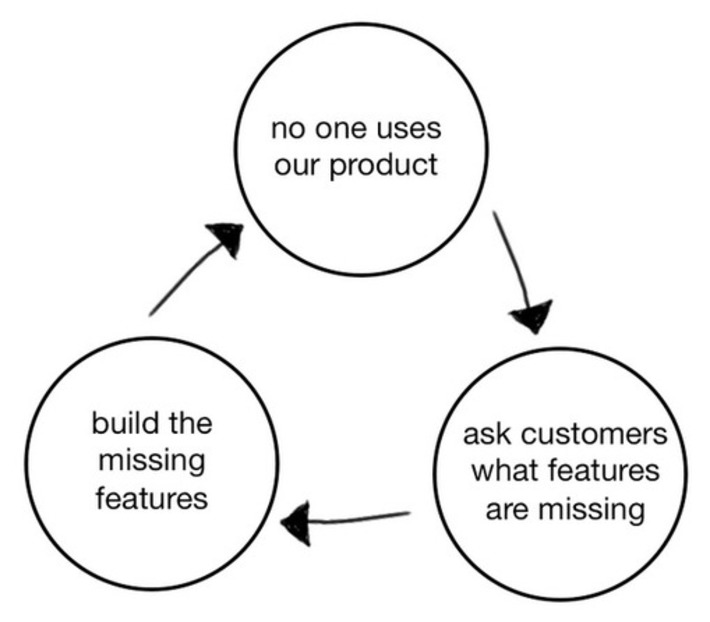
The hardest part of any new product launch is the beginning, when it’s not quite working, and you’re iterating and molding the experience to fix it. It may be the hardest phase, but it’s also the most fun. The Product Death Cycle All of this was on my mind when I saw a great tweet from …
Guillaume Decugis's insight:
Been there, done that...
And still seeing other entrepreneurs do the same mistake.
One feature... One feature is all it takes. Adding new ones won't save your product.
If I ask you what's the process map of your product's life-cycle can you answer me with a structured answer?
A simplification of the product life cycle is the process into what your product goes through from the point of development until it reaches the customer, ultimately starts declining in sales and returns feedback that will enhance the next version or triggers the closing of the product.
Now, this process assumes your product sells. This is why we're calling it a "Life cycle" but what happens if you don't sell?
The idea posted by Andrew Chen and exposed by David Bland is that at the start of a product launch if your product doesn't sell it has fallen into the Death Cycle. A process that (believe it or not) can benefit your product to the point of making the next version more profitable as long as you don't follow the mediocre three steps seeing on the top of the article.
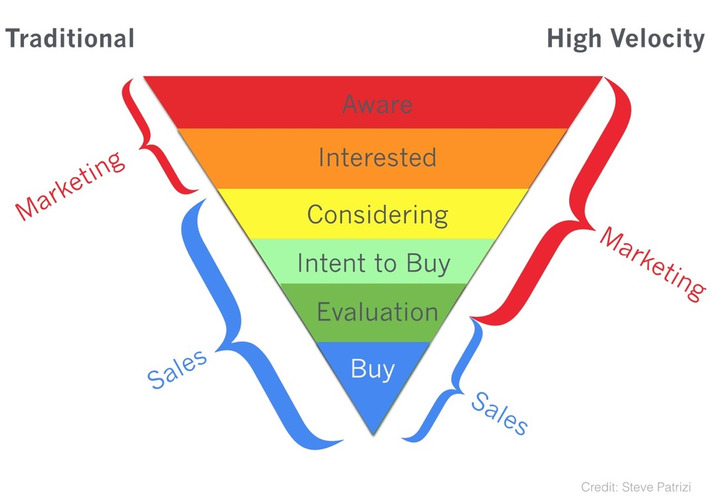
The role of the marketing team within SaaS has stretched from simply engendering awareness and creating interest, to guiding customers much deeper into the funnel. Steve Patrizi created the schematic above that illustrates the idea beautifully.
Guillaume Decugis's insight:
Marketing is taking a greater and greater lead (pun intended!) in SaaS companies as a part of the traditional scope of sales is shifting to marketers. That - plus the ability to understand product marketing through lean customer development - makes marketing skills a mus for SaaS founders.
Imagine if someone asked "would you invest in this company?" Your answer is going to be similar. With a few additions.Here's the checklist I would follow.
Guillaume Decugis's insight:
I love this guy. James Altucher has a way of making complex things crystal clear. Useful if you're considering working for a startup but also in symmetry if you're an entrepreneur looking to recruit.
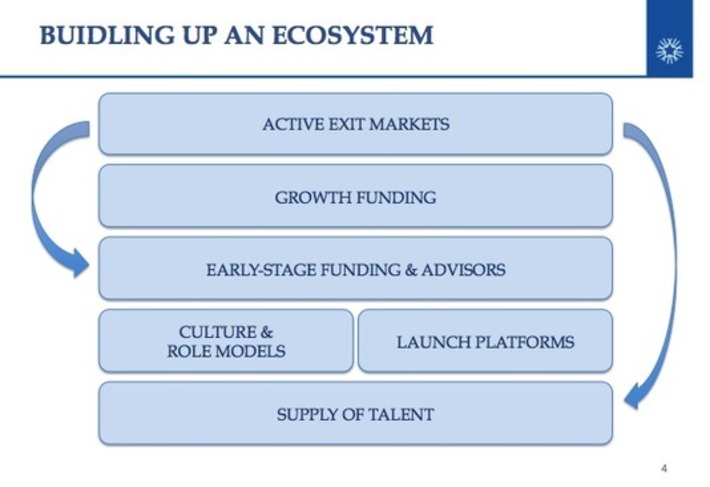
The required components to have a vibrant and sustainable tech ecosystem from my presentation at #premoney
Guillaume Decugis's insight:
How are the various tech startup ecosystems different from Silicon Valley? This very often asked question is answered in details and nuance here. And it's much more subtle than "we lack VC money".
I bolded the words, “growth is optional”, for a reason. I think this summarizes things so well. It might sound crazy because I’ve never met a company that says they don't want to grow. But many don’t do the things required to grow. It reminds me a lot of people who want to lose weight, stop smoking, or make some other major change in their life. They have the desire, but not the will to do the hard things.
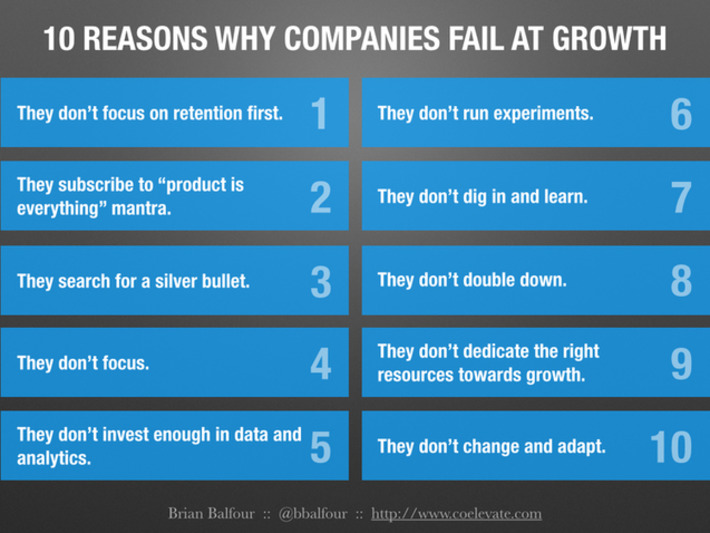
The concepts behind growth are much simpler than most people think. As with most things, it is executing that is the tough part. Here are 10 things I’ve seen companies fail at executing that prevent them from growing.
Guillaume Decugis's insight:
For having done a number of these mistakes myself, I find this is one of the best posts I've seen on that topic.
Teams are made of a variety of people with different views and sensitivities. So when things don't turn out the way you want, it can be extremely hard to stay focused on the right things.
#2 in particular is one thing I've seen many tech startups do, perhaps because a lot of them are engineering-driven at the core. They try to outcode themselves off a growth plateau through more features that will only get in the way and hurt their growth.
If you're having doubts - or when you'll have doubts - this is a good checklist to go back to with your team.
Price and complexity define a strategic spectrum of sales approaches for SaaS startups that gravitate strongly toward three distinct SaaS sales models.
Guillaume Decugis's insight:
A classic but still very interesting read by Joel York. Saas startups who pick up one precise quadrant will be more focused and probably do a better job. But this doesn't mean they can't expand as they grow:
- for instance by expanding from Enterprise to Transactional as SalesForce did offering SMB plans,
- or by expanding from self-service to Transactional or Enterprise as Dropbox did after having built a strong presence with its consumer self-service product.
We have been building 9 startups so far. Four of them are completely independent (Textmaster, Mention, Pressking, Mailjet) which means we don’t play any role in operations anymore, we just act as insightful board members.
Guillaume Decugis's insight:
Thibaud Elziere explains his model for e-Founders which is not an incubator but a startup studio and - in my opinion - much better. For a long time, people have been thinking of the right model to help startups and entrepreneurs. The old-fashioned incubator model seems very limited these days compared to initiatives like his or accelerators like Y Combinators. The reason is in the value they provide to entrepreneurs that they understand much better being founded by entrepreneurs themselves: it's not about providing a shared co-working space or cheap rent and wifi. This is about bringing the best possible combination of talent, network and execution to provide unfair advantage to entrepreneurs.
Great model which I'm sure others will embrace (some already have such as the Btwinz Fredenucci brothers).
The reality of consumer products I’ve never met an entrepreneur who’s happy with their metrics. Whether you’re talking about sign up rates, retention rates, or how often your users create content – on face value, the metrics always seem terrible. The secret is, almost everyone’s consumer product metrics are horrible, so once you start to …
Mathilde Collin shares her view on the difference between raising early-stage capital in the US compared to Europe, based on her own experiences.
Guillaume Decugis's insight:
Mathilde Collin is the CEO & Co-Founder of Front App and she gives a great perspective from her experience raising in the US after having tried in Europe - a question many European entrepreneurs have.
Now, what she writes is awesome and full of insightful points but I also couldn't help thinking that this is more a post about raising before YC vs raising after Y Combinator (Front was in the last batch). Due to its amazing track-record, YC has become a super strong "buy signal" to the VCs here in SV who, as she points out, are more concerned about missing the next Facebook than losing a marginal amount of their ever bigger funds.
Of course, you can argue that the mere existence of Y Combinator itself is a sign of how the ecosystem is more organized in the US than in Europe.
But if I were trying to raise seed right now, regardless of where I am, I would conclude one thing from her post: apply to YC.
The Valley is no longer about startups; it's about scale-ups.
Guillaume Decugis's insight:
Absolutely! And one of the things I keep repeating to many entrepreneurs who wonder whether they should come here or not. It's way easier to start in the rest of the world but Silicon Valley remains the best place to scale and dominate the world.
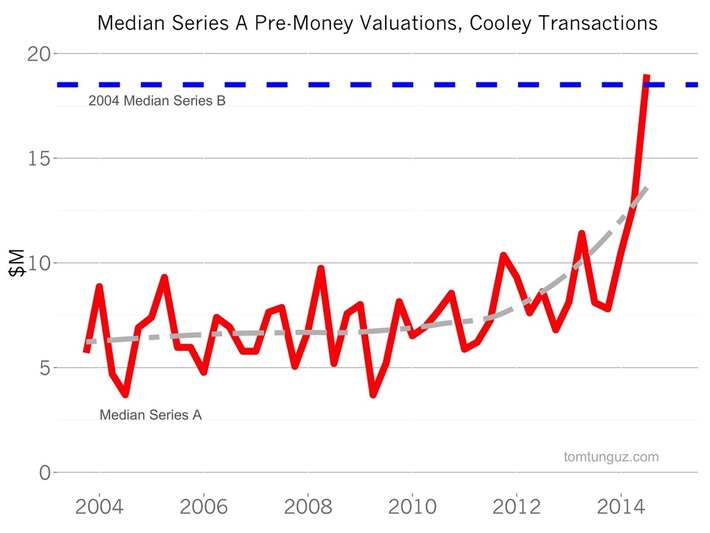
What a difference a few quarters make! In the past nine months, Series A valuations have skyrocketed. In fact, 2014 Series A pre-money valuations have surpassed Series B valuations from 10 years ago, accounting for inflation. The same is true for Series B valuations exceeding median Series C valuations a decade before.
Mistakes entrepreneurs should avoid when finding startup advisors and the reason it's so important to formalize an advisor agreement with equity.
Guillaume Decugis's insight:
I've often had that question and the above table is useful (and so is the template agreement that FounderDating put together here). Without going through too much complexity, formalizing (a little) helps making sure everyone is committed and aligned.
Taking on culture debt is risky and has a high interest rate. Here are 5 mistakes to avoid when hiring. (RT @ianetwork: 5 #Startup Hiring #Mistakes That Can Crush Your Culture !
Sam Altman and Dustin Moskovitz start off the How to Start a Startup Course. Sam's topic is "Ideas, Products, Teams and Execution, Part I" and Dustin's is "Why to Start a Startup".
Guillaume Decugis's insight:
Can't make it to Stanford? Here's the first lecture by YC Combinator's Sam Altman on entrepreneurship.
As he says in his introduction, entrepreneurship can not be taught 100% but a good part of it can and that's what he does in this lecture series which is just brilliant.
First and foremost, this lecture series will be for people who love and work on products, and in particular, software products.
This is who might benefit the most from this content:
Entrepreneurs, early startup employees, and PMs for big established products
Product managers, marketers, growth, and execs
… working on mobile apps, websites, enterprise/SaaS, and desktop software
Guillaume Decugis's insight:
If you think startup growth happens just because of luck or "learn by doing", you're probably missing out. Yes, it's not an exact science and it never will be. But there's a lot of rationalization that has been brought to the field in the past few years as we've had new methodologies based on experimentation and data such as the Lean Startup one.
Andrew Chen is certainly one of the most prominent contributors to the field with very clear, inspiring and practical essays on andrewchen.co.
Or, why even genius-level marketing gets no respect in Silicon Valley.
Guillaume Decugis's insight:
Beyond the sexual harassment story, the Tinder lawsuit revealed another interesting part of the startup culture in Silicon Valley: the myth that great products built by awesome engineers don't need marketing. Here's why it's wrong and why doing unscalable things early on to bootstrap usage or sales is critical to a company's success.
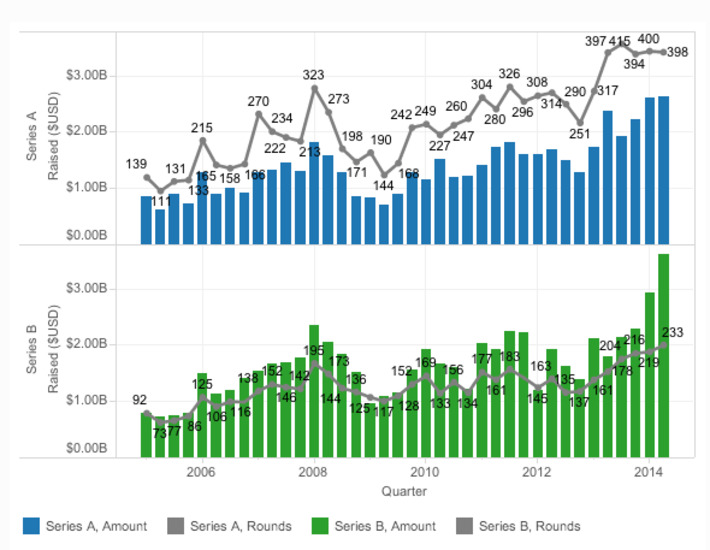
The Series A may be the new Series B, but as first round venture fundings have flat-lined over the past year, investors are increasing their bets on B rounds. Indeed, the dollar value of Series B r...
Guillaume Decugis's insight:
Series B crunch? Not really according to this data by CrunchBase which tracks most of the funding rounds. While Series A have leveled off over the past few quarters (at lest in number of transactions), Series B have kept increasing both in volume and amount.
Interestingly the Series B to Series A ratio is now above 50%.
Find product / market fit to get Series A and you' re (relatively) safe then?
A terrific SaaS VP of Marketing once told me, "If the sales team is focused on hitting this quarter's revenue target, then the marketing team ought to be focused on next quarter and the following quarter."
Guillaume Decugis's insight:
Do your marketing people know how many leads they need to generate for your sales team to be on target? Here's a quite straightforward but useful way to build the model up for Saas startups.
This was going to end badly.My boss screamed at me in front of my colleagues. I had done something wrong of course. I had sent a product to the client without debugging it thoroughly. It was my fault.
Guillaume Decugis's insight:
James Altucher might have Woody Allen style neurotic accents but he makes a lot of good points in there. Bottom line is that the "safe" career path that worked for your parents or grandparents is a thing of the past.
Time to think seriously about that startup project.
Imagine you're a 17-year-old girl at a well-to-do high school in Los Angeles, and you just discovered Snapchat. Until that moment, every time you thought..
Guillaume Decugis's insight:
Very interesting analysis debunking the myth that one single growth hacker could fix any startup's lack of growth. The secret of LinkedIn, Facebook, Twitter or Snapchat? A deep understanding of their users' psychology and motivations. Plus a perfect execution to make it frictionless and simplement to understand and tell.
“Imagine you’re sitting across from a reporter at lunch. You’re telling them what you do, your story, why they should care about your product. You have to convince this reporter to not only write about you, but that what you’re doing matters.
Guillaume Decugis's insight:
One of the common myths in Silicon Valley is that startups don't need marketing. But as shown by this long but excellent series of insights by Caryn Marooney, Head of Technology Communications for Facebook and co-founder of OutCast - the prominent SV PR agency, this couldn't be less true.
So many sales people rarely seem able to define what they do and how they help people in one or two short sentences. It took me longer than I ever thought it should have to develop such a seemingly easy, yet ridiculously, important task.
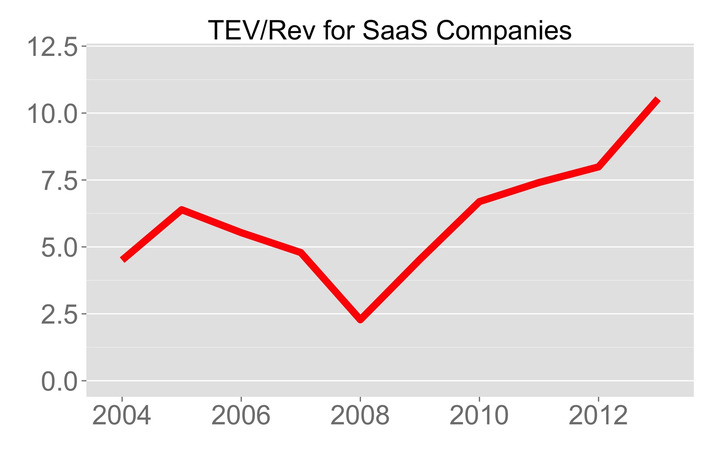
Consumer Apps used to be all the rage and WhatsApps + Instagram and others showed it was justified. But SaaS could be the new black and with consumerization of IT, there are interesting models to explore.
To get content containing either thought or leadership enter:
To get content containing both thought and leadership enter:
To get content containing the expression thought leadership enter:
You can enter several keywords and you can refine them whenever you want. Our suggestion engine uses more signals but entering a few keywords here will rapidly give you great content to curate.


 Your new post is loading...






























If I ask you what's the process map of your product's life-cycle can you answer me with a structured answer?
A simplification of the product life cycle is the process into what your product goes through from the point of development until it reaches the customer, ultimately starts declining in sales and returns feedback that will enhance the next version or triggers the closing of the product.
Now, this process assumes your product sells. This is why we're calling it a "Life cycle" but what happens if you don't sell?
The idea posted by Andrew Chen and exposed by David Bland is that at the start of a product launch if your product doesn't sell it has fallen into the Death Cycle. A process that (believe it or not) can benefit your product to the point of making the next version more profitable as long as you don't follow the mediocre three steps seeing on the top of the article.