Disaster relief efforts are characterised by complexity and uncertainty, which means they all need to be managed in a way that will create better responses. Disaster management therefore plays an essential role in the successful implementation of relief efforts. It all begins with the execution of the strategic process design. Disaster management involves...four phases: --Mitigation--Preparation--Response--Reconstruction
Looking at East Africa, the region has some of the highest consumer prices in the world, particularly outside major urban centers, due in large part to the high cost of transportation on poorly maintained and fragmented road networks. To take the extreme example, South Sudan has among the highest food prices in the world. Maize at the retail level is sold at US$ 10 per kilogram, and a three-liter bottle of cooking oil costs US$ 16. In fact, a tonne of maize costs more than triple the international price.
The pinch may not be felt as sharply in Kenya and Uganda, but there is no doubt that citizens have suffered as a result of decades of underinvestment in rail infrastructure.
...In August 2013, MSF announced the closure of all its projects in Somalia. The announcement followed the release of two MSF workers who had been kidnapped from Kenya's Dadaab refugee camp and held in Somalia for 21 months, as well as the murder of two MSF staff in Mogadishu and the release of their convicted killer after only three months in prison. These were the final blows in an accumulation of disastrous events; a total of 16 MSF staff were killed in Somalia since 1991...
...Over its 22-year history in Somalia, MSF has negotiated with armed actors and authorities on all sides. The exceptional humanitarian needs in the country have pushed the organisation and its staff to tolerate unparalleled levels of risk-much of it borne by MSF's Somali colleagues-and to accept serious compromises to its operational principles of independence and impartiality.
"In choosing to kill, attack, and abduct humanitarian aid workers, these armed groups, and the civilian authorities who tolerate their actions, have sealed the fate of countless lives in Somalia," said Dr. Unni Karunakara, MSF's international president. "We are ending our programmes in Somalia because the situation in the country has created an untenable imbalance between the risks and compromises our staff must make, and our ability to provide assistance to the Somali people."
...Unlike other developed nations, which purchase most food aid in the regions that receive it, the U.S. buys food from American farms, ships it on American vessels, and gives away much of the goods free of cost for humanitarian groups to distribute. Although the Government Accountability Office has concluded that this system is “inherently inefficient” and can be harmful to farmers in recipient nations, for decades the setup has been politically untouchable. A powerful coalition including agriculture companies, the military, the shipping industry and humanitarian aid groups ensured that any changes were dead on arrival in Congress.
But when an amendment to the farm bill seeking to shift up to half of U.S. food aid to local and regional purchases emerged in Congress in June, the tide appeared to be turning.
The Obama Administration estimated it could reach up to four million more people for the same price by purchasing half of its food aid locally. Big agriculture was mostly indifferent, with Cargill and the National Farmers Union endorsing the broad strokes of reform. The Pentagon gave its blessing, saying maritime readiness would not be harmed. Humanitarian groups had turned en masse against the current system, saying flooding poor countries with cheap foods was harmful to local farmers...
...As the vote approached, the shipping unions told Congress that the reform would destroy American jobs and gut the nation’s military sealift capacity. Their message was repeated among House members as they prepared on June 19 to cast their votes...The maritime unions’ success in persuading nearly half of Democrats to oppose a measure expanding the reach of food aid was not only a product of phone calls and effective lobbying...
The latest PwC transport and logistics research shows that while South Africa remains the top destination for transport and logistics companies, East and West Africa are making strides in improving their infrastructure in order to capture a greater share of the market.
In this video we interview PwC experts including Andrew Shaw, PwC associate director for capital projects and infrastructure for South Africa, and other transport and logistics industry leaders from Europe and East Africa.
In recent years, the subject of food waste has been raised repeatedly in industrialised countries, both in terms of reducing consumer food waste, as well as waste in distribution and retail. However, less attention has been given to tackling losses that occur at the beginning of the global food chain — in production. This is remarkable, given that it is estimated that in developing countries alone food loss at post-harvest and processing levels is as high as 40 percent.
This is a substantial figure, and one that needs addressing. A good place to start is with small-holder farmers, as the vast majority — 70 percent — of the world’s food starts its lifecycle in smallholdings.
CABI is a not-for-profit organization that works at the intersection of agriculture and international development. One of the problems we see on the ground, working with small-holder farmers in developing countries, is a lack of access to the knowledge and information that can help them integrate themselves into global supply chains. We are not only talking about crop and plant health information but also integrated soil fertility management, as well as practices and principles in supply chain management.
Practical problems that small holders face include not knowing how to produce at the rate of consumer demand or how to add value without adding to cost. They may not understand how to protect their crops from pests without using noxious chemicals, or apply them at rates that leave unacceptably high residue levels in the finished produce. They may not know the best ways to produce, store or transport food at the right international phytosanitary regulatory or retail specifications, meaning their products cannot enter the supply chain. Yet if the standards of their produce could be raised, not only would their livelihoods be improved, but the anticipated increases in global food demand could be better addressed.
The United States Africa Command (Africom) has awarded five major contracts for the supply and delivery of military equipment to Africa, including vehicles, tunnel detection systems and base infrastructure.
All the work is earmarked for completion by June 2017. Another contract dedicated to the expansion of Camp Lemonnier has been awarded to B L Harbert International LLC of Birmingham, Alaska, for the "construction of a forward operating site at Camp Lemonnier, Djibouti. The site will be comprised of 11 buildings, site work and supporting facilities required to support current and emerging operational missions.
"The following buildings will be constructed on a site that is approximately 20 acres in size: aircraft hangar, air operations centre, armoury, joint operations centre/tactical operation centre/communication centre, berthing/fitness/morale, welfare and recreation facility, logistics warehouse, maritime/riggers facility, training facility, engineering facility, vehicle maintenance shop, tactical support facility, and an aircraft parking apron." According to the notice, work will be completed by August 2016.
Kenya, Uganda and Rwanda are considering building a superhighway from Mombasa to Kigali, parallel to the planned railway.
According to regional trade lobby organization Trademark East Africa, which will be facilitating the project, it is expected to have a six-lane road, with construction beginning in 2016...
...This means that once the goods are loaded onto a truck at the Port of Mombasa, there will be no stops until the final destination. Weighbridges and roadblocks are among major hindrances to trade in the region.
As the cost of doing business in the region drops, intra-EAC trade, which currently stands at over $3.8 million, or just 13% of the total trade volumes in the region, is expected to increase...
"Logistics strategists can’t afford to ignore the African market of the future. The global transportation and logistics industry can play a vital role in Africa’s efforts to gear up – building its infrastructure, enabling supply chains and distribution networks, providing mobility – and ultimately helping create jobs for its people.”
Gateways to connect Africa to the rest of the world are also important. There aren’t enough ports to handle existing traffic. However, this is set to change, with plans in motion to build or expand five major ports: in the west at Barra do Dande and Lobito in Angola, and Lekki in Nigeria, and in the east at Musoma in Tanzania and Lamu in Kenya, according to the report.
Many companies looking to expand into East Africa are looking at Kenya as their preferred entry point. Kenya is still one of the easier African countries in which to do business – it has flexible labor regulations and investment laws that allow foreign investors to receive the same treatment as local ones, said the report.
But Kenya’s current transport infrastructure is inadequate to meet the country’s needs and significant improvement is required in the sector.
The 2013 Red Cross disaster report takes a close look at how technology can help with humanitarian activities. When there is a natural catastrophe, access to information is as important as to food and drink. NGOs are taking to geo-spatial mobile technology to collect data in real time in relation to people affected or about to be. You can warn a whole population in a hurry if it has smartphones.
A third of food produced never reaches our plates. Better transport, infrastructure and innovative ways of dealing with waste are vital to feed a booming population...
...Nowhere is the interconnectedness of food waste and food security more acute than in developing countries where poor diets, hunger, inadequate infrastructure and food mountains co-exist. In these markets, where many of the supply chains for the world's dietary staples such as rice and wheat begin, more than 40% of food is lost in the pre-consumption stage during harvest, drying, storage and transport.
In Sub-Saharan Africa alone, up to 150kgs of food produced is lost per person every year, according to FAO research. Therefore, although some element of waste is inevitable, reducing its scale will have a significant impact on the future of global food security and the sustainability of agricultural development...
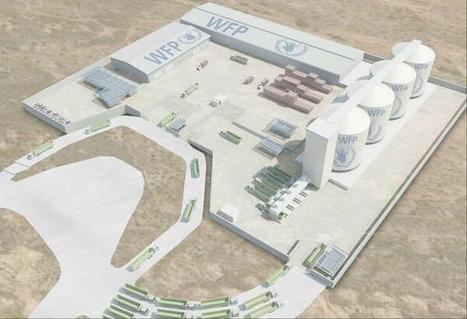
The World Food Programme (WFP) is the food assistance branch of the United Nations. This article by Jim Baum from Esri, looks at how GIS is providing assistance in a variety of applications includeing finding optimum locations for emergency food stockpiles and the development of evacuation plans.
A Chinese-funded railway project in Kenya that could transform transport in east Africa, and strengthen cross-border political and economic ties.
Kenya is known as the region's logistics, trade and transport hub. Yet, its railway dates back to the colonial era and the 300-mile (483 kilometer) journey from Mombasa to Nairobi currently takes 12 hours for passengers -- freight trains take up to 36...In November 2013, Kenyan president Uhuru Kenyatta laid the foundation stone for the construction of a new standard gauge railway line in Mombasa that will connect the coastal city with the Kenyan capital Nairobi.
...The state-owned China Road and Bridge Corporation (CRBC) will build the railway. The Chinese government has funded the first section of the project with $5.2 billion to build the Mombasa to Nairobi section. Work is expected to be completed by 2017...But the Mombasa-Nairobi section is only the first part of a much larger project. The standard gauge railway is planned to run between Mombasa and Malaba (in west Kenya) and eventually link to other major east African cities, namely Kampala (Uganda), Kigali (Rwanda) and Juba (South Sudan). With this, the Kenyan government is hoping to strengthen ties between those countries...
...In Dubai's International Humanitarian City (IHC), the Administrator saw the humanitarian supplies destined to meet the needs of refugees and displaced peoples in Syria and elsewhere. The UN's refugee agency and the World Food Programme have major warehouse facilities there. IHC is one of the world's largest and busiest logistics hubs for humanitarian aid, with nine UN agencies and nearly fifty NGOs and commercial entities using the facility...
More than one billion US dollars (about 1.6tri/-) is needed for the strengthening and deepening of seven berths at the Dar es Salaam Port, a move that will increase efficiency and boost cargo volume handling.
After the completion of the project, the port will be able to accommodate big ships in the same manner as the port of Durban, the largest harbour placed on major international shipping routes and South Africa's main cargo and container port...
...According to the transport lab recommendations, the ports and railways modernization will increase cargo handling to 18 million tonnes in 2015 from the current 12.1 million tonnes. The Port of Dar es Salaam, which services landlocked countries including Rwanda, Burundi, Uganda, Malawi, Zambia and Zimbabwe, handled about 12.1 million metric tons in 2012. TPA expects to handle 13 million tons in 2013.
Around a third of all the food produced in the world ends up being wasted somewhere along the production and consumption line, according to the UN's Food and Agriculture Organisation. In the UK, 50% of food waste occurs in the home: we throw away 7.2m tonnes of food and drink every year. That means the average household is putting £480 in the bin, rising to £680 for families with children. The rest of the waste takes place back up the supply chain, mostly on farms, but also during transport and in stores.
The consequences of all this waste go far beyond the burden on individual wallets – the land, water, fertilisers and labour that go into producing the food are also wasted, and we are left with the greenhouse-gas emissions from landfill and transport....
...Developing and developed countries account roughly evenly for the 1.3 billion tonnes of global food waste each year – but the nature of that wastage is very different. In developed countries, food is wasted throughout the supply chain, including at the consumption stage: the average European and North American consumer wastes 95-115kg of food a year. In sub-Saharan Africa and south/south-east Asia, very little is wasted by consumers. Here, most waste occurs early in the production chain, affecting millions of smallholders. Poor harvesting techniques, and a lack of storage and transport infrastructure, cause significant losses, reducing income and exacerbating local food insecurity.
BLOG and VIDEO...plus a fun African geography quiz!
The new round of fighting between Congolese government forces and the M23 rebels is reaching a dramatic climax...With the Congolese army having swept through all of the major towns that the M23 held -- Kibumba, Rumangabo, Rutshuru, Kiwanja, and, since this afternoon Bunagana -- the M23 may be nearing its end.
This would be historic. It would be the first time the Congolese government had defeated a major rebellion, and it would be the first time since 1996 that an armed group allied to Rwanda is not present in the eastern Congo...It is, however, too soon, to declare an end to the M23, as the rebels reportedly still occupy the hills along the Rwandan border between Runyoni and Tshanzu...
...If the M23 is defeated, the Rwandan, and possibly the Ugandan governments will have to decide whether they will arrest the fleeing leaders or give them amnesty...The Congolese army will be under scrutiny to see how they manage their victory. Any revenge attacks or targeting of suspected M23 collaborators could spoil the mood, and many will wait to see if they proceed to target the FDLR as promised....
Finally, the impact of a victory on the larger peace process in the region would be powerful. President Kabila, who signed the Framework Agreement last February largely due to pressure from the M23, could shake off some of the pressure on him to carry out national reforms and would be buoyed by the popularity such a victory would certainly bring.
A NEW packaging standard has been designed and endorsed by the East African member states including Tanzania where farmers and traders will now be required to fill up grains in sacks, not exceeding 50kgs instead of the current 100kgs.
The new development comes as a salvation to farmers in the country who have been complaining that grain buyers force them to sell their produce in sacks filled up to over 100kgs, hence selling in losses.
The total revamp of Africa Avenue last year, though cause for many complaints and traffic congestions at the time of construction, is no comparison to the havoc caused by the transformation of the eight kilometer long East-West road from Megenagna in Bole District, to Tor Hailoch in Lideta District, into a demolition zone. One of the two routes chosen for the under-construction Addis Abeba Light Railway Project (LRT), major construction is being undertaken on the road, considered the main transport corridor of the capital.
Looking at the current scene of jagged rocks, rain-filled holes, dust and construction vehicles, it is hard to envision the grand plans the city has for this corridor, including outfitting it with four interchanges and two overpasses. These are meant to accommodate the additional space that will be demanded when the train service starts.
The Chief Executive Officer of the New Partnership for Africa Development (NEPAD), Ibrahim Mayaki, has said that the ongoing 4,500-km Algiers-Lagos Trans-Saharan Highway construction would ease transportation.
The trans-Saharan Highway will also reduce transport costs between the two countries and boost intra-African trade.
He also added that the North-South transport corridor covering 2,800 km of road and rail networks between South Africa, Botswana, Zimbabwe, Zambia and Malawi would reduce transportation cost as well and boost intra-African trade.
He said that the critical need to enhance Africa’s cross-border trade and sustainable development informed the decision to promote the programme for infrastructure development in Africa.
Regional leaders have commended Kenya for accelerating movement of cargo across the region. Speaking during the 3rd Integration Infrastructure Projects Summit in Kigali, Presidents Yoweri Museveni, Salva Kiir and Paul Kagame noted that cargo from the port of Mombasa was now taking less time to reach their countries.
The leaders said the move by Kenya has reduced the cost of doing business, boosted economic growth and scaled up development in the region. “The overall effect is the wellbeing of the people of our region,” the leaders said.
President Uhuru Kenyatta said his administration prioritised removal of delays in cargo of clearance at the port of Mombasa and the challenges of transporting it along the northern corridor as part of its contribution to promoting regional trade.
The Skills for Africa programme idea was conceived in Kenya by ICT Authority and SAP East Africa and was officially launched in September 2012. Bright students from disadvantage backgrounds and women are considered for the training.
"SAP Africa recognises that addressing education and skills training is one of the best ways to deal not only with skills shortages facing the technology industry, but also help address Africa's chronic youth unemployment issue," said SAP Africa Chief Executive Officer Pfungwa Serima. "We recently signed a collaboration agreement with the World Bank to amplify our efforts to develop world-class IT and business skills, and it's great to see this first crop of young Kenyans successfully coming through the SAP Skills for Africa certification process."
SAP has committed to support the program that cost US$ 19,000 per student by training at least 100 graduates each year for the next four years. The company has subsequently rolled out the programme in a number of African countries.
Resilience is key this year when it comes to the delivery of humanitarian and development aid, which is why AidEx 2013 will feature innovative programs, exhibitors and products with the aim of better preparing countries for crises. Currently the number and scale of global emergencies are growing at an alarming rate, whilst at the same time budgets for the humanitarian aid sector are shrinking due to the economic downturn. AidEx 2013 brings together over 2,000 professionals and 200 suppliers from both civil society and the commercial world to discuss resilience and humanitarian action, as well as address wider issues facing the sector. The show is scheduled for Nov. 13-14 in Brussels, Belgium.
A huge transport infrastructure project due to link Kenya’s coast, Juba in South Sudan, and Ethiopia by 2030 is raising questions about the potential impact on the livelihoods of pastoralists, and protection and compensation for those adversely affected.
The 1,700km Lamu Port and Southern Sudan-Ethiopia Transport Corridor (LAPSSET), launched in March 2012 by the governments of Kenya, Ethiopia and South Sudan, with Uganda also recently joining, constitutes part of Kenya’s long-term development plan known as Vision 2030, and is projected to boost Kenya’s GDP by at least 3 percent, according to Jonathan Lodompui of the Vision 2030 secretariat. Lodompui was speaking at a forum on LAPSSET, which was convened by the Rift Valley Institute.
LAPSSET projects include a port in Lamu; a 1,500km standard-gauge railway line from Lamu to Nakodok, along the Kenya and South Sudan border; oil pipelines to South Sudan and Ethiopia; an oil refinery; three airports; and three tourist resorts - in the Kenyan towns of Isiolo and Lamu and on the shores of Lake Turkana.
Communities through whose land the LAPSSET corridor will pass are worried about potential land grabs and livelihood disruptions..."There is no such thing as free land in pastoral nomadic communities. Land is owned communally [and] this ought to be the route to negotiation over LAPSSET."
To get content containing either thought or leadership enter:
To get content containing both thought and leadership enter:
To get content containing the expression thought leadership enter:
You can enter several keywords and you can refine them whenever you want. Our suggestion engine uses more signals but entering a few keywords here will rapidly give you great content to curate.


 Your new post is loading...