Your new post is loading...

|
Scooped by
Beeyond
July 9, 9:11 AM
|
In April 2026, an unreleased AI model found a software flaw that had survived 27 years of human review inside OpenBSD, the operating system security professionals choose precisely because it is hardened. Anthropic deemed the model Claude Mythos Preview too dangerous to release to the public.
The telecom industry filed the story under cybersecurity and moved on. But that is the wrong reading of what is coming.
Mythos did more than embarrass the security profession. It exposed the founding assumption of the mobile generation model. Not the caricature that networks only change once a decade, because they are patched and upgraded constantly, but something subtler and harder to fix.
The generational cycle sets the speed at which the industry can revise its assumptions, and the operational doctrine around it sets the speed at which even routine fixes reach the live network.
|
|
Scooped by
Beeyond
July 4, 9:30 AM
|
Yup, you can be a trillion-dollar company; you can have the cheapest plans on the market; you can hire the best engineers in the world. But if you don’t have enough spectrum, everything is an uphill battle. Spectrum is the land your network is built on. Everything else, such as radios, software, and marketing, is what you build on top of it, and no amount of construction skill compensates for a small lot.
The United States is about to prove this twice. Once with fresh performance data that shows exactly how spectrum, not equipment, decides who wins today. And once with what’s coming with the mother of all spectrum auctions, 160 MHz of prime mid-band, the rules for which the FCC votes on July 22, 2026, which could redraw the American wireless map for the next decade.
|
|
Scooped by
Beeyond
July 1, 11:45 AM
|
A Token Policy architecture functions as a hybrid system, moving beyond the traditional network layers. It requires a convergence of functions that bridge the transport layer, where the 5G core operates, with the application layer, where token-based requests are actually generated.
Because the network must now “read” the intent of the traffic, we are essentially building a cross-layer gateway that sits between the user equipment and the service destination. The long-term viability of this approach depends on whether the 3GPP decides to standardize these functions.
|
|
Scooped by
Beeyond
June 26, 12:07 PM
|
The question of whether Elon Musk can execute a Jio-style entry into the US wireless market is easily answered: yes, he can, and it is highly likely to happen. There is a specific reason Musk has been selling a massive vision to his financial backers; during the recent IPO roadshow, SpaceX suggested to investors that Starlink’s addressable market is the entire global communications sector, representing an estimated $1.6 trillion in total value.
|
|
Scooped by
Beeyond
June 22, 9:50 AM
|
Telecom autonomy has struggled to evolve under traditional machine learning models because these older systems operate as uninterpretable black boxes. Machine learning excels at deterministic tasks and pattern recognition across massive datasets. However, network engineers managing critical infrastructure require clear explanations before executing system changes.
This lack of explainability stalled the progression of autonomous networks. Handing over control of complex actions without understanding the underlying math creates an extremely risky trust gap for Telcos. To resolve this, Nokia and Google Cloud designed the Gemini-powered agents using a “glass box” architecture.
Instead of executing an unverified command, the action reasoner agent functions as an advisory layer. It processes the network data and presents a confidence-based recommendation to the human operator. Because these specialized agents can explain their conclusions and reasoning, they elicit greater trust from users. Human engineers retain control and final approval over critical control points before logging and executing fixes. By combining autonomous data analysis with human observability, the platform establishes the required safety to deploy machine-speed operations.
|
|
Scooped by
Beeyond
June 19, 9:39 AM
|
Global mobile network data traffic grew by 22% between the first quarter of 2025 and the first quarter of 2026. That is a steady number, but it shows growth is slowing. Compare that to 2019, when the explosion of mobile video caused traffic to spike by 80% year-on-year. The data shows that the predicted AI data tsunami on the access network is absent.
|
|
Scooped by
Beeyond
June 18, 3:39 AM
|
By anchoring machine identities directly at the network or hardware level, operators can definitively authenticate automated assets and enforce strict security boundaries. Recent initiatives by operators like SK Telecom and StarHub demonstrate this emerging use case, moving beyond high-level AI experimentation to build concrete frameworks that assign verifiable identities to autonomous systems, enabling audit, monitoring, and secure machine-to-machine operations.
|
|
Scooped by
Beeyond
June 13, 9:10 AM
|
Sure, 6G will deliver necessary operational improvements. It will utilize new 7GHz spectrum, improve radio performance, and lower the cost per bit for operators still recovering from the 5G capex hangover. However, consumers and enterprises do not pay a premium for faster pipes. Connectivity is now a hyper-commoditized utility.
If Telcos want to capture value in this new economy, they must stop defining their core business as “connectivity.” Telecom is a distribution business.
Networks serve as the last-mile delivery system for the global economy. In the past, the industry distributed voice, SMS, and 8K video. Today, the asset being distributed is intelligence. Hyperscalers are building massive, centralized AI data centers, but that compute power requires a physical delivery mechanism to reach users.
To get in the path of the money, telecom operators must pivot to distributing AI agents and semantic compute to the edge.
|
|
Scooped by
Beeyond
June 1, 11:34 AM
|
Yes, Laser is the ultimate communications medium. Physics dictates that transmitting photons through a vacuum offers near-infinite bandwidth with zero latency constraints. But deploying naked lasers on Earth has historically been an exercise in frustration. Atmospheric turbulence, fog, rain, and physical interference forced the industry to wrap light in glass cables or default to the reliable, albeit slower, medium of radio frequencies.
For decades, Free Space Optics, or FSO, was dismissed as a fragile science experiment, and, to some extent, the case was officially closed.
Laser communications are back, driven by an explosion of technology developments and critical infrastructure needs that were once far from mainstream. Today, lasers are taking over every single layer of the network topology simultaneously, building a seamless architecture from space down to the terrestrial core. In orbit, optical inter-satellite links are creating massive mesh networks in a vacuum to route data globally.
|
|
Scooped by
Beeyond
May 29, 6:44 AM
|
Why is a company in its earliest revenue stages worth more than the giant that built the ground network?
Because the market believes space communications will be just as big as terrestrial ones. Investors are looking at future cash flows, betting that AST will carry a massive chunk of global mobile traffic, and do it with a SaaS-style model that completely bypasses the heavy, low-margin hardware trap telcos force on terrestrial vendors today.
|
|
Scooped by
Beeyond
May 27, 3:14 AM
|
There is a unicorn startup out of Latin America called NotCo. Their killer product is NotMilk. It is exactly what it sounds like: milk that tastes, pours, and froths exactly like milk. But it takes the cow completely out of the equation.
Yes! They removed the friction of the animal, the environmental tax, and the legacy supply chain, yet delivered the exact sensory outcome you want in your morning latte.
The telecom industry has the exact same problem.
After 150 years of legacy operations, the “telco” part of the equation produces nothing but friction. To be brutally honest, the word itself is tainted. It is universally associated with dropped calls, incomprehensible billing, utility, hidden fees, and hours wasted on hold.
But the reality is that today’s operators ( Telco) provide exponentially more value than basic connectivity alone. They are the invisible backbone of the modern digital economy. To survive, the industry needs to remove its own cow from the equation.
|
|
Scooped by
Beeyond
May 24, 5:51 AM
|
As a follow-up to our ongoing tracking of the telecommunication market, the structural contraction we’ve been mapping is visibly accelerating. The BT Group recently announced plans to eliminate up to 40% of its workforce by 2030, representing approximately 27,500 jobs. This follows a broader pattern across the global sector: Verizon recently executed a $2 billion restructuring program involving 15,000 corporate roles, while T-Mobile filed to reduce its corporate management layer in Bellevue, Washington. Across the entire ecosystem, operators and their supply chains are systematically reducing headcount.
The telecommunications labor market is locked into a structural contraction that will continue at least through this decade, and the reasons have nothing to do with AI or any technological shift.
|
|
Scooped by
Beeyond
May 21, 9:20 AM
|
To appreciate the significance of this development, it is helpful to look back at the previous defining era of telecommunications. In the early 2010s, as smartphones became ubiquitous and app economies exploded, the metric of value for both carriers and consumers shifted dramatically. This was the era of the gigabyte. Subscriptions, usage caps, and pricing tiers were all defined by data consumption. Telcos established the price per gigabyte as their primary billing KPI, monetizing the massive demand for mobile internet, video streaming, and app-based services. For a decade, the “GB per month” was the yardstick of digital life.
|
|
|
Scooped by
Beeyond
July 7, 10:12 AM
|
In 2020, the US government made a bet. To approve the merger of T-Mobile and Sprint, regulators needed to pretend the country would still have four wireless carriers, so they picked a successor. Dish Network, a satellite TV company run by Charlie Ergen, a former professional poker player who had spent two decades quietly hoarding spectrum licenses, would inherit Boost Mobile and its 9 million subscribers, buy divested spectrum, and build a brand new nationwide 5G network to challenge Verizon, AT&T, and T-Mobile.
Ergen built it. Between 2020 and 2025, Dish Wireless installed more than 144,000 radios on roughly 24,000 towers, covering over 80% of the US population. Court filings put the total investment at about $46 billion, more than $30 billion on spectrum and more than $16 billion on construction. And it was not a copy of anyone else’s network. Dish built the world’s first nationwide cloud native Open RAN network, with radios from Samsung and Fujitsu, software from Mavenir, and a core running in Amazon’s cloud. Engineers around the world studied it as the future of network construction.
But customers never showed up. Boost shrank rather than grew, sliding from 9 million subscribers to 7.53 million by early 2026, while quarterly net additions collapsed to a rounding error. A network sized for tens of millions of users carried a small fraction of that, and the bills kept arriving anyway. Tower rent alone ran to $567.8 million in 2025. By last year, Dish had quietly given up, moving Boost’s traffic onto AT&T’s network under a wholesale deal and, in August 2025, beginning the abandonment of the network it had just finished building.
|
|
Scooped by
Beeyond
July 3, 11:52 AM
|
On July 1, 2026, the Wall Street Journal dropped a story that moved $130 billion of market value in an afternoon: SpaceX had quietly shown investors a prototype handset during its IPO roadshow. Slimmer than an iPhone, with a proprietary operating system, a Qualcomm Snapdragon chip and xAI’s Grok woven into its core. Elon Musk’s response took four words, “utterly false”, and the market’s response took about 7% of SPCX shares, erasing more than $50 billion of Musk’s net worth and, for a day, his title as the world’s first trillionaire.
|
|
Scooped by
Beeyond
June 29, 9:49 AM
|
The question is not if, but how. Mapping the strategic paths for SpaceX’s entry into the terrestrial mobile space, and why, while difficult, it is far from impossible for Musk.
|
|
Scooped by
Beeyond
June 23, 9:44 AM
|
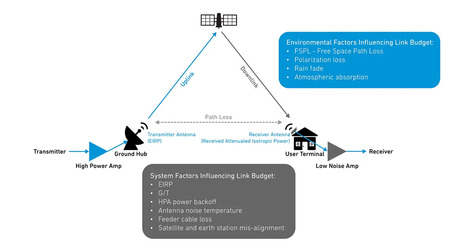
When a consumer installs a satellite dish on a roof, they establish a pristine, uncompromised line of sight to the sky using an active phased-array antenna with massive gain (30+ dBi). That architecture scales. Direct-to-Device does not. When you remove the dedicated roof dish and attempt to close that same 500 km link with an unmodified smartphone, you are forced to rely on an isotropic, omnidirectional antenna yielding roughly 0 dBi of gain and operating at a fraction of a watt of transmit power.
Despite the massive satellite apertures currently being deployed to brute-force the uplink, the laws of physics remain unforgiving. Orbital D2D cannot provide meaningful concurrent sector capacity, cannot provide low latency, and, due to a microscopic penetration margin, absolutely cannot provide indoor coverage.
Orbital D2D is more like an insurance policy. It is a brilliant, necessary solution for the 0.0001% of edge cases like the stranded hiker, the mid-ocean SOS, and extreme remote telemetry. But for Telcos tasked with delivering gigabits of data to dense urban and suburban populations, where 80% of data is consumed indoors, orbital D2D is practically useless as a core capacity layer.
|
|
Scooped by
Beeyond
June 21, 5:53 PM
|
At Reliance's Annual General Meeting, Jio shared a detailed proposal with India’s space regulator, IN-SPACe, outlining a massive orbital infrastructure project. The plan details the deployment of a proprietary Low Earth Orbit satellite constellation comprising approximately 1,650 satellites. Positioned at an operational altitude of approximately 650 kilometers, the network is designed to target two distinct service models: high-throughput rural fixed broadband and Direct-to-Device connectivity, which allows standard, off-the-shelf smartphones to connect directly to satellites without specialized satellite dishes or hardware modifications.
|
|
Scooped by
Beeyond
June 18, 8:41 AM
|
In 1932, American industrialist Eben Byers died after his jaw physically collapsed from drinking “Radithor”, an over-the-counter energy drink infused with raw radium. In the early 20th century, society was so mesmerized by the superficial “glow” of radiation that brands blindly put thorium and radium into cosmetics, toothpaste, and water. It wasn’t until 1938, when the lethal, cellular-level destruction of radiation became undeniable, that governments stepped in, stripped radioactive elements from consumer shelves, and locked nuclear energy behind strict regulatory walls.
Today, we are repeating that exact historical error.
|
|
Scooped by
Beeyond
June 14, 7:09 AM
|
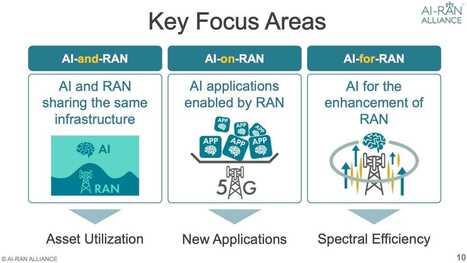
AI-RAN (artificial intelligence—radio access network) is a technology that enables the full integration of AI into the radio access network to realize transformative gains in operational performance, deliver new AI-based services, and unlock monetization opportunities. It enhances connectivity across mobile networks by leveraging AI to improve spectral efficiency, dynamic traffic handling, and real-time responsiveness.
|
|
Scooped by
Beeyond
June 8, 9:37 AM
|
Over the last eight months, NVIDIA has been aggressively pushing its AI-RAN strategy into the telecom ecosystem. We saw the high-profile operator announcements with T-Mobile, the deep Layer 1 baseband partnership with Nokia, and their massive strategic investment in custom silicon designer Marvell.
But all of that momentum had a strict physical boundary where NVIDIA stayed inside the baseband cabinet at the bottom of the tower. Their servers were targeting the Centralized Unit and the Distributed Unit part of Radio systems. The actual Radio Unit, the box clamped to the antenna at the top of the mast, was considered completely off-limits for general-purpose compute or dedicated chipsets.
The reason? The RU handles highly deterministic, real-time Layer 1 tasks in a harsh, passively cooled environment. The industry assumption was that a power-hungry GPU could never survive the strict energy, cost, and thermal constraints of the antenna. That space belonged exclusively to the highly efficient, custom ASICs built by Ericsson, Nokia, and Huawei.
|
|
Scooped by
Beeyond
May 30, 11:04 AM
|
The telecom world is split right down the middle over a major spending decision. This is even more polarizing than whether Pizza should have pineapple or if cats are better pets than dogs. The Telco fans are divided!
Telcos are trying to figure out whether tomorrow’s radio networks actually need GPUs, or if they can just keep using dedicated ASICs or even the CPU hardware they already have. The decision may seem small, but it has massive consequences across the value chain, vendors, the ecosystem, Capex, and monetization.
To understand where people stand, I ran a poll on LinkedIn asking if we actually need GPUs in the RAN to build a future-proof RAN network, or if the standard ASIC/CPU approach is enough. The results showed a clear dividing line. Around 60% said standard ASICs and CPUs are good enough, while 40% feels GPUs are mandatory.
|
|
Scooped by
Beeyond
May 28, 5:44 AM
|
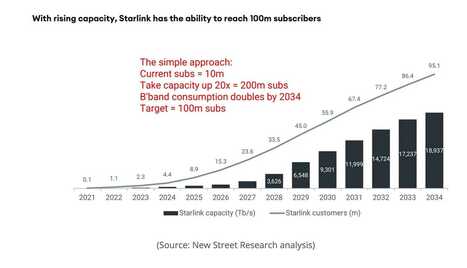
While the telecom sector spent years comfortably looking down on satellite internet as a niche utility for remote cabins, the cold mathematics of orbital infrastructure have been quietly laying the groundwork for an absolute takeover. A recent comprehensive forecast by the analyst firm New Street Research projected that Starlink will scale from its current base of roughly 10.3 million users to a massive 100 million subscribers by 2034. That means capturing nearly 10% of the global fixed broadband market and translating that density into roughly $49 billion to $55 billion in annual top-line revenue.
|
|
Scooped by
Beeyond
May 24, 5:53 AM
|
The SpaceX S-1 filing is their public declaration that the traditional telecommunications business model has entered a terminal phase. By valuing its connectivity segment opportunity against a $1.6 trillion Total Addressable Market, SpaceX is not signaling a partnership with telcos but their replacement, to the fullest extent that physics allows. This transition may not be completed in 12 or 24 months, but the 10-year ambition is clear.
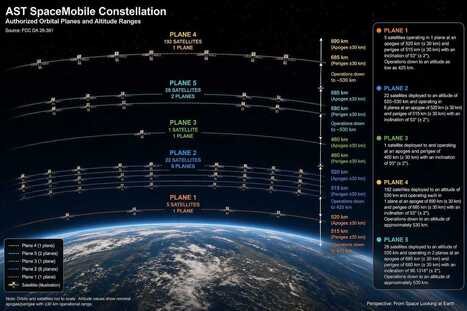
Faced with this orbital expansion, the industry is frantically seeking a counterweight, and market sentiment has converged on AST SpaceMobile as the only viable alternative. It is time to examine what AST SpaceMobile brings to the table in terms of its corporate strategy, technological architecture, and partnership framework, and to assess whether it offers telcos a path to maintaining their relevance.
|
|
Scooped by
Beeyond
May 22, 3:55 AM
|
The financial markets are currently parsing the implications of SpaceX’s proposed $1.75tn IPO valuation. While much of the initial retail focus has centered on the company’s interplanetary ambitions, institutional investors are scrutinizing a far more grounded thesis detailed in the May 2026 S-1 filing. The prospectus outlines a strategic pivot from a launch-and-logistics provider to a vertically integrated global telecommunications and compute utility.
At 94 times its projected 2025 consolidated revenue of $18.67bn, SpaceX’s valuation represents a significant departure from traditional aerospace and telecommunications multiples. The justification rests on the company’s definition of a staggering $28.5tn Total Addressable Market. By partitioning this TAM into space logistics ($370bn), global connectivity ($1.6tn), and AI infrastructure ($26.5tn), the prospectus argues that the historical separation between the physical transport of data and the compute layer is converging, and the company intends to capture the margins of both.
|