 Your new post is loading...
Postpartum depression (PPD) is a significant public health concern in the United States, affecting many women after childbirth and contributing to adverse maternal and infant outcomes. This study aimed to synthesize current evidence on the epidemiology, risk factors, and management of PPD, with particular attention to emerging therapeutic and digital care approaches. A systematic search of major databases identified 25 eligible studies published between 2010 and 2026. The findings indicate that PPD remains prevalent, with disparities strongly associated with race, socioeconomic status, and access to care. Risk factors are multifactorial and include prior mental illness, low social support, unintended pregnancy, and psychosocial stressors, with growing evidence also pointing to genetic contributions. Symptoms may emerge at different stages of the postpartum period, underscoring the importance of ongoing screening rather than a single assessment. While psychotherapy and antidepressant therapy remain the foundation of treatment, newer strategies such as telehealth, mobile health applications, and wearable technologies show promise in improving early detection and access to care. Overall, addressing PPD requires integrated, equitable, and patient-centered approaches to improve maternal and child health outcomes.
Why Losing A Pet Can Feel Worse Than Losing A Person If you have ever whispered to yourself, “Losing my dog hurt more than losing some people,” you are not broken, heartless, or dramatic. You are just telling the truth about a relationship most of society still does not know how to talk about
Death is a complicated topic, and many worry about saying the wrong thing to someone who's grieving. These expert tips can help you provide support with empathy.
Treatment-resistant depression patients cost Medicare an average of $45,994 per year — about 21% more than comparable beneficiaries with major depressive disorder whose symptoms are controlled, according to a report from Health Management Associates. The research and consulting firm conducted a narrative literature review and analyzed Medicare fee-for-service and Part D claims data from 2021 […]
Micah Sawyer transformed the tragic loss of his son into a nonprofit providing life-saving naloxone and recovery scholarships to thousands.
Last month, in this column, I wrote about the grief of the families going through the unexpected death of their children due to school shootings. This month, I’d like to explore that idea further, of what behaviors and thinking patterns happen to members of these families and all families dealing with traumatic losses. In my […]
Grief treats are on the rise, bringing mourners together to heal in places more idyllic than your therapist’s office.
Not All Is What It Seems: Depression on the Job We often associate depression with sadness and tiredness, and sure, those are two of the classic signs. But the reality is: depression can show itself in much sneakier ways, especially in the workplace. According to several therapists interviewed b
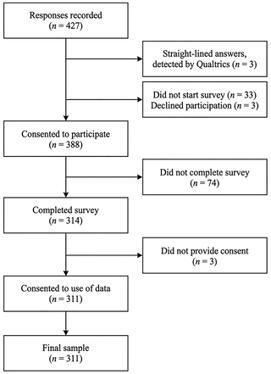
While experiencing individual eco-emotions, such as eco-anxiety, eco-guilt, and eco-grief, has been linked to pro-environmental behavior, no prior studies have jointly investigated these variables. Research in Dutch and German populations is particularly scarce despite being at relatively high risk for experiencing the effects of climate change, such as floods. This study examined the relationship between eco-anxiety and pro-environmental behavior, with eco-guilt and eco-grief as mediators, and age, gender, and proximity to water as moderating variables. Cross-sectional data (n = 311) were collected using an online survey. Data analyses revealed significant positive correlations between all three eco-emotions and pro-environmental behavior. A positive relationship between eco-anxiety and pro-environmental behavior was found, which was mediated by eco-guilt, but not eco-grief. With a negative indirect effect of eco-guilt on pro-environmental behavior, eco-guilt was a non-linear, suppressor-like variable. Only age moderated the pathway from eco-anxiety to eco-guilt; no moderation effects were found for gender or proximity to water. This research provides preliminary evidence of the complex relationships between eco-anxiety, eco-guilt, eco-grief, and pro-environmental behavior in a Dutch and German population. The findings highlight the importance of developing educational programs to inform individuals about eco-emotions and potential coping strategies, while promoting pro-environmental behavior. Future studies with larger, more diverse samples are recommended to replicate the results and explore which groups of individuals may be more vulnerable to experiencing higher levels of eco-emotions. Further, intensive longitudinal research designs combined with (generalized) causal mediation analyses could be applied to unravel the temporal interplay of eco-emotions and PEB.
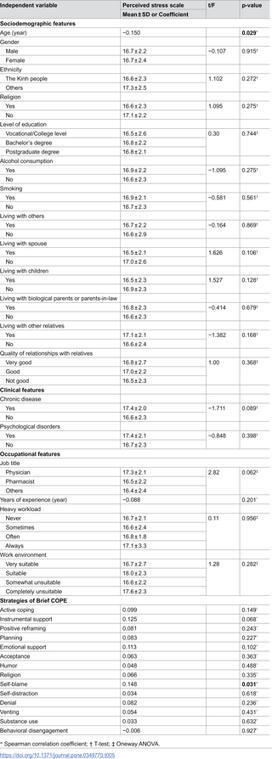
Background Occupational stress is a growing concern among healthcare workers (HCWs), particularly in primary care settings where responsibilities are multifaceted and resources are limited. Objective This study aimed to determine the proportion of perceived stress levels, identify the coping strategies employed, and explore sociodemographic, familial, and occupational factors associated with stress among HCWs in a district-level health system in Ho Chi Minh City, Vietnam. Methods A cross-sectional study was conducted from 19 February 2025–31 March 2025 involving 212 HCWs selected through total population sampling. Data were collected using a structured self-administered questionnaire comprising the 10-item Perceived Stress Scale (PSS-10) and the Brief COPE inventory. Descriptive statistics summarized participant characteristics and stress levels. Comparisons were performed using independent t-tests and one-way ANOVA, while Spearman’s rank correlation explored associations between continuous variables. Variables with p < 0.20 in univariate analysis were included in a multivariate linear regression model with backward elimination to identify independent predictors of stress. Multicollinearity was assessed using the Variance Inflation Factor (VIF). Results The mean PSS-10 score was 16.7 ± 2.3, with 93.4% of participants experiencing moderate stress and 6.6% low stress. The most frequently endorsed coping strategies were denial (5.8 ± 1.2), behavioral disengagement (5.4 ± 1.4), and substance use (5.0 ± 1.1). Multivariate analysis revealed that younger age, having chronic diseases, and being a physician were independently associated with higher perceived stress. Conclusion The study reveals a high prevalence of moderate stress among HCWs in primary care, with frequent use of ineffective coping strategies. Interventions should be tailored to promote effective coping, reduce occupational burdens, and provide targeted support to vulnerable subgroups.
A Johns Hopkins expert answers key questions about depression, suicide and other concerns for teens and young adults in college.
As Jewish communities face compounding crises, group grief rituals offer a scalable, cost-effective supplement to traditional support.
A tiny brain implant now approved for human trials could help treat depression from home. The breakthrough signals a new frontier in mental health care.
|
Having an end-of-life plan before your pet needs it can provide comfort when the time comes.
New research from Macquarie University has found removing everyday positive
mental health behaviours for just two weeks can rapidly trigger symptoms of
depression and anxiety
To understand how parenting styles influence adolescent mental health, the Department of Psychology at Lingnan University, collaborating with researchers from the School of Psychology at South China Normal University and the Department of Applied Psychology at Guangdong University of Education, conducted a one-year longitudinal study. The research findings show that when parents use psychological control to manage their children, such as forcing compliance through guilt induction or love withdrawal—a tactic widely regarded as emotional blackmail—it can impair an adolescent's capacity to regulate emotions. This then exacerbates depressive symptoms and heightens the risk of self-harm, particularly in girls.
Beyond neurotransmitters: could depression sometimes be an inflammatory disorder?
Psychologically, grief is not a mental illness. However, unaddressed or overwhelming loss can increase the risk of depression, anxiety disorders, and substance misuse
PsychiatryOnline.org is the platform for all American Psychiatric Association Publishing journals, DSM, and bestselling textbooks, as well as APA Practice Guidelines, and continuing medical education.
Older cultures made room for mourning. Today, we often rush it, and it comes with a cost. Three experts explain.
Tom Duane is grieving his loyal poodle Daisy, while navigating aging, survival, and the strange ache of loving deeply enough to hurt.
A seven-year study found that distinct EEG brain-wave patterns emerging at age 9 can predict vulnerability to anxiety or depression by age 13. Anxiety was linked to right-brain activity, while depression was associated with left-brain circuits.
When Sal Douglas’s mother died, she didn't collapse onto a sofa. Instead, she "project-managed death". Then on a drive home, she was hit with a thought.
The weekend lie-in may reduce their risk of depression by 41%, according to a new study.
|
















Postpartum Depression in the United States: A Systematic Review of Epidemiology, Risk Factors, and Contemporary Management With Emphasis on Emerging Therapeutic and Digital Care Models | Cureus
Better understanding of postpartum depression
Please also review AIHCP's Grief Counseling Program