“(1) In its resolution 55/61 of 4 December 2000, the General Assembly recognized that an effective international legal instrument against corruption, independent of the United Nations Convention against Transnational Organized Crime (resolution 55/25, annex I) was desirable and decided to establish an ad hoc committee for the negotiation of such an instrument in Vienna at the headquarters of the United Nations Office on Drugs and Crime (UNODC). The text of the United Nations Convention against Corruption was negotiated during seven sessions of the Ad Hoc Committee for the Negotiation of the Convention against Corruption, held between 21 January 2002 and 1 October 2003. The Convention approved by the Ad Hoc Committee was adopted by the General Assembly by resolution 58/4 of 31 October 2003. The General Assembly, in its resolution 57/169 of 18 December 2002, accepted the offer of the Government of Mexico to host a high-level political signing conference in Merida for the purpose of signing the United Nations Convention against Corruption. In accordance with article 68 (1) of resolution 58/4, the United Nations Convention against Corruption entered into force on 14 December 2005. A Conference of the States Parties is established to review implementation and facilitate activities required by the Convention.
(2) First International Forum on Tax and Crime ∙ Oslo ∙ 21-23 March 2011. Issues related to greater inter-agency co-operation were discussed by more than 150 delegates from 54 delegations who participated in the first tax and crime forum on 21-23 March 2011 in Oslo hosted by the Norwegian government. The conference brought together representatives from a range of OECD and non-OECD governmental agencies, including Tax Administrations, Finance and Justice Ministries, Financial Intelligence Units, Central Banks, FATF, International Organisations, as well as business and NGOs. Second International Forum on Tax and Crime ∙ Rome ∙ 14-15 June 2012. This Forum brought together senior policy makers from different government agencies including the tax, anti-money laundering and anti-corruption communities, as well as private sector representatives, NGOs and other interested stakeholders. Participants examined best practice approaches to closer inter-agency co-operation at the domestic level and explore how to improve international cooperation. The conference also showcased specific key risks in the tax and crime area, allowing countries to target resources and learn from the experience of others. Building on previous events in Oslo and Rome, the Third Forum on Tax and Crime provided an opportunity for senior government officials from tax and customs administrations, anti-money laundering and anti‑corruption authorities, police and law enforcement, public prosecutors, financial regulators and government Ministries, as well as international organisations and NGOs, to discuss current issues and country experiences on key policy and operational topics in combating all forms of financial crime.
(3) The 4th Joint African Union Commission/United Nations Economic Commission for Africa (AUC/ECA) Conference of African Ministers of Finance, Planning and Economic Development was held in 2011. This Conference mandated ECA to establish the High Level Panel on Illicit Financial Flows from Africa. Illicit financial flows out of Africa have become a matter of major concern because of the scale and negative impact of such flows on Africa’s development and governance agenda. By some estimates, illicit flows from Africa could be as much as US $50 billion per annum. This is approximately double the official development assistance (ODA) that Africa receives and, indeed, the estimate may well be short of reality as accurate data does not exist for all transactions and for all African countries.
Fronting means a deliberate circumvention or attempted circumvention of the South African B-BBEE Act and the Codes. Fronting commonly involves reliance on data or claims of compliance based on misrepresentations of facts, whether made by the party claiming compliance or by any other person. Verification agencies, and /or procurement officers and relevant decision-makers may come across fronting indicators through their interactions with measured entities. The B-BBEE Commission may also approach a court of law to restrain any breach or for any appropriate remedial relief, which may include setting aside the transaction or initiative. The B-BBEE Commission will not discuss the merit or the details of its investigative process, but the findings will be published as required in the B-BBEE Act.
Vienna, 24 June 2014 - Around a third of the world's population has access to the internet, and the average user is now more likely to be in a developing country and use a mobile device rather than fixed line access. Additionally, in the developing world the greatest proportion of internet users are younger than 25 years. This context has important implications for the ways in which law enforcement and criminal justice authorities prevent and combat cybercrime.
Against this backdrop, Member States of the East African Community (EAC), in conjunction with UNODC, the Commonwealth Secretariat and the Uganda National Information Technology Authority (NITA), recently held a regional meeting in Kampala, Uganda, on preventing and combating cybercrime. Among other topics, participants addressed the most effective measures to protect children online, promote and enable the safe and responsible use of information and communication technologies by children, and to prevent and combat the misuse of such technologies for their exploitation.
The meeting brought together senior government officials, academia, and key stakeholders to discuss practical measures to strengthen operational cooperation between EAC Member States on cybercrime and the acquisition of digital evidence, as well as substantive and procedural legislation and mutual assistance to disrupt cybercrime taking place across borders.
The issue of enhancing existing cybercrime and cybersecurity research and training capabilities within the EAC region was also raised by experts from higher education institutions. Representatives of global university programmes provided expertise on lessons learned and ideas on improving regional cooperation through a virtual network of stakeholders in the area. Experts agreed to develop locally adapted modules to be shared across the region, and debated the potential of openly accessible regional centres for excellence in cybersecurity research and training.
Participants also addressed the popular, rapidly developing payment method of 'mobile money'. They consulted on the vulnerabilities of this technology and the strategies to secure mobile money platforms across the region, as well as effective approaches to the regulation of mobile money to promote economic inclusion and prevent criminal misuse. Further information at:
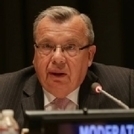
25 April 2014 - In remarks delivered at a day-long debate at the UN General Assembly in New York on "ensuring stable and peaceful societies," the Executive Director of the UN Office on Drugs and Crime (UNODC), Yury Fedotov, said, "We have seen the devastating consequences to health, security and development caused by drug trafficking and other organized crime activities, which know no borders."
The thematic debate was opened by UN Secretary-General Ban Ki-moon and President of the General Assembly John Ashe and attended by representatives of member states, UN agencies and international organizations, as well as academics and civil society representatives.
Mr. Fedotov went on to say that corruption and a lack of good governance are major threats to social and economic development. "Weak institutions make it easier for crime, violence and corruption to prevail. Ineffective and inaccessible criminal justice systems fall short in the protection of human rights, " he said.
The Executive Director was making his remarks during an afternoon panel session on 24 April titled, "Strengthening national institutions towards achieving sustainable development."
His remarks made direct reference to the importance of building on the Millennium Development Goals to create a sustainable future for everyone. But to achieve this, Mr. Fedotov said, there was a need to "strengthen, and make more effective, national, regional and international institutions promoting security, justice and the rule of law."
Earlier in the day, Mr. Fedotov had addressed the first panel session of the thematic debate where he emphasised that justice and corrections components were essential to re-establish the rule of law and support national capacity building.
UNODC estimated in 2011 that the proceeds from drug trafficking and other transnational crimes were worth around US$870 billion in 2009. The largest income from transnational crime comes from drug trafficking; worth around US$320 billion annually.
On 25th April, Mr. Fedotov gave a briefing to the UN Counter-Terrorism Committee Executive Directorate (CTED) in which he also stressed that "weak governance and weak criminal justice systems often go hand in hand with instability, crime and terrorism." Further information:
21 February 2014 - The cultivation of illicit drug crops goes hand in hand with poverty and food insecurity. Weaning poor farmers off illicit crop cultivation requires sustainable alternative livelihoods, without which they will fall back on lucrative cash crops - coca leaf, opium poppy or cannabis - to survive. UNODC alternative development programmes therefore focus on providing economic and employment opportunities to communities subsisting on illicit crops.
The 2009 'Political Declaration and Plan of Action on International Cooperation Towards an Integrated and Balanced Strategy to Counter the World Drug Problem', being reviewed in Vienna this year, highlighted the need to address the supply side of the drug trade. UNODC helps States to implement poverty reduction and rural development strategies, carrying out projects in Afghanistan, the Plurinational State of Bolivia, Colombia, Lao People's Democratic Republic, Myanmar and Peru.
Besides encouraging farmers to switch to legal farming, such projects help them develop the skills needed once communities relinquish illicit crops. The Office works to create income-generating activities; provide vocational training; and improve social development. Activities range from initiatives to promote small farmer cooperatives to increase food security in Myanmar to supporting sustainable tourism in Colombia. Other areas include promoting agro-forestry, fisheries and bee-keeping.
Over the past decade, alternative development programmes have produced sustainable reductions in some places where illicit crop cultivation, particularly of coca bushes, takes place. Programmes have focused on improving or building necessary infrastructure; increasing the quality and yield of food crops and introducing productive cash crops to generate income.
Despite progress, much still needs to be done. Key to the success of such programmes is the expansion of market access for farmer-led small business enterprises. Long-term commitment and financial investments are required to ensure lasting benefits. The scope and reach of alternative development activities also need to be broadened to farming communities that lack development assistance and continue to cultivate illicit crops.
At the upcoming High Level Review of the 2009 Plan of Action, taking place in Vienna from 13 to14 March 2014 prior to the 57th Session of the Commission on Narcotic Drugs (which runs from 17 to 21 March), Member States will have the opportunity to take stock of the impact of alternative development activities and commit to a number of measures to step up alternative livelihood programmes.
Members of the opposition Left Democratic Front (LDF) party clashed with Kerala's Watch and Ward assembly staff as they attempted to block the entrances of the assembly in Thiruvananthapuram,...
The National Assembly's Agriculture committee was the latest watchdog body fighting graft claims after it emerged members received bribes to play down the Mumias Sugar Company report. The...
After an insider and a former officer of the People's Liberation Army in China exposed that at least two vice chairmen of the Central Military Commission (CMC), Xu Caihou and Guo Boxiong,...
The shortage of fuel in the country has been caused by corruption which the Patriotic Front (PF) Government has no political will to end corruption, Rainbow Party president Wynter Kabimba has said....
In parliament, the agriculture committee is taking issue with recent reports that its members may be involved in a bribery scandal. The committee is calling for the naming and shaming of the...
The Immigration and Refugee Board said it rejected Belhassen Trabelsi’s application because of allegations that he was involved in a bribery scheme involving foreign companies seeking public contracts in the North African country...
Just a week ago, Director of National Intelligence James Clapper testified before Congress that his fundamental concern focuses on the “moderate, iterative..
Collective Action - building alliances against corruption
In the face of the widespread and deep-rooted corruption problem that affects society in general, governments, their procuring entities and the private sector in equal measure, it seems highly unlikely that individual activities alone will be sufficient to bring about significant ethical changes and improve the transparency of business processes.
This is precisely where "Collective Action" methods become important: ‘Collective Action’ enables corruption to be fought collectively, with various interest groups, working together and building an alliance against corruption so that the problem can be approached and resolved from multiple angles.
The advantages of Collective Action:
Collective Action describes various methods of combating corruption. It is a matter of acting collectively and forming alliances against corruption. Collective Action calls for cooperation on the part of participants from the worlds of politics, business and society at large.
The ultimate goal is thereby to create fair and equitable market conditions, that is a "Level Playing Field", for all marketplace participants and to eliminate the temptation of corruption for all those concerned.
Collective Action helps to set up the conditions for fair competition within a corrupt environment.
Collective Action promotes innovation, as the bidder is selected solely on the basis of price, quality and capacity to innovate.
Observance of anti-trust law when collaborating with other companies must be ensured by a neutral monitor (e.g. in the form of a non-governmental organization).
Collective Action can, if necessary, cover gaps in legislation or replace or augment inadequate local law.
Thursday, 2 July 2015 at the Ministry of Foreign Affairs, The Hague, the Netherlands
In co-operation with the Universities of Groningen and Tilburg and the Dutch Association of Investors for Sustainable Development (VBDO) the Ministry of Foreign Affairs of the Netherlands organizes a one-day international tax conference. The conference will provide a forum for academics, companies, government officials and members of civil society to discuss effective ways to support developing countries’ tax policy and revenue collection. The conference aims to feed national policymaking as well as the international debate on domestic resource mobilization in the post 2015 area. The conference is held in the context of the Global Partnership for Effective Development Cooperation, of which Lilianne Ploumen, the Dutch Minister for Foreign Trade and Development Cooperation, is co-chair.
Tax avoidance by multinationals is hampering domestic resources mobilisation in many countries. In particular developing countries find it very hard to levy the right amount of taxes on profits of foreign companies earned within their borders. At the same time developing countries are confronted with decreasing aid budgets and badly need the revenues to finance essential public investments. Mobilisation of domestic resources will also be one of the major issues at the Third International Conference on Financing for Development in Addis Ababa, Ethiopia, from 13 to 16 July 2015.
Insufficient coordination between the different national fiscal systems offers ample opportunities for tax avoidance world-wide. G20 and OECD try to address mismatches and loopholes in the global ‘patchwork’ of tax regulations through the BEPS (Base Erosion and Profit Shifting) project. The OECD will come with its full set of recommendations by the end of 2015. Other international organizations, such as EU, IMF, UN and World Bank, as well as regional organisations and individual countries are active with own initiatives, either to enhance fiscal co-operation or to strengthen capacities of tax administrations. The conference ‘Pay your taxes where you add the value’ will focus on how we can best support developing countries in fighting tax avoidance and collecting a fair amount of taxes.
The conference includes introductions of various experts on fiscal rule-making and cooperation and a presentation of the results of the Tax Transparency Benchmark 2015.
The conference is free of charge for registered participants. Please direct questions and return the registration form to: conference2july@minbuza.nl.
12 May 2014 - The twenty-third session of the United Nations Commission on Crime Prevention and Criminal Justice (CCPCJ) opened today in Vienna with a call by UNODC Executive Director Yury Fedotov for Member States to work closely together to combat crime in every country. This year's theme for the Commission is international cooperation on criminal matters, which emphasises the need for countries to work jointly in areas such as extradition, mutual legal assistance, confiscation of assets and joint investigations.
This Session of the Crime Commission precedes next year's UN Crime Congress, to be held in Qatar, which will focus on integrating crime prevention and criminal justice into the wider UN work in order to address social and economic challenges and promote the rule of law. At the same time, the event paves the way to the September 2015 UN summit on the post-2015 development agenda, where world leaders will decide on how best to build on the progress achieved towards the Millennium Development Goals.
Mr. Fedotov's CCPCJ opening remarks touched upon many of UNODC's prime mandates, including crime and development, the treatment of prisoners, violence against children, the rule of law, human trafficking and the smuggling of migrants.
"Underpinning all of these efforts, whether to combat wildlife crime or stop trafficking and money laundering, is international cooperation in criminal matters." Mr. Fedotov said this was necessary when faced with a "globalized world characterized by an unprecedented level of connectivity. "
The five days of the 23rd Session of the Commission on Crime Prevention and Criminal Justice will see numerous discussion on crime trends, over 40 high-profile side events, and the adoption of a series of resolutions on crime matters.
Mr. Fedotov was speaking to an audience of around 800 representatives of Member States, civil society and the media. Other notable speakers at the opening included the Chair of the CCPCJ, Vladimir Galuska, Permanent Representative of the Czech Republic to the UN in Vienna, Ahmad bin Abdullah Al Mahmoud, Deputy Prime Minister of Qatar, Andrea Orlando, Minister of Justice, Italy and Joaquín Hernán Estrada Santamaría, Attorney-General, Nicaragua. Further information at:
4 April 2014 - This week a 500-bed prison opened in Garowe, the capital of the Puntland State of Somalia, under a UNODC programme aimed at enhancing criminal justice institutions in the region. This facility was built in close cooperation with the local government and several international organizations and donors.
The construction of the Garowe prison is a key component of UNODC's Maritime Crime Programme, carried out throughout the Horn of Africa to combat piracy. The facility is a step towards improving criminal justice institutions and marks the successful completion of one of the biggest construction projects of its kind, undertaken by UNODC in partnership with the UN Office for Project Services (UNOPS) and with the participation of UNOV, UNON and UNDP. The prison has been constructed to provide humane and secure detention conditions in line with international human rights standards. Beyond its construction a strong emphasis has been placed on training and mentoring custodial staff, to ensure the prison is managed in accordance with best practices in the provision of criminal justice.
In a statement released for the occasion, UNODC Executive Director Yury Fedotov acknowledged the significance of this multi-stakeholder achievement, stating: "The opening of the Garowe Prison is an important milestone because it shows that building capacity in law enforcement and criminal justice processes is equally as important as pursuing the pirates at sea."
The new Garowe prison will receive inmates imprisoned locally and, especially, prisoners convicted of piracy who are serving their sentences in neighbouring countries. By transferring them back to Somali territory, the burden of prosecuting and holding them will be reduced on these states and allow the prisoners to serve their sentences in their home state, closer to their families and within their own cultural environment. This will also facilitate education, vocational training and other rehabilitation programmes that are tailored to their local environment and needs.
Under UNODC's Piracy Prisoner Transfer Programme 91 prisoners have already been transferred to the prison, including prisoners previously held at the old prison in Garowe and 18 convicted pirates transferred from the Seychelles. The new facility offers improved infrastructure and sanitation, medical support to inmates and staff, education programmes for the prisoners, and vocational training programmes in areas like construction, sewing, carpentry and brick making, among others. As a high security facility, it exceeds the security conditions of any institution of its type in the region. More information at:
African leaders and international funders have voiced their support of a new African science funding platform set to be launched this summer.
The Alliance for Accelerating Excellence in Science in Africa is a pan-African platform which aims to strengthen the long-term development of research leadership, scientific excellence and innovation that impact on Africa’s developmental challenges.
The Wellcome Trust, the Gates Foundation and the Department for International Development (DFID) are funding the development of AESA and share their vision of supporting the next generation of outstanding African researchers, who will help solve some of the continent’s greatest health and development issues.
The AESA platform is being led by the African Academy of Sciences and the New Partnership for Africa's Development. It will, among other things, identify challenges that hinder rapid scientific advancement in Africa, run open calls for proposals with transparent review processes, actively manage grants and evaluate and measure the impact of such investments.
A formal launch of AESA is planned to coincide with the next AU summit in June 2015 in South Africa.
For more information see the Wellcome Trust website.
Members of the opposition Left Democratic Front (LDF) party clashed with Kerala's Watch and Ward assembly staff as they attempted to block the entrances of the assembly in Thiruvananthapuram,...
SEC enforcement actions demonstrate the SEC’s intent to penalize companies paying commercial bribes for violations of the accounting provisions of the FCPA.
The Brazilian government acknowledges the need to fight corruption after 1.5 million protesters hit the streets across the country on Sunday in a major show of anger against leftist President...
57.6% of companies see the development of policies and procedures that can be practically applied in all countries as the most challenging internal anti-corruption and compliance issue.* This is one of the topics discussed today at a webcast with ...
A former senior employee of a major bank has been arrested and charged with bribery as part of an ongoing investigation by the Fraud & Cybercrime Squad and officers from the United States'...
KUALA LUMPUR: A Petronas senior manager was acquitted by the Sessions Court here Monday of bribery involving the supply of Natural Gas Liquid (NGL) to a petro-chemical company.
More than a million protesters took to the streets of Brazil on Sunday, calling for the impeachment of President Dilma Rousseff amid economic struggles and the Petrobras corruption scandal.
ATHENS, Greece (AP) — Greek authorities have indicted more than 60 people to stand trial over an alleged bribery scandal 17 years ago, involving a telecom contract for German industrial giant Siemens AG.
An investigation found that the Greek state lost some 70 million euros from the 1998 sale of equipment from Siemens to Greece's dominant telecom operator, OTE.
A panel of judges decided Monday that 64 Greek and German nationals should stand trial for bribery or money laundering. The suspects include former Siemens and OTE officials, and the former treasurer of Greece's once-prominent Socialist party.
Two of the main suspects have fled Greece, while others live in Germany.
No trial date was set. The charges carry a maximum 20-year prison sentence.
Australia’s anti-corruption for development policy provides a framework for planning, resourcing, and reviewing anti-corruption activities on a country and reg…
To get content containing either thought or leadership enter:
To get content containing both thought and leadership enter:
To get content containing the expression thought leadership enter:
You can enter several keywords and you can refine them whenever you want. Our suggestion engine uses more signals but entering a few keywords here will rapidly give you great content to curate.


 Your new post is loading...