“(1) In its resolution 55/61 of 4 December 2000, the General Assembly recognized that an effective international legal instrument against corruption, independent of the United Nations Convention against Transnational Organized Crime (resolution 55/25, annex I) was desirable and decided to establish an ad hoc committee for the negotiation of such an instrument in Vienna at the headquarters of the United Nations Office on Drugs and Crime (UNODC). The text of the United Nations Convention against Corruption was negotiated during seven sessions of the Ad Hoc Committee for the Negotiation of the Convention against Corruption, held between 21 January 2002 and 1 October 2003. The Convention approved by the Ad Hoc Committee was adopted by the General Assembly by resolution 58/4 of 31 October 2003. The General Assembly, in its resolution 57/169 of 18 December 2002, accepted the offer of the Government of Mexico to host a high-level political signing conference in Merida for the purpose of signing the United Nations Convention against Corruption. In accordance with article 68 (1) of resolution 58/4, the United Nations Convention against Corruption entered into force on 14 December 2005. A Conference of the States Parties is established to review implementation and facilitate activities required by the Convention.
(2) First International Forum on Tax and Crime ∙ Oslo ∙ 21-23 March 2011. Issues related to greater inter-agency co-operation were discussed by more than 150 delegates from 54 delegations who participated in the first tax and crime forum on 21-23 March 2011 in Oslo hosted by the Norwegian government. The conference brought together representatives from a range of OECD and non-OECD governmental agencies, including Tax Administrations, Finance and Justice Ministries, Financial Intelligence Units, Central Banks, FATF, International Organisations, as well as business and NGOs. Second International Forum on Tax and Crime ∙ Rome ∙ 14-15 June 2012. This Forum brought together senior policy makers from different government agencies including the tax, anti-money laundering and anti-corruption communities, as well as private sector representatives, NGOs and other interested stakeholders. Participants examined best practice approaches to closer inter-agency co-operation at the domestic level and explore how to improve international cooperation. The conference also showcased specific key risks in the tax and crime area, allowing countries to target resources and learn from the experience of others. Building on previous events in Oslo and Rome, the Third Forum on Tax and Crime provided an opportunity for senior government officials from tax and customs administrations, anti-money laundering and anti‑corruption authorities, police and law enforcement, public prosecutors, financial regulators and government Ministries, as well as international organisations and NGOs, to discuss current issues and country experiences on key policy and operational topics in combating all forms of financial crime.
(3) The 4th Joint African Union Commission/United Nations Economic Commission for Africa (AUC/ECA) Conference of African Ministers of Finance, Planning and Economic Development was held in 2011. This Conference mandated ECA to establish the High Level Panel on Illicit Financial Flows from Africa. Illicit financial flows out of Africa have become a matter of major concern because of the scale and negative impact of such flows on Africa’s development and governance agenda. By some estimates, illicit flows from Africa could be as much as US $50 billion per annum. This is approximately double the official development assistance (ODA) that Africa receives and, indeed, the estimate may well be short of reality as accurate data does not exist for all transactions and for all African countries.
Fronting means a deliberate circumvention or attempted circumvention of the South African B-BBEE Act and the Codes. Fronting commonly involves reliance on data or claims of compliance based on misrepresentations of facts, whether made by the party claiming compliance or by any other person. Verification agencies, and /or procurement officers and relevant decision-makers may come across fronting indicators through their interactions with measured entities. The B-BBEE Commission may also approach a court of law to restrain any breach or for any appropriate remedial relief, which may include setting aside the transaction or initiative. The B-BBEE Commission will not discuss the merit or the details of its investigative process, but the findings will be published as required in the B-BBEE Act.
18 April 2015 – United Nations officials gathered at the UN Crime Congress under way in Doha, Qatar, have called on Member States to take action and implement the new international standards on the elimination of violence against children adopted late last year, stressing that such violence continues to have a devastating effect on children, families, and society as a whole.
The new set of international standards and norms – entitled the “United Nations Model strategies and practical measures on the elimination of violence against children in the field of crime prevention and criminal justice,” and approved by the UN General Assembly on 18 December 2014 – aim to not only improve the effectiveness of the criminal justice system in preventing and responding to violence against children but also to protect children against any violence that may result from their contact with that system.
Speaking at a high-level event on the margins of the Crime Congress earlier this week, Valerie Lebaux, the Chief of the Justice Section, Division for Operations, in the United Nations Office on Drugs and Crime (UNODC), said such Model strategies represent “an historical achievement and a strong endorsement of the commitment of Member States towards addressing the issue of violence against children.
As part of its mandate, in fact, UNODC has now developed a joint global programme with the United Nations Children's Fund (UNICEF) to tackle head-on the scourge of violence against children.
“Considering the complex nature of the issue, the needs for technical assistance are extensive and cannot be met within a short period of time,” Ms. Lebaux continued. “Our joint efforts are essential to translate the Model Strategies into concrete actions.”
In addition, she stressed that interventions require the effective incorporation of international standards and norms into national legislation, the establishment of accountable institutions and policies, the training of justice practitioners, and the cooperation between child protection and justice systems.
Also addressing the high-level event, Mona Rishmawi, Chief of the Rule of Law, Equality and Non-Discrimination Branch at the Office of the High-Commissioner on Human Rights (OHCHR), drew attention to the numerous children lost in the world's prison systems, adding that a justice policy that places “emphasis on incarceration and criminal sanction, in particular as a primary response to child offenders is simply the wrong response.”
“Children do not belong to prisons. Children should not be kept in closed institutions deprived of care, love and nurture. They belong in schools, in playgrounds and safe home environments,” Ms. Rishmawi declared.
“We know that wherever children are deprived of liberty they are at especially high-risk of physical violence and abuse whether by the police, other detainees or their own peers,” she continued, adding that children deprived of their liberty had a higher rate of anxiety, depression and feelings of helplessness.
“That's why we welcome these Model Strategies and that's why they are needed,” she concluded.
7 April 2015 – This is a critical year for development as countries hammer out a new, post-2015 development agenda. At the 13th Crime Congress, taking place in the Qatari capital of Doha - from 12 to 19 April 2015 - policymakers and experts from around the world have joined forces with the UN, inter-governmental and non-governmental organizations to chart a new course for crime prevention and rule of law in support of sustainable development.
“The rule of law, better criminal justice systems, access to justice, well-functioning law enforcement and prosecution authorities… could be enablers for development,” the Executive Director of the UN Office on Drugs and Crime (UNODC), Yury Fedotov, told the UN News Centre in an interview ahead of the Crime Congress, which is held every five years.
Prisons could be places where the ideology of violent extremists could be reversed, according to the UN Interregional Crime and Justice Research Institute (UNICRI).
Reem Abaza caught up with Joanne Jousif, the project manager for UNICRI in Indonesia who spoke about the role of prisons in dealing with this type of offender.
16 April 2015 – With over 10 million people in prisons worldwide, prison overcrowding has reached epidemic proportions in many countries, a senior official from the United Nations Office on Drugs and Crime (UNODC) said today at the 13th UN Congress on Crime Prevention and Criminal Justice.
“Prison overcrowding can also be considered as a symptom of a malfunctioning justice system, and the problems of overcrowding have to be dealt with by the prison administration, although the solutions are seldom within their reach,” Piera Barzano, Senior Regional Advisor of the Justice Section at UNODC, said during a side event at the UN Crime Congresscurrently under way in Doha.
There are usually several reinforcing reasons that may lead to prison overcrowding, she continued, and such causes are not confined to the limits of criminal justice but extend to other spheres of State responsibility such as welfare policy, access to health services, education, and employment.
Running until the 19 April, the Crime Congress, held every five years, brings together governments, policy-makers and experts to consider how best to integrate crime prevention and criminal justice into the wider UN agenda. It also focuses on links between security and justice, and sustainable development.
Prison overcrowding refers to the occupancy rate and the official capacity of prisons. It refers to situations where the number of prisoners exceeds such official prison capacity. More specifically, the rate of overcrowding is defined as that part of occupancy rate above one hundred per cent and is usually understood that occupancy above 120 per cent can be considered as serious overcrowding.
Last year, 77 countries worldwide were reported having a prisoner occupancy rate higher than 120 per cent, with some as high as almost 400 per cent. The problem is very localized and extremely challenging, according to UNODC. Overcrowding also increases the risk of transmission of communicable diseases and poses an immense management challenge to prison administrations.
“Prison overcrowding impacts the quality of nutrition, sanitation, prisoner-activities, health care services and the care of vulnerable groups. It affects the physical, mental health and well-being of all prisoners. It generates prisoner tension, violence, exacerbates existing mental and physical health problems,” said Ms. Barzano.
Five years ago at the 12th UN Crime Congress, in Brazil, a workshop was held on the ‘Strategies and Best Practices against Overcrowding in Correctional Facilities.’
“So here we are five years down the line,” continued Ms. Barzano, but there is still a growing recognition that one of the key obstacles to implementing the provisions of the standard minimum rules of the treatment of prisoners is overcrowding in prisons,
She also highlighted UNODC’s work with the Red Cross to publish a handbook on strategies to reduce overcrowding in prison. Calling it a practical tool for practitioners and policy-makers, she said the handbook is available on UNODC’s website in several languages.
“Overcrowding is a very serious humanitarian concern as it generates substandard and inhumane conditions. Tens of thousands of people are forced to live in congested accommodations with insufficient space to move, sit or sleep,” said Miroslawa Czerna of the International Committee of the Red Cross (ICRC), who was also at the event.
“Being squeezed into cramped living quarters in appalling hygiene conditions and with no privacy makes the experience of being deprived of freedom distressful in normal circumstances exponentially worse. It erodes human dignity,” she added.
It also exacerbates tensions and endangers detainees, supervisors and security, Ms. Czerna emphasized
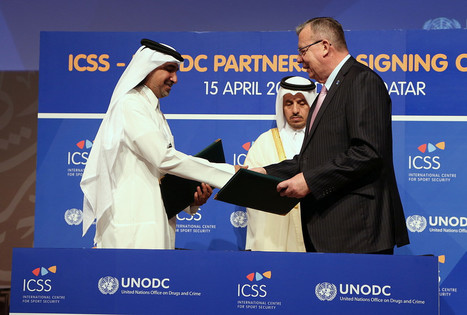
15 April 2015 – The United Nations Office on Drugs and Crime (UNODC) announced today a new partnership with the International Centre for Sport Security (ICSS) to help strengthen cross-border investigations into match-fixing and manipulation of sports competitions, as well as bolstering measures to prosecute offenders.
“Recent cases make clear the urgent need for effective responses to match-fixing. This is not only a ‘simple’ breach of sporting rules; it is also a criminal justice issue, and, I would add, an issue of public trust”, said UNODC Executive Director, Yury Fedotov, during a special event at the 13th UN Congress on Crime Prevention and Criminal Justice, under way in Doha, Qatar.
He said that links between match-fixing and other criminal activities have been identified as additional challenges for investigators and law enforcement authorities. Match-fixing is increasingly being viewed as a crime that needs to be addressed through tailor-made legislative responses and effective investigative powers, particularly in view of its links with organized crime, corruption, and money-laundering.
UNODC says that illegal sports betting and match-fixing have grown into a huge transnational business worth billions of dollars. It threatens the credibility of sport and creates dangerously close links with crime.
The rise of match-fixing can be linked to the rise of online gambling, which increased the number of people with direct economic interest in sport competitions.
The commercialization of sport has led to more lucrative gains from sport-related betting. During the 2010 World Cup in South Africa, 5,000 people were arrested in connection with sport betting in China, Malaysia, Singapore and Thailand, and more than $10 million was seized.
Under the new partnership, the UNODC and ICSS will work together to develop a number of programmes to support the fight against match-fixing and illegal betting, as well as safeguarding major sporting events against corruption.
Over the coming months, they will also begin work to develop a special training resource aligned with the UN Convention against Transnational Organized Crime and the UN Convention against Corruption (UNCAC) that will identify key themes related to prosecutions and investigations into match-fixing which can be implemented by criminal justice and law enforcement authorities.
Established in 2010, ICSS is an international, not-for-profit organization based in Doha, with a global mission to promote and protect the integrity and security of sport.
Mr. Fedotov said that the new partnership “will consolidate, develop, and further our cooperation with ICSS to stop match-fixing and illegal betting, as well to safeguard against corruption in major sports events, with a particular focus on capacity building and the development of technical tools.”
"Today is an important step forward in the fight to safeguard sport and I would encourage governments, law enforcement agencies, international sports organizations, as well as the public and private sector, to implement the measures that will be developed as part of this partnership with the ICSS," he added.
UNODC has already signed a partnership with the International Olympic Committee (IOC), and the two have jointly produced a study on “Criminalization approaches to combat match-fixing and illegal betting.”
The President of the ICSS, Mohammed Hanzab, said that match-fixing has a profound impact not just for sport but on wider society. It affects people from all walks of life across many countries around the world.
“As a result, match-fixing is an issue that governments, as well as sport, cannot ignore any longer and simply must address,” he told the event.
United Nations voluntary trust fund for victms of human trafficking. Photo: UNODC 40
Print
14 April 2015 – With human trafficking now a global criminal enterprise generating billions of dollars every year, United Nations officials stressed today during a high-level event at the UN Crime Congress in Doha, Qatar, that victims of the crime need broad based assistance for their recovery.
Almost every nation in the world is affected by human trafficking either as a country of origin, transit, or destination. The victims are exploited in a range of different sectors, with some 53 per cent involved in sexual exploitation and 40 per cent in forced labor, according to 2011 figures.
In 2010, the UN established a Voluntary Trust Fund for Victims of Trafficking in Persons and the high-level event discussed the achievements of the Fund and the challenges it has faced over the past five years.
“The Fund helps to ensure that women, children and men who have been exploited by traffickers are identified and provided with the assistance, protection and support needed for their physical, psychological and social recovery,” said Yury Fedotov, the Executive Director of the UN Office on Drugs and Crime (UNODC).
The UN Special Rapporteur on Trafficking in Persons, Maria Grazia Giammarinaro, said that assistance is crucial “in ensuring the full access to an effective remedy for victims, including rehabilitation, reintegration and redress for any harm committed against them” and in preventing “re-victimization and re-trafficking of victims.”
However, in practice, trafficked persons are frequently left without remedies or the assistance necessary to start a rehabilitation or reintegration process, she added.
Ms. Giammarinaro stressed that a strong partnership with non-governmental organizations is necessary to effectively address the scourge. She strongly urged Member States to contribute generously to the UN Trust Fund.
“The role of the Trust Fund is crucial. It is not meant of course to replace state action. States have their obligations and have to fulfill their obligations in the field of victims’ right protection, including allocating adequate funding for NGOs,” she added.
The first three-year grant-cycle of the Fund ended last December and a total of 11 projects in Albania, Cambodia, Costa Rica, Czech Republic, France, Kenya , Israel, Moldova, Nepal, Nigeria and the United States received nearly $750,000 dollars.
Each year, some 2,000 victims benefitted from direct assistance, including provision of shelter, basic health services, vocational training and schooling, as well as psychosocial, social and economic support.
Mr. Fedotov said the continuing difficulties in raising money for the Trust Fund, despite its tangible achievements, remain a key challenge in providing meaningful assistance.
Since it was established, the mechanism has received just over $2 million in paid contributions from 19 Member States and some 30 private-sector donors, as well as individuals.
“While these contributions have been very gratefully received, they remain below the level of funding needed, and I hope we can rely on your support to ensure that the Trust Fund can have the reach and impact envisaged by the Global Plan of Action,” he said.
Two representatives of non-governmental organizations assisting victims of trafficking in persons in Nepal and Nigeria, Sunita Damuwar, President of the Board of Shakti Samuha, and Paul Adepelumi, Executive Director of the African Centre for Advocacy and Human Development (ACAHD), were among the participants of this high-level event. Ms. Damuwar described the work done by her organization in Nepal. She showed a scarf “made by our trafficking survivors who live in our shelter home.”
Mr. Adepelumi explained that thousands of Nigerian girls work in the sex industry and that “many are found in Europe.” He added that the root causes of this human trafficking are “widespread poverty” and conflict.
13 April 2015 – With wildlife and forest crimes on the rise, yielding enormous profits for criminal networks, United Nations high-level officials at a major anti-crime meeting under way in Doha, Qatar, stressed the gravity of the scourge, saying that it fuels violence, corrupts supply chains and undermines the rule of law.
“Wildlife and forest crime…has the potential, not only to devastate the environment, but also to undermine the social, political and economic well-being of societies, while generating billions of dollars for criminal gangs and sustaining their illicit activities,” General Assembly President Sam Kutesa told a high-level event held as part of the 13th UN Congress on Crime Prevention and Criminal Justice.
Wildlife and forest crime includes the taking, trading, importing, exporting, processing, possessing, obtaining and consumption of flora and fauna (animals, birds, fish, plants and trees) in contravention to national and international law.
The impact of the crime is global, but wildlife and forest crime is particular acute in developing countries as under-resourced governments often lack the capacity to regulate the exploitation of their natural resources.
In 2013 alone, some 20,000 African elephants were slaughtered. In the same year, more than 1,000 rhinos were killed on the continent.
The total value of the illegal trade in wood-based products, usually from and within East Asia and the Pacific, is worth an estimated $17 billion.
“We now, for the first time, have the opportunity to draw the attention of this Congress in its 60th year to the need to treat wildlife crime as a serious crime,” said the Secretary-General of the Convention on international trade in endangered species of wild fauna and flora (CITES), John Scanlon, also at the event.
“It is because the scale and nature of illegal wildlife trade have changed over recent years and so must the global response. And it is responding but more clearly needs to be done,” he added.
Mr. Scanlon said that illegal wildlife trade is not about local subsistence poaching. Today, the world is confronted by transnational organized criminal gangs, and in some cases, rebel militia and rogue elements of the military. They are driving industrial scale poaching and illegal trade for illicit offshore markets.
“This has changed the dynamic of combating this highly destructive criminal activity in particular as it relates to some mega fauna, such as the African elephant and high value flora such as rosewood. But it also threatens many lesser known species, such as the pangolin”, he added.
The Executive Director of the UN Office on Drugs and Crime (UNODC), Yury Fedotov, said inadequate legislative frameworks remain “far too commonplace.”
Simply bringing wildlife crime cases to court is a challenge, he said, and this hard work is too easily undone when cases files are poorly prepared and investigations weak.
“Even when criminal traffickers are successfully prosecuted, the sentences imposed are often inadequate – small fines, a few months’ imprisonment or conditional sentencing”, he stressed.
All countries “must treat wildlife and forest crime as a serious criminal offence,” he added. “By guaranteeing a four-year sentence or more severe penalty, we can ensure that penalties are commensurate and can serve as a deterrent.”
He said that there is a need to apply the techniques that are known to be effective in fighting organized crime networks generally: intelligence sharing and undercover operations, addressing corruption risks, going after the money and tracking illegal goods to their destinations.
“Finally, we must make the development of alternative livelihoods a priority, to support the communities, in some countries, hurt most by this crime. In brief, a balanced approach, addressing supply and demand, in a spirit of shared responsibility, is needed”, he added.
The UN Crime Congress opened Sunday and is expected to conclude on 19 April.
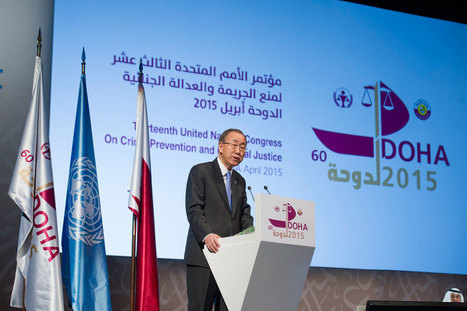
Secretary-General Ban Ki-moon addresses 13th United Nations Crime Congress in Doha, Qatar. April 2015. UN Photo/Eskinder Debebe 115
Print
12 April 2015 – Kicking off the 13th United Nations Congress on Crime Prevention and Criminal Justice in Doha, Qatar, Secretary-General Ban Ki-moon along with several other top UN officials today spotlighted the critical connection between rule of law and sustainable development.
“All societies need fair criminal justice systems, effective, accountable institutions, and access to justice for all,” Mr. Ban said in his keynote address at the opening ceremony of the Crime Congress.
“Accountable security services can go a long way toward ending cycles of violence. Strengthening legal rights helps address inequalities,” he added.
“There can be no sustainable development without human rights and the rule of law,” the Secretary-General continued.
Hundreds of policymakers and practitioners in the area of crime prevention and criminal justice, as well as experts from academia, representatives of intergovernmental and non-governmental organizations, specialized agencies and other UN entities, and media are attending the forum, which is held every five years.
The Doha Crime Congress, running through 19 April, was opened by the Prime Minister of Qatar, Abdullah bin Nasser bin Khalifa Al Thani. The Congress takes place several months ahead of a major summit on the future global development agenda, scheduled to take place at UN Headquarters in September.
The Crime Congress today adopted the 'Doha Declaration', a political document emphasizing important aspects of fighting transnational organized crime and strengthening criminal justice systems and crime prevention.
“This September, Member States will consider a post-2015 development agenda that can pave the way to a better future for billions of people,” Mr. Ban said. “Success requires that the new agenda and sustainable development goals reflect the centrality of the rule of law.”
The Secretary-General called international cooperation and coordination critical, particularly in areas such as combating transnational organized crime and terrorism.
“I encourage every country to ratify and implement the conventions against drugs, crime and corruption, and the international instruments against terrorism, and to support the important and varied work of the UN Office on Drugs and Crime,” he added.
“We must also adapt to changing times. Cybercrime has now become a business which exceeds billions of dollars a years in online fraud, identity theft, and lost intellectual property. It affects millions of people around the world, as well as businesses and governments.”
During the ceremony, three representatives of the Youth Forum, which took place before the Congress, delivered to the participants the Doha Youth Forum statement, which includes their recommendations on the main themes that will be discussed at the Congress.
General Assembly President Sam Kutesa said that the Crime Congress is “an important forum to focus on crimes affecting the ability of millions of people around the world to realize a life of prosperity and dignity”.
Mr. Kutesa called on participants “to use this forum to generate concrete ideas that can positively contribute to the on-going negotiating process for the post-2015 development agenda in the area of crime prevention and criminal justice”.
Economic and Social Council (ECOSOC) President Martin Sajdik and UN Office on Drugs and Crime (UNODC) Executive Director Yury Fedotov also delivered remarks at the opening of the Congress.
“We are all gathered here to further advance our united response to crime,” Mr. Sajdik said. “Although planned already years ago the timing of our congress cannot be better. After the Sendai Conference on Disaster Risk Reduction of last March our congress here is another landmark meeting in this absolutely crucial year for global development.”
Mr. Fedotov said that the meeting offers a timely opportunity to further advance global action, and promote a holistic approach that integrates effective crime prevention and criminal justice measures into the wider UN agenda, including work on gender equality and the protection of children.
“The Congress is an excellent opportunity to extend and enhance international cooperation to counter transnational organized crime, terrorism and illicit financial flows, and to ensure that our responses are fast, smart and able to cope with new threats,” he added.
At a press conference later this afternoon, Secretary-General Ban Ki-moon congratulated the Prime Minister of Qatar on the successful adoption of the Doha Declaration.
“I believe the Declaration to be implementable, concise and achievable,” he said.
“I expect the Conference to be action-driven. It should provide a platform for increased cooperation between governments, intergovernmental organizations and civil society on the whole spectrum of crime prevention and criminal justice issues,” he added.
This year's meeting - expected to conclude on Sunday, 19 April - marks the 60th anniversary of the Crime Congress.
News Tracker: past stories on this issue
DOHA: UN forum to discuss link between crime prevention and sustainable development
"Corruption is the thief of economic and social development; stealing the opportunities of ordinary people to progress and to prosper"
Yury Fedotov, Executive Director of the United Nations Office on Drugs and Crime (UNODC)
The 2015 UN Crime Congress aims to raise awareness of the connection between weak crime prevention and ailing social development, as well as to show states that without respect for the rule of law and an effective criminal justice system, sustainable development will be difficult to attain.
The rule of law requires coherent legal frameworks based on human rights and effective governmental systems and institutions. Citizens of a state must all have equal rights under the law, with access to public services, information and justice. With proper standards and frameworks, rule of law supports enforceable contracts, fair labour regulations, healthcare and sanitation systems, education, effective security against violence, conflict and crime-all vital elements for development and inclusive growth.
A main deterrent to development and equality is corruption, which undermines institutions and contributes to instability. With rampant corruption, foreign direct investment is discouraged and businesses cannot thrive, meaning economic development is stunted. Corruption affects every level of society, starting from the government down to the average citizen. The impoverished suffer most, usually due to diversion of public money and foreign aid away from vital projects. Without fair use of these resources, countries lack funds to build vital infrastructure such as roads, hospitals and schools.
But corruption is not just about money being stolen from where it is needed the most; it leads to weak governance, which in turn fuels organized criminal groups and promotes crimes such as human trafficking, arms and migrant smuggling, counterfeiting and the trade in endangered species. How does corruption and weak governance undermine development?
Corruption is the single greatest obstacle to economic and social development around the world.
It stifles economic growth, undermines the rule of law, and squanders talent and precious resources. Where corruption is rife, companies are reluctant to invest as the costs of doing business are significantly higher. Ultimately, corruption prevents people, countries and businesses from fulfilling their potential.
Corruption undermines democracy, governance and human rights by weakening State institutions that are the cornerstones of fair and equitable societies. Vote buying at elections distorts the democratic process and justice is challenged when criminals are able to bribe with impunity.
With funds intended to provide essential services such as health care, education, clean water, sanitation and housing diverted by corruption, there is less provision of services.
Crime and corruption degrade already weak state institutions, as criminals use resources from illicit activities to bribe law enforcement officials, neutralize courts, purchase or intimidate politicians and journalists, and engage business leaders in criminal activities.
Cumulatively, corruption, crime and weak rule of law tear at the social fabric, undermining the legitimacy of the state, driving out licit economic activity, and endangering public security.
"The rule of law is both an essential condition of sustainable development and a development outcome in its own right. The rule of law can promote inclusive economic growth, reduce inequalities and build institutions that provide access to justice for all."
-Jan Eliasson, Deputy Secretary-General What is the United Nations doing to tackle corruption and promote the rule of law?
The only legally binding universal anti-corruption instrument is the United Nations Convention against Corruption(UNCAC) which now has 174 states parties. The Convention contains innovative and globally accepted anti-corruption standards applicable to both the public and private sectors. The Convention encourages states to successfully attack corruption by providing equal and fair justice for all and creating an environment where the rule of law can prevail.
A global community of anti-corruption experts is being created through the peer review mechanism set up to support the implementation of the UNCAC. The mechanism is also helping to desensitize and depoliticize the issue of corruption, enabling a frank and constructive global dialogue among regions and legal systems.
UNODC has trained more than 1,400 anti-corruption practitioners from across the globe and provided assistance to dozens of States to draft or amend their legislation.
The mechanism has a truly global reach and the country reports have become a benchmark against which countries can measure their progress. It is helping build up a global picture of efforts against corruption. Another of its strengths is its inclusiveness which enables least developed countries and developing countries to participate on an equal footing in the review process.
UNODC also partners with the World Bank on the Stolen Asset Recovery Initiative (StAR Initiative), which supports efforts to end safe havens for corrupt funds. StAR works closely with developing countries and financial centres to prevent the laundering of the proceeds of corruption and to facilitate more systematic and timely return of stolen assets.
Protection against crime and violence is a top priority of people everywhere.
Criminal activities undermine state authority by fuelling corruption and damaging the legitimate economy. This has an impact on the quality of life of citizens, most particularly the poor, women and children. Effective criminal justice systems and respect for the rule of law are crucial for achieving sustainable development.
In a globalized inter-connected world the transnational nature of crime is one of the key challenges countries face.
From 12 to 19 April 2015, Qatar will be hosting the Thirteenth UN Crime Congress in Doha which brings together governments, policy-makers and experts to exchange their experiences and intensify international cooperation in tackling the threat of transnational organized crime.
As the international community continues to discuss the post-2015 development agenda, so the 13th Crime Congress will consider how best to integrate crime prevention and criminal justice into the wider UN agenda. It will focus on links between security, justice and the rule of law, and the attainment of a better, more equitable world.
As the Executive Director of the United Nations Office on Drugs and Crime (UNODC), Yury Fedotov, has said, people aspire to be free from the grip of crime, violence, corruption and insecurity: “This basic human aspiration chimes with a growing recognition across the international community that crime is not simply a social problem, but a grave obstacle to achieving sustainable development.”
Every five years policy-makers and practitioners working in crime prevention and criminal justice gather for the United Nations Crime Congress to help shape the agenda and standards of the UN on crime prevention and criminal justice. The Doha Congress in 2015, which marks the 60th anniversary of the Crime Congress, will consider how best to integrate crime prevention and criminal justice into the wider UN agenda.
The United Nations Crime Congress is the world's largest and most diverse gathering of governments, civil society, academia and experts in crime prevention and criminal justice. For 60 years the congresses have had an impact on criminal justice policies and strengthened international cooperation against the global threat of transnational organized crime.
The practice of holding international conferences on crime control matters at five-year intervals dates back to 1872 when conferences were held under the auspices of the International Prison Commission which later became the International Penal and Penitentiary Commission (IPPC).
The First United Nations Congress was held in Geneva in 1955.
Sixty years later, this tradition continues with the Government of Qatar hosting the Thirteenth United Nations Congress in Doha. The theme of the Thirteenth Congress is "Integrating crime prevention and criminal justice into the wider UN agenda to address social and economic challenges and to promote the rule of law at the national and international levels, and public participation".
On the agenda in 2015
Successes and challenges in implementing comprehensive crime prevention and criminal justice policies and strategies to promote the rule of law nationally and internationally and to support sustainable development; International cooperation, including regionally, to combat transnational organized crime; Comprehensive and balanced approaches to prevent and adequately respond to new and emerging forms of transnational crime; National approaches to public participation in strengthening crime prevention and criminal justice.
1955: Geneva, Switzerland The First Congress adopted the Standard Minimum Rules for the Treatment of Prisoners.
1960: London, United Kingdom The Second Congress recommended special police services for juvenile Justice.
1965: Stockholm, Sweden The Third Congress analyzed the relationship between criminality and social change.
1970: Kyoto, Japan The Fourth Congress called for improving crime prevention planning for economic and social development.
1975: Geneva, Switzerland The Fifth Congress approved the Declaration on the Protection of All Persons from Being Subjected to Torture and Other Cruel, Inhuman or Degrading Treatment or Punishment.
1980: Caracas, Venezuela Under the theme “Crime prevention and the quality of life”, the Sixth Congress recognized that crime prevention must be based on the social, cultural, political and economic circumstances of countries.
1985: Milan, Italy The Seventh Congress adopted the Milan Plan of Action and several new United Nations standards and norms under the theme “Crime prevention for freedom, justice, peace and development".
1990: Havana, Cuba The Eighth Congress recommended action against organized crime and terrorism under the theme “International crime prevention and criminal justice in the Twenty-first century”.
1995: Cairo, Egypt The Ninth Congress focused on international cooperation and practical technical assistance for strengthening the rule of law under the theme “Seeking security and justice for all”.
2000: Vienna, Austria The Tenth Congress adopted the Vienna Declaration committing Member States to strengthen international cooperation in the fight against transnational crime and criminal justice reform.
2005: Bangkok, Thailand The Eleventh Congress adopted the Bangkok Declaration, a crucial political document laying the foundation for and showing the direction towards strengthening international coordination and cooperation efforts to prevent and combat crime.
2010: Salvador, Brazil The Twelfth Congress highlighted the pivotal role of justice in development, emphasized the need for a holistic approach to criminal justice system reform to strengthen the capacity of criminal justice systems, and explored ways of preventing and controlling emerging forms of crime worldwide.
15th Istanbul Anti-Corruption Action Plan Meeting:
This meeting will focus on the third round monitoring reports under the Istanbul Anti-Corruption Action Plan for Kyrgyzstan and Ukraine. The meeting will also include progress reports from Armenia, Azerbaijan, Georgia, Kazakhstan, Mongolia, Tajikistan and Uzbekistan.
18th ACN Steering Group Meeting:
An opportunity to discuss the progress in implementing the ACN Work Programme 2013-2015 as well as the new Work Programme for 2016-2019. This meeting will also provide a platform to discuss the outcomes of the external evaluation of the ACN.
OECD Integrity Week:
The March meetings of the Anti-Corruption Network for Eastern Europe and Central Asia will take place within the framework of OECD Integrity Week - an annual event held at the OECD Headquarters to actively support governments and organisations to strengthen integrity, build trust, and fight corruption. This year's Integrity Week also includes the OECD Integrity Forum on Curbing Corruption - Investing in Growth, 25-26 March 2015.
The G20 have committed to the implementation of international legislative frameworks, the adoption of measures in preventing and combating corruption, the strengthening of international co-operation, and a stronger engagement with the private sector. The OECD actively supports this work.
CORRUPTION AND GROWTH
The G20 Anti-Corruption Working Group asked the OECD to prepare a study on the impact of corruption on economic growth as part of the Russian Presidency's focus on growth. This Issues Paper, presented to Leaders in St Petersburg, investigates the relationship between corruption -- and anticorruption measures -- and economic performance. By analysing the channels through which corruption affects economic performance, this Paper offers a better understanding of the complex factors hampering the economic potential of countries affected by corruption.
WHISTLEBLOWER PROTECTION
Whistleblower protection has been identified by the G20 as an essential tool to encourage the reporting of misconduct, fraud and corruption. The OECD elaborated a complete study on G20 whistleblowers protection frameworks(pdf), as well as a related compendium of best practices and guiding principles for legislation, which was supported by the G20 AWG in the First Monitoring Report that Leaders adopted in Cannes, November 2011.
INTEGRITY IN THE PUBLIC SECTOR
The G20 relies on the OECD’s expertise in public sector integrity, including through its Integrity Reviews, to support its agenda on integrity of public officials through financial disclosure and on integrity in public procurement. The OECD, together with the World Bank, presented several concept notes which led to the adoption by the G20 of High-Level Principles on Financial Disclosure.
DIALOGUE BETWEEN BUSINESS AND GOVERNMENTS
Engagement with the private sector in the fight against corruption has been a key priority of the G20 since the Seoul Summit.
The OECD has co-organised four high level conferences on anti-corruption. The most recent was held on 11 June in Rome, Italy. The conference brought together high-level government, business and civil society representatives to address the latest challenges facing countries, business and civil society. Sessions included:
Digging corruption out of the natural resources sectors: What new avenues for joint efforts?
Sweeteners in international contracts: Are "offsets" the new corruption threat?
Mechanisms to recognise companies’ compliance efforts: Do they work and can they be applied in all jurisdictions?
Tackling facilitation payments and solicitation: Can you say “no”?
The three previous editions of the conference were held in Paris (2011, 2013) and Puerto Vallarta 2012.
The OECD has a close relationship with the B20 Task Force on Anti-corruption and has regularly provided contributions to its work.
FOREIGN BRIBERY
The OECD has actively supported G20 countries in implementing their commitment on foreign bribery under the Seoul and 2013-2014 Action Plans. The Organisation is engaged with the G20 countries that are not Parties to the OECD Anti-Bribery Convention (China, India, Indonesia, and Saudi Arabia), including through the organisation of technical seminars and high-level events on foreign bribery.
China, India and Indonesia have been attending the meetings of the OECD WGB on a regular basis as ad hoc participants. Building on the OECD’s expertise and countries’ experience in the monitoring of the Convention, and at the request of the G20, the OECD prepared guiding principles on solicitation and on enforcement of foreign bribery rules.
Moreover, effective and efficient Mutual Legal Assistance (MLA) is essential in the investigation and prosecution of transnational corruption cases, and the recovery of assets derived from such criminal conduct. The G20 asked the OECD and UNODC to report on the High-Level Principles on Mutual Legal Assistance(pdf) for the St Petersburg Summit.
By Sean Buchanan ROME, Apr 15 2015 (IPS) Lobbying is an integral part of democracy, but multiple scandals throughout Europe demonstrate that a select number of voices with more money and insider contacts can come to dominate political...
Cybercrime is an emerging form of transnational crime, and one of the fastest growing. As the Internet has become an almost essential part of our lives, prov...
17 April 2015 – Efforts to tame the fast-growing cybercrime threat took centre stage at the United Nations Crime Congress under way in Doha, Qatar, as a diverse group of experts in the field urged strong partnerships between the public and private sectors to create a safer digital landscape.
“Cybercrime has become an established threat to the security of States and individuals alike,” Loide Lungameni, Chief of the Organized Crime and Illicit Trafficking Branch in the UN Office on Drugs and Crime (UNODC), told a high-level event on the topic.
Continuing, she warned those gathered for the 13th UN Congress on Crime Prevention and Criminal Justice that in the near future, due to ever-increasing global connectivity, it will become hard to imagine a form of cybercrime – or perhaps any crime – that does not involve electronic evidence.
According to UNODC, threats to Internet safety have spiked dramatically in recent years, and cybercrime now affects more than 431 million adult victims globally.
Cybercrime exists in many forms, the most common being identity-related offences. This occurs by ‘phishing’ (deceiving Internet users into giving their personal information), the dissemination of ‘malware’ (software that disrupts computer systems and collects personal or sensitive information) and hacking (illegally accessing someone’s computer remotely).
Criminals tend to use these methods to steal credit card information and money. Moreover, the Internet has become a breeding ground for criminal activity related to copyright and intellectual property rights, as well as offences such as child pornography and abuse material.
For the past two years, UNODC, under its programme for cybercrime, has been delivering technical assistance to law enforcement authorities, prosecutors, and the judiciary, in three regions of the world, in Eastern Africa, South-East Asia, and Central America.
The agency has emphasized that developing countries lack the capacity to combat cyberattacks and other forms of cybercrime. Criminals also exploit countries’ legal loopholes and weak security measures to perpetrate cybercrimes.
“The main objective of the programme is to respond to identified needs in developing countries by supporting Member States to prevent and combat cybercrime”, Ms. Lungameni explained.
UNODC works with international partners in carrying out this technical assistance, including the International Telecommunication Union (ITU), the Commonwealth Secretariat, the World Bank, Interpol, and Europol.
At another meeting, Jinyong Chung, senior counsel for the World Bank, stressed how important it is for international organizations and their partners to combat cybercrime.
“We all know that cybercrime is a not an easy issue to deal with. But if we do nothing, just because it is very hard to deal with, it causes other risks,” he said.
He added that the Bank’s mission in combating cybercrime is “to build capacity among policymakers, legislators, public prosecutors and investigators and civil society in developing countries, in the policy, legal and criminal justice aspects.”
“We are trying to achieve this goal through synthesizing international best practices in these areas”, he said, adding that the World Bank has developed a virtual library which gathers all what is available regarding cybercrime issues. This virtual library will be open to the public.
The head of Cybercrime Program Office in the Council of Europe, Alexander Seger, said in another session that capacity building is crucial as an effective way to address the challenge of cybercrime.
“We have seen a lot of progress in that field over the last five years, how donors have opened up their financing instruments to support capacity building programs”, he said. “Capacity building on cybercrime contributes to human rights and the rule of law, contributes to human development and democratic governance,” he added.
The private sector is also involved in combating cybercrime and a side event discussed public-private partnership about it, with the participation of Microsoft Corporation.
In an interview with UN Radio, the head of the Microsoft Digital Crime Unit for Middle East and Africa, Dale Waterman, said: “We are trying ultimately to create a safer digital world for our customers.”
As such, Microsoft is focusing its efforts on malware and vulnerable populations, “who tend to be the young and the less tech-savvy…and the elderly. With the young, we are developing ways in which child exploitation abused images can be removed from the Internet,” he explained.
16 April 2015 – Weighing in on the vital importance of the world’s cultural artifacts and the illegal trade that endangers them, experts at an event held at the United Nations Crime Congress, under way in Doha, Qatar, urged Member States to use the existing legal instruments to fight this crime and stressed the importance of raising awareness.
“We are pushing and we are encouraging all Member States to implement the existing Conventions and guidelines that are available. I think there are enough legal instruments to be able to counter illicit trafficking of cultural heritage,” said Anna Paolini the UN Educational, Scientific and Cultural Organization (UNESCO) for the countries of the Gulf region and Yemen.
“We encourage Member States to establish a national registry and inventory of cultural heritage because this is a very important tool for risk management and prevention, as well as to introduce risk-management planning and to align and enforce local legislation,” she added.
The workshop, a highlight of today’s work at the 13th UN Congress on Crime Prevention and Criminal Justice, was organized by the National Institute of Justice of the United States, the Korean Institute of Criminology, the International Scientific and Professional Advisory Council and the UN Office on Drugs and Crime (UNODC).
In a separate interview with UN Radio, Duncan Chappell, Professor of Law at the University of Sydney said the current turmoil in the Middle East, “the cradle of civilization,” spotlighted the need to address this issue head on.
According to UNESCO, pillage of cultural heritage and antiquities in both Iraq and Syria has reached an unprecedented scale, fueling the respective conflicts by providing revenues for armed groups and terrorists.
Just two months ago, the UN Security Council adopted a resolution urging global cooperation “to impair, isolate and incapacitate” terrorist threats, approving measures targeting sources of funding for the Islamic State of Iraq and the Levant (ISIL) and Al-Nusrah Front (ANF), and condemning those buying oil from the groups, banning all trade in looted antiquities from Iraq and Syria, and calling on States to end ransom payments.
The resolution called on both UNESCO and Interpol to help step up protection of cultural heritage in Syria and Iraq, and subsequently, last month, UNESCO Director-General, Irina Bokova, launched in Baghdad a social media campaign – #Unite4Heritage, to raise awareness and to build support for the protection of heritage where it is threatened by extreme violence.
While, participants at today’s event underscored the difficulties in quantifying the phenomenon, the illegal trade in cultural property is thought to be worth between $2 billion and $6 billion per year.
“Objects that are dug up illegally, generally, nobody is going to report that. And it is only when [those objects] appear on the open market that we know they have been stolen,” Mr. Chappell said, explaining why the job of identifying and tracking what has been stolen, destroyed or smuggled.
“[Further], Interpol, which has some pretty good databases, doesn’t necessarily get any information about this sort of illicit excavations either. And the third reason is that there are no good inventories in many of the countries where these objects are taken,” he said.
Mariya Polner, policy advisor at the World Customs Organization, said the job of customs agencies could be compared to “looking for a needle in a haystack.”
“The chain is as strong as its weakest link…with common effort and goodwill, we can work together to preserve the cultural heritage for the future generations,” she said.
To reduce the demand of cultural heritage, Ms. Paolini said that raising awareness, and strengthening education and advocacy at global and local levels are important “to provide a counter narrative to sectarian propaganda in this region.”
“Rather than rely on a great deal of criminal law which generally has been the response to punish through the use of severe penalties people who are engaged in this sort of activities, we should be doing more to stop the demand for this type of crime,” suggested Mr. Chappell.
“It can only really operate with people who are prepared to buy these looted objects. People turn a blind eye to the provenance of [these artifacts] in many cases and are quite prepared to buy them if they have got enough money and interest. That sort of attitude should change,” he concluded.
We must take the fight to the traffickers along maritime routes, says UNODC Chief
DOHA/VIENNA 15 April (UN Information Services)-The Indian Ocean couldbecome ahaven for criminal activity participants, heard today at an event held at the 13th Crime Congress for Crime Prevention and Criminal Justice in Doha.
"Recent research conducted by the Global Maritime Crime Programme indicates an increase in Dhow traffic between known departure points for heroin trafficking and the east coast of Africa and South Asia, with traffickers adopting innovative concealment methods and using several drop-off points to smaller vessels," said the Executive Director of the UN Office on Drugs and Crime (UNODC) Yury Fedotov.
To counter this, more robust responses to maritime drug trafficking were needed from the international community he said. Comparing the fight against crime on the high seas with that on land, Mr. Fedotov, underscored it was imperative that the maritime domain was not ignored.
UNODC has worked with Member States and other partners to achieve impressive results in the maritime piracy fight. The four piracy prosecution states, Kenya, Seychelles, Mauritius and Tanzania, for example, have tried three hundred and fourteen suspected pirates in the last four years .
But, he said, it was now time to take the fight forward against the maritime traffickers. UNODC was doing this through its new Global Maritime Crime Programme, which is now geared towards taking on transnational organized crime on the high seas.
"While there remain challenges with prosecuting narcotics traffickers detected at sea, we will continue to work with coastal states to introduce enabling legislation, in line with international conventions, that will help to improve investigations and strengthen criminal justice responses," said Mr. Fedotov.
Other speakers at the high level event included Minister of Justice of Sri Lanka, Wijeyadasa Rajapakshe, Minister of Home Affairs of Seychelles, Charles Bastienne, Deputy Commander, Combined Maritime Forces (CMF), Commodore Will Warrender, Head, Global Maritime Crime Programme (UNODC), Alan Cole.
van Šimonović, Assistant Secretary-General for Human Rights, moderates a discussion on the death penalty at the Doha Crime Congress. Photo: UN Webcast video capture 51
Print
14 April 2015 – As the 13th United Nations Congress on Crime Prevention and Criminal Justice continued its work in Doha, Qatar today, high-level UN, academic and Government experts at a panel discussion on death penalty advocated moving away from the punishment as there is no empirical evidence that it deters crime.
“Over the lifetime of the United Nations, the balance has shifted, and today, more than 160 Member States have either abolished the death penalty or do not practice it”, said UN Assistant Secretary-General for Human Rights, Ivan Ivan Šimonović, who moderated the discussion.
“Despite these positive developments, however, a number of States continue to impose the death penalty,” he told the panel, one of the many events taking place during the UN Crime Congress, which opened Sunday and is expected to conclude on 19 April.
The participants at the panel included the Minister of Justice of Italy, Andrea Orlando, the UN Special Rapporteur on extrajudicial, summary or arbitrary executions, Christof Heyns, the Deputy Director in Penal Reform International in charge of regional Middle East and North Africa office, Haitham Shibli, a non-governmental organization working on penal and criminal justice reform, and Jeffrey Fagan, Professor at Columbia Law School in New York.
Mr. Šimonović stressed that Amnesty International noted in a recent report on global sentences and executions that in 2014 there were fewer registered executions but there was an increase of people condemned to death.
“The spread of drug trafficking and terrorism is an important factor for many States when considering to retain or even reintroduce the death penalty,” he added, noting that China, Iran, Viet Nam, Saudi Arabia, Singapore, and Malaysia have the highest rate of executions for drug trafficking.
The event, organized with Italy, provided the opportunity to present a publication by the Office of the UN High Commissioner for Human Rights (OHCHR) Moving away from the Death Penalty, Arguments, Trends and Perspectives. The book, launched at UN Headquarters in October 2014, has been translated into Arabic and will be available soon, said Mr. Šimonović.
“The world is certainly moving away from the death penalty, in just the way the world moved away from slavery, from judicial torture and from other such practices”, Mr. Heyns said, recalling that in 1948, only eight States had taken the death penalty out of their laws.
“Now, 99 have done so,” he said, adding that only five States now execute more than 25 people a year – China, Iran, Saudi Arabia, Iraq, the United States.
The Special Rapporteur stressed that “the most important consideration coming into play over the last seven years is that it is not clear that the death penalty has any special deterrence value. In fact, there is no evidence to that effect.”
“The death penalty creates a false sense of security,” he continued, underscoring that the punishment will not solve the problem of criminal activity and that countries should rather focus on better policing and addressing underlying causes.
Mr. Heyns said that there has been a “shift” regarding death penalty. “It seems that it is a matter of decades before there will be a situation where it is very likely that very few States will still have the death penalty officially in their books.”
Regarding the situation in the Middle East and North Africa, Mr. Shibli stressed the use of death penalty on a very wide and vague scope in the region.
He took the examples of Yemen, where there are more than 360 crimes punishable by death penalty, Morocco where there are more than 325, and Egypt with more than 40. “It is widely used in the criminal law as a punishment in the region,” Mr. Shibli said. “Generally in the region now, especially after the political instability, the governments feel more at ease in using the death penalty.”
Mr. Fagan discussed the situation in the United States, where capital punishment is a legal sentence in more than 30 states. He pointed out empirical research that shows that “there is no evidence that death penalty has any greater deterrent effect than would other punishments.”
“Deterrence is one of the essential justifications. Without that justification, I think there is a constitutional issue,” he added.
He said that because of that evidence, things are changing in the United States. “There is a deep change in the American society in respect to the beliefs about the death penalty,” he concluded.
A wide view of participants attending the UN Crime Congress in Doha, Qatar. Photo: UNODC 72
Print
13 April 2015 – The role that fair, transparent and accessible legal frameworks play in poverty eradication – and in promoting sustainable development – was highlighted by General Assembly President Sam Kutesa and other top United Nations officials attending the UN Congress on Crime Prevention and Criminal Justice today, in Doha, Qatar.
“Equal access to justice and non-discriminatory laws help advance gender equality and promote equitable and inclusive development. Furthermore, fighting corruption will make funds available for delivery of basic services to citizens, particularly to the most vulnerable,” Mr. Kutesa said at a high-level special event on the rule of law, human rights and the post-2015 agenda.
“Nurturing and promoting rule of law and human rights for all without discrimination is critical for reducing violence and crime, and ensuring human security. Central to this is the need for effective and accountable security and justice systems to address cycles of violence and to promote peace and stability, which are important pre-requisites to sustained economic growth,” he added.
The high-level special event was organized by the UN Office on Drugs and Crime (UNODC), in partnership with the Rule of law coordination and resource group, as well as Italy and Thailand. The UN Crime Congress opened Sunday and is expected to conclude on 19 April.
Today’s discussion “is an important follow-up to the General Assembly’s high-level thematic debate on ‘Integrating crime prevention and criminal justice in the post-2015 development agenda,’ which was held in New York on 25 February 2015,” said UNODC Executive Director, Yury Fedotov.
Mr. Kutesa stressed that the nature of crime has changed. “Many countries are today grappling with national and transnational crimes like human, firearms and drug trafficking; corruption; smuggling of migrants; counterfeit medicines; cybercrime and piracy. These not only undermine national capacities towards effective rule of law and human rights promotion, but also weaken the ability of countries and communities to prosper and realize development opportunities,” he added.
The President of the UN Economic and Social Council (ECOSOC), Martin Sajdik, the Assistant Secretary-General for the Rule of Law and Security Institutions in the Department of Peacekeeping Operations, Dmitry Titov, the Assistant Administrator and Director of the Bureau for Policy and Programme Support of the UN Development Programme (UNDP), Magdy Martinez-Soliman, and the Assistant Secretary-General for Human Rights, Ivan Šimonović, also spoke at today’s high-level event.
Mr. Sajdik said “there is no good governance, without rule of law, and there is no rule of law without good governance,” and added, “the promotion of sustainable development, guarded by strong rule of law and human rights, is a road that must be taken by everyone.”
“If we wish to secure peaceful and stable societies, and true social development, then eradicating discrimination, fighting inequalities between social groups, and ensuring that ‘no one is left behind’ should be our urgent priority,” Mr. Šimonović said.
He also stressed that “law enforcement and the administration of justice must be consistent with international human rights law.” “Laws should serve people, reflecting their values and needs and not be imposed on them. We need ‘rule of law,’ not a ‘law and order’ approach. Where law enforcement is discriminatory, and disproportionately harsh, and where the laws themselves are unjust, this generates both resentment and inequality,” he added.
For his part, Mr. Martinez-Soliman spoke about UNDP's work in preventing impunity, human rights violations and to ensure the rule of law in over 100 countries, including 40 affected by crisis. UNDP also helps strengthen the capacity of governments to hold perpetrators of crimes accountable and to provide vulnerable people, especially victims of conflict with measures of redress."
Mr. Šimonović stressed that “to be truly transformative, and effective, the new post-2015 development agenda must be firmly based on international human rights law, aiming to secure freedom for fear and want for all, without discrimination.”
Mr. Titov said that it is not just violent crime that hinders development. “There is a wealth of evidence, as mentioned by many today, that corruption is a major hindrance with a disproportionate impact on the poor and marginalized,” he said.
He gave examples of initiatives by the Department of peacekeeping operations to strengthen the rule of law, including “helping the authorities in the Democratic Republic of the Congo to deal with military officers accused of committing crimes against civilians” and “supporting Côte d’Ivoire in operationalizing all 37 courts and rehabilitating 22 prisons across the country following the 2011 crisis.”
9 April 2015 – Ahead of a major summit in New York in September on the future global development agenda, the 13th United Nations Crime Congress will convene in Doha next week to discuss the links between crime prevention, security, justice and sustainable development.
“The rule of law, better criminal justice systems, access to justice, well-functioning law enforcement and prosecution authorities – they could be enablers for development,” the Executive Director of the UN Office on Drugs and Crime (UNODC), Yury Fedotov, said in a recent interview with the UN News Centre. “That’s why the Crime Congress is important, especially this year, just a few months before the UN summit on the post-2015 development agenda,” added the chief of the Vienna-based UNODC.
The theme of the Congress, which will take place in the Qatari capital from 12 to 19 April, is “Integrating crime prevention and criminal justice into the wider United Nations agenda to address social and economic challenges and to promote the rule of law at the national and international levels, and public participation.”
Hundreds of policymakers and practitioners in the area of crime prevention and criminal justice, as well as individual experts from academia, representatives of inter-governmental and non-governmental organizations, specialized agencies and other UN entities, and the media are expected to attend the forum, which is held every five years.
This year’s Crime Congress, which will be opened by Secretary-General Ban Ki-moon, also marks the 60th anniversary of the first such meeting held in 1955. Participants are expected to discuss the successes and challenges in the implementation of comprehensive policies and strategies for the prevention of crime and criminal justice in order to strengthen the rule of law at the national and international levels and to support sustainable development.
Other issues include international cooperation, including at the regional level, to combat transnational organized crime; comprehensive and balanced approaches to prevent and adequately respond to new and emerging forms of transnational crime; and national approaches to public participation in the strengthening of crime prevention and criminal justice.
In addition to the main session, several side-events are planned on various topics, such as human trafficking, smuggling of migrants, wildlife and forest crime, and cybercrime.
The Congress is expected to adopt the ‘Doha Declaration,’ a political document that will put an emphasis on important aspects of fighting transnational organized crime and strengthening criminal justice systems and crime prevention. It will contain recommendations which will be submitted to the next session of the UN Commission on Crime Prevention and Criminal Justice, to be held in Vienna from 18 to 22 May.
Mr. Fedotov believes that international cooperation is crucial to fight crime. “National borders do not stop criminals. That’s why international cooperation has to grow. That’s why the 13th Crime Congress is very important,” he said.
He also believes that the role of the public in strengthening crime prevention and criminal justice is very important, noting: “We cannot do anything without civil society.”
In advance of the Congress, a Youth Forum involving the participation of more than 160 students from different backgrounds will take place during which they will be asked to role-play the 13th Crime Congress to discuss the main themes.
"Human trafficking is one of the world's most shameful ills-a heartless violation of human rights in which lives are traded, sold, exploited, abused and ruined. No country is immune, and millions of lives are at stake. We must take a united stand, shine a spotlight on the issue, put traffickers behind bars and give protection and support to victims and vulnerable people." - Secretary-General Ban Ki-moon
The trafficking of human beings has existed for centuries. It is a ruthless crime which mercilessly exploits millions of vulnerable women, children and men worldwide. Even today it is very difficult to assess the scale of the problem because of its clandestine nature. Almost every country in the world is affected either as a country of origin, transit, or destination. It has become a global criminal enterprise generating enormous illicit profits, worth billions of dollars per year. This global crime moves where the profits are higher and detection risks lower and which constantly mutates and evolves, adapting to local circumstances and opportunities.
Human trafficking is defined as "the recruitment, transport, transfer, harbouring or receipt of a person by such means as threat or use of force or other forms of coercion, of abduction, of fraud or deception for the purpose of exploitation ". (Trafficking in Persons Protocol)
Trafficking can occur nationally or regionally, or from continent to continent. No country is left untouched by human trafficking: Europe is a destination for victims from the widest range of destinations; many people from Asia are trafficked to the widest range of destinations, and the Americas are prominent, both as the origin and destination of victims of human trafficking. Trafficking within the same region seems to be the most common trafficking flow.
People are trafficked to be exploited in a range of different sectors: of the detected victims in 2011, 53 per cent were involved in sexual exploitation and 40 per cent in forced labour which includes exploitation in agriculture, horticulture, construction, textile production in sweatshop conditions, catering and restaurants, entertainment services and domestic servitude. Other forms of exploitation have been found such as forced marriage, organ removal, illegal adoption and the exploitation of children for begging and as child soldiers.
Most countries have now criminalized trafficking with a specific offence in line with the UN Trafficking in Persons Protocol. But impunity remains a serious problem; only four in 10 countries reported having 10 or more yearly convictions in 2010-2012 and nearly 15 per cent having no convictions at all in the same period.
How does human trafficking undermine development?
Poverty and inequality are linked to increases in organized crime including human trafficking. Targets aimed at reducing the number of people being trafficked are being discussed by the United Nations as part of the post 2015 development agenda.
What is clear is that sustainable development is directly affected by human trafficking. Through bribery and corruption, organized criminal gangs of traffickers undermine governments and the rule of law.
Human trafficking comes at a high cost for the economy: reducing tax revenues and migrant remittances. It shatters the social fabric: family ties and communities are destroyed, children miss out on an education, and public health problems such as HIV/AIDS may be fuelled.
But the most devastating impact is on the victims themselves: if they survive, they can be mentally and physically traumatized for the rest of their lives. They may not be able to return to a productive life in their communities. So human trafficking needs to be tackled and victims must be empowered to become survivors, if sustainable development is to be achieved. What is the United Nations doing to combat human trafficking?
The United Nations Office on Drugs and Crime (UNODC) runs the Global Programme against Trafficking in Persons (GPAT), which supports Member States to prevent and prosecute the crime, to protect the rights of victims, and promotes cooperation among Member States.
UNODC's Human Trafficking Case Law Database has made available information on more than 1,000 successful prosecutions and convictions from 83 countries. The database improves the capacity of States to investigate and prosecute trafficking crimes.
Dedicated anti-human trafficking programmes have been developed jointly with national governments in key countries and regions including Latin America, the Middle East and North Africa, the Horn of Africa, the Gulf countries, and South and West Asia.
In the last two years alone UNODC has trained more than 1,300 practitioners such as law enforcement officials, and has reached 76 countries through its technical assistance activities. It also runs mock trials for judges and prosecutors and lawyers to aid successful prosecution of traffickers.
UNODC's field offices have organized training, mock trials and workshops in Africa and the Middle East (in Benin, Chad, Cote d'Ivoire, Egypt, Gambia, Jordan, Republic of Congo, Senegal, Sudan, Togo and Zimbabwe) and in Latin America (Brazil, Colombia, Costa Rica, El Salvador, Guatemala , Honduras, Mexico, Nicaragua and Panama).
UNODC also works with other UN agencies, international organizations and other stakeholders to ensure a coordinated approach to tackling human trafficking.
16/04/2015 - Widespread corruption was one of the main reasons that led to the change of the political regime in Ukraine in 2014. The new administration pledged to fight corruption, a challenging task in the current context of the economic crisis and military conflict in the East of the country. It has made a major breakthrough in anti-corruption policy, legal and institutional reforms. But it has so far failed to deliver convincing results beyond legal reforms. Ukraine must enforce its new anti-corruption legislation, and bring corrupt officials to justice without delay, says the new OECD report.
The report commends Ukraine for the recent adoption of the anti-corruption strategy and for the reform of its criminal legislation that brought the country into compliance with international anti-corruption standards. It also welcomes the decision to create two anti-corruption bodies - the Corruption Prevention Agency and the National Anti-Corruption Bureau. The report highlights the major role that the civil society played in the reform process.
However, these encouraging steps have not yet been supported by strong enforcement actions. The report raises major concerns about the lack of prosecutions of corrupt members of the former regime, especially those whose assets have been frozen in OECD countries and of corruption spreading in the new government. The report recommends that Ukraine should:
Adopt the action plan for the national anti-corruption strategy that will have clear indicators for measuring performance and ensure that the monitoring of its implementation is based on corruption surveys and inputs by the civil society; Ensure the independence of the National Anti-Corruption Bureau and provide it with all necessary resources to investigate high level corruption crimes; Establish the Corruption Prevention Agency without delay and build its capacity for effective prevention of corruption in the public administration, in particular by setting up the electronic asset disclosure system for public officials; Pursue without further delay the reform of civil service in line with the European standards for public administration in order to ensure its professionalism and integrity; Boost the reform of the judiciary and take measures to ensure the independence and integrity of judges, in particular by revising relevant constitutional provisions; Introduce legislation on transparent financing of political parties and electoral campaigns, including direct public financing, to limit the influence of private interests over politics and reinforce rules on integrity and corruption prevention for political officials. Take effective measures to boost the potential of business to contribute to the economic recovery of the country by freeing it from “corruption tax”, political dependencies and dominance of oligarchs.
Curbing Corruption - Investing in Growth OECD, Paris, 25-26 March 2015
Make a difference at the OECD Integrity Forum!
The OECD Integrity Forum unites and engages policy-makers, businesses, civil society, academia and other concerned parties to identify new approaches to preventing, detecting and sanctioning corruption.
Debates will review existing anti-corruption mechanisms across the investment policy cycle and explore good practices in mitigating corruption and ensuring that investment remains pertinent and efficient for stakeholders.
Exposing the links between investment and corruption
Public and private investment are essential to long-term economic growth. Yet corruption remains a persistent obstacle preventing countries from obtaining the full benefits of public and private investment.
Corruption distorts the quality, composition and productivity of physical capital, and seriously undermines investment.
Corruption is an indirect tax levied on investors at the expense of the public good. It also increases the cost of investment contributing to unsuitable, defective, and dangerous infrastructure.
Investors are adverse to countries with insufficient safeguards against corruption.
US Secretary of State Hillary Rodham Clinton is among the leaders and campaigners talking about the challenge of fighting bribery and corruption. For more in...
To get content containing either thought or leadership enter:
To get content containing both thought and leadership enter:
To get content containing the expression thought leadership enter:
You can enter several keywords and you can refine them whenever you want. Our suggestion engine uses more signals but entering a few keywords here will rapidly give you great content to curate.


 Your new post is loading...