Your new post is loading...
L'avenir de la gouvernance d'entreprise américaine repose-t-il uniquement sur l'envoi de lettres incendiaires ? Mardi, le fonds spéculatif américain Irenic Capital Management a lancé une campagne activiste contre Snap, la maison mère du réseau social Snapchat. L'action Snap a chuté de 75 % depuis son introduction en bourse en 2017 et se situe bien en deçà des sommets historiques atteints après la pandémie. Irenic réclame les changements habituels : licenciements massifs, abandon de certaines activités et une meilleure gouvernance d’entreprise. Ce dernier point est particulièrement pertinent pour l’activiste : la particularité de Snap est que ses actions cotées n’ont aucun droit de vote. De nombreuses entreprises technologiques possèdent des actions à droit de vote multiple qui donnent le contrôle aux fondateurs, mais les actionnaires ordinaires disposent au moins d’un droit de vote et d’une voix, même minime. Ce n’est pas le cas chez Snap. De ce fait, Irenic et les autres actionnaires partageant les mêmes idées sont non seulement incapables de soutenir le programme et les diapositives envoyés au fondateur et PDG de Snap, Evan Spiegel , en menaçant d'influencer le résultat du scrutin, mais ils ne peuvent en aucun cas exprimer leur mécontentement lors des élections.
KPMG LLP failed to properly audit private debt manager Bridging Finance, according to the Ontario Securities Commission, and the accounting giant now faces up to $40-million in fines for allegedly not flagging problems in the years leading up to Bridging’s collapse. In an enforcement document filed late Tuesday, the securities watchdog emphasized the importance of audited financial statements in fostering trust with investors, who rely on accounting firms such as KPMG to give them independent assessments of companies’ financial health. The OSC alleges that KPMG’s reports on Bridging instead gave investors a “false sense of confidence.” As a private debt manager, Bridging Finance raised money from retail investors across multiple funds and then lent it out to borrowers who often could not obtain financing from traditional lenders such as Canadian banks. The four Bridging Finance funds that KPMG audited in 2019 and 2020 had a collective net asset value of $1.7-billion.
When a major company collapses, the search for a villain begins almost immediately. Surely the blame must be applicable to a rogue chief executive, reckless trader or a fraudulent finance chief.
And yet, decades of our first-hand Kakabadse global research into corporate breakdowns suggests something far more unsettling. Boards rarely fail because of one bad actor or a single catastrophic decision. They fail because of predictable and repeatable patterns which quietly take root long before the headlines announcing devastating consequences arrive. Governance failure is seldom sudden. Rather it is a slow drift, and most boards that preside over such collapses believe they are functioning perfectly well up until the point of crisis that marks their demise. We identify the eight most commonly commented causes of board failure:
There’s a French dictum: Il faut tourner sept fois sa langue dans sa bouche avant de parler. It means think before you speak. Air Canada’s outgoing CEO, Michael Rousseau, could have benefited from that wisdom before he offered his condolences in a by-and-large English video message (save for “bonjour” and “merci”) after a collision at New York’s LaGuardia Airport killed two Canadian pilots, including a francophone. Ditto for the airline’s corporate directors, who have spent years offering Canadians double-speak about the importance of French, this country’s other official language. Mr. Rousseau isn’t solely to blame for his latest French faux pas. Indeed, this foul-up points to failures of corporate governance at the flag carrier.
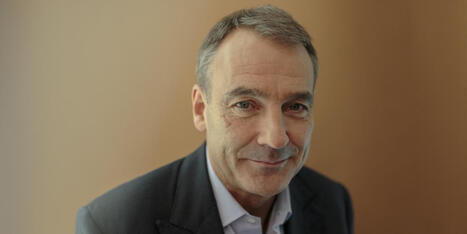
The former chief executive of British oil company BP BP -4.63%decrease; red down pointing triangle is jumping into the American artificial-intelligence boom. Bernard Looney is taking on the chief executive role at Prometheus Hyperscale, a data-center developer that hopes to funnel tens of billions of dollars into two projects in Wyoming and another in Texas. The move marks the latest push by oil-and-gas veterans to capitalize on a building boom that has strained power markets and driven the U.S. construction sector in recent years. With energy-hungry projects requiring huge workforces and sprawling supply chains, companies including SLB, Baker Hughes and even major oil companies have vied to capture more of Silicon Valley’s spending spree.
Laurent Ferreira a formulé ces avertissements mardi durant sa participation à un évènement virtuel organisé par le Cercle finance du Québec. La réponse naturelle d’une banque centrale à une hausse de l’inflation est généralement d’augmenter les taux d’intérêt, et la Réserve fédérale américaine (Fed) a marqué une pause l’hiver dernier dans son cycle d’assouplissement monétaire en conservant les taux inchangés. Mais la patience de la Fed pourrait être limitée. « Si on retourne dans une situation de politique monétaire restrictive, ça va être difficile », a dit Laurent Ferreira.
Isabelle Lemay, présidente et cheffe de la direction, Stefania Cella, vice-présidente et cheffe de la direction financière, et Catherine Venne, vice-présidente-marketing, prennent les rênes du détaillant implanté depuis une quarantaine d’années au Québec et en Ontario. Les trois femmes souhaitent poursuivre la mission du détaillant, tout en le positionnant « comme l’allié incontournable des activités extérieures au Canada ». L’entreprise, qui compte 12 magasins et un site transactionnel, veut éventuellement ouvrir 5 autres emplacements dans les 5 prochaines années « afin de renforcer sa présence au Québec et en Ontario ».
The Federal Reserve needs a new chairman. Jerome Powell's term expires May 15. Kevin Warsh—Stanford, Harvard Law, former Fed governor and crisis-tested—is nominated and ready. The Senate should confirm him immediately. Instead, we have a spectacle. Senator Thom Tillis (R–NC) has pledged to block Warsh’s nomination from advancing until the Department of Justice (DOJ) drops its criminal probe of Powell. The DOJ move here—which a federal judge has already tossed out, finding that the government had produced “essentially zero evidence to suspect Chair Powell of a crime”—is not an investigation. It’s a political grievance dressed up in a subpoena. U.S. Attorney for the Distrcit of Columbia Jeanine Pirro has vowed to appeal anyway. It’s true that a number of highly reputable legal scholars think the judge’s opinion was a fourth-rate effort that would embarrass a first-year law student. But this is beside the point. The renovation of the Federal Reserve palace is another nauseating example of government incompetence and indifference to costs. Sadly, that’s the norm in Washington. If it were a crime, most of the capital would be serving time. But stubbornness in pursuing a criminal probe of Powell is costing us something real.
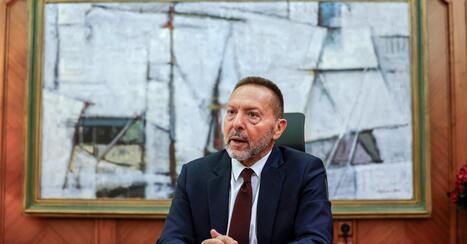
Europe could face recession if the Iran conflict drags on and oil prices jump over $150 per barrel, European Central Bank policymaker Yannis Stournaras told Greek radio on Wednesday. "Right now, nobody says we'll have a recession. But if it (the Iran war) continues, if we're having scenarios with (oil prices) over $150 per barrel, nothing can be ruled out, even a recession," Stournaras, Greece's central banker, said in remarks to Parapolitika radio.
The European Central Bank is concerned about the banking credentials of the executive put forward by Monte dei Paschi di Siena's board to become CEO, a person with direct knowledge of the matter told Reuters. The ECB's concerns about the banking experience of Fabrizio Palermo, the current CEO of Rome utility ACEA , would carry weight in the assessment that the central bank will perform if Palermo is elected next month to head Italy's third-largest lender - and could lead the ECB to attach conditions.
Federal NDP Leader Avi Lewis says his vision for rebuilding the party includes an end to the expansion of oil and gas pipelines despite opposition from his provincial counterparts in Alberta and Saskatchewan. Mr. Lewis, who beat four other candidates and claimed a decisive first-ballot victory with 56 per cent of the votes on Sunday, is vowing to rebuild the federal NDP. The party lost its official status last April, leading to then-leader Jagmeet Singh’s immediate resignation. Don Davies served as the interim leader. The party holds just six of the required 12 seats needed to achieve official status in the House of Commons. That’s down from a record 103 in 2011, when then-NDP leader Jack Layton led the party to Official Opposition status.
Battle lines are drawn, as Ottawa crafts new regulations that will tackle road pollution by Canadian drivers – and go some distance toward shaping the country’s automotive market for the next decade. Since Prime Minister Mark Carney announced in early February that his government would jettison his predecessor Justin Trudeau’s requirement that electric vehicles make up a growing share of all car sales, federal officials have been working toward a replacement policy supposed to be drafted by summer. The policy is to be a renewed emphasis on tailpipe standards, which set industry-wide requirements for reducing greenhouse-gas emissions per vehicle and involve more flexible compliance approaches than just transitioning to EVs.
Two domestic pension funds have made the final round of bidders for Regina-based property registry Information Services Corp. in an auction where support for the Saskatchewan economy is as important as offering the highest price. Plenary Americas, an infrastructure investment arm of the Caisse de dépôt et placement du Québec, and the Ontario Municipal Employees Retirement System are expected to make offers for ISC ahead of an April 1 deadline, according to two sources with knowledge of the process. The Globe and Mail is not naming the sources because they are not permitted to speak for the companies. Spokespersons for ISC, Plenary Group and OMERS declined to comment.
|
Germany-based global travel retailer Gebr. Heinemann is promoting the current chief financial officer at its Asia-Pacific division, Rajshree Dugar, to CEO from September 1. The incumbent regional head, Johannes Sammann, is moving to the company’s Hamburg headquarters to assume the role of vice president—people and culture. The leadership transition comes as the Singapore-based division continues a restructuring process of the regional business which Dugar will now lead. The reboot is largely due to the impact of lower Chinese per-head spending which has had ripple effects across Asia-Pacific and changed the retailer’s—and some competitors’—strategic priorities. Heinemann’s co-CEO Raoul Spanger has, in the recent past, noted the impact. He said: “There has been a significant change in the shopping behavior of Chinese travelers who used to be high-spending. We do not expect this customer group to return with their former purchasing power. As a result, our industry as a whole is experiencing a significant decline in sales in Asia-Pacific, not only now, but for the foreseeable future.”
Unilever and McCormick shareholders found the reality of their planned $65 billion food deal hard to digest on Tuesday, perturbed by the transaction's structure, its long timeline to closing and the potential for antitrust scrutiny. Shares in Unilever, owner of Hellmann's mayonnaise to Knorr stock cubes, fell by 7% after the deal was announced, wiping $7 billion from its market value while McCormick, owner of Cholula hot sauce, also took a hit as its shares slid by about 5%.
Intel agreed to buy Apollo Global Management’s 49% stake in the companies’ Fab 34 joint venture chip manufacturing plant in Ireland for $14.2 billion. Intel said it would fund the purchase through a combination of cash on hand and about $6.5 billion in new debt issuances. Intel expects the transaction to add to ongoing earnings per share and strengthen the company’s credit profile beginning in 2027. Apollo led an $11.2 billion investment for the 49% stake in 2024. The agreement was “the right structure at the right time,” Intel Chief Financial Officer David Zinsner said, adding that the company now has a stronger balanced sheet and an evolved corporate strategy.
Canada’s Sun Life Financial said on Monday it had completed an acquisition of the remaining stakes in BGO and Crescent Capital that it did not already own. The insurer paid $1.59 billion (US$1.14 billion) for the remaining 44 per cent interest stake in real estate investment management advisor BGO and $829 million for the remaining 49 per cent stake in alternative credit investment manager Crescent. Before the transaction, Sun Life owned a majority in both companies. It formed BGO in 2019 through the merger between Bentall Kennedy and GreenOak, holding a 56 per cent stake in the combined company. The insurer took a 51 per cent stake in Crescent for $450 million in 2021.
Les modifications apportées à la législation en 2017 prévoient que les droits d’accise payés par les producteurs d’alcool augmentent automatiquement chaque année au 1er avril, en fonction de l’inflation, sans qu’il soit nécessaire d’obtenir l’approbation du Parlement. Le gouvernement libéral a temporairement plafonné ces hausses à 2 % depuis 2023. L’augmentation prévue mercredi devait marquer la dernière année d’application de ce plafond. Mais un responsable gouvernemental, qui n’est pas autorisé à s’exprimer sur cette annonce avant qu’elle ne soit rendue publique, a indiqué à La Presse Canadienne qu’Ottawa s’apprête à renouveler ce plafond jusqu’en 2028.
Three months out from the formal review date for the North American trade pact, Canada and Mexico are on different paths. In March, Mexico’s trade team began “technical discussions” with the Office of the United States Trade Representative (USTR), starting to hash out new rules around regional content in vehicles, supply-chain security and foreign investment. Canada, by contrast, appears to be largely on the sidelines. Dominic LeBlanc, Canada’s minister responsible for U.S. trade, said Monday that his team has re-engaged with the Trump administration over the past month, after almost no contact following the breakdown of trade talks in October. But he offered few details, and nothing to suggest that Ottawa has begun substantive talks with USTR ahead of the July 1 review date for the United States-Mexico-Canada Agreement.
« Le repreneuriat, je le place au même titre que l’incertitude mondiale que nous vivons dans le contexte économique, au même titre que les tarifs [de Donald Trump] », lance sans ambages le ministre délégué à l’Économie et aux Petites et Moyennes Entreprises, en entrevue avec La Presse. Samuel Poulin annonce ce mardi qu’il confie à la cofondatrice de l’École d’entrepreneurship de Beauce, Nathaly Riverin, le mandat de mener une nouvelle offensive en repreneuriat. Elle sera à la tête d’un « cercle d’experts » chargé d’éclairer le gouvernement au moment où 50 000 propriétaires déclarent avoir l’intention de vendre ou de céder leur entreprise d’ici cinq ans au Québec, selon l’Observatoire de Repreneuriat Québec.
The United Arab Emirates is preparing to help the U.S. and other allies open the Strait of Hormuz by force, Arab officials said, a move that would make it the first Persian Gulf country to become a combatant, after being hit by Iranian attacks. The U.A.E. is lobbying for a United Nations Security Council resolution that would authorize such action, the officials said. Emirati diplomats have urged the U.S. and military powers in Europe and Asia to form a coalition to open the strait by force, the officials said. A U.A.E. official said the Iranian regime thinks it is fighting for its existence and is willing to bring the global economy down with it in a chokehold on the strait. The U.A.E. official said the country had reviewed its capabilities to assist in securing the strait, including efforts to help clear it of mines and other support services.
Francois Dauphin, the head of Montreal’s Institute for Governance of Private and Public Organizations, which advocates for better governance practices, said the language crisis at Air Canada is the most extreme example he’s seen of a major company being punished over the language issue. Companies should understand Quebec’s Frenchlanguage requirements as a way to “simply to show that they care about their customers and employees,” said Dauphin. Most companies in Montreal find a way, he said — for example, by making sure the second-in-command is fully fluent in the language and in the public eye, if the person holding the top job isn’t fluent.
Stock-market volatility has largely upended what was supposed to be a blockbuster year for initial public offerings, but Plaid’s finance chief says her company can afford to wait for the right moment to go public. As IPO preparations continue, Seun Sodipo is focused on growth, and the fintech company is seeing results: Annual recurring revenue last year climbed 40% from the year earlier, to more than $500 million, according to Plaid. That’s up from a pace of 27% in 2024. Plaid also said it turned a full-year profit on an adjusted earnings before interest, taxes, depreciation and amortization basis. This growth comes after Plaid pushed into new business lines—including payments, antifraud services and underwriting. The company is best known for connecting users’ bank accounts to other apps. It charted a new course as an independent company after its sale to Visa fell through in 2021.
Le ministre responsable du Commerce Canada–États-Unis, Dominic LeBlanc, a précisé lundi avoir déjà fait savoir à son homologue américain Howard Lutnick ainsi qu’au représentant au Commerce, Jamieson Greer, que le Canada est, à l’instar des États-Unis, une fédération et qu’Ottawa n’a pas l’intention de dicter aux provinces la marche à suivre dans un secteur qui relève de leur compétence. Durant une conférence de presse à Ottawa, M. LeBlanc a indiqué avoir soulevé cette question avec certains premiers ministres et avec ses homologues provinciaux au cours des dernières semaines, mais il a aussi souligné qu’il respectait leur décision en la matière. « Nous travaillons avec les provinces. Nous ne parlons pas au nom des provinces dans leurs juridictions », a expliqué le ministre.
Un membre du conseil d’administration du Canadien National vient d’acheter pour un peu plus d’un million de dollars d’actions du transporteur ferroviaire montréalais. Albert Monaco a acheté le 20 mars un lot de 7400 actions au prix unitaire de 135,68 $. Il est membre du conseil d’administration du Canadien National depuis trois ans. Il a dirigé Enbridge, une entreprise d’infrastructure énergétique de Calgary, pendant une dizaine d’années, de 2012 à 2023.
|