Your new post is loading...
Russia's Deputy Prime Minister Alexander Novak said on Thursday that the OPEC+ group of leading oil producers would continue working together despite the departure of the United Arab Emirates, Russian news agencies reported. According to the reports, Novak said he did not expect an oil price war to emerge following the UAE's exit given a global oil deficit. The UAE said on Tuesday it was quitting OPEC, dealing a blow to the oil producers' group as an unprecedented energy crisis triggered by the Iran war exposes discord among Gulf nations. The UAE was the fourth-largest producer in OPEC+, which comprises OPEC and its allies, while Russia is second, behind Saudi Arabia. "In the current situation, it is hard to talk about a price war when there is a shortage in the market. What we are seeing instead is the deepest crisis in the industry," Novak was quoted as saying by Interfax news agency.
The Bank of England kept its main interest rate on hold at 3.75 per cent Thursday as policy-makers assess the economic impact of the Iran war and Tehran’s effective closure of the Strait of Hormuz, through which a fifth of the world’s crude passes. The decision was widely expected and echoes the decision of other central banks facing higher prices as a result of the conflict in the Middle East. On Wednesday, the Bank of Canada and U.S. Federal Reserve kept rates on hold, a day after the Bank of Japan did so too. The European Central Bank also left interest rates unchanged as expected on Thursday, but signalled rising concerns over soaring inflation, bolstering bets it would lift rates several times this year with an initial move in June.
French car maker Renault Group's Chairman Jean-Dominique Senard said on Thursday that he will not seek a new term at the end of his current term in spring 2027. "I will not stay on for one term too many, and I will make it my priority to ensure an orderly succession, guided by a single obsession: safeguarding the interests of the company and its teams," he said at the Renault shareholders' meeting.The announcement confirms an earlier report by Reuters. A former top executive at tyre manufacturer Michelin, Senard was appointed as Renault chairman in 2019.
Federal Reserve Chair Jerome Powell said Wednesday that he would stay on the central bank’s board after his chairmanship ends next month to defend the institution from what he called unprecedented legal attacks from the Trump administration. His decision marks a departure from decades of precedent and overshadowed deepening divisions over the path for interest rates. Powell announced his decision Wednesday after officials extended an interest-rate pause but split over whether to continue hinting at further rate cuts, an uncharacteristically contentious end to Powell’s eight-year chairmanship. His term as chair ends May 15 but a separate term as governor allows Powell to remain at the Fed until early 2028. For decades, Fed chairs have left the building when their successor is installed.
The executive director of the Royal Society of Canada is stepping down, which leaves the academic association without a top administrator who forged new coalitions on its behalf, enhanced its public profile, expanded its reach and worked to acquire a permanent home in Ottawa. Darren Gilmour will depart the organization in May after 16 years, having elected to step down, according to the Royal Society’s president, Françoise Baylis. Mr. Gilmour said in a news release that he leaves the organization in a position to “enhance its contribution to a better country at a critical moment in Canadian history.” He did not respond to interview requests.
Michael Rousseau, le président-directeur général d’Air Canada, qui multiplie les controverses linguistiques depuis sa nomination en 2021, n’aura finalement pas à comparaître devant le Comité permanent des langues officielles à Ottawa. Radio-Canada a obtenu copie de la motion déposée à huis clos par le Comité dans les derniers jours. On y explique que la récente sortie publique de M. Rousseau – qui y annonçait son départ d’ici le 30 septembre prochain – a changé la donne. Qui plus est, le Comité doute de la pertinence de convoquer M. Rousseau considérant que ses dernières convocations n’ont amené presque aucun progrès. Michael Rousseau a comparu à plusieurs reprises devant le Comité permanent des langues officielles sans démontrer de progrès significatif quant au respect de ses engagements d’améliorer sa capacité à s’exprimer en français, peut-on lire dans la motion du Comité.
Prime Minister Mark Carney named former cabinet minister Jonathan Wilkinson on Thursday as the next ambassador to the European Union. Wilkinson confirmed the news in a post to X after sources close to Wilkinson confirmed the new role to CTV News. The appointment has been speculated upon since as early as last September. In a letter posted online, Wilkinson said the decision was “not easy” and that he is taking on the role to “serve Canada.” “I believe that, at this moment, this is where I can best contribute to the long-term interests of Canadians,” Wilkinson writes, while referencing how the world “has changed in fundamental ways.”
Adam Wyden’s activist hedge fund is offering to buy Meineke owner Driven Brands for nearly $3 billion, according to a letter that was viewed by The Wall Street Journal. ADW Capital is offering $18 a share to buy all Driven’s shares outstanding, according to the letter, a roughly 40% premium to its recent stock price. The move is part of ADW’s effort to overhaul the automotive services provider and to remove private-equity firm Roark Capital, which is Driven’s majority owner. Driven owns brands including Meineke and Auto Glass Now. The hedge fund, which has a roughly 3.7% stake in Driven, had last month called on the company to launch a strategic review process and to explore a sale or break up, the Journal reported.
Italian luxury yacht-maker Ferretti was being held back by a “lack of industrial vision” and its large Chinese shareholder's aversion to risk, its chief executive told the Financial Times. CEO Alberto Galassi's comments come as the company's two largest shareholders - Chinese state-owned conglomerate Weichai Group and Czech investor KKCG Maritime - set the stage for a proxy battle at the company's annual meeting on May 14. Galassi said “management changes at Weichai have constrained decision-making at Ferretti and the lack of industrial vision is weighing negatively on the group", in an interview with the FT published on Thursday. KKCG Maritime submitted a list of nominees, including KKCG's founder, Karel Komarek, for president, and proposed confirming Galassi as chief executive. The Czech firm, which last month increased its stake to around 23% of Ferretti's capital, said it wanted to overhaul the firm's board, currently dominated by representatives of China's Weichai Group, which has a 39.5% stake. Weichai's slate contains no explicit nominee for the chief executive role, and proposes Executive Director Tan Ning as chair.
The United Nations is finally building a global carbon market, and it may be overengineering it. Under the Paris Agreement, the Article 6.4 mechanism, formally known as the Paris Agreement Crediting Mechanism (PACM), is designed to create a unified system for generating and trading carbon credits across countries. In simple terms, it turns emissions reductions into tradable assets that can be bought and used elsewhere. It is meant to fix a problem that has plagued carbon markets for years: credibility. The recent appointment of Trovio to operate the mechanism’s registry, the infrastructure that tracks credits, signals that the system is moving from theory to execution. After years of negotiation and discussion, the Article 6.4 mechanism is no longer conceptual. It is happening. But as the mechanism comes into focus, a more uncomfortable question is emerging: what if this rigorous solution is too good at solving the wrong problem?
After a joke by late-night host Jimmy Kimmel drew calls from the White House for ABC to fire the comedian, the U.S. Federal Communications Commission on Tuesday ordered an early license review of the network's television stations. The standoff between President Donald Trump's administration and the global entertainment conglomerate is the first crisis facing Walt Disney’s new CEO Josh D’Amaro. Unlike the last battle with Kimmel that centered on free speech, this time the FCC is targeting Disney's track record of diversity and inclusion practices, according to the order. The review names eight ABC stations owned by Disney. Disney has until May 28 to respond.
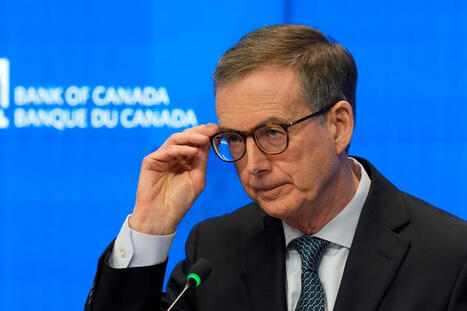
The Bank of Canada held its benchmark interest rate steady on Wednesday, but warned that interest rates may need to change depending on the duration of the oil price shock and the outcome of trade talks with the United States and Mexico. As widely expected, the bank’s governing council kept its policy rate at 2.25 per cent for the fourth consecutive time, even as the conflict in the Middle East has pushed energy prices sharply higher and squeezed Canadian consumers at the gas pump. Governor Tiff Macklem said his team decided to “look through” the energy price shock in the near term. But he said the trajectory of monetary policy will depend to a significant degree on how long oil prices remain elevated – something that’s contingent on the outcome of peace talks between the United States and Iran.
La transaction, qui avait été annoncée au début du mois, a été conclue lundi. Elle découlait du processus de vente et de sollicitation d’investissements mené sous la supervision de la Cour supérieure et de Raymond Chabot. La Financière Outremont a ainsi mis la main sur la majorité des actifs de Groupe Colabor et de ceux de ses filiales Les Pêcheries Norref Québec et Transport Paul-Émile Dubé. Aux prises avec des difficultés financières, Colabor s’est placé à l’abri de ses créanciers en janvier. L’entreprise s’est trouvée acculée au pied du mur après avoir été frappée par une attaque informatique juste après s’être endettée pour conclure une acquisition.
|
Britain’s King Charles and Queen Camilla will end a four-day state visit to the U.S. on Thursday with a formal farewell with U.S. President Donald Trump and First Lady Melania Trump in Washington. The king is then expected to lay a wreath at Arlington National Cemetery, across the Potomac River in Virginia, a sacred site for many Americans where tens of thousands of the country’s war dead are buried, as well as two presidents and some former Supreme Court justices. The royal visit to the U.S., officially to commemorate the 250th anniversary of America’s Declaration of Independence from British rule, came at a time of tensions between Britain and the U.S., with Trump having criticized British Prime Minister Keir Starmer for what he says is his lack of help in the U.S.-Israeli war on Iran.
The head of an organization that oversaw a $300-million federal digital prescription service has been removed in the midst of a probe by a parliamentary committee into how the program failed. The board of Canada Health Infoway, a government-funded non-profit, dismissed Michael Green as chief executive officer on Wednesday after more than 11 years in the role. Board chair Peter Vaughan said in a statement that the decision was effective immediately. Canada Health Infoway launched a program called PrescribeIT in 2017 as part of “axe the fax” initiatives to replace fax machines with digital alternatives, in this case transmitting prescriptions from doctors’ offices to pharmacies digitally.
Weir Group reported a fall in first-quarter orders on Thursday, sending the British engineering firm's shares down as much as 10%, even as it reiterated its annual outlook and promoted the head of its biggest business to CEO. The company, focused heavily on services to the mining sector, said Chief Executive Jon Stanton will step down after nearly a decade in the role and be succeeded in August by the president of its minerals division, Andrew Neilson. The update comes as global demand for critical and rare-earth minerals such as nickel and cobalt continues to accelerate, driven by electric vehicles, grid expansion, a renewable energy push and data‑centre growth linked to AI.
Canada is set to host a proposed mulitlateral defence bank designed to help fund the rearmament of nations facing heightened geopolitical risks, the country's finance ministry said in a statement late on Wednesday. The statement said Canada had been working in Montreal with allies to agree a founding charter for the planned Defence, Security and Resilience Bank (DSRB). The other countries were not identified. The DSRB has been proposed by former NATO security advisers, senior ex-military personnel and bankers. Its aim is to found a triple-A rated institution capable of raising 100 billion pounds ($135 billion) to fund defence projects, particularly in countries that may struggle to access cheaper finance.
The federal government is pledging up to $145-million for security during the World Cup, to help host cities Vancouver and Toronto deal with rising costs associated with an unprecedented police deployment during the soccer tournament. The money, announced Wednesday at a renovated BMO Field in Toronto, will help police monitor and prevent potential safety threats related to hooliganism, large-scale protests and terror attacks. That includes the use of plainclothes foreign police, or “football intelligence officers,” from competing nations who will work with local police and fan groups to help keep supporter marches from getting out of control. Security has become one of the biggest costs of FIFA’s marquee event, which is being played in Canada for the first time in June, along with host cities in the United States and Mexico. With large crowds expected in Toronto and Vancouver over the course of 13 games, police say thousands of officers will be needed for the biggest security operation in either city’s history.
A group of Alphabet shareholders are pressing the company to explain how it governs and controls the use of its technology and cloud services by governments for surveillance after the tech giant rejected calls for greater disclosure. In a letter to Alphabet, seen by Reuters, the group asked for a meeting with management after the Google owner opposed a shareholder resolution seeking a report on how it oversees the related risks. "Cloud-based services are a growing segment, and it's getting more and more militarized," said Marcela Pinilla, director of sustainable investing at Zevin Asset Management, which wrote the letter signed by 42 organizations and 14 individuals managing a combined $1.15 trillion in assets.
Premier Inn owner Whitbread has said it will sell and lease back £1.5bn of its freehold properties and also exit its restaurant business, putting 3,800 jobs at risk, after months of pressure from an activist investor. Whitbread — which is unusual in the hotel sector for owning much of its real estate outright — said on Thursday that it planned to raise £1.5bn by offloading freehold property “to fund future growth”, adding that it would “increasingly look to grow on a leasehold basis”. The company also said it would close or sell off all of its 197 branded restaurants, including Beefeater and Brewers Fayre, in a move that could cut 3,800 jobs across the UK and Ireland. A total of 110 will be sold, the company said, while the rest will be converted into hotel rooms or food and drink facilities for hotel guests.
Activist investor Engine Capital has a roughly 2% stake in KBR and is urging the government contractor to explore a sale because it believes the company’s businesses are being undervalued in the public market, according to a letter viewed by The Wall Street Journal. [...] Engine argues that the planned separation would be costly and create new risks and tax difficulties, according to the letter that was delivered to KBR’s board of directors on Monday. Instead, Engine believes KBR could attract both private-equity and strategic buyers for the company and could fetch from $48 to $55 a share in a transaction. KBR shares closed Wednesday at $36.02.
Britain's Whitbread said on Thursday it will shut its 197 remaining branded restaurants and start selling more meals at its hotels, potentially cutting about 3,800 jobs as it battles pressure from UK property taxes and an activist investor. Whitbread had been exploring ways to boost returns after the UK budget left Britain's largest hotel operator saddled with higher costs. The company was already converting some underperforming restaurants into hotel rooms and was urged by activist investor Corvex in December to review its strategy. A surge in energy prices triggered by the war in the Middle East is expected to compound difficulties for the hospitality sector, which had already been hit by weak consumer spending and increased costs. Whitbread said it will take a 5 million pound hit this year from the impact of the Iran war on hotels in the Middle East.
Conversations with the federal and British Columbia governments have “raised the likelihood” of the LNG Canada export terminal expansion in Kitimat, B.C., says Wael Sawan, Shell PLC’s SHEL-N chief executive, with a decision on the project expected in the coming months. Mr. Sawan’s comments come on the heels of Shell’s announcement Monday that it is buying Calgary-based ARC Resources Ltd. – the largest pure-play producer in the Montney basin, which straddles Alberta and northeast British Columbia. The US$16.4-billion deal will significantly boost Shell’s holdings in the region, which is a crucial supplier of natural gas to LNG Canada. Shell holds a 40-per-cent share in the terminal, whose liquefied natural gas can reach Asian markets faster than most other North American suppliers. While there has been no final investment decision made on the second phase of the terminal, it is on the list of five projects that Prime Minister Mark Carney has said will be reviewed for fast-track approval under Ottawa’s Building Canada Act.
Dans son énoncé économique présenté mardi, le ministre des Finances, François-Philippe Champagne, estime que le déficit pour l’exercice financier 2025-2026 s’établira finalement à 66,9 milliards de dollars, à 11,4 milliards de moins que le manque à gagner de 78,3 milliards qu’il voyait dans sa boule de cristal quand il a déposé son premier budget, en novembre dernier. Le déficit aurait été encore légèrement inférieur, soit environ 60,6 milliards, n’eût été de nouvelles mesures annoncées depuis le début de l’année, notamment les 3,1 milliards pour la nouvelle Allocation canadienne pour l’épicerie et les besoins essentiels – une aide financière pour quelque 12 millions de Canadiens à faible revenu qui sera déposée sur leur compte de banque à compter du 5 juin. Le gouvernement Carney a aussi utilisé cette manne inattendue pour investir 1,7 milliard afin d’accélérer la construction de logements. L’amélioration du solde budgétaire aurait été du même ordre, soit d’environ 10,7 milliards par année en moyenne, pour les quatre prochains exercices financiers. Mais Ottawa a fait le choix d’utiliser cette hausse des revenus à d’autres fins.
À quatre mois de la campagne électorale, la première ministre a voulu couper l’herbe sous le pied de ses adversaires avec un allègement fiscal de 630 millions sur cinq pour 75 000 petites entreprises. Elle a choisi de faire son annonce mercredi en Beauce, terreau fertile aux PME, mais aussi au Parti conservateur du Québec qui milite pour des baisses d’impôt. Le chef libéral Charles Milliard et le chef péquiste Paul St-Pierre Plamondon ont tous deux promis de réduire le fardeau des PME en cas de prise du pouvoir. M. Milliard s’est engagé l’an dernier à baisser de 11,5 % à 10 % le taux général d’imposition des PME, un répit de 3000 $ dollars par année pour une entreprise dont le revenu imposable s’élève à 150 000 $. De son côté, M. St-Pierre Plamondon a promis en janvier un « allègement fiscal historique » pour les PME sans donner de détails.
|