Your new post is loading...
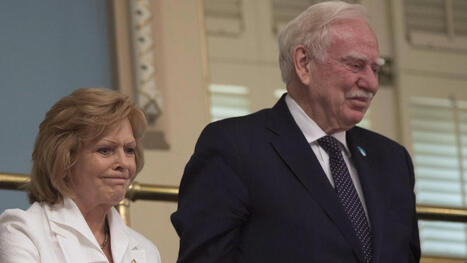
L’homme d’affaires Robert Parizeau, frère du premier ministre Jacques Parizeau, est décédé mardi à l’âge de 90 ans à l’Hôpital général de Montréal. Décoré de l’Ordre national du Québec, M. Parizeau a contribué aux domaines de l’assurance, de la gouvernance d’entreprise et de la philanthropie. Diplômé de l'École des hautes études commerciales de Montréal en 1957, il a travaillé une quarantaine d'années dans le domaine de l’assurance et de la réassurance. Il a notamment dirigé la société de courtage Sodarcan pendant une bonne partie de sa carrière. Après la vente de Sodarcan à Aon, il a fait partie des conseils d’administration de l’Institut sur la gouvernance d’organisations publiques et privées (IGOPP) et de plusieurs entreprises, dont Power Corporation, UAP, la Banque Nationale, Gaz Métropolitain (devenue Énergir), le Groupe Canam et Van Houtte.
Aberdeen Group Plc has announced that Arno Kitts and Richard (Rick) Lacaille have been appointed to the board as non-executive directors. Arno Kitts has held senior leadership roles at BlackRock, Henderson Global Investors and JP Morgan. At BlackRock, he was managing director of the UK Institutional business and chief executive of its life insurance investment platform. He is the founder of Perspective Investments, a boutique investment management firm. Kitts has also served as a non-executive director of Pension Insurance Corporation plc, where he chaired the investment and origination committee. He is currently chair of New World Group Holdings Limited and a member of the investment committee of The Valesco Group Limited. Rick Lacaille has spent more than 20 years in senior roles at State Street Global Advisors, latterly as global chief investment officer. Most recently he served as global head of ESG at State Street, where he led the firm’s approach to sustainability and engagement with regulators, clients and investors. Lacaille is currently a senior advisor at Enzo Advisors LLC and executive advisor at Arab Invest.
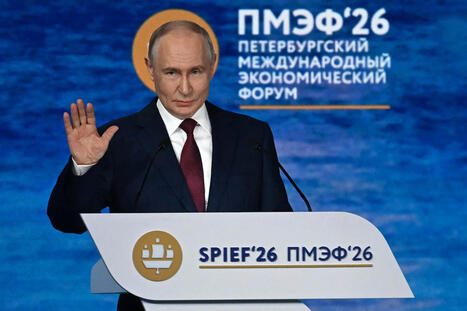
Russian President Vladimir Putin said Friday that developing countries have gained an increasingly important role in the global economy, while the share of output by Western countries has shrunk. In a speech to the annual St. Petersburg International Economic Forum, Putin accused the West of undermining the global economy and finances with unilateral sanctions. By freezing Russian assets abroad, Western nations eroded trust in their own currencies, he said. “The sanctions and blocking of Russia’s sovereign reserves have irreversibly impacted the standing of international currencies, the dollar and the euro,” he said. “Just like Russia, any other country could lose access to their legitimate assets in dollars or euros, as well as Western financial and payment systems.”
Arrangements disclosed ahead of the SpaceX IPO continue to worry investors that they are heading into a governance black hole. This week, Harvard governance guru Lucian Bebchuk blasted his afterburners at the plans for the second time. In a new article after seeing the fully published plans, Bebchuk, together with colleague Kobi Kastiel, writes: “even investors who believe Musk walks on water should give these risks significant weight when assessing how much they are willing to pay for SpaceX shares”. The arrangements, of course, suggest the IPO would concentrate power in the hands of Musk and give investors very little recourse. Elsewhere, there are also concerns. Shareholder advisers Minerva conclude that “investing in SpaceX is less a question of access to a high-growth story than of comfort with a governance model where influence is constrained and oversight is structurally weak”.
Western Asset Management Co, a unit of Franklin Resources, will pay a $100 million civil penalty to resolve U.S. Securities and Exchange Commission charges related to former co-chief investment officer Kenneth Leech's alleged cherry-picking scheme, the regulator said on Friday. Leech has pleaded not guilty to related criminal charges in New York. Wamco, as his former firm is commonly known, did not admit wrongdoing. In a regulatory filing, Franklin said Wamco agreed to settle as a "business decision" to avoid prolonged litigation, and that the accord ends probes of the asset manager by the SEC and the U.S. Department of Justice.
Canada’s economy added 87,800 jobs and the unemployment rate fell to 6.6% in May, data showed on Friday, defying widespread expectations of only modest employment growth and showing some resilience despite signs of softer economic growth. The May data marked the first job growth of 2026 and helped wipe out almost 80 per cent of all job losses posted since the start of the year. The last time the economy added a significant number of jobs was October, 2025, Statistics Canada said. Analysts polled by Reuters had forecast the unemployment rate last month would hold steady at the six-month high of 6.9 per cent reached in April and had predicted a net gain of 10,000 jobs.
Australia's corporate regulator said on Friday it had launched a formal investigation into three KPMG Australia partners linked to whistleblower allegations the accounting firm misused confidential client data to win lucrative audit contracts. The probe comes as some blue-chip clients and government agencies say they are re-examining their association with the Big Four accounting firm, three years after rival PwC Australia was rocked by a scandal that involved sharing confidential government information with prospective clients. The Australian Securities and Investments Commission said it began a preliminary probe into KPMG in April and moved to a formal investigation after the resignation of the firm's CEO and audit chief last week.
Shares in Bodycote fell on Friday after Apollo Global Management said it doesn’t intend to make a firm takeover offer, ending discussions over a 1.52 billion-pound ($2.04 billion) proposal. In European morning trade, shares fell 9.4% to 746 pence, but are up 6.6% over the year to date. The U.K. metal treatment company said it continues to have confidence in its strategy to create a resilient business with attractive growth. Bodycote is making progress on performance and growth improvements, and had a positive start to 2026, the FTSE 250 company said. “Apollo continues to hold Bodycote and its management team in high regard,” the New York firm said. It didn’t give a reason for ending the talks.
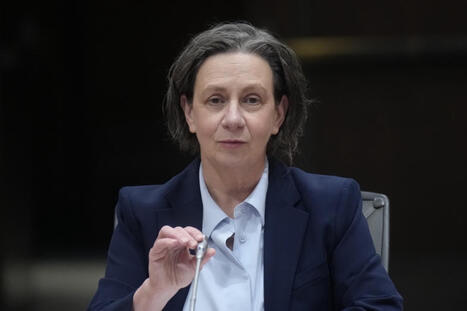
La directrice parlementaire du budget (DPB), Annette Ryan, publie jeudi la première mise à jour économique et budgétaire de son bureau depuis qu’elle a pris ses fonctions en avril. Elle prévoit que les déficits annuels seront en moyenne supérieurs de 4,6 milliards aux prévisions d’Ottawa dans sa mise à jour économique du printemps. La DPB considère que le déficit pour l’exercice en cours diminuera légèrement pour s’établir à 71,8 milliards – soient environ 6,5 milliards de plus que les prévisions d’Ottawa du printemps.
The European Commission on Thursday chastised Spain for failing to implement its new capital requirements directive, following its earlier criticism of Madrid's attempts to hinder BBVA's takeover bid for Sabadell . In a letter seen by Reuters, the Commission told the Spanish government it was in breach of EU regulations on the single supervisory mechanism, the capital requirements directive, and parts of the Treaty on the Functioning of the European Union. While it did not specifically mention the takeover attempt, it said domestic measures in place in Spain were incompatible with the new CRD VI framework governing acquisitions and mergers. The EU's new capital requirements directive had to be implemented by January 2026.
Australia's Lynas Rare Earths said on Thursday that Chief Operating Officer Pol Le Roux will take over as interim CEO from June 30, marking a leadership transition at the world's largest producer of rare earths outside China. Le Roux will be succeeding Amanda Lacaze, who is retiring from the helm after 12 years in the role. Le Roux joined Lynas in late 2010, a few years before Lacaze, and has overseen the company's operations across Australia and Malaysia. He has previously held multiple roles at French chemicals company Rhône-Poulenc, which is now a part of Belgium-based Solvay.
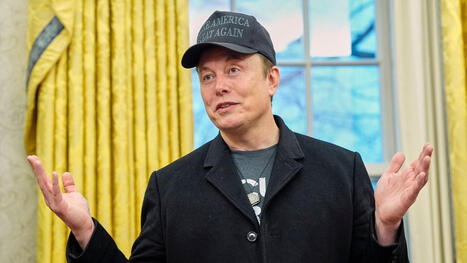
SpaceX says it plans to raise up to US$75 billion when it goes public this month, setting the stage for the largest-ever stock market debut and putting Elon Musk on course to becoming the world’s first trillionaire. The company, formally known as Space Exploration Technologies Corp., said Wednesday it will sell 555.6 million shares at US$135 a piece in an initial public offering. The estimated proceeds would easily top the US$26 billion raised by oil giant Saudi Aramco in 2019. The offering would also give SpaceX a market value of US$1.77 trillion. Only six companies in the S&P 500 are currently worth more, with Nvidia tops at US$5.2 trillion. Besides the size of the offering and the expected proceeds, SpaceX’s amended prospectus updates details about how much control of the company Musk will have. As SpaceX’s CEO, chief technical officer and chairman, Musk’s voting power will come primarily through his ownership of 5.22 billion Class B shares, which give the holder 10 votes for every share held. According to the filing, Musk would have 82.4 per cent of the voting power in the company.
Calgary-based power producer TransAlta Corp. TA-T said on Wednesday it will acquire two natural gas-fired peaking facilities near Denver, Colo., from Blackstone BX-N for about US$1-billion, strengthening its presence in the Western U.S. power market. Power producers are adding flexible gas-fired capacity to support rising demand, as the industry prepares for a rapid growth in electricity consumption, partly driven by power-hungry data centres. The assets, Mountain Peak Power and Canyon Peak Power, have a combined capacity of 318 megawatts and are fully contracted under long-term tolling agreements with investment-grade customers for more than 25 years. The deal includes assuming US$750-million of project-level debt and raising about US$250-million in equity through a $350-million bought deal share offering.
|
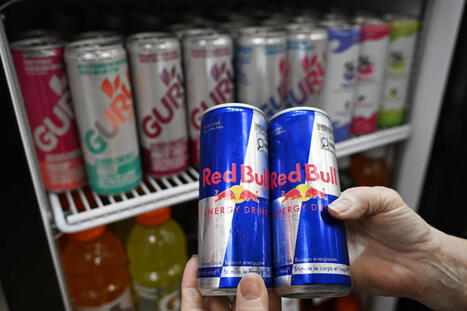
Quebec’s health minister is set to table a bill taking aim at the potentially harmful effects of energy drinks on teens, but one member of the provincial legislature could block its adoption until after an upcoming general election this fall. Maïté Blanchette Vézina, the only member of the Conservative party to hold a seat at the legislature, told reporters Thursday that she does not want to rush legislation that would restrict or ban the sale of the drinks. Calls to ban the sale of energy drinks to those under 16 years old grew after the death of 15-year-old Zachary Miron, who died in 2024 after drinking a can of Red Bull while on ADHD medication.
High-profile governance experts have argued that debate over the position of chairs should move beyond the governance code’s insistence that they be independent and non-executive, to recognise that companies may need an executive chair or other forms of leadership. Hans-Christoph Hirt and Roger Barker—respectively a professor at Swiss business school IMD and chief thought leadership officer at the Center for Governance in Riyadh—argue that discussion of the chair should move beyond a binary choice. “The real question,” they write on the IMD website, “is not simply structural (should we have an executive chair?) but practical: what leadership challenge or opportunity is the organisation trying to address?
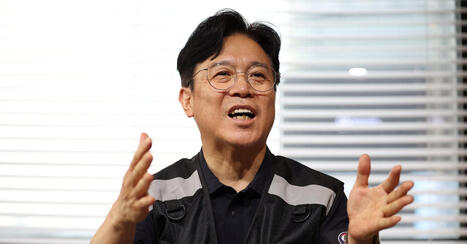
South Korea's labour minister called on the country's major tech firms to share the spoils of their massive windfall profits, warning that unprecedented chip-sector gains stemming from the AI boom risked widening a gap in inequality. In an interview, Kim Young-hoon told Reuters that companies like Samsung Electronics that outperform profit targets should consider sharing excess gains with suppliers, subcontractors and their workers, after deducting taxes, given their contributions to corporate growth. The South Korean government, businesses, unions and suppliers should engage in a public dialogue on how to share such "excess profits" and narrow the gap between large conglomerates and smaller suppliers, he said.
Ukrainian President Volodymyr Zelenskiy published an open letter to President Vladimir Putin on Thursday in which he proposed the two leaders meet to agree an end to more than four years of war, warning that Kyiv stood ready to fight on otherwise. In his letter, which the president's office said had been sent to other countries, including the United States, Zelenskiy said the majority of Russians had grown tired of Ukrainian missile and drone attacks, inflation and fuel shortages, and were ready for peace. Zelenskiy said that with the United States focused on the conflict in Iran "it would be wrong to simply wait until the war in Europe returns to the center of its attention".
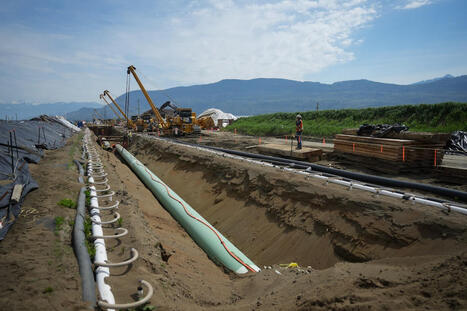
The federal government is delaying legislation that would bring sweeping changes to environmental assessments, after widespread backlash from climate and nature groups. In a Thursday press release, Dominic LeBlanc, the minister for Internal Trade and One Canadian Economy, and Transport Minister Steven MacKinnon said they would extend consultations before tabling the legislation. The government wants to streamline the approval process for industrial projects and speed up decision-making, allowing companies to more quickly clear regulatory hurdles aimed at protecting the environment.
Boralex Inc. says its shareholders have approved a previously announced agreement to be acquired by Brookfield Asset Management Ltd. and La Caisse. The arrangement resolution was approved by 99.86 per cent of votes cast by shareholders. The deal for the two Canadian institutional giants to buy the renewable power producer was in March. At the time, Brookfield Asset Management and La Caisse agreed to buy the Quebec-based company for $9-billion, including debt, or about $3.8-billion in equity value.
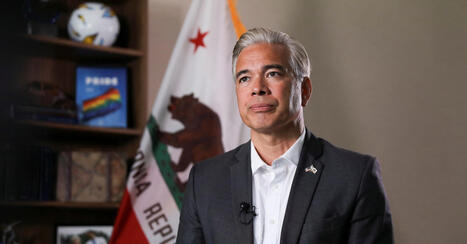
California Attorney General Rob Bonta will soon decide whether to sue to block Paramount's $110 billion acquisition of Warner Bros, he told Reuters in an interview, adding that in general he views any corporate promises to address antitrust concerns as better when backed up by potential divestitures. Bonta's office has been reviewing the deal for potential violations of U.S. antitrust law, as movie theater owners, Hollywood actors and others have expressed concerns that it would decrease competition across the industry, leading to lower wages, higher prices and fewer options for consumers and content buyers. Antitrust authorities in Europe are set to decide by early July whether to clear the deal, while the U.S. Department of Justice is likely to reach a decision soon, according to a source familiar with the matter. The deal could close once it clears those reviews, putting time pressure on Bonta's office, which is seen as the most likely enforcement agency to challenge the deal.
Major shareholders in Heineken have urged the Dutch brewer to appoint an external chief executive to succeed Dolf van den Brink, the Financial Times reported on Friday, citing two top-15 investors. The brewer's board is divided over whether to promote an internal candidate or bring in an outsider, the newspaper added, citing people familiar with the matter. Reuters could not immediately verify the FT report. Heineken did not immediately respond to Reuters' request for a comment. Van den Brink stepped down on May 31 after nearly six years at the helm, as the industry grapples with tepid beer demand. Last month, Heineken said the search for van den Brink's successor was progressing well and expected to conclude soon. Two top-15 investors told the FT that the family-controlled group should drop its tradition of promoting insiders and appoint an external candidate to revive performance.
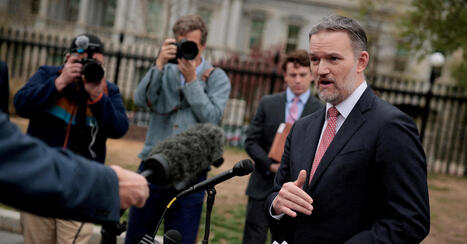
The United States will respect tariff caps in trade deals struck with the European Union, Japan and other countries, and planned U.S. tariffs over forced labour provide the legal basis to do so, U.S. Trade Representative Jamieson Greer said on Thursday. "We understand that a deal is a deal," Greer told reporters on the sidelines of an OECD ministerial meeting in Paris. Washington has struck deals with Brussels and Tokyo that limit U.S. tariffs on most EU or Japanese imports to a maximum of 15%. However, Greer's office on Tuesday unveiled a new set of tariffs on 60 countries after determining that they had failed to curb trade in goods made with forced labour. The EU would face a 10% tariff and Japan 12.5%. A further Section 301 investigation into excess manufacturing capacity could see overall tariffs on the two economies' goods push well past 15%.
A federal judicial panel on Wednesday approved a rule change designed to help judges comply with their obligations to recuse themselves from cases in which they own stock in the companies appearing before them. The U.S. Judicial Conference's Committee on Rules of Practice and Procedure, during a meeting in Chicago, approved a final rule designed to address concerns that judges were not being adequately informed that they might have a potential financial interest in cases warranting their recusal. The panel endorsed amending Rule 7.1 of the Federal Rules of Civil Procedure to require parties in a lawsuit to disclose when they are directly or indirectly owned by any publicly held business organization or parent entity with a stake of 10% or more.
The pro-Iran Hezbollah movement rejected a new ceasefire in Lebanon on Thursday and Israel said it would not withdraw troops from the country, undermining U.S. President Donald Trump's efforts to halt fighting there to forge peace with Tehran. Iran has made a ceasefire in Lebanon a condition for any peace deal with Washington, and has suggested in recent days that it could intervene directly in support of its proxy Hezbollah if Israel keeps up or escalates attacks there. Lebanese President Joseph Aoun said the ceasefire would come into force within 24 hours of all concerned parties approving it. However, Hezbollah leader Naim Qassem rejected the Washington declaration, insisting "resistance will continue".
After months of delay, the federal government is unveiling its AI strategy that outlines a vision focused on job creation, sovereignty and increased AI adoption. But the plan lacks details on how Canadians will be protected from the technology’s potentially adverse effects. Prime Minister Mark Carney is making the announcement alongside Artificial Intelligence Minister Evan Solomon in Toronto on Thursday. “Canadians want safe, reliable, and sovereign AI. They want the best tools to build a prosperous future guided by our values,” Solomon said in a statement in the strategy.
|