Your new post is loading...
En temps de protectionnisme américain, l’Union européenne (UE) et le secteur de la défense sont souvent évoqués comme options de repositionnement pour bon nombre entreprises. C’est toutefois plus facile à dire qu’à faire, constate Investissement Québec (IQ). Combien de fois avons-nous entendu que l’Accord économique commercial et global entre le Canada et l’Union européenne constituait un plan B pour diversifier ses exportations ? Le hic : huit ans après l’entrée en vigueur de l’entente, les résultats ne semblent pas au rendez-vous de ce côté-ci de l’Atlantique. « On regardait les chiffres pour ce que l’on exporte en Europe […] ça ne marchait pas, laisse tomber la présidente-directrice générale d’IQ, Bicha Ngo, en entrevue éditoriale avec La Presse. Le Québec n’a pas vraiment profité de l’accord. Ce que j’entendais des entrepreneurs, c’est : “Pour faire des affaires avec les États-Unis, ça nous prend 12 mois, en Europe, c’est 2 à 3 ans, facilement.” »
Our 2025 Board Indexes track the latest developments in boardrooms around the world. By highlighting global data and trends in board composition, governance practices and director compensation, we are able to present an up-to-date and global picture of the state of boards of the leading public corporations in countries and industries. What’s different about today’s boards? Profound shifts have taken place, such as the increase in board independence, the prevalence of non-executive chairs and the emergence of the lead or senior independent director (SID) role. Very few boards undertook an annual board evaluation 40 years ago — it’s now mandatory in many countries. And just look at the progress on gender diversity: although the percentage of women among new board members has leveled off, women now constitute more than 40% of board directors in several countries.
Sustainable investing promises much—but its aims are far from unified. In the final NBS-PRI-ECGI Public Lecture of 2025, Professor Ayako Yasuda posed a pressing question: what are investors actually trying to achieve—financial value, moral alignment, or real-world impact? And can a single category of “sustainable funds” deliver all three? The lecture framed this question as a fundamental tension in the modern sustainable finance ecosystem: products designed to avoid harm, generate societal benefits, and improve portfolio performance often sit uncomfortably together under one label.
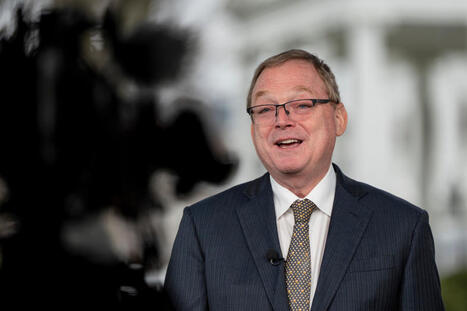
Kevin Hassett, conseiller économique de Donald Trump et son favori pour piloter la Réserve fédérale américaine (Fed), a affirmé dimanche que la mission de la banque centrale des États-Unis était de faire preuve d’indépendance et d’appuyer ses décisions sur les indicateurs économiques, mais que l’opinion présidentielle « comptait ». En tant que « conseiller du président, je parle avec lui de quasiment tout presque chaque jour. J’ai, à coup sûr, parlé de politique monétaire » avec lui, a répondu M. Hassett, interrogé sur la chaîne CBS pour savoir s’il consulterait fréquemment le président s’il était choisi pour remplacer Jerome Powell, dont le mandat s’achève en mai. Donald Trump « n’aurait aucun poids » sur la décision du comité, a assuré l’économiste. « C’est juste son opinion qui compte, si elle est bonne, si elle s’appuie sur les données économiques », a-t-il expliqué.
SpaceX executives are starting the process to select Wall Street bankers to advise it on its initial public offering, according to people familiar with the matter. Investment banks are scheduled to make their initial pitches this coming week in what is known as a bake-off, according to people familiar with the matter, representing the most concrete steps the rocket maker has taken toward what would be a blockbuster IPO. On Friday, SpaceX told employees it is preparing for a possible public offering next year, The Wall Street Journal reported. Chief Financial Officer Bret Johnsen told SpaceX staff in a message that, “The thinking is that if we execute brilliantly and the markets cooperate, a public offering could raise a significant amount of capital.” Johnsen also wrote that whether a listing will happen and when it might take place remain “highly uncertain.”
Chinese state-owned miner Jiangxi Copper has won the support of SolGold’s board, after making a sweetened bid for the U.K.-listed company backed by BHP and Newmont. After two prior bids were rejected, Jiangxi’s revised takeover offer has cleared the board hurdle, bringing it one step closer to the finish line. Jiangxi upsized the deal terms to 28 pence per share of the mineral exploration company, a 7.1% premium to the stock’s price before the initial proposal was disclosed, and an increase from the 26 pence offered previously. The nonbinding offer values the U.K.-listed company at 842 million pounds, or about $1.13 billion, Jiangxi and SolGold said in a joint statement Friday. SolGold’s board said it “would be minded to recommend” that shareholders vote in favor of the deal if Jiangxi makes a firm offer by the Dec. 26 deadline. So far, shareholders holding nearly 41% of SolGold have said they intend to support the deal.
With Canadian steel exports to the United States in free fall, Ottawa has taken a series of escalating steps to shore up demand for the country’s steel mills by restricting imports of foreign-made metal. These protectionist measures, which will be further tightened in the coming weeks, have been lauded by Canadian steel producers, who have seen their business models upended by U.S. President Donald Trump’s 50-per-cent steel tariff. But the measures are also drawing criticism from steel users, particularly in Western Canada, who warn of shortages and rising costs for construction materials and manufacturing inputs if they’re forced to buy from Eastern mills rather than bringing in product by ship at world prices. In effect, the federal government is responding to U.S. protectionism with its own turn inward, forcing a marriage between different regional steel markets that have mostly operated independently for decades.
Transat A. T. estime que Pierre Karl Péladeau veut contrôler son conseil d’administration sans avoir à débourser une « prime de contrôle ». Le spécialiste du voyage d’agrément permettra toutefois à ses actionnaires de se prononcer sur les changements proposés par l’homme d’affaires, mais pas aussi rapidement que ce qui était souhaité par ce dernier. Deuxième actionnaire en importance (9,5 %) de la société mère d’Air Transat, M. Péladeau souhaite destituer des administrateurs et faire passer la taille du conseil d’administration de 11 à 6 membres. L’actionnaire de contrôle de Québecor souhaite aussi y faire son entrée, accompagné d’André Brosseau et Jean-Marc Léger. Transat propose de tenir l’assemblée extraordinaire le 10 mars prochain tandis que l’homme d’affaires demandait que l’évènement se tienne d’ici le 6 février. « Cette proposition [de M. Péladeau] conférerait un contrôle effectif du conseil sans qu’une prime de contrôle ne soit versée aux autres actionnaires et sans qu’un plan stratégique pour les activités de Transat ne soit communiqué publiquement », a expliqué le voyagiste et transporteur aérien, lundi, dans un communiqué.
Governance expert Steven Bowman FAICD, managing director of Conscious Governance, says future-focused boards will sharpen how they monitor strategy, nurture culture, develop workforce capability, manage risk and refresh themselves. The pressures on governance are intensifying, says Graham Kittle, Managing Partner of Heidrick & Struggles Australia. Many boards still struggle with strategic questions that strike at the core of long-term value, he says, adding that directors must be asking: “Why does our board exist, and is our strategy aligned with long-term value creation?” He explains that nearly “60 per cent of board agendas are still weighted toward traditional oversight areas such as financial performance, risk and shareholder concerns, leaving limited room for forward-looking planning.” Together, Bowman and Kittle’s insights create a clear picture: boards must evolve across five critical fronts if they are to remain effective stewards in 2026.
The biggest governance stories of 2025. A complete round-up of some of the hottest corporate leadership stories of the year. It’s been another busy 12 months. It may well be only now that corporate leaders have a chance to look back and realise how much has changed. Here are some of the main milestones of 2025, a year that screams of increased unpredictability, scrutiny and uncertainty as new ways of working take shape.
Apollo has moved a fast-growing unit focused on complex lending out of its prized buyout division, in the latest sign of a shift towards private credit and away from a business that built it into a $900bn behemoth. The shake-up, which has not been previously reported, began earlier this year and was announced at a town hall this week, according to people familiar with the matter and a presentation seen by the Financial Times. Matt Nord, formerly co-head of private equity at Apollo, will helm the newly separated group known as hybrid capital, which crafts complex debt structures that are often attached to minority equity investments. Reed Rayman, a rising star who was behind Apollo’s lucrative takeovers in 2021 of Yahoo and AOL, was appointed deputy head of hybrid investing alongside veteran Apollo credit investor Chris Lahoud. The move highlights how chief executive Marc Rowan is pinning Apollo’s future on lending to businesses, a strategy that has transformed the group into a formidable challenger to the world’s biggest banks.
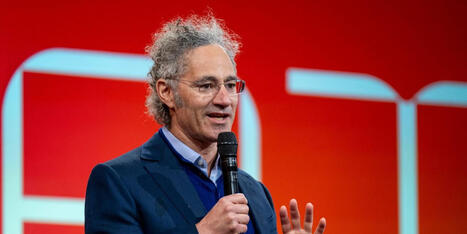
Palantir is expanding its legal campaign against a rival artificial-intelligence company, accusing the CEO and two other employees of engaging in a sprawling effort to poach Palantir’s workers and customers. The data-analysis firm, co-founded by a group including Alex Karp and Peter Thiel, said in a court filing that Percepta CEO and co-founder Hirsh Jain and co-founder Radha Jain (no relation) aggressively pursued Palantir employees for a “copycat” company, in violation of their nonsolicitation agreements. It accused a third employee, Joanna Cohen, of stealing confidential documents from Palantir before she left for the rival firm. Percepta said that it has never used any of Palantir’s confidential information and accused the company of cherry-picking out of context information, calling Palantir’s case “baseless.”
Lululemon Athletica Inc. chief executive officer Calvin McDonald will step down at the end of January, as the athleisure pioneer struggles to fend off growing competition and refresh styles that have grown stale with shoppers. Mr. McDonald, who has led the Vancouver-based retailer since 2018, has been struggling to reassure investors amid a slowdown in its U.S. business and as its stock price plunged by 50 per cent since the beginning of the year. Lululemon has hired an executive search firm and is looking for its next CEO, the company announced Thursday. Mr. McDonald will leave the role on Jan. 31, 2026, and will also step away from the company’s board of directors but will continue as a senior adviser until March 31. Chief financial officer Meghan Frank and chief commercial officer André Maestrini will serve as co-CEOs on an interim basis until the search is complete.
|
Ben & Jerry's on Monday said it would implement a nine-year term limit for its independent board directors, a move that could remove three current members including board chair Anuradha Mittal. The move comes after Magnum Ice Cream , which now owns the ice cream brand following its spinoff from Unilever earlier this month, said in November that Mittal "no longer meets the criteria" to serve following internal investigations. Mittal, who has served on Ben & Jerry's board since 2007 and been its chair since 2018, had earlier refused to resign, calling the efforts to remove her an attempt by Unilever to "undermine the authority of the board itself.
Tesla’s board of directors has earned more than US$3 billion through stock awards that far exceeded the value of those given to peers at the biggest U.S. technology firms at the time they were paid, according to an analysis performed for Reuters by compensation and governance specialist Equilar. The analysis found CEO Elon Musk’s brother Kimbal has earned nearly $1 billion since 2004, based on the appreciated value of stock options held or liquidated. Director Ira Ehrenpreis has collected $869 million since 2007. Board chair Robyn Denholm has made $650 million since 2014. Directors reaped such windfalls even though they haven’t awarded themselves new stock grants since 2020. The board agreed to suspend director compensation starting in 2021 to settle a shareholder lawsuit alleging excessive board-member pay. Between 2018 and 2020, however, the average Tesla director received a total of about $12 million in cash-and-stock compensation.
The European Commission is expected on Tuesday to reverse the EU's effective ban on sales of new combustion-engine cars from 2035, bowing to intense pressure from Germany, Italy and European automakers struggling against Chinese and U.S. rivals. The move, the details of which are still being hashed out by EU officials ahead of its unveiling, could see the effective ban pushed back by five years or softened indefinitely, official and industry sources said. The likely revision to the 2023 law requiring all new cars and vans sold in the 27-nation bloc from 2035 to be CO2 emission-free would be the European Union's most significant climb-down from its green policies of the past five years. "The European Commission will be putting forward a clear proposal to abolish the ban on combustion engines," Manfred Weber, head of the European Parliament's largest group, the European People's Party, said on Friday. "It was a serious industrial policy mistake."
Tesla’s board of directors has earned more than US$3 billion through stock awards that far exceeded the value of those given to peers at the biggest U.S. technology firms at the time they were paid, according to an analysis performed for Reuters by compensation and governance specialist Equilar. The analysis found CEO Elon Musk’s brother Kimbal has earned nearly $1 billion since 2004, based on the appreciated value of stock options held or liquidated. Director Ira Ehrenpreis has collected $869 million since 2007. Board chair Robyn Denholm has made $650 million since 2014. Directors reaped such windfalls even though they haven’t awarded themselves new stock grants since 2020. The board agreed to suspend director compensation starting in 2021 to settle a shareholder lawsuit alleging excessive board-member pay. Between 2018 and 2020, however, the average Tesla director received a total of about $12 million in cash-and-stock compensation. That was about eight times as much as the average director at Alphabet, the next highest-paid among the “Magnificent Seven” companies over the same period.
Australia’s stock-exchange operator’s response to its serious and repeated failings has been compromised by its focus on shareholder returns, the country’s securities operator said. The Australian Securities and Investments Commission on Monday said that it will force ASX to hold almost US$100 million in additional capital to cover the cost of remediation for the failings, which include multiple outages. An ASIC-commissioned panel that includes a former deputy governor of the Reserve Bank of Australia said that ASX, which runs the exchange on which its own shares are traded, has underinvested in the resilience and security of its infrastructure. At the same time, the panel observed that ASX paid out 88% of its underlying profit in dividends over the past five years. “ASX’s focus on short-term financial performance and shareholder returns has compromised its obligations to operate critical national market infrastructure,” ASIC said in a statement.
Chief executives of some of the world’s largest companies are all-in on artificial intelligence, though many haven’t yet seen meaningful returns on their investments. After a year in which trillions of dollars worth of AI investments buoyed global markets and the economy, 68% of CEOs plan to spend even more on AI in 2026, according to an annual survey of more than 350 public-company CEOs from advisory firm Teneo. Less than half of current AI projects had generated more in returns than they had cost, respondents said. They reported the most success using AI in marketing and customer service and challenges using it in higher-risk areas such as security, legal and human resources. Teneo also surveyed about 400 institutional investors, of which 53% expect that AI initiatives would begin to deliver returns on investments within six months. That compares to the 84% of CEOs of large companies—those with revenue of $10 billion or more—who believe it will take more than six months. Surprisingly, 67% of CEOs believe AI will increase their entry-level head count, while 58% believe AI will increase senior leadership head count.
Canopy Growth Corp. has signed a deal to buy Quebec-based MTL Cannabis Corp. in a transaction valued at about $125-million. The deal is expected to help boost Canopy Growth’s position in Canada’s medical cannabis market. Canopy Growth chief executive Luc Mongeau says MTL’s cultivation expertise, combined with his company’s scale, positions it to improve product quality, expand supply and accelerate its path to profitable growth. Under the terms of the agreement, MTL shareholders will receive 0.32 of a common share of Canopy Growth and 14.4 cents in cash for each MTL share they hold. Canopy shares closed at $2.40 on the Toronto Stock Exchange on Friday. The deal requires regulatory and MTL shareholder approval. Closing of the transaction is expected to occur before the end of February.
As we approach the close of 2025, the global mergers and acquisitions (M&A) landscape is buzzing with renewed optimism. Our latest WTW research, conducted in partnership with the M&A Research Centre at Bayes Business School, reveals that dealmakers have significantly outclassed companies not involved in M&A during the first nine months of this year, based on share price performance. This strong showing puts the M&A market on track for its best year since the post-pandemic boom, setting a robust foundation for 2026. The confluence of pent-up demand, soaring stock market highs, and steady interest rates has fueled a surge in M&A activity, giving buyers every reason to anticipate a strong finish to 2025. Looking ahead, We see five key trends that companies should closely monitor as we step into 2026.
In the year ahead, five forces will define the landscape — technology, demographics, geopolitics, ESG and capital flows. Each of these forces is interconnected, amplifying risk and opportunity. Understanding how these forces intersect will be essential for boards seeking to make strategic decisions in a year likely to be as challenging as it is transformative. “You could say 2026 is the first year of the new order,” says AMP Chief Economist and head of Investment Strategy Shane Oliver. “We’re still figuring out what it all means, but it’s going to be noisy and messy.”
US President Donald Trump has signed an executive order to “increase oversight” of powerful proxy advisers that guide shareholder votes made by pension funds and some other money managers. Trump directed the Securities and Exchange Commission, the Federal Trade Commission and the Department of Labor to step up regulation of two dominant advisory groups. The order said Glass Lewis and Institutional Shareholder Services “regularly use their substantial power to advance and prioritize radical politically-motivated agendas”, citing their past support for environmental and diversity initiatives. ISS’ and Glass Lewis’s recommendations, which wield huge influence in companies’ shareholder votes, have angered powerful chief executives such as Jamie Dimon and Elon Musk. The order directs the SEC to examine whether ISS and Glass Lewis have violated anti-fraud statutes in their recommendations or should be regulated as investment advisers.
CGI Inc. says it has signed a contract with NATO to implement a highly secure mobile telecommunications system between top brass at the military alliance. The information technology company says the project will allow “NATO executives and selected target groups” to send classified information over an ironclad network, regardless of their location, marking a shift away from wired connection. The deal was inked with NATO’s Communications and Information Agency, though terms were not disclosed. The agency and CGI are spearheading the project, named Hermes after the messenger of the Greek gods. CGI says it will include a new service operation centre that houses a monitoring system, support line and training program. The contract comes after chief executive François Boulanger told analysts last month that he sees “a lot of potential” in the military sector, given the sharp ramp-up in defence spending in Canada and Europe.
Iliad hasn’t given up on a potential deal that would consolidate France’s telecommunication industry, despite a recent setback. Iliad Group, via its French business Free-Iliad, earlier this year joined forces with rivals Orange and Bouygues EN 0.30%increase; green up pointing triangle to offer 17 billion euros ($19.96 billion) for most of Altice France’s telecoms activities, grouped under SFR. A takeover would consolidate control over France’s strategic telecom infrastructure and spur investment in new technologies such as artificial intelligence, the bidders had said. Altice rejected that proposal, without giving a reason. Still, some believe the bid holds promise and could be revived. “We still think that this offer has some potential and it was well-suited to the current circumstances of the market,” Aude Durand, Iliad Group’s deputy chief executive, said in an interview on the sidelines of the ai-Pulse conference in Paris.
|