Your new post is loading...
Scott Hoffman resigned from Two Sigma Investments after less than two years as its co-chief executive officer, the latest fallout from years of infighting at the $70 billion hedge fund. Hoffman cited “ongoing governance challenges” since one of the founders, John Overdeck, returned to Two Sigma’s management committee, according to a March 31 filing.
Canada’s merchandise trade deficit widened by a big margin in February, data showed on Thursday, as higher gold imports took the total imports to a record high, while exports could not match up even though it also rose sharply. It was also the first time that Canada’s share of exports to the U.S. dropped to its lowest level of just over 66 per cent, from 68 per cent a month ago and over 79 per cent a year ago when companies were front-loading goods due to incoming U.S. tariffs. The trade deficit for February was at $5.74-billion, following an upwardly revised $4.18-billion in the prior month, Statistics Canada said.
Le trajet pour revenir à l’équilibre budgétaire au Québec est périlleux. Il faudra passer par la case « austérité » pour y arriver, à moins d’une hausse miracle des revenus… ou d’une hausse des impôts. Le temps est venu de tenir un grand débat national sur l’avenir du modèle québécois, estime l'Institut du Québec (IDQ). Il nous faut une conversation transparente sur les choix à venir sur les finances publiques en amont d’une campagne électorale, a déclaré mercredi à Zone info la PDG de ce groupe de recherche indépendant, Emna Braham, qui dévoilait plus tôt dans la journée une étude sur le sujet (nouvelle fenêtre). Québec prévoit une hausse des dépenses de portefeuilles de 1,5 % par année. Or, durant les années qui ont été décrites comme celles de l’« austérité » sous le gouvernement de Philippe Couillard, de 2014 à 2018, ce taux de croissance était de 3,2 %. Et durant les années Legault, de 2018 à 2025, la hausse moyenne annuelle des dépenses gouvernementales s’est élevée à 7 %
Goldman Sachs said on Thursday it has completed the acquisition of active exchange-traded fund provider Innovator Capital Management, expanding the Wall Street bank's presence in the fast-growing active ETF segment. Active ETFs are among the fastest-growing areas of asset management, attracting investors with lower costs and flexible strategies at a time when returns from some passive index products have lagged. The bank said in December that it would acquire Innovator Capital, which managed 171 ETFs with about $31 billion in assets, in a deal worth about $2 billion. With this acquisition, we have taken a transformative step in our commitment to provide sophisticated investment solutions that are designed to deliver specific outcomes for investors through market cycles," Goldman Sachs Chief Executive Officer David Solomon said. Following the deal, Innovator's co-founders Bruce Bond and John Southard will join Goldman Sachs as advisory directors, the firm said, while Chief Investment Officer Graham Day and Head of Distribution Trevor Terrell will join as partners.
This week Unilever sealed a deal with U.S. spicemaker McCormick (MKC.N), opens new tab to hive off its food business to make a $65 billion sauces-to-spices food giant. Unilever will retain a near 10% stake, with its shareholders having another 55%. The recent spin-offs leave the firm a far leaner beast focused on beauty, personal care and home care, areas where Fernandez spent most of his 38-year career at Unilever selling products from Dove soap to Surf laundry detergent. This is the right step at the right time to build a simpler, sharper, higher-growth Unilever," Fernandez told analysts on a call after sealing the McCormick deal.
Thursday marks one year since U.S. President Donald Trump upended the global trading system with his “Liberation Day” duties — a major step in his wider tariff campaign that’s hammered critical sectors of Canada’s labour market. With roughly a year of employment data now in hand showing the impact of Trump’s tariffs on Canadian jobs, economists say some of the early resilience to the trade disruption is giving way to a stalled labour market. A shrinking labour pool is also throttling job growth, experts warn. And there are now risks that weakness could be spilling over from industries hard-hit by tariffs into services and sectors not directly exposed to the new trading order. The labour market over the past year has been pretty stable, and maybe even a better word for that is static,” said Brendon Bernard, senior economist at job search platform Indeed.
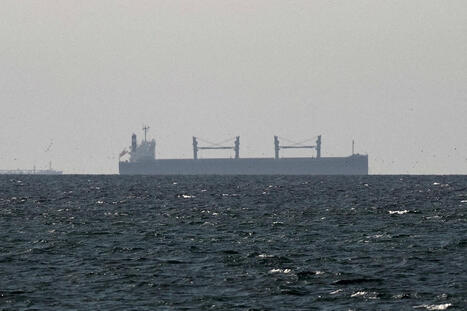
Britain will host talks on Thursday aimed at forming a coalition of countries to explore ways to reopen the Strait of Hormuz after U.S. President Donald Trump said securing the vital waterway was a problem for other nations to resolve. British foreign minister Yvette Cooper will chair the virtual meeting of about 35 countries including France, Germany, Italy, Canada and the United Arab Emirates around midday in London to explore ways to restore freedom of navigation in the area. The United States is not due to attend. The meeting takes place after Trump said in an address to his nation on Wednesday evening that the Strait could open “naturally” and it was the responsibility of countries that rely on the waterway to ensure it was open.
L'avenir de la gouvernance d'entreprise américaine repose-t-il uniquement sur l'envoi de lettres incendiaires ? Mardi, le fonds spéculatif américain Irenic Capital Management a lancé une campagne activiste contre Snap, la maison mère du réseau social Snapchat. L'action Snap a chuté de 75 % depuis son introduction en bourse en 2017 et se situe bien en deçà des sommets historiques atteints après la pandémie. Irenic réclame les changements habituels : licenciements massifs, abandon de certaines activités et une meilleure gouvernance d’entreprise. Ce dernier point est particulièrement pertinent pour l’activiste : la particularité de Snap est que ses actions cotées n’ont aucun droit de vote. De nombreuses entreprises technologiques possèdent des actions à droit de vote multiple qui donnent le contrôle aux fondateurs, mais les actionnaires ordinaires disposent au moins d’un droit de vote et d’une voix, même minime. Ce n’est pas le cas chez Snap. De ce fait, Irenic et les autres actionnaires partageant les mêmes idées sont non seulement incapables de soutenir le programme et les diapositives envoyés au fondateur et PDG de Snap, Evan Spiegel , en menaçant d'influencer le résultat du scrutin, mais ils ne peuvent en aucun cas exprimer leur mécontentement lors des élections.
KPMG LLP failed to properly audit private debt manager Bridging Finance, according to the Ontario Securities Commission, and the accounting giant now faces up to $40-million in fines for allegedly not flagging problems in the years leading up to Bridging’s collapse. In an enforcement document filed late Tuesday, the securities watchdog emphasized the importance of audited financial statements in fostering trust with investors, who rely on accounting firms such as KPMG to give them independent assessments of companies’ financial health. The OSC alleges that KPMG’s reports on Bridging instead gave investors a “false sense of confidence.” As a private debt manager, Bridging Finance raised money from retail investors across multiple funds and then lent it out to borrowers who often could not obtain financing from traditional lenders such as Canadian banks. The four Bridging Finance funds that KPMG audited in 2019 and 2020 had a collective net asset value of $1.7-billion.
When a major company collapses, the search for a villain begins almost immediately. Surely the blame must be applicable to a rogue chief executive, reckless trader or a fraudulent finance chief.
And yet, decades of our first-hand Kakabadse global research into corporate breakdowns suggests something far more unsettling. Boards rarely fail because of one bad actor or a single catastrophic decision. They fail because of predictable and repeatable patterns which quietly take root long before the headlines announcing devastating consequences arrive. Governance failure is seldom sudden. Rather it is a slow drift, and most boards that preside over such collapses believe they are functioning perfectly well up until the point of crisis that marks their demise. We identify the eight most commonly commented causes of board failure:
There’s a French dictum: Il faut tourner sept fois sa langue dans sa bouche avant de parler. It means think before you speak. Air Canada’s outgoing CEO, Michael Rousseau, could have benefited from that wisdom before he offered his condolences in a by-and-large English video message (save for “bonjour” and “merci”) after a collision at New York’s LaGuardia Airport killed two Canadian pilots, including a francophone. Ditto for the airline’s corporate directors, who have spent years offering Canadians double-speak about the importance of French, this country’s other official language. Mr. Rousseau isn’t solely to blame for his latest French faux pas. Indeed, this foul-up points to failures of corporate governance at the flag carrier.
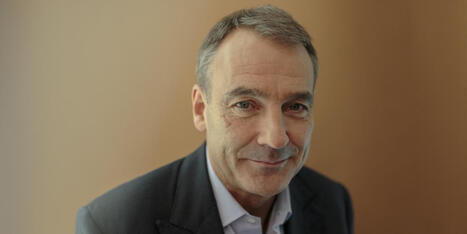
The former chief executive of British oil company BP BP -4.63%decrease; red down pointing triangle is jumping into the American artificial-intelligence boom. Bernard Looney is taking on the chief executive role at Prometheus Hyperscale, a data-center developer that hopes to funnel tens of billions of dollars into two projects in Wyoming and another in Texas. The move marks the latest push by oil-and-gas veterans to capitalize on a building boom that has strained power markets and driven the U.S. construction sector in recent years. With energy-hungry projects requiring huge workforces and sprawling supply chains, companies including SLB, Baker Hughes and even major oil companies have vied to capture more of Silicon Valley’s spending spree.
Laurent Ferreira a formulé ces avertissements mardi durant sa participation à un évènement virtuel organisé par le Cercle finance du Québec. La réponse naturelle d’une banque centrale à une hausse de l’inflation est généralement d’augmenter les taux d’intérêt, et la Réserve fédérale américaine (Fed) a marqué une pause l’hiver dernier dans son cycle d’assouplissement monétaire en conservant les taux inchangés. Mais la patience de la Fed pourrait être limitée. « Si on retourne dans une situation de politique monétaire restrictive, ça va être difficile », a dit Laurent Ferreira.
|
La juge Jane Dietrich a approuvé mercredi une procédure qui permettra au détaillant en difficulté de solliciter des investissements dans l’entreprise ou de choisir un ou plusieurs acquéreurs pour l’entreprise ou ses actifs d’ici juin. Le détaillant n’a pas précisé ce qu’il mettait en vente, mais a indiqué dans les documents judiciaires que ses actifs étaient évalués à 126,8 millions. L’entreprise comptera au maximum 18 magasins d’ici la conclusion d’une éventuelle vente, et une base de données gouvernementale indique qu’elle détient 162 marques déposées. Il est possible qu’un acheteur rachète l’ensemble de l’entreprise ou que plusieurs acquéreurs en rachètent des parties.
A governance expert has warned that the current AGM season could still see shareholder dissent over chief executive pay despite City figures declaring attitudes have changed towards bumper remuneration deals. Bernadette Young, director of Indigo Independent Governance, warns boards that higher pay levels will require a convincing explanation if they are to avoid 2025’s big increase in shareholder revolts
BP named Carol Howle as deputy chief executive on Thursday and said she would oversee the company's ongoing portfolio review and strategy development. Howle, who served as interim chief executive before Meg O'Neill started the top job on Wednesday, will also return to her former role as head of supply, trading and shipping. BP is undergoing a major strategy shift after pivoting back to a focus on oil and gas a year ago following an ill-fated foray into renewables. It has cut billions of dollars from planned renewable energy projects, pledged to divest $20 billion of assets by 2027, and to reduce debt and costs. Net debt fell to $22 billion from $26 billion in the fourth quarter last year, and BP reiterated its target range of $14 billion-$18 billion by end-2027. BP's Chair Albert Manifold, who took the role in October before Murray Auchincloss abruptly exited as CEO in December, has said BP holds assets that may be more valuable to others. Howle will oversee long-term strategy development beyond BP's 2027 targets, O'Neill said in a statement. BP's strategy and sustainability team will report to Howle, who has spent 25 years with BP.
Elon Musk’s SpaceX is one step closer to staging what could be the largest initial public offering of all time. The satellite builder and rocket operator has confidentially filed IPO paperwork with the Securities and Exchange Commission, according to people familiar with the matter. SpaceX is aiming for an IPO that could raise between $40 billion and $80 billion, The Wall Street Journal has reported. The filing puts the company on track to potentially list shares by July, as Musk has told people is his goal. SpaceX would be the first of three mega-IPOs that could go in 2026: Artificial-intelligence companies OpenAI and Anthropic are both waiting in the wings for potential offerings before year-end. Many smaller technology-company IPOs have been pushed off in 2026, as fears about how AI will upend the software industry have sent investors running.
U.S. President Donald Trump has said he is strongly considering pulling the U.S. out of NATO, ratcheting up his criticism of European allies and exposing a wider rift in the transatlantic alliance — this time over America’s war alongside Israel against Iran. While Trump’s talk of a possible NATO pullout dates back years, the comments to Britain’s Telegraph newspaper, published Wednesday, were among the clearest and most disparaging yet — suggesting the fracture has deepened perhaps to a point of no return. Asked whether he would reconsider U.S. membership in the alliance after the war on Iran ends, Trump replied: “Oh yes, I would say (it’s) beyond reconsideration.” Contacted by The Associated Press, NATO did not provide an immediate comment.
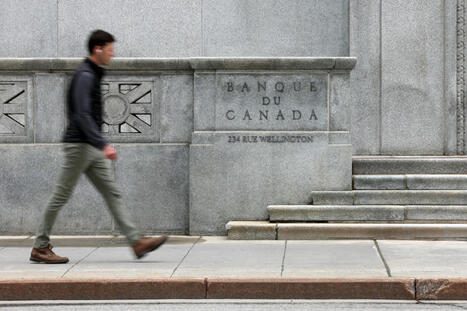
Un résumé des délibérations du Conseil de direction de la Banque du Canada, qui a décidé le 18 mars de maintenir le taux directeur à 2,25 %, a été publié mercredi. Le rapport montre que les membres du Conseil ont débattu de la meilleure ligne de conduite à adopter en matière de politique monétaire, alors que la flambée des prix de l’énergie devrait alimenter une hausse de l’inflation, tandis que l’économie canadienne affiche des résultats décevants. Le risque d’une hausse de l’inflation justifie généralement une augmentation du taux directeur, tandis qu’une croissance économique atone pousse généralement la banque centrale à baisser ses taux.
Spanish defence firm Indra appointed Angel Simon Grimaldos as non-executive chairman and director on Thursday, a day after Angel Escribano resigned following a failed deal with his own company and reported government pressure for his exit. Simon, former CEO of Criteria Caixa, was nominated as chair by state-owned fund SEPI, which holds a 28% stake in Indra, according to a report by Spanish paper La Vanguardia. Escribano handed in his resignation on Wednesday, saying that staying on could "jeopardise the company’s stability", two weeks after Escribano Mechanical and Engineering (EM&E) withdrew from a potential acquisition by Indra due to a conflict of interest.
Germany-based global travel retailer Gebr. Heinemann is promoting the current chief financial officer at its Asia-Pacific division, Rajshree Dugar, to CEO from September 1. The incumbent regional head, Johannes Sammann, is moving to the company’s Hamburg headquarters to assume the role of vice president—people and culture. The leadership transition comes as the Singapore-based division continues a restructuring process of the regional business which Dugar will now lead. The reboot is largely due to the impact of lower Chinese per-head spending which has had ripple effects across Asia-Pacific and changed the retailer’s—and some competitors’—strategic priorities. Heinemann’s co-CEO Raoul Spanger has, in the recent past, noted the impact. He said: “There has been a significant change in the shopping behavior of Chinese travelers who used to be high-spending. We do not expect this customer group to return with their former purchasing power. As a result, our industry as a whole is experiencing a significant decline in sales in Asia-Pacific, not only now, but for the foreseeable future.”
Unilever and McCormick shareholders found the reality of their planned $65 billion food deal hard to digest on Tuesday, perturbed by the transaction's structure, its long timeline to closing and the potential for antitrust scrutiny. Shares in Unilever, owner of Hellmann's mayonnaise to Knorr stock cubes, fell by 7% after the deal was announced, wiping $7 billion from its market value while McCormick, owner of Cholula hot sauce, also took a hit as its shares slid by about 5%.
Intel agreed to buy Apollo Global Management’s 49% stake in the companies’ Fab 34 joint venture chip manufacturing plant in Ireland for $14.2 billion. Intel said it would fund the purchase through a combination of cash on hand and about $6.5 billion in new debt issuances. Intel expects the transaction to add to ongoing earnings per share and strengthen the company’s credit profile beginning in 2027. Apollo led an $11.2 billion investment for the 49% stake in 2024. The agreement was “the right structure at the right time,” Intel Chief Financial Officer David Zinsner said, adding that the company now has a stronger balanced sheet and an evolved corporate strategy.
Canada’s Sun Life Financial said on Monday it had completed an acquisition of the remaining stakes in BGO and Crescent Capital that it did not already own. The insurer paid $1.59 billion (US$1.14 billion) for the remaining 44 per cent interest stake in real estate investment management advisor BGO and $829 million for the remaining 49 per cent stake in alternative credit investment manager Crescent. Before the transaction, Sun Life owned a majority in both companies. It formed BGO in 2019 through the merger between Bentall Kennedy and GreenOak, holding a 56 per cent stake in the combined company. The insurer took a 51 per cent stake in Crescent for $450 million in 2021.
Les modifications apportées à la législation en 2017 prévoient que les droits d’accise payés par les producteurs d’alcool augmentent automatiquement chaque année au 1er avril, en fonction de l’inflation, sans qu’il soit nécessaire d’obtenir l’approbation du Parlement. Le gouvernement libéral a temporairement plafonné ces hausses à 2 % depuis 2023. L’augmentation prévue mercredi devait marquer la dernière année d’application de ce plafond. Mais un responsable gouvernemental, qui n’est pas autorisé à s’exprimer sur cette annonce avant qu’elle ne soit rendue publique, a indiqué à La Presse Canadienne qu’Ottawa s’apprête à renouveler ce plafond jusqu’en 2028.
|