
Émissions, actualités en direct | ICI Radio-Canada.ca
Get Started for FREE
Sign up with Facebook Sign up with X
I don't have a Facebook or a X account


|
Scooped by
Institut sur la gouvernance (IGOPP)
onto Gouvernance - Veille quotidienne May 13, 2015 9:31 AM
|
 Scoop.it!
Émissions, actualités en direct | ICI Radio-Canada.ca

 Your new post is loading...
 Your new post is loading...
Your new post is loading...
Scoop.it!

From
www

FedEx has lined up financing and a new board for its FedEx Freight unit ahead of its planned spinoff of the freight-trucking division. FedEx on Friday said FedEx Freight has entered into a five-year, $1.2 billion revolving-credit facility and a three-year, $600 million delayed-draw term-loan facility. FedEx said it has filed a Form 10 registration statement with the U.S. Securities and Exchange Commission for the spinoff. FedEx previously said that its executive chairman, R. Brad Martin, will serve as FedEx Freight’s chairman. The company said John Smith, the incoming president and chief executive of FedEx Freight, will also serve on the board, along with eight independent directors. Stephen Gorman, a FedEx director since 2022, will step down from the board upon joining the FedEx Freight board, the company said.
Scoop.it!

Corporate governance is set to be increasingly used as a political instrument, underscoring its importance in a changing world order. If 2025 revealed notable shifts in the balance of power between stakeholders, shareholders and management across markets, 2026 is set to see governments exerting greater intervention in shaping corporate governance rules and behaviour. The US is the most striking and unexpected example of this reframing. What began as a backlash against stakeholder capitalism – such as pressure on both US and multinational companies to dismantle Diversity, Equity and Inclusion (DEI) programmes – has moved far beyond that.
Scoop.it!

Dealmakers predict an uptick in mergers and IPOs for retailers and consumer goods companies this year after punishing tariffs on imports to the U.S. had sidelined activity in the industry for the first half of 2025. Several national restaurant and convenience store chains are primed for IPOs, along with organic baby food company Once Upon a Farm, Hellman & Friedman-backed auto repair company Caliber Holdings, and Bob’s Discount Furniture, which is owned by Bain Capital, according to more than two dozen CEOs, M&A advisors and private equity investors who attended the ICR Conference in Orlando, Florida this week.
Scoop.it!
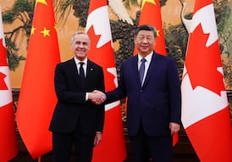
The Liberal government has reached a deal with Beijing to slash tariffs on a set number of Chinese electric vehicles in exchange for China dropping duties on agriculture products, Prime Minister Mark Carney said Friday. It marks the prime minister’s first deal on trade since taking office last year and a de-escalation in tensions with a country the Liberal government had, in recent years, branded a disruptive power. Carney described it as a “preliminary but landmark” agreement to remove trade barriers and reduce tariffs, part of a broader strategic partnership with China. “It’s a partnership that reflects the world as it is today, with an engagement that is realistic, respectful and interest-based,” Carney said at a news conference in Beijing. Carney said Ottawa expects Beijing to drop canola seed duties to 15 per cent from 84 per cent by March 1, and called that “enormous progress.”
Scoop.it!

From
www
New York Attorney General Letitia James filed suit against the former head of Emergent BioSolutions, accusing him of insider trading for selling his shares in the company before disclosing contamination issues in its production of the Covid-19 vaccine. Robert Kramer, who retired as chief executive officer in 2023, made $10.1 million from the sale of his shares months after learning about—and before publicly disclosing—production problems the company was facing, according to a lawsuit filed Thursday in state court. Kramer is accused of violating the Martin Act, which forbids company insiders from trading stock while possessing material non-public information, James said. “At the height of the COVID-19 pandemic, Robert Kramer illegally profited millions by selling his company shares, while knowing that Emergent faced issues producing the AstraZeneca vaccine for millions of people,” James said in a statement. “Kramer’s actions were illegal and unethical, and we are holding him accountable.”
Scoop.it!

For a year, Wall Street’s dominant theme has been the so-called K-shaped economy, in which the well-to-do have powered financial activity despite lower earners’ struggles. This week, the country’s largest banks reported a broadly disappointing set of quarterly earnings, marking the first stumble after a yearlong spree of rising markets and softening regulations paid off handsomely for the finance set. Results at Bank of America Corp., Citigroup Inc., JPMorgan Chase & Co. and Wells Fargo & Co. all fell short of expectations and their shares fell. Troubles ranged from delayed merger deals (JPMorgan) to stubborn expenses (Citi) to questions about the efficacy of artificial-intelligence tools (Bank of America). Banks that do business largely with rich individuals and corporations, such as Goldman Sachs Group Inc. and Morgan Stanley, fared comparatively better.
Scoop.it!

C’est la fin d’une époque chez le fabricant montréalais de robinetterie industrielle Velan. La famille fondatrice cède le contrôle à une firme d’investissement de Toronto en acceptant un escompte important par rapport à la valeur de l’entreprise en Bourse. Les trois fils du fondateur de Velan se sont entendus pour vendre à Birch Hill la totalité de leurs actions à droit de vote multiple pour un peu plus de 200 millions de dollars. La famille a accepté un prix unitaire de 13,10 $ pour ses actions, l’équivalent d’un escompte de 30 % par rapport au cours de l’action de 18,79 $ enregistré à la fermeture des marchés mercredi. Birch Hill obtiendra ainsi une participation dans Velan représentant 72 % des actions en circulation et près de 92 % des droits de vote qui y sont rattachés. La clôture de cette opération est prévue d’ici l’été.
Scoop.it!

From
www
Paramount failed to force Warner Bros. Discovery to disclose more information soon about its deal with Netflix when a judge denied its request Thursday. Paramount earlier this week filed a lawsuit in Delaware seeking to compel Warner to release more information about its merger agreement with Netflix, specifically how Warner values the global networks business it will create as part of a plan to split itself in two. Paramount also asked the judge to expedite the proceeding for that lawsuit ahead of next Wednesday, when its tender offer for Warner is set to expire. On Thursday, a judge denied Paramount’s motion to expedite, saying that Paramount has not proven it would suffer irreparable harm from any alleged omissions of information by Warner. The judge added that Paramount has other ways to find that information. Paramount also said Thursday that it plans to extend its tender offer beyond Jan. 21. It is able to keep extending that deadline.
Scoop.it!

From
www
2025 was a year of significant political and economic uncertainty. In this article, we look to 2026 and the economic outlook in Canada as well as share our thoughts on key issues for the compensation committee agendas among large Canadian companies. Canada’s economy proved more resilient in 2025 than trade headlines suggested, despite tariffs weighing on exports and manufacturing in the spring. Equity markets looked past the turbulence: The S&P/TSX 60 returned nearly 30%, outperforming the S&P 500 by more than 10 points and driven by heavy financial and energy/materials exposure. For 2026, consensus targets point to more normalized returns — analysts project 9% to 12% growth for the S&P 500 versus muted expectations of 5% growth in the S&P/TSX Composite.
Scoop.it!

Private companies, like their public company counterparts, are subject to a wide range of risks that could impact their activities and challenge their ability to successfully accomplish their strategies. Unlike public corporations, private firms are not subject to SEC regulations requiring the disclosure of key risks in their financial statements. However, private companies and their boards, whether family-owned, private equity-owned or employee-owned, play just as dangerous a game if they ignore the possibility of such risks and fail to prepare for them. Enterprise risk management (ERM) is a critical function that enables private companies to increase their chances of achieving their goals. While boards and companies often think first about addressing negative risks (threats) when considering risk management, ERM can also be utilized to take advantage of the opportunities these risks present. A private company’s board plays a critical role in ensuring not only the company has an effective ERM program, but it also looks for and acts on opportunities arising from these risks.
Scoop.it!

U.S. soft drinks giant Keurig Dr Pepper on Thursday launched its $18 billion all-cash takeover bid for coffee and tea group JDE Peet's, setting the stage for a global coffee company that could rival market leader Nestle. Keurig will offer 31.85 euros for each share in JDE Peet's, whose board and a majority of shareholders have committed to accepting the offer, the two companies and Dutch special purpose vehicle Kodiak BidCo said. The deal is set to close in the second quarter. Keurig had in August announced the buyout, one of Europe's largest in recent years and one that would consolidate the global coffee market as bean prices hit record highs. It had also announced plans to split the merged entity's coffee and other beverage businesses, including Dr Pepper sodas, into two publicly traded companies.
Scoop.it!

The U.S. Supreme Court issued three decisions on Wednesday but did not decide the closely watched dispute over the legality of U.S. President Donald Trump‘s global tariffs. The court did not announce the next date when it will issue rulings. It does not announce in advance which rulings will be released on a given date. The challenge to Trump’s tariffs marks a major test of presidential powers as well as of the court’s willingness to check some of the Republican president’s far-reaching assertions of authority since he returned to office in January 2025. The outcome will impact the global economy.
Scoop.it!

From
www
U.S. forces boarded a sixth oil tanker on Thursday morning, according to people familiar with the matter, after seizing a fifth tanker in waters near Venezuela late last week. The move is a sign that the Trump administration’s crackdown on the what is called the dark fleet that transports sanctioned oil will continue as the U.S. seeks to work with Venezuela’s interim government to control the country’s oil sales. The tanker was seized in the U.S. Southern Command Area of Responsibility in waters around Central and South America and the Caribbean. The oil-tanker crackdown has had a significant impact on Venezuela’s oil exports. In the month of January, crude loadings have fallen to about half of normal levels, according to shipping-analytics provider Kpler.
|
Scoop.it!

The paradox is that weak decision ownership, not weak technology, is what turns a transparency duty into inconsistent practice. Transparency for AI generated content is often framed as a question of hidden markings and automated checks. For boards, it is mainly a question of authority, who decides when a label appears, what proof backs that decision, and who can pause publication when the organisation cannot show compliance. The paradox is that weak decision ownership, not weak technology, is what turns a transparency duty into inconsistent practice. On 17 December 2025 the European Commission published the first draft Code of Practice on transparency of AI generated content and opened feedback until 23 January 2026, with a second draft expected by mid March 2026 and a final text targeted for June 2026. The transparency rules are due to apply from 2 August 2026.
Scoop.it!

SEC chairman Paul Atkins has ordered the Division of Corporation Finance to carry out a comprehensive review of Regulation S-K, the cornerstone of non-financial disclosure requirements for public company filings in the US. The move, announced January 13, came with a clear focus on cutting through what Atkins described as a growing volume of disclosure that may not meaningfully aid investors. Atkins said that Regulation S-K has expanded substantially since its inception in 1982, and that the resulting filings can bury investors in information that is not clearly material to investment or voting decisions. He underscored the need for disclosure that better reflects what a reasonable investor would consider relevant. Public comments on potential revisions are being invited through April 13, 2026, as part of the review process begun with a focused look at executive compensation rules under Item 402 which took place last year.
Scoop.it!

Global shipping company Diana Shipping plans to launch a proxy fight to replace rival Genco Shipping & Trading's six current directors, making its decision just days after the board rejected Diana's takeover offer, two people familiar with the matter said. Diana Shipping, which owns nearly 15% of Genco and proposed buying all outstanding shares for $20.60 per share in cash, will nominate executives who have shipping and maritime industry experience in the coming days, one of the sources told Reuters. A representative for New York City-based Genco was not immediately available to comment. Diana now wants to give Genco shareholders an opportunity to elect newcomers to the board who would be open to exploring alternatives, including reviewing Diana's proposal to buy Genco, said one of the sources who was not authorized to speak publicly about the company's plan.
Scoop.it!
From
www
Mitsubishi has agreed to acquire a U.S. shale-gas business for $5.2 billion, in an effort to secure U.S. energy assets as geopolitical uncertainties persist. The acquisition of shale-gas assets in Texas and Louisiana is the Japanese company’s biggest-ever deal. The natural gas from the business is sold in the southern U.S. market, where demand is expected to rise, Mitsubishi said Friday. Part of the production could be exported as liquefied natural gas to Asia, including Japan and Europe, it said. The deal comes as President Trump has sought to shore up the U.S.’s manufacturing base and increase energy exports, while pressing allies not to buy oil and gas from countries such as Russia. The Japanese trading house said that it had agreed to acquire Aethon III, Aethon United and related entities that own shale-gas interests and gas processing facilities, and also develop, produce and sell natural gas.
Scoop.it!

From
www
Walmart will reshuffle its leadership team when John Furner takes over as chief executive next month, elevating a group of longtime executives as the retailer navigates a complex consumer and government landscape. David Guggina will become chief executive of Walmart U.S. as Furner leaves the role. That puts Guggina, the company’s current chief e-commerce officer, at the helm of the retailer’s largest business unit, which employs around 1.5 million workers. Walmart said in a statement that Guggina’s background in e-commerce and supply-chain operations positions him to continue expanding delivery and digital services. Chris Nicholas, currently the head of Sam’s Club U.S., will succeed Kath McLay as chief executive of Walmart’s international division. McLay was seen as a possible successor to departing Chief Executive Doug McMillon before Furner got the job. She plans to exit from the role at the end of the month, Walmart said Thursday.
Scoop.it!

The Canada Pension Plan Investment Board is committing another $750-million to a long-standing partnership with Northleaf Capital Partners to make private-equity investments in small and medium-sized Canadian companies, tapping a part of the market it couldn’t otherwise easily access. The arrangement is 20 years old and CPPIB has now committed more than $3-billion since it started in 2006. Over that span, Northleaf – an established Canadian private-equity firm that has managed US$30-billion – has invested in more than 100 funds and backed at least 900 companies on CPPIB’s behalf, following customized investing parameters. Most of those are mid-market companies with profits ranging from $10-million to $75-million annually, which are still growing. For a fund as large as CPPIB – which manages $778-billion and routinely cuts billion-dollar cheques – the effort to find, evaluate and manage a large portfolio of smaller deals doesn’t pay off.
Scoop.it!
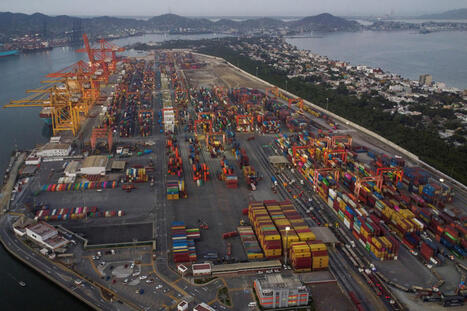
Le gouvernement mexicain a assuré jeudi qu’il progressait avec Washington dans la révision prévue de l’accord commercial nord-américain ACEUM, dont le président américain Donald Trump a récemment remis en cause la pertinence. Lors de la conférence de presse quotidienne de la présidente mexicaine, le ministre de l’Économie, Marcelo Ebrard, a évoqué des réunions presque hebdomadaires avec les équipes américaines afin de pouvoir conclure le processus de révision le 1er juillet, comme prévu depuis la signature de l’accord. « Des sujets qui nous ont été soumis l’an dernier, nous avons pratiquement tout terminé », a indiqué le responsable. Mardi, lors d’une visite dans une usine automobile, Donald Trump a de nouveau mis en doute l’avenir de l’ACEUM en affirmant qu’il avait été « sans importance » pour l’économie américaine.
Scoop.it!

The number of US activist campaigns in 2025 rose by an estimated 19 percent over the multi-year average, according to a recent Barclays report. However, a Harvard Law School Forum on Corporate Governance posting from The Conference Board estimates that more than 85 percent of the 2025 campaigns they tracked never got as far as a shareholder vote – with activists either withdrawing or securing concessions through settlements. A high proportion of last year’s so-called ‘friendly’ settlements have the potential to turn decidedly ‘unfriendly’ this year if the subject companies can’t hold up their end of the bargain – by failing to reverse a languishing share price, underperforming financially or falling short on other agreed-upon goals such as an M&A deal, spin-off or corporate governance reforms. Such companies could end up being the targets of follow-on proxy fights this year, either from their original activists or new opponents.
Scoop.it!

The five-year plan is under siege in corporate America. In a stark sign of how dramatically strategic thinking has contracted, only 19 percent of public company board members say their boards conduct scenario planning exercises based on five-year assumptions, according to a recent survey by Chief Executive Group and the Long Term Stock Exchange. The forces strangling long-term planning are familiar: artificial intelligence’s breakneck evolution, regulatory whiplash and shareholders’ insatiable appetite for quarterly gains. Together, they’ve created what one director described as an environment where leadership teams chase “near-term wins” that often “compromise future positioning.” Most companies abandoned traditional 10-year planning long ago, retreating to three-to-five-year horizons. Now, even those modest timelines are under siege.
Scoop.it!

From
www
A US activist investor is pushing for the removal of Marston’s five non-executive board members, accusing the UK pub group’s board of a “persistent refusal to act in shareholders’ best interests”. Houston-based Bradley Radoff said in an open letter this week that the company’s leadership had shown “indifference” to his calls last year to initiate a share buyback or dividend programme. Marston’s is one of the UK’s largest pub operators, with 1,300 sites across Britain. Shares in the group have climbed almost 60 per cent in the past year, reaching their highest price since 2022, but remain well below pre-pandemic levels. The company last paid a dividend in January 2020. Radoff said that together with affiliates, he held an approximately 3 per cent stake in Marston’s. He said he would vote against the re-election of the company’s non-executive directors at its upcoming shareholder meeting, scheduled for the end of January.
Scoop.it!

Canaccord Genuity Group Inc. has acquired Carbon Reduction Capital in a bid to grow its U.S. capital markets business in the renewable energy sector. Financial terms of the agreement were not immediately available. CRC-IB offers investment banking services in the U.S. with experience in the wind, solar, storage, carbon capture and energy transition sectors. It has executed more than 400 transactions with an aggregate value of about US$91 billion. Canaccord Genuity chief executive Jeff Barlow says the deal unlocks new opportunities to increase its market share in the U.S. and globally. Canaccord Genuity is an independent financial services firm, with operations in wealth management and capital markets.
Scoop.it!

From
www
A fierce crackdown by Iranian security forces that has killed thousands of people protesting against the country’s autocratic leaders has forced demonstrators off the streets in some cities, with residents reporting an eerie quiet after days of escalating violence. Iran’s government has blocked the internet and deployed large numbers of police and troops in an effort to quell the biggest threat to the regime since a 1979 revolution that established theocratic rule overseen by Shiite clergy. Iranians said they were afraid to leave their homes. President Trump on Wednesday said Iran had stopped killing people, after days of threatening to take action against the regime if it killed protesters. Asked if military action was off the table, he said, “We’re going to watch it and see what the process is, but we were given a very good statement by people that are aware of what’s going on.”
|






Entrevue Yvan Allaire