Design, Science and Technology
59.8K views | +65 today
Design, Science and Technology
#ideas #design #science #technology #inspiration #media #information
Your new post is loading...
Rescooped by Antonios Bouris from visual data
June 19, 2015 6:28 AM
Scoop.it!

Data Visualization 101: Scatter Plots

Data Visualization 101: Scatter Plots | Design, Science and Technology | Scoop.it

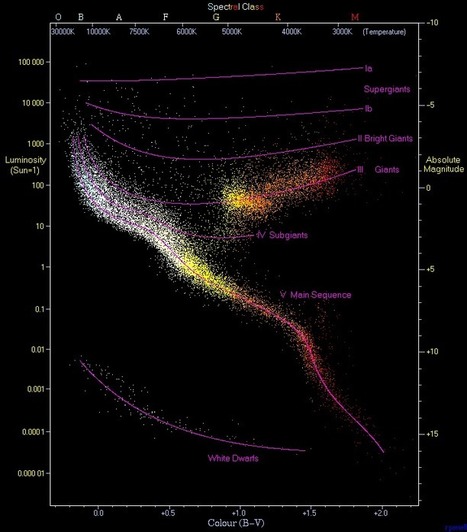
In our Data Visualization 101 series, we cover each chart type to help you sharpen your data visualization skills.Scatter plots have been called the “most versatile, polymorphic, and generally useful invention in the history of statistical graphics” (Journal of the History of the Behavioral Sciences, 2005).

That’s a big claim, but just as their name implies, they can take a confusing and scattered set of data and make sense of it. As such, these plots are much more than a visualization tool; they are a discovery tool. Let’s look at what makes the scatter plot so good...


Via Lauren Moss
Marco Favero's curator insight, June 19, 2015 3:49 AM

aggiungi la tua intuizione ...

Christopher Higgins's curator insight, July 18, 2015 6:17 AM

A quick history of graphing information and how scatter plots are unique from other ways of graphing in more than one way.  A great visual of the different types of relationships that are easily identified on a scatter plot, highlighting why scatter plots are so useful to understand relationships between two different variables.  

Scooped by Antonios Bouris
June 12, 2015 9:03 PM
Scoop.it!

Mesmerising photographs from the sky to bring some perspective to your day

Mesmerising photographs from the sky to bring some perspective to your day | Design, Science and Technology | Scoop.it

Benjamin and his team create and share one “Overview” – the site’s name for each image – every day, to highlight the impact we have had on the Earth. “We work with Digital Globe’s database of satellite imagery and then add an artistic orientation to bring out the mesmerising aesthetic that this perspective provides. Each Overview ultimately starts with a thought experiment. We consider the places where man has left his mark on the planet and then conduct the necessary research to identify locations (and the corresponding geo-coordinates) to convey that idea.”

No comment yet.
Scooped by Antonios Bouris
June 12, 2015 9:02 PM
Scoop.it!

50 shareable customer experience soundbites from #GartnerCRM

50 shareable customer experience soundbites from #GartnerCRM | Design, Science and Technology | Scoop.it
A selection of socially shareable soundbites from the Gartner Customer Strategies & Technologies Summit in London #GartnerCRM Jim Davies, Research Director – Gartner “Customer Experience will accelerate to the speed of digital business” #GartnerCRM...
No comment yet.
Rescooped by Antonios Bouris from Amazing Science
June 12, 2015 9:01 PM
Scoop.it!

Electron microscopes are close to imaging individual atoms

Electron microscopes are close to imaging individual atoms | Design, Science and Technology | Scoop.it

Today’s digital photos are far more vivid than just a few years ago, thanks to a steady stream of advances in optics, detectors, and software. Similar advances have also improved the ability of machines called cryo-electron microscopes (cryo-EMs) to see the Lilliputian world of atoms and molecules. Now, researchers report that they’ve created the highest ever resolution cryo-EM image, revealing a druglike molecule bound to its protein target at near atomic resolution. The resolution is so sharp that it rivals images produced by x-ray crystallography, long the gold standard for mapping the atomic contours of proteins. This newfound success is likely to dramatically help drugmakers design novel medicines for a wide variety of conditions.


“This represents a new era in imaging of proteins in humans with immense implications for drug design,” says Francis Collins, who heads the U.S. National Institutes of Health in Bethesda, Maryland. Collins may be partial. He’s the boss of the team of researchers from the National Cancer Institute (NCI) and the National Heart, Lung, and Blood Institute that carried out the work. Still, others agree that the new work represents an important milestone. “It’s a major advance in the technology,” says Wah Chiu, a cryo-EM structural biologist at Baylor College of Medicine in Houston, Texas. “It shows [cryo-EM] technology is here.”


Cryo-EM has long seemed behind the times—an old hand tool compared with the modern power tools of structural biology. The two main power tools, x-ray crystallography and nuclear magnetic resonance (NMR) spectroscopy, enable researchers to pin down the position of protein features to less than 0.2 nanometers, good enough to see individual atoms. By contrast, cryo-EM has long been limited to a resolution of 0.5 nm or more.


Cryo-EM has been around for decades. But until recently its resolution hasn’t even been close to crystallography and NMR. “We used to be called the field of blob-ology,” says Sriram Subramaniam, a cryo-EM structural biologist at NCI, who led the current project. But steady improvements to the electron beam generators, detectors, and imaging analysis software have slowly helped cryo-EM inch closer to the powerhouse techniques. Earlier this year, for example, two groups of researchers broke the 0.3-nm-resolution benchmark, enough to get a decent view of the side arms of two proteins’ individual amino acids. Still, plenty of detail in the images remained fuzzy.


For their current study, Subramaniam and his colleagues sought to refine their images of β-galactosidase, a protein they imaged last year at a resolution of 0.33 nm. The protein serves as a good test case, Subramaniam says, because researchers can compare their images to existing x-ray structures to check their accuracy. Subramaniam adds that the current advance was more a product of painstaking refinements to a variety of techniques—including protein purification procedures that ensure each protein copy is identical and software improvements that allow researchers to better align their images. Subramaniam and his colleagues used some 40,000 separate images to piece together the final shape of their molecule. They report online today in Science that these refinements allowed them to produce a cryo-EM image of β-galactosidase at a resolution of 0.22 nm, not quite sharp enough to see individual atoms, but clear enough to see water molecules that bind to the protein in spots critical to the function of the molecule.


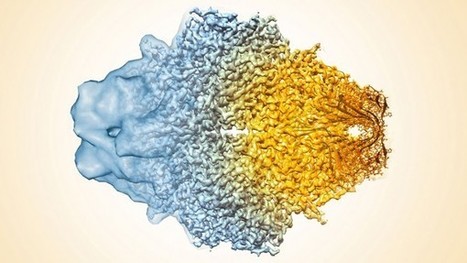
The above composite image of the protein β-galactosidase shows the progression of cryo-EM’s ability to resolve a protein’s features from mere blobs (left) a few years ago to the ultrafine 0.22-nanometer resolution today (right).


Via Dr. Stefan Gruenwald
No comment yet.
Rescooped by Antonios Bouris from 21st Century Learning and Teaching
June 12, 2015 9:00 PM
Scoop.it!

How Curated Content Performance Beats Original Content | Curation | eSkills

How Curated Content Performance Beats Original Content | Curation | eSkills | Design, Science and Technology | Scoop.it
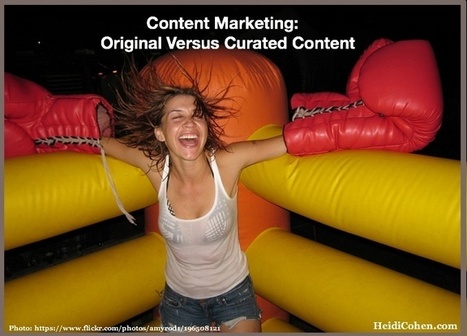
Having the original versus curated content debate? Here's research to help you. Advantages and disadvantages of original vs curated content are presented.


Learn more:


- https://gustmees.wordpress.com/2013/04/25/learn-every-day-a-bit-with-curation/


- http://www.scoop.it/t/21st-century-learning-and-teaching/?tag=Curation


Via Marc Wachtfogel, Ph.D., Gust MEES
Gust MEES's curator insight, June 12, 2015 4:00 PM
Having the original versus curated content debate? Here's research to help you. Advantages and disadvantages of original vs curated content are presented.


Learn more:


- https://gustmees.wordpress.com/2013/04/25/learn-every-day-a-bit-with-curation/


- http://www.scoop.it/t/21st-century-learning-and-teaching/?tag=Curation


bernieshoot's curator insight, June 13, 2015 7:28 AM

#content #performance

Tony Guzman's curator insight, June 15, 2015 2:40 PM

This article addresses the argument of, "What is more effective: original or curated content?"

Rescooped by Antonios Bouris from levin's linkblog: Design Channel
June 12, 2015 8:58 PM
Scoop.it!

2015 LogoLounge Trend Report on LogoLounge.com

2015 LogoLounge Trend Report on LogoLounge.com | Design, Science and Technology | Scoop.it
2015 LogoLounge Trend Report

Via Levin Chin
No comment yet.
Rescooped by Antonios Bouris from Amazing Science
June 5, 2015 5:24 AM
Scoop.it!

Billboards of the future could show astonishing 3D effects, thanks to a new technology from Austria

Billboards of the future could show astonishing 3D effects, thanks to a new technology from Austria | Design, Science and Technology | Scoop.it

Huge 3D Displays without 3D Glasses: A new invention opens the door to a new generation of outdoor displays. Different pictures can be seen at different angles, creating 3D effects without the need for 3D glasses.


Public screenings have become an important part of major sports events. In the future, we will be able to enjoy them in 3D, thanks to a new invention from Austrian scientists. A sophisticated laser system sends laser beams into different directions. Therefore, different pictures are visible from different angles. The angular resolution is so fine that the left eye is presented a different picture than the right one, creating a 3D effect.

In 2013, the young start-up company TriLite Technologies had the idea to develop this new kind of display, which sends beams of light directly to the viewers’ eyes. The highly interdisciplinary project was carried out together with the Vienna University of Technology.


Via Dr. Stefan Gruenwald
Rescooped by Antonios Bouris from Creatives at Home on the Internet
June 5, 2015 5:18 AM
Scoop.it!

Johannes Stötter Nature-Art

Johannes Stötter Nature-Art | Design, Science and Technology | Scoop.it
Welcome to the website of Johannes Stötter, artist, musician and fine-art-bodypainter. His works are influenced by spititual and nature-related themes...

Via Judith Van Praag
Judith Van Praag's curator insight, June 3, 2015 12:18 AM

Well, eh, I'm not going to give away what this is all about. Click and enjoy.

Rescooped by Antonios Bouris from Content curation trends
June 5, 2015 5:15 AM
Scoop.it!

How Content Curation Can Save Millions to Organizations

How Content Curation Can Save Millions to Organizations | Design, Science and Technology | Scoop.it
That’s the exhilaration that comes with curation. Imagine the web as millions of pages. To make your magazine, you tear out any of those pages you fancy, explain why they matter, and push the button. Bingo! You’ve shared a link to the content and your take on it.

Via Guillaume Decugis
Nataliia Viatkina/Наталія Вяткіна's curator insight, August 6, 2015 11:09 AM

@Jay Cross gives a detailed and clear use case of how collaborative content curation can save millions to large organizations as it saves employee time while involving them in the process.


He also explains his content curation routine that he sees as a mandatory skill to be trained by modern employers.


He makes a great job at connecting two sides of content curation:


- the fact it's saving people's time to look for meaning in information overload themselves,


- the fact it's rewarding for content curators as it helps them build their professional brands. 


A win-win no-brainer for smart organizations. 

Salim Bennouri's curator insight, August 7, 2015 6:56 AM

@Jay Cross gives a detailed and clear use case of how collaborative content curation can save millions to large organizations as it saves employee time while involving them in the process.


He also explains his content curation routine that he sees as a mandatory skill to be trained by modern employers.


He makes a great job at connecting two sides of content curation:


- the fact it's saving people's time to look for meaning in information overload themselves,


- the fact it's rewarding for content curators as it helps them build their professional brands. 


A win-win no-brainer for smart organizations. 

sakwe's curator insight, May 8, 2025 3:51 PM
Scooped by Antonios Bouris
June 5, 2015 4:54 AM
Scoop.it!

What Is a QR Code?

What Is a QR Code? | Design, Science and Technology | Scoop.it

It wasn't long ago when QR codes first started showing up in consumer advertising. Many of us have no idea "What Is a QR Code & How to use it for business". So let's find out.

No comment yet.
Rescooped by Antonios Bouris from levin's linkblog: Design Channel
June 5, 2015 4:19 AM
Scoop.it!

Spectacular 3D Kaleidoscope Installation Comprises 320 Origami Shapes

Spectacular 3D Kaleidoscope Installation Comprises 320 Origami Shapes | Design, Science and Technology | Scoop.it
Comprising over 320 different origami shapes, Japanese spatial designer Masakazu Shirane and artist Reuben Young have created a spectacular installation called Light Origami. The giant three-dimensional kaleidoscope is now part of Vivid Sydney, an 18 day festival of light, music, and ideas.
Visitors can enter the geometric structure and be mesmerized by the different spectrums of light projected into the space. New and unique forms are also produced the longer they interact with the piece. “On t

Via Levin Chin
Lynda Lukasiewicz's curator insight, June 5, 2015 3:44 PM

What a spectacle of color, form and light!

Scooped by Antonios Bouris
May 29, 2015 8:01 AM
Scoop.it!

27 Killer Strategies for Brainstorming Blog Post Ideas

27 Killer Strategies for Brainstorming Blog Post Ideas | Design, Science and Technology | Scoop.it
If you are struggling to come up with blog post ideas, learn 27 tactics that will fill your content calendar and remove the stress of blogging.
Toni Oo's curator insight, May 31, 2015 1:17 PM

27 Killer Strategies for Brainstorming Blog Post Ideas

Sonia Santoveña's curator insight, June 1, 2015 7:31 AM

añada su visión ...

Rescooped by Antonios Bouris from levin's linkblog: Design Channel
May 29, 2015 7:45 AM
Scoop.it!

The Design Economy primer: how design is revolutionising health, business, cities and government

The Design Economy primer: how design is revolutionising health, business, cities and government | Design, Science and Technology | Scoop.it
This article is part of The Design Economy series.

Asked recently what she saw as the single greatest driver of social change, Melinda Gates of the Gates Foundation replied: “Design.”

Via Levin Chin
No comment yet.
Scooped by Antonios Bouris
June 19, 2015 6:27 AM
Scoop.it!

Google's Guide To Designing With Empathy

Google's Guide To Designing With Empathy | Design, Science and Technology | Scoop.it
Designers can reach over 1 billion people just by keeping accessibility in mind, says Google's Astrid Weber and Jen Devins.
Suzi Shapiro's curator insight, June 20, 2015 3:41 PM

Disability can be permanent or temporary.

Make sure that as many people as possible can make use of your designs!

Rescooped by Antonios Bouris from levin's linkblog: Design Channel
June 12, 2015 9:02 PM
Scoop.it!

Watch This Guy Make Eerie Electronic Music Using Ink on Paper

Watch This Guy Make Eerie Electronic Music Using Ink on Paper | Design, Science and Technology | Scoop.it
Thanks to the magic of things like light sensors and accelerometers, it’s possible to turn nearly anything into a musical instrument. Next up: screenprinted pieces of paper.

Via Levin Chin
No comment yet.
Scooped by Antonios Bouris
June 12, 2015 9:01 PM
Scoop.it!

Infographic: Ed tech can change the world

Infographic: Ed tech can change the world | Design, Science and Technology | Scoop.it
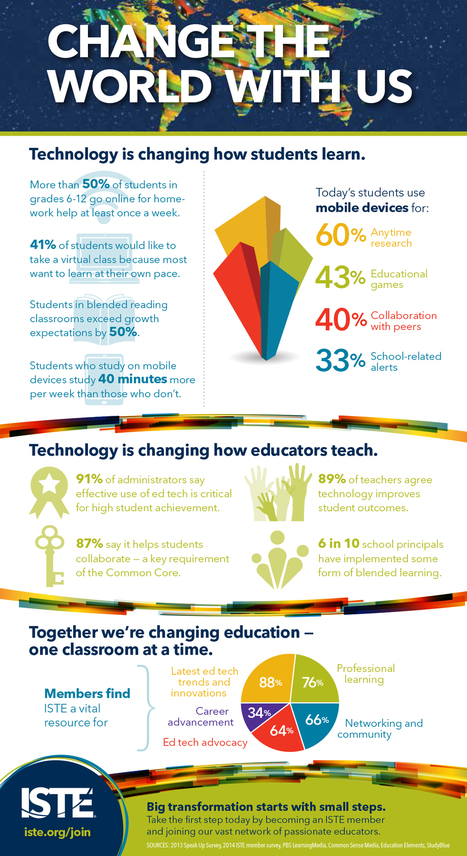
Educational technology is making a huge impact on how students learn, how teachers teach and how education is done.
SA Fia Z's curator insight, September 29, 2015 4:15 AM

Technology is and will continue to revolutionize education. I

elearning at eCampus ULg's curator insight, September 29, 2015 9:05 AM

Great inforgraphics

Tom Georgiev's curator insight, September 29, 2015 5:18 PM

Lets Change The World Together , I'll Show You How to Make Things Right Again, Gain Trust and Fix any Problems We Face! Give Me Your Hand and Trust Me!

Scooped by Antonios Bouris
June 12, 2015 9:00 PM
Scoop.it!

The Four Phases of Design Thinking

The Four Phases of Design Thinking | Design, Science and Technology | Scoop.it
What can people in business learn from studying the ways successful designers solve problems and innovate?
Laura Rosillo's curator insight, June 15, 2015 1:54 PM

añada su visión ...

Rescooped by Antonios Bouris from Creativity Scoops!
June 12, 2015 8:59 PM
Scoop.it!

4 Reasons You Can't Brainstorm Creative Ideas – And What You Should Do Instead – Design School

4 Reasons You Can't Brainstorm Creative Ideas – And What You Should Do Instead – Design School | Design, Science and Technology | Scoop.it
Put down the pen.

Via Creativity For Life
No comment yet.
Scooped by Antonios Bouris
June 5, 2015 5:26 AM
Scoop.it!

daniel britton stunts reading ability with dyslexia typeface

daniel britton stunts reading ability with dyslexia typeface | Design, Science and Technology | Scoop.it

by breaking down and reassembling the alphabet into layers, daniel britton attempts to show how impairing the condition can be.

No comment yet.
Rescooped by Antonios Bouris from levin's linkblog: Design Channel
June 5, 2015 5:20 AM
Scoop.it!

Sleek Modern Light Bulb Doubles as a Bluetooth Speaker

Sleek Modern Light Bulb Doubles as a Bluetooth Speaker | Design, Science and Technology | Scoop.it
Isn’t it nice when technology can perform double duties? Sony introduced a product that simultaneously plays music and lights a room, all while being gorgeously designed. They’ve combined a warm-colored LED bulb with an integrated Bluetooth speaker. This innovative mixture has a clean and modern aesthetic and is something you’d want openly displayed in your home.
The brightness of the bulb is measured at 360-lumen, meaning that it’s more of mood lighting rather than a spotlight. This could be pe

Via Levin Chin
No comment yet.
Scooped by Antonios Bouris
June 5, 2015 5:16 AM
Scoop.it!

Design Thinking: Putting the Customer at the Heart of Development

Design Thinking: Putting the Customer at the Heart of Development | Design, Science and Technology | Scoop.it
Engage with your customers at the design stage to find out what they really want from your products and services and to create innovative new solutions.
No comment yet.
Rescooped by Antonios Bouris from Corporate Identity
June 5, 2015 5:01 AM
Scoop.it!

GB v0.12 – Ganz Basic | GB v0.12 – Genuinely Basic - 2014 | work | Red Dot Award: Communication Design

GB v0.12 – Ganz Basic | GB v0.12 – Genuinely Basic - 2014 | work | Red Dot Award: Communication Design | Design, Science and Technology | Scoop.it
In order to differentiate itself from the competition, the DocCheck AG Annual Report, entitled “Ganz Basic” (Genuinely Basic), goes back to the digital roots of the company. The evolution of the “basis” revolution is showcased in a surprising way by the use of a clearly analogue version on continuous paper. Using ASCII fonts, the group presents its performance characteristics and portrays members of the board and employees as a valuable systems resource. The digital version consists of a contemp

Via Niels Biersteker
No comment yet.
Rescooped by Antonios Bouris from levin's linkblog: Design Channel
June 5, 2015 4:52 AM
Scoop.it!

Living Light by Nissa Kinjalina

Living Light by Nissa Kinjalina | Design, Science and Technology | Scoop.it
Kazakhstan-based designer Nissa Kinjalina created Living light a lamp that appears as a diaphanous container, in which the light was poured. It can be carried

Via Levin Chin
No comment yet.
Scooped by Antonios Bouris
June 5, 2015 4:15 AM
Scoop.it!

DeSID report examines the growth of service design

DeSID report examines the growth of service design | Design, Science and Technology | Scoop.it
A much needed recent report Design for Service Innovation & Development (DeSID) takes a rigorous look at service design through six case studies and a survey of 49 design agencies internationally.
No comment yet.
Rescooped by Antonios Bouris from levin's linkblog: Design Channel
May 29, 2015 7:48 AM
Scoop.it!

Beautiful Fordite Stones Created from Layers of Automotive Paint are a By-Product of Old Car Factories

Beautiful Fordite Stones Created from Layers of Automotive Paint are a By-Product of Old Car Factories | Design, Science and Technology | Scoop.it

image via flickr user nebbie image via Fordite.com image via Fordite.com Old car factories had a harmful impact on the environment, releasing toxic chemicals into the air, land and water. But it wasn’t all ugly.


Via Levin Chin
No comment yet.