


Attached to your hand, the 'Teacher' coaches you to draw by forcing your hand to perform certain motions using haptic feedback.
Via Ensil

 Your new post is loading...
 Scoop.it! Attached to your hand, the 'Teacher' coaches you to draw by forcing your hand to perform certain motions using haptic feedback. Via Ensil 
Scoop.it!

In 2013, students at the University of Maribor in Slovenia designed a “green” 3D printer, known as PrintGREEN, whose output has the ability to grow grass. Conceived by Maja Petek, Tina Zidanšek, Urška Skaza, Danica Rženičnik and Simon Tržan, they developed the device with the help of their mentor Dušan Zidar. The innovative invention prints an earthy mixture in a variety of shapes and sizes, allowing you to express your gardening creativity with unconventional designs. Via Levin Chin
Scoop.it!

People used to be computers. That is, for hundreds of years, computing was the work of humans, and very often women. Then, in the mid-20th century, machines began to take on the bulk of computing work, and the definition of "computer" changed.
Scoop.it!

Human-Centered Design is a seven-week course that will introduce you to the concepts of human-centered design and help you use the design process to create innovative, effective, and sustainable solutions for social change. Via Julie Tardy
Scoop.it!

Today’s guest post is written by Dr. Kevin W. Tharp, an associate professor of digital marketing technology at the University of Wisconsin-Stout — and the founder of the first ever Bachelor of Science in Digital Marketing Technology degree.
Scoop.it!

The drama of Norway’s nature is hard to overstate. Incredible fjords of extraordinary beauty, cutting gashes from a jagged coastline deep into … Via Tiaan Jonker
Scoop.it!
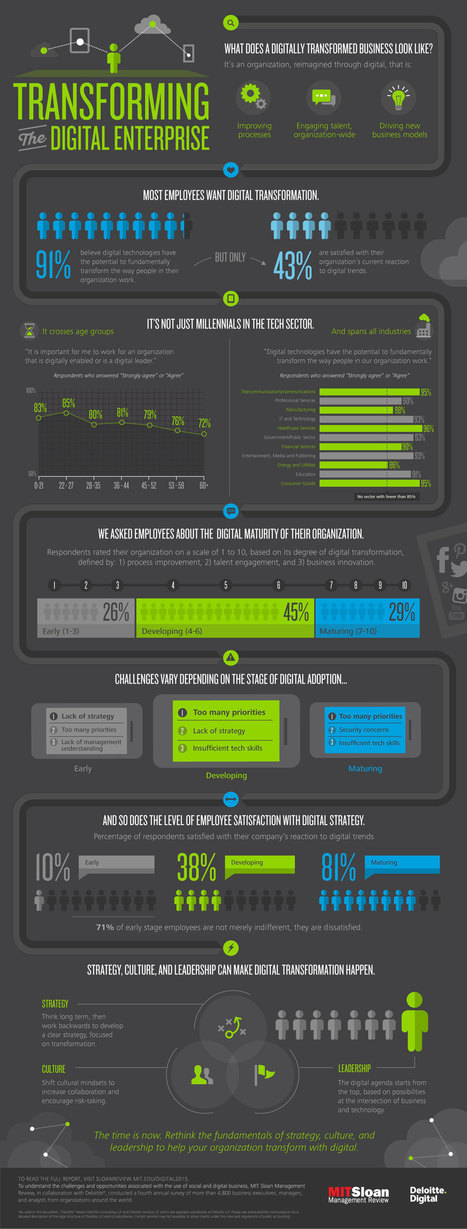
Findings from a new 2015 global report on digital business, by MIT Sloan Management Review and Deloitte, indicate that strategy, not technology, is driving digital transformation.
Scoop.it!
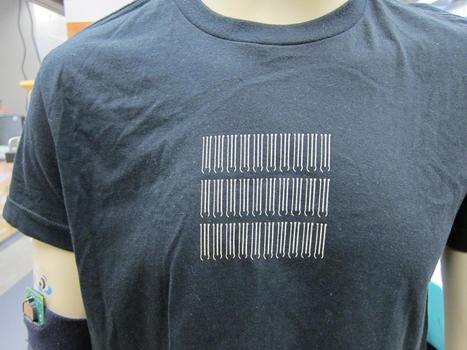
Instead of heating or cooling your whole house, imagine a fabric that will keep your body at a comfortable temperature — regardless of how hot or cold it actually is. That’s the goal of an engineering project called ATTACH (Adaptive Textiles Technology with Active Cooling and Heating) at the University of California, San Diego, funded with a $2.6M grant from the U.S. Department of Energy’s Advanced Research Projects Agency – Energy (ARPA-E). By regulating the temperature around an individual person, rather than a large room, the smart fabric could potentially cut the energy use of buildings and homes by at least 15 percent, said project leader Joseph Wang, distinguished professor of nanoengineering at UC San Diego. “In cases where there are only one or two people in a large room, it’s not cost-effective to heat or cool the entire room,” said Wang. “If you can do it locally, like you can in a car by heating just the car seat instead of the entire car, you can save a lot of energy.” The smart fabric will be designed to regulate the temperature of the wearer’s skin — keeping it at 93° F — by adapting to temperature changes in the room. When the room gets cooler, the fabric will become thicker. When the room gets hotter, the fabric will become thinner, using polymers inside the smart fabric that expand in the cold and shrink in the heat. “93° F is the average comfortable skin temperature for most people,” added Renkun Chen, assistant professor of mechanical and aerospace engineering at UC San Diego, and one of the collaborators on this project. The clothing will incorporate printable “thermoelectrics” into specific spots of the smart fabric to regulate the temperature on “hot spots” — such as areas on the back and underneath the feet — that tend to get hotter than other parts of the body when a person is active. “With the smart fabric, you won’t need to heat the room as much in the winter, and you won’t need to cool the room down as much in the summer. That means less energy is consumed,” said Chen. The researchers are also designing the smart fabric to power itself, using rechargeable batteries to power the thermoelectrics and biofuel cells that can harvest electrical power from human sweat. The 3-D printable wearable parts will be thin, stretchable, and flexible to ensure that the smart fabric is not bulky or heavy. The material will also be washable, stretchable, bendable and lightweight. “We also hope to make it look attractive and fashionable to wear,” said Wang. Via Dr. Stefan Gruenwald
Scoop.it!

Improvisation is a key skill in the jazz world, but does it have a place in classical music training (and performance) as well? Via stan stewart
Scoop.it!

Google has opened up its image recognising robots to anybody — letting people create strange, horrifying images out of their own pictures. Via Levin Chin
Scoop.it!

When designing your customer experience, don’t strive to be different. Be better. #CX http://t.co/ZQwKfHzV7l
Scoop.it!

Scoop.it!

A team of astronomers and computer scientists at the University of Hertfordshire have taught a machine to “see” astronomical images, using data from the Hubble Space Telescope Frontier Fields set of images of distant clusters of galaxies that contain several different types of galaxies. The technique, which uses a form of AI called unsupervised machine learning, allows galaxies to be automatically classified at high speed, something previously done by thousands of human volunteers in projects like Galaxy Zoo. “We have not told the machine what to look for in the images, but instead taught it how to ‘see,’” said graduate student Alex Hocking. “Our aim is to deploy this tool on the next generation of giant imaging surveys where no human, or even group of humans, could closely inspect every piece of data. But this algorithm has a huge number of applications far beyond astronomy, and investigating these applications will be our next step,” said University of Hertfordshire Royal Society University Research Fellow James Geach, PhD. The scientists are now looking for collaborators to make use of the technique in applications like medicine, where it could for example help doctors to spot tumors, and in security, to find suspicious items in airport scans. Via Dr. Stefan Gruenwald
|
Scoop.it!

Over the last year, Belgian painter and sculpturor Stefaan De Croock aka Strook (previously) began working with repurposed wood panels, doors, and furniture to construct giant faces on the side of buildings. The recycled wood surfaces are cut into precise geometric shapes and pieced together like Via Kuniko

Yafen Cao's curator insight,
October 9, 2015 11:07 PM
Let children have more impression on the shapes constructions.
Scoop.it!

From
webaim

"The focus of web accessibility is often on web development – the things that happen in HTML, CSS, or JavaScript after a site has been designed visually. Optimal accessibility should start much earlier, as part of the visual design process. We have created an infographic that highlights a few important principles of accessible design."

Karen Olges's curator insight,
July 27, 2015 9:49 AM
Texture is very important. A mixture of media, text, pictures and links is essential to a successful website.
Scoop.it!
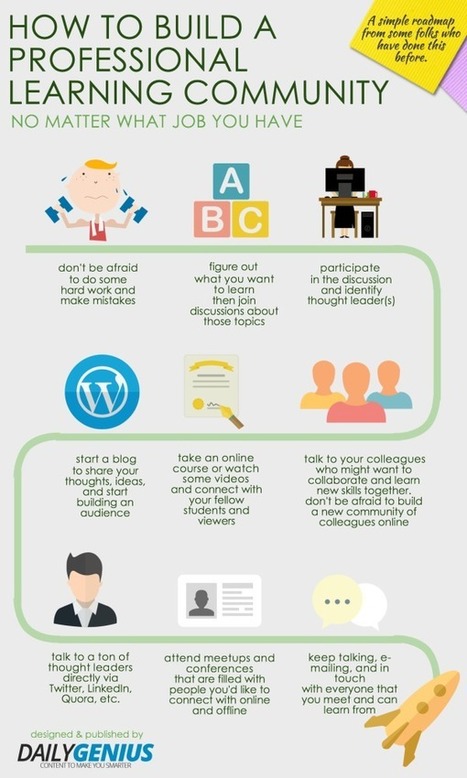
In 21st Century LEARNers Know THEIR LEARNing Path. WHAT is "Professional LEARNing"!? Well, it is DIFFERENT from normal (?) LEARNing as it provides the Students, LEARNers THE "LEARNing Path" and... Via Gust MEES

Gust MEES's curator insight,
July 20, 2015 11:31 AM
In 21st Century LEARNers Know THEIR LEARNing Path. WHAT is "Professional LEARNing"!? Well, it is DIFFERENT from normal (?) LEARNing as it provides the Students, LEARNers THE "LEARNing Path" and... 
Annette T's curator insight,
August 1, 2015 8:42 PM
In 21st Century LEARNers Know THEIR LEARNing Path. WHAT is "Professional LEARNing"!? Well, it is DIFFERENT from normal (?) LEARNing as it provides the Students, LEARNers THE "LEARNing Path" and...
Scoop.it!


Donna Rosenberger's curator insight,
July 28, 2015 1:45 PM
Check these out, if you do not have the time or equipment to do these in class. 
Sue Gaardboe's curator insight,
August 31, 2015 9:18 AM
Some fun videos, even though some of the slides are a bit wordy.
Scoop.it!

By Pawan Deshpande "Recently, Kimberley Isbell of the Nieman Journalism Lab cited a Harvard Law report and published an extensive post on news aggregation and legal considerations. From a curation perspective, the whole article is interesting, but what was the most surprising was that her recommendations for being an ethical content aggregator, were the same as being an effective content curator."

Maritza Pérez Hdez 's curator insight,
July 16, 2015 8:37 AM
Reglas para el fomento de la Ética y Derechos de Autor en la #curacióndecontenidos
Scoop.it!
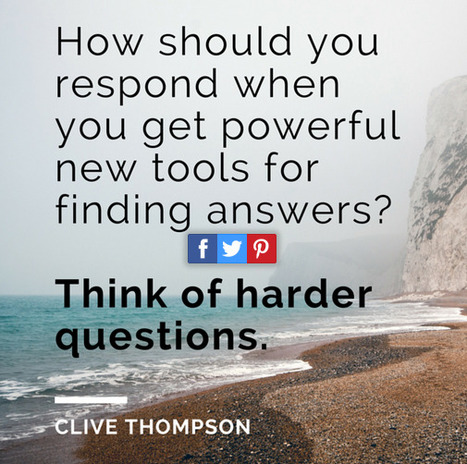
"We can make all sorts of assumptions about the way technology is changing learning, but what does the science actually say? According to Alfred Spector, Google’s vice president of research, it says a lot. For example, virtual tutors have helped average students reach the top 2% of their course; video games provide immersive environments that take the bordedom out of studying; and social networks are being used to increase interaction between students." Via Beth Dichter

Beth Dichter's curator insight,
July 15, 2015 10:56 PM
Technology...some argue for it and others against it, but was does the research say? This post explores current research. Sections include: * Better at maths, worse at reading - In short, "edtech applications boost mathematics achievement, especially when individualized computer-assisted instruction is involved." * More games, bigger brains - Research shows that playing video games can make an impact on the brain. One study cited stated "a robust positive association between the cortical thickness and video game duration in teens who invested the most time in games." Two areas of the brain, the prefrontal cortex (responsible for decision making and self-control) and the Frontal Eye Fields (which govern visual-motor processing) showed cortical matter increases. * Selective knowledge, shallow creativity - This section discusses how technology may make it easier for us to recall information. Are we potentially "outsourcing our knowledge to digital tools"? What do you think? Many schools are moving towards 1-to-1 digital devices to help students learn. Will this improve their outcomes at school? This post explores some of the issues that may help us choose the best ways to use digital tools, and when it may be better to approach learning using other methods. 
Mel Riddile's curator insight,
July 16, 2015 8:56 AM
Beth Dichter's insight: Technology...some argue for it and others against it, but was does the research say? This post explores current research. Sections include: * Better at maths, worse at reading - In short, "edtech applications boost mathematics achievement, especially when individualized computer-assisted instruction is involved." * More games, bigger brains - Research shows that playing video games can make an impact on the brain. One study cited stated "a robust positive association between the cortical thickness and video game duration in teens who invested the most time in games." Two areas of the brain, the prefrontal cortex (responsible for decision making and self-control) and the Frontal Eye Fields (which govern visual-motor processing) showed cortical matter increases. * Selective knowledge, shallow creativity - This section discusses how technology may make it easier for us to recall information. Are we potentially "outsourcing our knowledge to digital tools"? What do you think? Many schools are moving towards 1-to-1 digital devices to help students learn. Will this improve their outcomes at school? This post explores some of the issues that may help us choose the best ways to use digital tools, and when it may be better to approach learning using other methods.
Scoop.it!
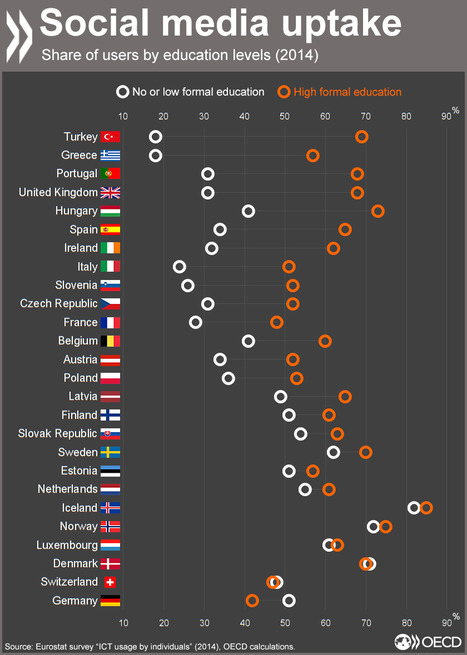
Government at a Glance provides readers with a dashboard of key public sector indicators. Each indicator is presented in a user-friendly format, with Via Gust MEES

Manuel Gutierrez Avalos's curator insight,
July 7, 2015 10:40 PM
Interesante, para obtener conocimiento de forma global.
Scoop.it!

Margot Krasojevic's latest proposal, a mesh shelter that takes the concept of snow caves and applies it to an artificial structure, is built for an eminently practical purpose: a built emergency shelter for climbers and others caught in extreme conditions. The elaborate, high tech and naturally contoured structure is as much a thought experiment as it is a serious architectural proposal, with the carbon fibre mesh acting as a snow-catcher, forming a frame for a large snow drift. The captured snow works as both building material and insulation, allowing for the creation of a shelter of several rooms. Inside sits a wooden frame suspended from the mesh and attached to the landscape by climbing ropes, which avoid freezing by swaying. This frame can have canvases attached to it, and contains cell-like modules that would act as sleeping areas... Via Lauren Moss
Scoop.it!
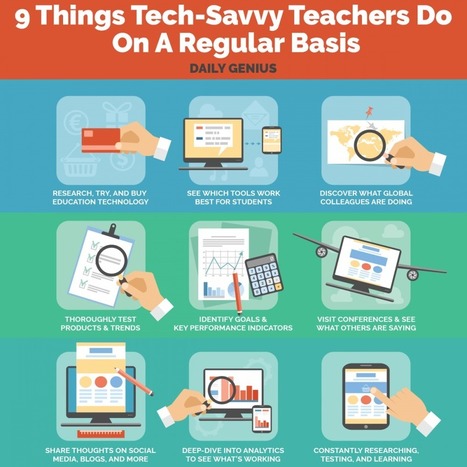
The 9 Things Tech-Savvy Teachers Do On A Regular Basis shows how edtech teachers are looking for new ways to innovate and deploy new learning strategies. Via Gust MEES
Gust MEES's curator insight,
July 8, 2015 3:40 PM
The 9 Things Tech-Savvy Teachers Do On A Regular Basis shows how edtech teachers are looking for new ways to innovate and deploy new learning strategies.
Scoop.it!


Cultural Infusion's curator insight,
July 10, 2015 12:53 AM
Discover a great but not well known job! |







This robotic glove teaches hands-on skills like drawing through muscle training.
http://www.ensil.com/industrial-parts