


Design, Science and Technology
59.8K views |
+65 today
#ideas #design #science #technology #inspiration #media #information
Curated by
Antonios Bouris
 Your new post is loading...
 Scoop.it! 
Here's why you need someone who understands code but doesn't necessarily live in it. 
Scoop.it!

There once was a time where everything you needed to know for your career was taught to you by the educational institution you attended and the company you worked for. You would go get your four year bachelor’s degree in whatever topic and that information would stay with you for a little while, then you would periodically take some additional classes offered through your company. Today by the time you graduate with a four year college degree most of the information you will learn will be outdated and perhaps obsolete. The world has changed and it’s up to us as individuals (and as companies) to make sure that we can change too. Organizations must enable employees by deploying the right technologies to connect people and by supporting employees and allowing them learn outside of the company. Individuals must get rid of all excuses and understand that they can learn anything they want anytime they want to learn it. Learn more: https://gustmees.wordpress.com/2014/10/03/design-the-learning-of-your-learners-students-ideas/ Via Mark E. Deschaine, PhD, Gust MEES

Christophe Poupet's curator insight,
August 30, 2015 2:08 PM
There once was a time where everything you needed to know for your career was taught to you by the educational institution you attended and the company you worked for

Nigerian Institute of Chartered Arbitrators's curator insight,
January 7, 2017 4:55 AM
Why We Can No Longer Rely Only On Schools And Companies For Professional And Personal Development
Nigerian Institute of Chartered Arbitrators's curator insight,
January 7, 2017 9:13 AM
Why We Can No Longer Rely Only On Schools And Companies For Professional And Personal Development
Scoop.it!


Ensil's curator insight,
August 28, 2015 11:21 AM
The hardware and software that run unmanned vehicles in the Arctic must be hardened against the extreme environment and have excellent acoustic communication with their mother ship, since ice, and therefore the vehicles portals to the ocean water, are always moving.
Scoop.it!

Google has many different sources of revenue, but one of their most noticeable is the ads that appear next to search results for specific keywords. How much that keyword costs depends, in part, on how often people search for it -- the more people search for a certain keyword, the more expensive it is. Via Brian Yanish - MarketingHits.com, massimo facchinetti, Lauren Moss

Laura Tate's curator insight,
January 18, 2019 11:44 AM
Wow, San Antonio car wreck attorney is the most expensive keyword at more than $600
Scoop.it!
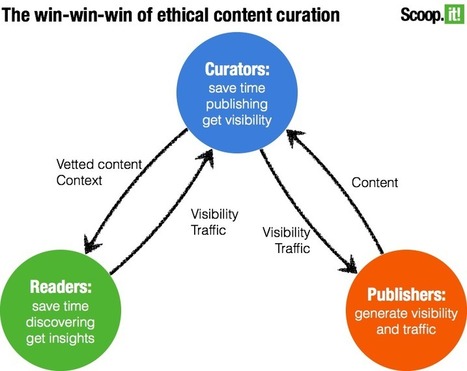
Ever since we started to work on Scoop.it, we’ve had this question: is it fair to use other people’s content for your own good: in other words, how ethical is content curation? Is it even legal?…
Scoop.it!

Sharing the road with self-driving cars will mean them learning our driving tics and perhaps even adopting some themselves Via Levin Chin
Scoop.it!

Despite the recent popularity of the "dad bod," every hot new trend officially ends when dad, mom, Uncle Joe, the grandparents and the dorky neighbors down the street join the fun. Just ask Facebook.
Scoop.it!

Imagine if you could take 1,000 words a and help people digest that information in only a few seconds? Via Jeffrey Jablonski, Ph.D.

Maria Alejandra Castañeda Marín's curator insight,
September 15, 2015 11:51 PM
infographics are really helpful for learning through visual thinking and for integrating knowledge to our students cognitive structure
Scoop.it!

EM2N's winning proposal will take form as a staggered, elongated building with a tall, slender tower that provides an urban symbol for both institutions. Via Levin Chin
Scoop.it!

"Music takes place in time, but repetition beguilingly makes it knowable in the way of something outside of time." Via Cultural Infusion
Scoop.it!

Scoop.it!
View full lesson: http://ed.ted.com/lessons/music-and-math-the-genius-of-beethoven-natalya-st-clair How is it that Beethoven, who is celebrated as one of the... Via Cultural Infusion
|
Scoop.it!

Antonios Bouris's insight:
“If our performers – players, singers, and conductors alike – had a better insight into the essentials of musical scores, we would not be faced with what seems to have become almost a rule in the superficially over-polished performances of today: either the rattling through of a piece without any reasonable articulation, without any deeper penetration into its character, tempo, expression, meaning, and effect – or the hyper-individualistic distortion of the ideas expressed in a composer’s score.”
Scoop.it!

The Nicholson Center at Florida Hospital, which trains doctors to use the latest medical technology, including robots, has been testing the latency between communication-rich environments, such as hospital campuses. Early results have led researchers to a conclusion that is either astounding or not at all surprising, depending on the depth of your knowledge about network latency and the recent progress of robotic surgery. It turns out that telesurgery, in which a surgeon in one location performs an operation in another with the aid of a robot, could quite easily be practiced today with existing technology. I, for one, was astounded. "We didn't know if we could stay below the necessary thresholds in terms of latency," says Dr. Roger Smith, CTO of the Nicholson Center, referring to the delay between the moment information is transmitted and the moment it is received. "But it turns out that today's internet has no trouble beating those thresholds. So the barrier to telesurgery really isn't in the technology, but elsewhere." The burgeoning field of robotic surgery is dominated by Intuitive Surgical, which makes the da Vinci Surgical System. Intuitive received FDA clearance for the da Vinci in 2000, though at that time it wasn't clear how readily surgeons would adopt the new technology or how patients would react to it. But the da Vinci proved its usefulness early on by reducing complications associated with prostate removal. Because of the position of the prostate, surgeons have to enter through the abdomen and then tunnel down to reach it. The invasiveness of the procedure carries high risks, and two common complications are incontinence and impotence. The da Vinci uses long pencil-like rods in place of a surgeon's hands, meaning surgeries performed with it are less invasive and significantly reducing complications and recovery times. Hundreds of thousands of surgeries are now conducted with da Vinci systems each year--virtually every prostate patient with a choice opts for it--and robotic surgery has quickly passed the crucial adoption threshold. Intuitive Surgical now has an $18.2B market cap. Interestingly, many of the patents that Intuitive acquired when constructing the da Vinci came from tech developed with funding from the Department of Defense. It makes sense. The military has a huge interest in robotic surgery. In combat, evacuating casualties to a state of the art medical facility can be exceedingly difficult. But neither is it practical to staff combat hospitals with the necessary array of surgical specialists. The best answer seems to lie in a robotic surgical device that can be operated remotely by an expert surgeon who is perhaps based hundreds of miles away. The da Vinci was a major step toward that vision, but it's taken longer to clear the network hurdles necessary to make remote surgery viable. Via Dr. Stefan Gruenwald
Scoop.it!

To stay ahead of the competition, it’s important for marketing leaders to have an eye on trends that have the potential to accelerate—or disrupt—your business.

sharon lewis's curator insight,
September 1, 2015 9:29 PM
"According to Gartner, 89% of executives believe that customer experience will be their primary mode of competition by the end of 2016" This means finessing the balance between a sequence of personalized experiences while avoiding the data creep factor.
Scoop.it!

BEDFORD, Mass., 27 Aug. 2015. Unmanned ground vehicle (UGV) experts at iRobot Corp. in Bedford, Mass., have received a $4 million order from the U.S. Navy for the company's model 110 FirstLook robots and accessories, company officials announced last week. Via Ensil
Ensil's curator insight,
August 28, 2015 11:31 AM
The rugged iRobot 110 FirstLook is a five-pound, compact and expandable robot that provides situational awareness, performs persistent observation, and investigates and manipulates dangerous and hazardous materials while keeping the operator out of harm's way.
Scoop.it!

Physicists have created a so-called magnetic wormhole that transports a magnetic field from one point to the other without being detected. Ripped from the pages of a sci-fi novel, physicists have crafted a wormhole that tunnels a magnetic field through space. "This device can transmit the magnetic field from one point in space to another point, through a path that is magnetically invisible," said study co-author Jordi Prat-Camps, a doctoral candidate in physics at the Autonomous University of Barcelona in Spain. "From a magnetic point of view, this device acts like a wormhole, as if the magnetic field was transferred through an extra special dimension." The idea of a wormhole comes from Albert Einstein's theories. In 1935, Einstein and colleague Nathan Rosen realized that the general theory of relativity allowed for the existence of bridges that could link two different points in space-time. Theoretically these Einstein-Rosen bridges, or wormholes, could allow something to tunnel instantly between great distances (though the tunnels in this theory are extremely tiny, so ordinarily wouldn't fit a space traveler). So far, no one has found evidence that space-time wormholes actually exist. The new wormhole isn't a space-time wormhole per se, but is instead a realization of a futuristic "invisibility cloak" first proposed in 2007 in the journal Physical Review Letters. This type of wormhole would hide electromagnetic waves from view from the outside. The trouble was, to make the method work for light required materials that are extremely impractical and difficult to work with, Prat said. But it turned out the materials to make a magnetic wormhole already exist and are much simpler to come by. In particular, superconductors, which can carry high levels of current, or charged particles, expel magnetic field lines from their interiors, essentially bending or distorting these lines. This essentially allows the magnetic field to do something different from its surrounding 3D environment, which is the first step in concealing the disturbance in a magnetic field. So the team designed a three-layer object, consisting of two concentric spheres with an interior spiral-cylinder. The interior layer essentially transmitted a magnetic field from one end to the other, while the other two layers acted to conceal the field's existence. The inner cylinder was made of a ferromagnetic mu-metal. Ferromagnetic materials exhibit the strongest form of magnetism, while mu-metals are highly permeable and are often used for shielding electronic devices. A thin shell made up of a high-temperature superconducting material called yttrium barium copper oxide lined the inner cylinder, bending the magnetic field that traveled through the interior. The final shell was made of another mu-metal, but composed of 150 pieces cut and placed to perfectly cancel out the bending of the magnetic field by the superconducting shell. The whole device was placed in a liquid nitrogen bath in order to work. Normally, magnetic field lines radiate out from a certain location and decay over time, but the presence of the magnetic field should be detectable from points all around it. However, the new magnetic wormhole funnels the magnetic field from one side of the cylinder to another so that it is "invisible" while in transit, seeming to pop out of nowhere on the exit side of the tube, the researchers report today (Aug. 20, 2015) in the journal Scientific Reports. Via Dr. Stefan Gruenwald
Scoop.it!

The new portable weapon system is more like burning ants with a really expensive magnifying glass than obliterating Alderaan. Via Ensil
Ensil's curator insight,
August 27, 2015 9:22 AM
In response to the dangers posed by irresponsible drone flyers with little knowledge of airspace regulations, Boeing has created a low-cost solution.
Scoop.it!
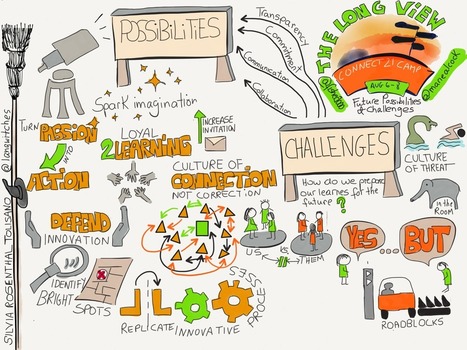
Note taking is a big topic among educators. How do we teach it to our students? What are the best methods? Is digital note taking worse than taking your notes on a piece of paper? I am a big advoca... Learn more: - http://www.scoop.it/t/21st-century-learning-and-teaching/?tag=Sketchnoting - http://www.scoop.it/t/21st-century-learning-and-teaching/?tag=Creativity Via Gust MEES
Scoop.it!
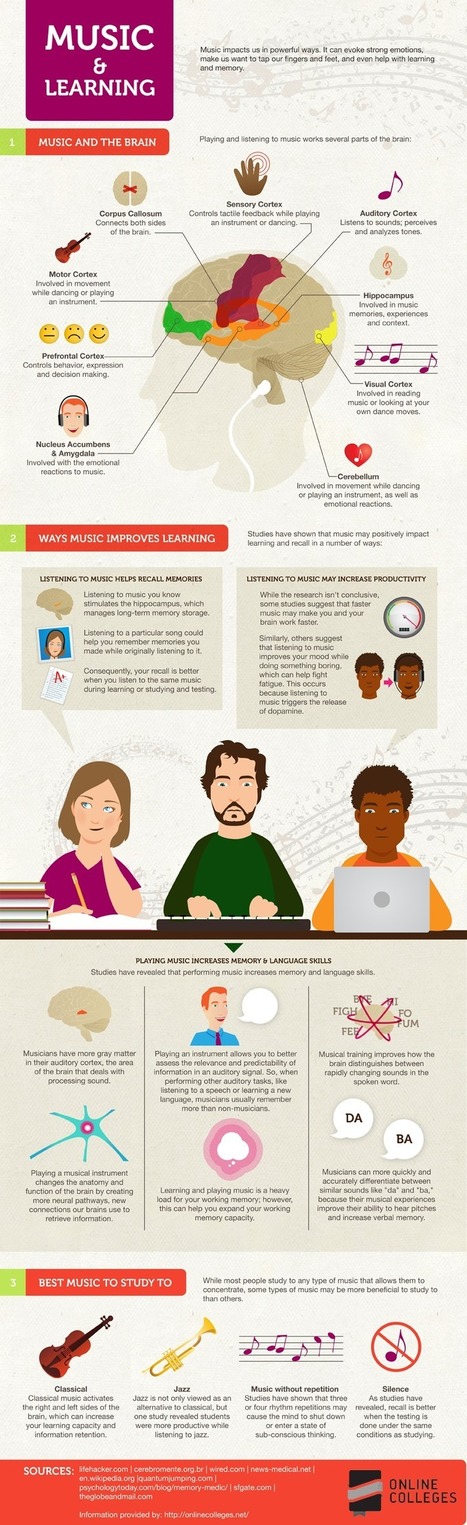
Scientists explain how music affects the brain, while musicians themselves add to the evidence that music has a strong influence on learning. Via Cultural Infusion
Scoop.it!

Many of today’s public libraries are taking on newer roles. They are offering programs in technology, career and college readiness and also in innovation and entrepreneurship. Via Julie Tardy
Scoop.it!

Dr Dan Jenkins leads the human factors and research team at DCA Design International, working on a range of projects in domains including medical, transport, consumer goods and industrial products. Lisa Baker is a Chartered Ergonomist of the CIEHF and senior human factors researcher at DCA Design International. Here, in advance of an interactive workshop they will present at Design Council, they discuss the necessity of designing from a strong evidence base. Via Rosário Durão
Scoop.it!

With so much of our work now being done at computers, music has become an important way to 'optimize the boring.' Here's how to do it right. Via Cultural Infusion
|






