


After his first venture failed, entrepreneur Nihal Mehta used the lessons he learned to found successful start-ups and, eventually, a VC fund.

 Your new post is loading...
 Scoop.it! After his first venture failed, entrepreneur Nihal Mehta used the lessons he learned to found successful start-ups and, eventually, a VC fund. 
No comment yet.
Sign up to comment
Scoop.it!

When you are sitting in the office using your computer, a mouse and keyboard is the ideal interface for most of us. When you are out traveling and try to work
Via Desife
Scoop.it!

Art therapy can be valuable in navigating anxiety. It can become another healthy tool in our collection whether your anxiety is occasional or chronic. One big Via Jolie B Studios, stan stewart
Scoop.it!
CRM are those three easy letters that seem much harder to grasp when you’re talking about business. Via Alama
Scoop.it!

From
phys

A team of researchers at MIT's Computer Science and Artificial Intelligence Lab (CSAIL) has long believed that wireless signals like WiFi can be used to see things that are invisible to the naked eye. Since 2013, CSAIL researchers have been developing technologies that use wireless signals to track human motion. The team has shown that it can detect gestures and body movements as subtle as the rise and fall of a person's chest from the other side of a house, allowing a mother to monitor a baby's breathing or a firefighter to determine if there are survivors inside a burning building. Next up? Seeing a person's silhouette and even distinguishing between individuals. In a paper accepted to the SIGGRAPH Asia conference taking place next month, the team presents a new technology called RF Capture that picks up wireless reflections off the human body to see the silhouette of a human standing behind a wall. By tracking the silhouette, the device can trace a person's hand as he writes in the air and even distinguish between 15 different people through a wall with nearly 90 percent accuracy. In other words, from the opposite side of a building, RF Capture can determine where you are, who you are, and even which hand you are moving. Via Dr. Stefan Gruenwald
Scoop.it!

There are numerous qualities that will help a prospective entrepreneur get a small business up and running. Some may come naturally, and others may require focus, experimentation and learning from ot… Via The Fish Firm II

Alahad Group Leading Manpower Agency in Pakistan - NO #1 in Recruitment Agency in Pakistan's curator insight,
December 12, 2015 2:01 AM
#NowHiringUAE #JobSearchUAE #JobHuntKSA #Careers #AlahadGroup #ALAHAD #HR #Recruiting #employers #HumanResources #hiring #tweetmyjobs #jobless #freelance #jobopening #jobposting #employment #opportunity #recruiting #jobsearch #joblisting #hireme #MBA #linkedin #unemployed #resume #needajob #jobtips #career #interview #training #jobhunt #dreamjob #hotjobs #consulting #consultants Alahad Group The Recruiting Specialists http://www.alahadgroup.com
Scoop.it!

The 10 Most Popular CRM Products http://t.co/5f3AlnAHXw #CRM #B2B
Scoop.it!

Back to the Future II didn't just predict the world in 2015 – designers say the film created a "self-fulfilling prophecy" that shapes today's design Via Levin Chin
Scoop.it!

At last, scientists have identified the stylist that gives hornbeam and elderberry salon-worthy hair. In the winter of 1916-17, Alfred Wegener was serving in the German army's weather service. Sometime that winter, perhaps in the course of his duties, he noticed something strange sprouting from the fallen logs and branches of France's Vosges Mountains, near the border with Germany. It appeared to be luxuriant, silky hair made of ice. Hair ice is made of ultra-fine filaments just .02mm wide but up to 20 cm long. It's found on barkless dead wood or on wood where the bark has begun to peel away. It's usually found on moist, rotting logs and branches lying on the ground, but sometimes found on dead parts of still-standing trees. The hair is smooth and lustrous, and may have waves, curls, or even parts, just like human hair. Via Dr. Stefan Gruenwald
Scoop.it!
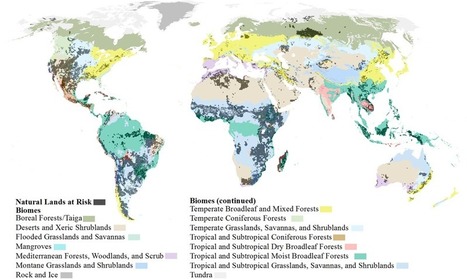
By 2050, the world’s population is projected to approach nine billion. With more people will come more developed land—a lot more. Urbanization, agriculture, energy, and mining put 20 percent of the world’s remaining forests, grasslands, and other natural ecosystems at risk of conversion by 2050. With that kind of expansion, there are sure to be harms—namely clean water, clean air, and biodiversity. To mitigate some of those risks, scientists and geographers at the Nature Conservancy have taken a crucial step by mapping the potential impact that human growth will have on natural lands. It’s the most comprehensive look to date at how major forms of development will take over fragile ecosystems, if left unchecked... Via Lauren Moss

CTy Thiet Ke Kien Truc Neohouse's comment,
October 3, 2017 10:46 PM
Bài viết rất hữu ít . Cùng tôi chia sẻ những điều hữu ít đi .
Scoop.it!

Agricultural biotech giants are starting to make moves into CRISPR gene editing, saying they’ll be selling seeds engineered with the technology by the end of this decade. As part of their collaboration, DuPont said it had made an investment in Caribou, a small startup that holds commercial rights to patents Berkeley has applied for on CRISPR-Cas9. DuPont will have exclusive rights to those patents in crops like corn and soybeans, should they be approved. Currently, most GMOs are transgenic plants that have been engineered by adding bacterial genes to the plants so that they poison insects or survive weed sprays. Thanks to biotechnology, the seed business has ballooned to about $40 billion a year, and companies like Monsanto, Dow, DuPont, and Syngenta have come to dominate it. But the need to invest millions more in a sweeping technology shift hits as depressed commodity markets have made the profitability of biotech seeds less certain. Gutterson says DuPont thinks gene editing will kick off a new wave of products and profits. “We have no doubt that genome editing is going to have a material impact on the value proposition,” he says. “We think another whole cycle could come from genome editing.” Gene editing could lead to some surprising creations in agriculture. For instance, peanuts have a number of proteins responsible for allergies. Getting rid of them is challenging, but allergy-free peanuts might be possible with the new technology. Via Dr. Stefan Gruenwald

Christian Faltado Cantos's curator insight,
October 18, 2015 11:25 PM
Gene editing could lead to some surprising creations in agriculture. 
Ines Jurisic's curator insight,
October 19, 2015 7:48 AM
."..Thanks to biotechnology, the seed business has ballooned to about $40 billion a year, and companies like Monsanto, Dow, DuPont, and Syngenta have come to dominate it." -----------In Money we Trust:( |
Scoop.it!
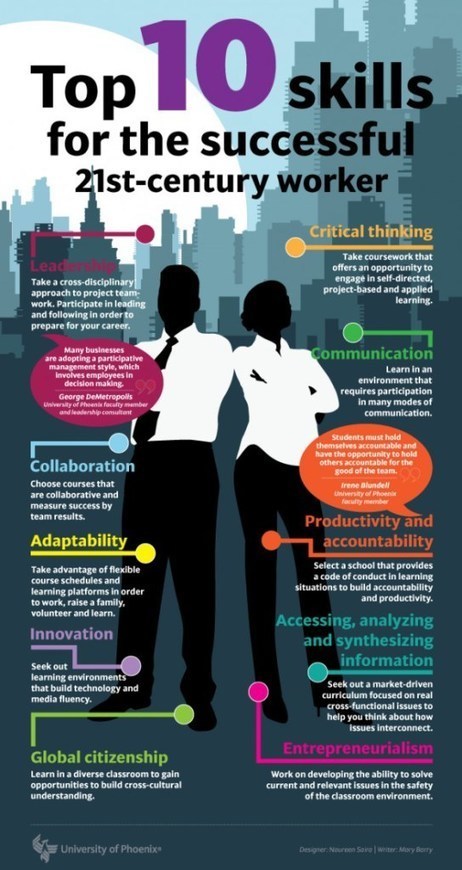
Because of ICT there are sooooo many NEW possibilities to use with the computers and the internet. Just imagine that a company owner should employ people for each special application, NO WAY! (S)He wouldn’t have enough money to afford it!!! So it is necessary that the 21st Century worker/employee would be an all-rounder! An all-rounder WHO comes straight out of school and from whom the business/workforce could profit directly!!! Learn more: https://gustmees.wordpress.com Via Gust MEES

Jerry Busone's curator insight,
November 6, 2015 8:52 AM
Some good insight about working in the 21st century 
Michelle Gilstrap's curator insight,
November 7, 2015 11:02 AM
Adding in the computer skills in database management and I think you have it.
Scoop.it!
Art therapy can be valuable in navigating anxiety. It can become another healthy tool in our collection whether your anxiety is occasional or chronic. One big Via Jolie B Studios, stan stewart
Scoop.it!

EDUCATION and/or EXPERIENCE:
Experience working with students online in a distance-learning environment strongly preferred.
Scoop.it!
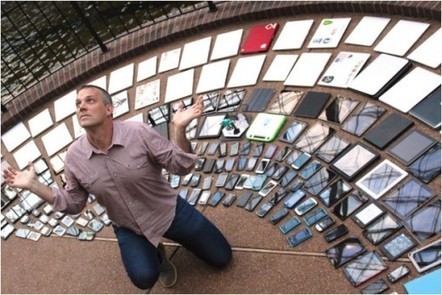
Whether you’re designing a small company website or reworking an ecommerce platform, let’s explore some mistakes you definitely want to avoid on your next responsive Web design project. Via gonzodesign
Scoop.it!


Maricarmen Husson's curator insight,
October 29, 2015 2:21 PM
Qué pasa en Internet en un minuto. Infografía
Scoop.it!

We hosted a webinar with Dan Olsen, author of The Lean Product Playbook, on how to use prototypes and user testing to create better designs in less time. Via Alessandro Rea
Scoop.it!

Visitors can climb to the top of this pavilion in the Jardin des Tuileries, which is made up of a complex lattice of identical timber beams. Designed by Kengo Kuma & Associates for Galerie Phillipe Gravier, the structure is based on small nomadic shelters, and has been assembled using techniques typical of traditional Japanese carpentry. "The pavilion consists of identical wooden pieces that have been stacked, twisted and assembled to create a poetic dynamic volume," said Kuma. "It offers an organic geometry by a geometric composition of wood." Via Lauren Moss
Scoop.it!

maciek jasik imagines fruits and vegetables filled, not with a fleshy, edible interior, but rather plumes and puffs of vibrantly colored vapor.
Scoop.it!

PreNav has built a new UAV system that can make the exacting movements necessary to inspect industrial equipment and tall structures, such as wind turbines and cell towers. Via Ensil
Scoop.it!

Metagenomic profiling, also called metagenomic shotgun sequencing (MSS) represents a powerful application made possible by the digital nature of next-generation sequencing technologies. In it, one basically sequences a sample isolate obtained from somewhere — a shovelful of dirt, a scoop of plankton, or anything else that contains living organisms. MSS has proven particularly useful to studies of the human microbiome, or in layman’s terms, all of the bacteria/viruses/fungi that live in our bodies. Many such microbiota are beneficial or simply commensal (not doing harm) with us. Others, like methicillin-resistant Staphylococcus aureus (MRSA), can cause severe disease. Most efforts to chart the human microbiome have focused on bacteria, whose relatively stable genomes make them amenable to assay development. Viruses, in contrast, are somewhat under-studied. Part of that is due to the small size and highly variable nature of viral genomes. A new study in Genome Research showcases a capture-based enrichment strategy to improve virome sequencing. The ViroCap panel was developed by Todd and Kristine Wylie, who happen to be colleagues of mine at the McDonnell Genome Institute. The panel enriches for nucleic acids from 34 families of DNA or RNA viruses that infect vertebrate hosts, beautifully illustrated in a figure from the paper (see above). At the time of the ViroCap design, NCBI GenBank contained the sequenced genomes of around 440 viral species, for a total of about 1 Gbp (billion base pairs) of sequence. After considerable bioinformatics efforts, the authors produced a ~200 Mbp sequence target and worked with Nimblegen to have it designed. References Via Dr. Stefan Gruenwald
|






