


Visualizations that show comparisons, connections, and conclusions offer analytical clarity.

 Your new post is loading...
 Scoop.it! Visualizations that show comparisons, connections, and conclusions offer analytical clarity. 
No comment yet.
Sign up to comment
Scoop.it!

Is your marketing department moving molehills in mountains of social? Why don't you ask your employees to shoulder some of the lifting? Because five minutes of Via Jessica Kelly

Jessica Kelly's curator insight,
May 12, 2016 5:56 PM
Take the title to heart -- this is a terrific (clear, comprehensive) piece o' work.
Scoop.it!

Ultrasound is also called sonography and is essentially a type of ‘medical sonar’. It has revolutionized medicine since the 1940s, giving us the ability to look into the body in a completely safe way without leaving icky radiation behind, like xrays.
Via Dr. Stefan Gruenwald
Scoop.it!

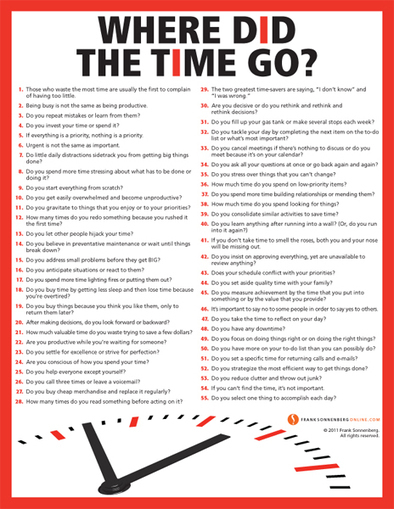
Unlock your potential. Take a moment to think about these 52 awesome questions.
Learn more / En savoir plus / Mehr erfahren:
http://www.scoop.it/t/21st-century-learning-and-teaching/?tag=Frank+SONNENBERG
Via Gust MEES

Gust MEES's curator insight,
May 5, 2016 7:46 AM
Unlock your potential. Take a moment to think about these 52 awesome questions.
Learn more / En savoir plus / Mehr erfahren:
http://www.scoop.it/t/21st-century-learning-and-teaching/?tag=Frank+SONNENBERG
Scoop.it!

Thursday’s chart concludes our preview of GWI’s new audience report on Millennials to look at social networking behaviors among this key group. Via Jessica Kelly
Jessica Kelly's curator insight,
May 5, 2016 3:11 PM
No millennial, me, but I've just recently cut back from 5+ to 3-ish.
Scoop.it!
Antonios Bouris's insight:
:D
Scoop.it!

This comprehensive guide will cover the fundamentals of visual design principles, demonstrated with plenty of illustrations to deepen your understanding. Whether you
Scoop.it!

Researchers from the University of Illinois at Urbana-Champaign have developed a one-step, facile method to pattern graphene by using stencil mask and oxygen plasma reactive-ion etching, and subsequent polymer-free direct transfer to flexible substrates.
Graphene, a two-dimensional carbon allotrope, has received immense scientific and technological interest. Combining exceptional mechanical properties, superior carrier mobility, high thermal conductivity, hydrophobicity, and potentially low manufacturing cost, graphene provides a superior base material for next generation bioelectrical, electromechanical, optoelectronic, and thermal management applications.
Via Dr. Stefan Gruenwald
Scoop.it!

Skycat FUSE® is a patent-pending parachute launcher and emergency rescue
Scoop.it!

Obalys Consulting's curator insight,
April 27, 2016 8:26 AM
La Liste est longue... Mais interessante
Scoop.it!

The Lexus Design Awards, which began four years ago, puts forth a noble and valuable effort to search for valid ideas worth nurturing. Teaming up young designers with successful and thoughtful designer mentors, the projects chosen for the awards are given careful consideration and encouragement so those with idea have Via Levin Chin
Scoop.it!

DNA molecules can store information many millions of times more densely than existing technologies for digital storage — flash drives, hard drives, magnetic and optical media. Those systems also degrade after a few years or decades, while DNA can reliably preserve information for centuries. DNA is best suited for archival applications, rather than instances where files need to be accessed immediately.

Prometheus's curator insight,
May 19, 2016 4:29 PM
Bio tech for info storage...science fiction no longer
|
Scoop.it!

Across Australia some of these ideas are being put into practice. Some schools have dropped the notion of year levels to enable them to meet children at their point of need and acknowledge that not all students learn at the same pace.
Learn more / En savoir plus / Mehr erfahren:
https://gustmees.wordpress.com/2014/10/03/design-the-learning-of-your-learners-students-ideas/
Via Kim Flintoff, Gust MEES

Lacey Mack's curator insight,
May 13, 2016 2:36 AM
This is interesting for our modern learners, who teach themselves so much already and should be driven by their own passion.
Prometheus's curator insight,
May 15, 2016 4:24 PM
Hmmmmmm....interesting...what does it mean for teachers and schools. Is this the future of education in the western world?
Scoop.it!
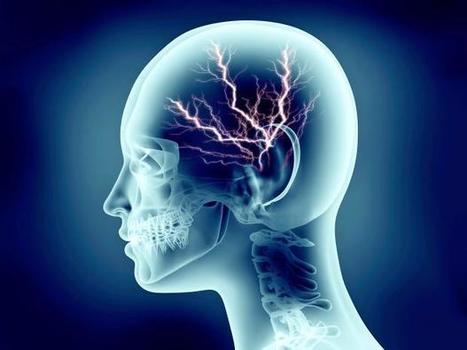
Thousands of genes are involved in intelligence, according to a new study which effectively shatters any hopes of eugenicists that babies can be genetically designed to be clever. In one of the largest studies of the human genome to date, a group of 253 scientists from around the world identified 74 genetic variants that are associated with the number of years spent in formal education. Via Campaign for Social Science, Dr. Stefan Gruenwald

Campaign for Social Science's curator insight,
May 12, 2016 4:35 AM
News item - Thousands of genes are involved in intelligence, according to a new study which effectively shatters any hopes of eugenicists that babies can be genetically designed to be clever.
Scoop.it!

We maintain that the most beautiful staircase in the world is in this bookstore in Portugal. But a close second, if it were still standing, would be the grand staircase in this now-defunct 19th-Century Parisian department store. This was the interior centerpiece of Les Grands Magasins Dufayel, a massive structure Via Levin Chin
Scoop.it!

Challenging to understand and even more complicated to define, the proper perspective on the value of design is a critical function for the future creative.
Scoop.it!

IBM believes it can demonstrate an experimental chip that will prove the power of quantum computers in just a few years. Via Marylene Delbourg-Delphis
Scoop.it!

From
qz

When we show students how to take notes, we prioritize outsiders’ ability to look at the notes later and understand what was said. But as someone who takes notes for other people professionally, I can tell you two things that are wrong with this approach. First, it’s really difficult to take notes so that they are clear to other people. And second, that’s not the best way to understand and remember information. Via Jeffrey Jablonski, Ph.D.
Scoop.it!

Herringbones by Raw-Edges experiments with surface dip-dyeing to create colourful patterned furniture Via Levin Chin
Scoop.it!

“ I have a confession to make. I hate meetings. Maybe that is not entirely true. I hate bad meetings. You know the ones where you spend a lot of time going round and round in circles, yet seem to accomplish little at the end of the day. One of those main staples of these meetings has been “brainstorming”. This process is one that has been heralded in not only meetings, but also for “Design Thinking” (here is a document on the techniques os brainstorming in design thinking from Stanford University, Institute of Design). So out of sheer curiosity, I googled “brainstorming is bad” to see what I found (not biased at all I know). Here are a few of the articles that I read with little snippets from each.”
Via John Evans, Andoni
Scoop.it!

From
phys
Peering to the outskirts of our solar system, NASA's Hubble Space Telescope has spotted a small, dark moon orbiting Makemake, the second brightest icy dwarf planet—after Pluto—in the Kuiper Belt.
The moon—provisionally designated S/2015 (136472) 1 and nicknamed MK 2—is more than 1,300 times fainter than Makemake. MK 2 was seen approximately 13,000 miles from the dwarf planet, and its diameter is estimated to be 100 miles across. Makemake is 870 miles wide. The dwarf planet, discovered in 2005, is named for a creation deity of the Rapa Nui people of Easter Island.
The Kuiper Belt is a vast reservoir of leftover frozen material from the construction of our solar system 4.5 billion years ago and home to several dwarf planets. Some of these worlds have known satellites, but this is the first discovery of a companion object to Makemake. Makemake is one of five dwarf planets recognized by the International Astronomical Union.
The observations were made in April 2015 with Hubble's Wide Field Camera 3. Hubble's unique ability to see faint objects near bright ones, together with its sharp resolution, allowed astronomers to pluck out the moon from Makemake's glare. The discovery was announced today in a Minor Planet Electronic Circular. Via Mariaschnee, Dr. Stefan Gruenwald
Scoop.it!

Dildo-drones promise the "hands-free" masturbation experience you've always dreamed of.
Scoop.it!
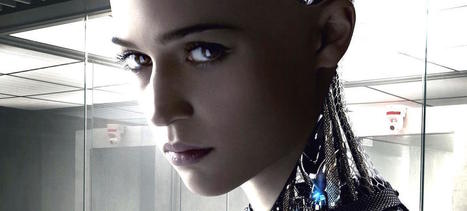
Artificial intelligence (see the Wikipedia definition), specifically machine learning, is an increasingly integral part of many industries, including marketing. Via Eric_Determined / Eric Silverstein

Eric_Determined / Eric Silverstein's curator insight,
April 19, 2016 3:06 PM
Is there anything AI can't do?
Ben @Econsultancy shares 15 key examples of AI in Marketing:
1. Recommendations/content curation 2. Search engines3. Preventing fraud and data breaches4. Social semantics5. Website design6. Product pricing7. Predictive customer service8. Ad targeting9. Speech recognition10. Language recognition11. Customer Segmentation12. Sales forecasting13. Image recognition 14. Content generation15. Bots, PAs and messengers |






