TeachThought.com has a series of posts about self-directed learning by Terry Heick and the staff, well worth a read! “
“Learning is most effective when it’s personalised; it means something to the learner. That happens when people feel they are participants and investors in their own learning, shaping what and how they learn, and able to articulate its value to them.” — Leadbeater, Charles
You can't teach someone how to learn. You can give them helpful tips and advice, but a single structure for education is not going to work for everyone. It's so much harder for people to learn their true potential, to reach their goals, when they're only shown a single path to them. You show them the path through the forest, but what if there's a rock face nearby that also leads up to where they want to go, and what if they happen to be a fantastic rock climber? It just makes more sense to show someone a map if you can, instead of directing them towards only one path.
“Learning is most effective when it’s personalised; it means something to the learner. That happens when people feel they are participants and investors in their own learning, shaping what and how they learn, and able to articulate its value to them.” — Leadbeater, Charles
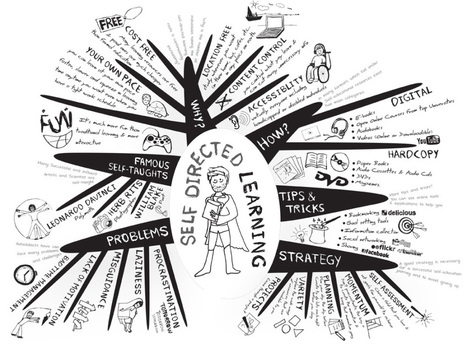
Famous Self-Taughts (Autodidacts): Leonardo Da Vinci, William Blake, Herb Rits (in addition to Virginia Woolf, Mark Twain, John D. Rockefeller, and many others)
Design Thinking is AIGA Chicago's biannual lecture series devoted to those who are reshaping the creative process, directing currents in contemporary culture and evolving the meaning of design.
As social media evolves, marketers realize that a social presence is no longer an option, but a necessity. Many have noticed a disconnect, however, between consumer reach provided by social media and actual, quantifiable customer acquisition and return on investment.
Recent research by The Incyte Group provides unprecedented insight into four major consumer segments that are researching your brand online and more importantly the best ways you can reach them.
The implications of the findings are not a one size fits all solution for social engagement.
Rather, the research provides insight into four consumer segments that can have a major impact on your social strategy if you understand what motivates them.
First published in 1972, The Universal Traveler is a mad masterpiece of D.I.Y. hippie culture that deserves its place in history next to the Last Whole Earth Catalog.
This is a guest post from Michael Margolis, the lead user researcher for the Google Ventures design studio. Michael spends his days helping the fund's portfolio companies to quickly recruit users, ...
Data is everywhere and well-designed data graphics can be both beautiful and meaningful. As visualizations take center stage in a data-centric world, researchers and developers spend much time understanding and creating better visualizations. But they spend just as much time understanding how tools can help programmers and designers create visualizations faster, more effectively, and more enjoyably.
As any visualization practitioner will tell you, turning a dataset from raw stuff in a file to a final result in a picture is far from a single-track, linear path. Rather, there is a constant iteration of competing designs, tweaking and evaluating at once their pros and cons. The visualization research community has recognized the importance of keeping track of this process.
Read the complete article to learn more about the future of the practice and the tools that enable designers to create thoughtful infographics and visualizations...
The WFH House in China, designed by Copenhagen-based studio, Arcgency is a contemporary design, constructed of three stacked shipping containers.
The house surrounded by lush vegetation ”was designed to produce more energy than it consumes through the use of upcycled shipping containers as a steel frame, a sustainable bamboo facade, a rainwater collection system, solar cell-clad green roof and permeable paving.”
The interior is neat, dressed up in impeccable white, yet with splashes of color here and there. The main floor is envisioned as one singular space that accommodates the kitchen, dining area and the living room. The main advantage is that, this type of space delimitation allows a seamless transition between the indoor environments...
More information about the book: http://ThisIsServiceDesignThinking.com This is Service Design Thinking introduces an inter-disciplinary approach to designin...
Fullscreen and volume up, please! ;-) Short movie inspired on numbers, geometry and nature — 3D animation by Cristóbal Vila · More info about this movie: www.etereaestudios.com —…
Whether they’re dealing in cars or cookies or computers, companies typically struggle with how to effectively and reliably create innovative products and services.
When we are given a problem to solve, we spend time thinking about the problem and reframe the issue and try many things in our head to move towards a solution. Design thinking actually takes the problem to the customer ...
Summer is in full swing! No matter where in the world our students are when they’re not at Stanford, we see them spreading the spirit, mindsets and processes we teach at the d.school. Check out the...
I am passionate about teaching and mentoring students. I also love consulting and researching. However, the one thing that consistently takes me into a state of flow is when the design thinking be...
Australia must embrace design thinking Financial Times Design thinking – a creative approach to solving problems – is top of the agenda at many leading global organisations.
In many ways, this Fellow-year has been a treasure hunt. The guiding question has been "Where are the richest opportunities for authentic, engaged, student-centered learning?" By extension, which ...
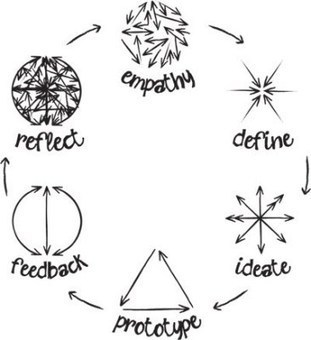
Interestingly, one of the most exciting approaches I’ve come across has a humble origin: the process associated with design. “Design Thinking” is a process, a framework, a series of steps that designers go through in order to solve problems, to improve existing ideas, or to realize previously unseen potential.
===> In short, it’s a deliberate process that can be used to increase curiosity, creativity, and critical-thinking. <===
David Kelley is the founder and chairmen of IDEO, probably the world's best known design innovation consultancy. Though not quite a household name, Kelley has.
To get content containing either thought or leadership enter:
To get content containing both thought and leadership enter:
To get content containing the expression thought leadership enter:
You can enter several keywords and you can refine them whenever you want. Our suggestion engine uses more signals but entering a few keywords here will rapidly give you great content to curate.


 Your new post is loading...
















Definitely well worth a read
My Thoughts:
You can't teach someone how to learn. You can give them helpful tips and advice, but a single structure for education is not going to work for everyone. It's so much harder for people to learn their true potential, to reach their goals, when they're only shown a single path to them. You show them the path through the forest, but what if there's a rock face nearby that also leads up to where they want to go, and what if they happen to be a fantastic rock climber? It just makes more sense to show someone a map if you can, instead of directing them towards only one path.
“Learning is most effective when it’s personalised; it means something to the learner. That happens when people feel they are participants and investors in their own learning, shaping what and how they learn, and able to articulate its value to them.” — Leadbeater, Charles
Famous Self-Taughts (Autodidacts): Leonardo Da Vinci, William Blake, Herb Rits (in addition to Virginia Woolf, Mark Twain, John D. Rockefeller, and many others)