


There is a lot to learn from Rwanda when it comes to women empowerment and political participation, a top UN official told visiting parliamentarians yesterday.


 Your new post is loading...
 Scoop.it! There is a lot to learn from Rwanda when it comes to women empowerment and political participation, a top UN official told visiting parliamentarians yesterday. 
No comment yet.
Sign up to comment
Scoop.it!
This year is the 10th edition of the Women’s Forum Global Meeting. We are celebrating by bringing together a truly outstanding group of speakers — trailblazers for human rights and women’s empowerment and pioneers and new innovators in business, education, and science and technology. Our aim? For participants be inspired by and discuss with these leaders about how we can contribute to more equitable economies and societies. Ours is a complicated and sometimes overwhelming, unjust, and violent world. It’s also a world where more women, in more contexts, have agency and can make a difference.
Scoop.it!

Somali women and girls continue to be at high risk for gender-based violence (GBV), with more than 1,000 cases reported in Mogadishu during the first half of 2014.
Scoop.it!
As the world is swept by unparalleled levels of displacement, festering conflicts, and a convergence of crises, the international community must fully endorse the role of women's empowerment and gender equality in ensuring global peace, security and development, the Security Council and top United Nations officials declared today. In a unanimously adopted Presidential Statement this morning ahead of a day-long debate on "women, peace and security," the Security Council reaffirmed the need to dismantle the "persistent barriers" facing gender equality, calling on Member States to embrace a "dedicated commitment to women's empowerment, participation, and human rights" and ensure their full and equal participation in peace and security issues.
Scoop.it!
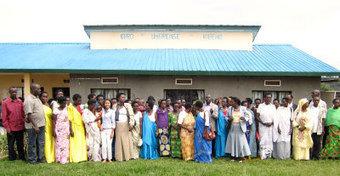
On a sunny Tuesday in the Nyaruguru district of Rwanda’s South Province, 75 women and men gather in their best clothes to graduate from the UN Women-supported Farmer Field School programme. They are among 350 farmers who have undergone a six-month course to learn modern agricultural techniques for their wheat and Irish potato crops. - See more at: http://www.unwomen.org/en/news/stories/2014/9/rwanda-farmer-field-schools?__scoop_post=253ff710-4c93-11e4-9fb1-001018304b75&__scoop_topic=1920302#__scoop_post=253ff710-4c93-11e4-9fb1-001018304b75&__scoop_topic=192030
Scoop.it!

MOLE REFUGEE CAMP, Democratic Republic of the Congo, October 3 (UNHCR) – The market in Mole refugee camp was buzzing on a recent Saturday morning, with stalls selling everything from fish, goat meat, cassava and vegetables to clothes, cosmetics, household items and electronic equipment. Just two months earlier, the place had been half empty. That all changed when the World Food Programme (WFP) decided to end food distributions and introduced cash grants for the 13,000 refugees from Central African Republic, transforming life in Mole in northern Democratic Republic of the Congo (DRC). "Food distribution was always chaotic; some food was missing. Now [with the grants], everyone receives their cash without any problem," noted Patrick N'Gocko, a 25-year-old refugee representative. The funds are distributed by UNHCR. Many of the refugees questioned by UNHCR said that since WFP introduced the cash grants three months ago in the camp, they can eat and buy what they like and vary their diet. "They are happy. Cows are killed in the camp," said N'Gocko, in an isolated region where beef is regarded as a bit of a luxury.... ...However, the cash grants also present challenges, including an increase in the price of food and other items at the market. Another challenge is that a smaller proportion is being used to buy food. When refugees receive cash grants, some buy items they could not previously afford, like clothes, household items or leisure goods....
Scoop.it!

The UN’s ‘pre-zero draft’ of the post-2015 framework for disaster-risk reduction calls for a marriage of science and community-level expertise. The final framework will set out what various sectors can do to reduce risks from catastrophes after the current framework expires in 2015. According to the draft, scientific and technical capacity will be useful for managing disaster data and assessing peoples’ vulnerability to hazards related to climate, geology and water, while the leadership, capacities and resources of local communities are considered essential for disaster risk reduction. [1]
Scoop.it!
On the occasion of the African Development Bank's commemoration of the Africa Year of Agriculture and Food Security, on Monday, September 29, 2014 in Abidjan, Chiji Ojukwu, Director of the AfDB's Agriculture and Agro Industry Department, reflects on the importance of agriculture in Africa.
Scoop.it!
“The Standard Digital NewsChase Bank donates Sh30 million for training of midwives in AfricaThe Standard Digital NewsWomen empowerment is one of the core agenda of our Foundation's corporate social responsibility investment.”
Scoop.it!
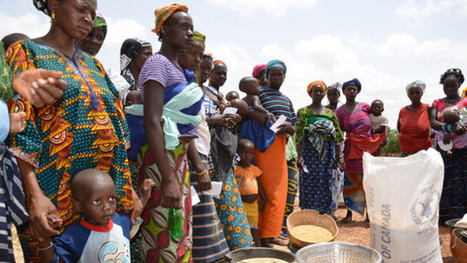
Up to three out of four people who contract the deadly Ebola virus are women. Nearly two out of three people who died in the 2004 Indian Ocean tsunami were female. And women in Mali are widely seen as bearing the greatest burden during times of hardship and crisis. The reason women and girls experience disproportionately greater impact from disease outbreaks, natural disasters and other life-threatening hardships has little to do with biology — and much to do with gender roles....
Scoop.it!
Some African Union troops in Somalia sexually exploited or raped women and girls who are internal refugees, a new report by an international human rights group alleged Monday. Human Rights Watch said it interviewed 21 women and girls since 2013 who described being sexually abused or sexually exploited by Burundian or Ugandan military personnel in two bases in Mogadishu. Ten separate incidents of sexual abuse, including rape and sexual assault, and 14 cases of sexual exploitation were documented during the period, the rights group said. Four of the rape cases and one sexual assault involved girls under 18. The youngest victim was a 12-year-old girl who was allegedly raped by a Ugandan soldier.
Scoop.it!

This blog by Tanvi Bhatkal accompanies her recently released report on gender and perception data, looking at the priority of gender equality from the MY World survey data.
Scoop.it!
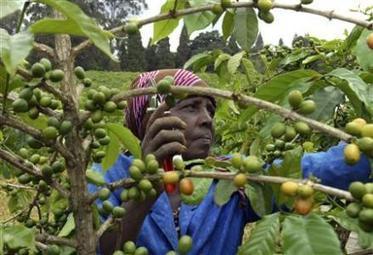
Women farmers are the pillars of African agriculture. According to the United Nations Food and Agriculture Organisation over two thirds of all women in Africa are employed in the agricultural sector and produce nearly 90 percent of food on the continent. They are responsible for growing, selling, buying and preparing food for their families. Yet even as the guardians of food security, they are still marginalised in business relations and have minimal control over access to resources such as land, inputs such as improved seeds and fertilizer, credit and technology.
|
Scoop.it!

By Pascal Sanginga, Wendy Manchur and Kevin Tiessen Nairobi — KEY MESSAGES - The Canadian International Food Security Research Fund (CIFSRF) specifically targets women smallholder farmers as agents of change. - Over the last three years, research has directly benefited and engaged over 28,000 farmers: 15,000 female and 13,000 male farmers. - They have tested over 130 innovations that have increased productivity and incomes and improved and diversified women and children's diets. - Recognizing the role that women scientists can play in agriculture research, the program has supported the graduate training of 82 young scientists, including 45 women.
Scoop.it!
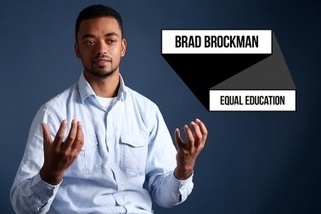
[AUDIO FILE] Open Society Fellow Ben Rawlence argues that Islamic extremism and the counter-productive responses from ill-informed and unwieldy governments are the principle threats to the development of open societies in Kenya and Somalia. Critically engaging with Muslim areas, issues, organizations, and populations, and developing a generational, long-term strategy will be key to overcoming these problems. In this conversation, Rawlence presents the case that, as the Aga Khan has done so successfully in this region, and as the Open Society Foundations have done in other parts of the world, there needs to be a renewed focus on higher education and long-term capacity building among refugees in eastern Africa. Speakers
Scoop.it!

IFAD, FAO and WFP, led by the UN Women and with the support of the African Union (AU), last week (October 15 – 17, 2014) co-hosted a Sharefair for Rural Women’s Technologies in Nairobi, Kenya, the first of its kind in Eastern and Southern Africa. The objective of the Sharefair was to showcase agricultural innovations that enhance women’s access to labour-saving technologies, as the main players in ensuring family nutrition and household food security. The event was organized to coincide with the International Day of Rural Women marked yearly on 15 October, with this year’s theme, Rural Women and Agriculture; and World Food Day, on 16 October on the theme of Gender, Food and Nutrition Security. More than 400 policymakers, academics, food producers, investors, rural women, representatives of UN agencies and non-governmental organizations, including 155 exhibitors of technologies took part in the event.
Scoop.it!

“This year's International Day of Rural Women emphasized that rural women are critical for achieving the transformational economic, environmental and social changes required for sustainable development.”
Scoop.it!
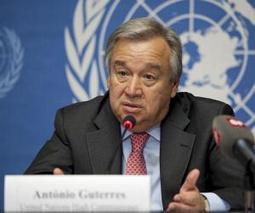
The United Nations refugee chief said [that] an international crisis is brewing in Africa, and called for renewed commitment to refugees. Antonio Guterres, the U.N. High Commissioner for Refugees, told an assembly in Geneva, Switzerland, that new conflicts in the Central African Republic, northern Nigeria, Libya and SOUTH SUDAN have displaced over 2.5 million people in the first six months of this year.
Scoop.it!
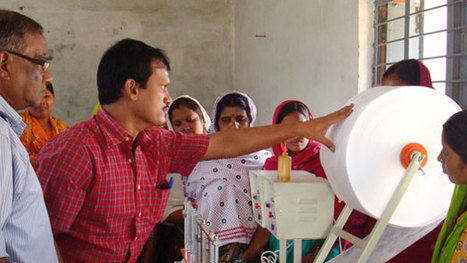
[INDIA] Breaking taboos, pioneering innovation for women's health Devex Many women in rural India still face social restrictions during menstruation: They are kept away from household duties, such as cooking or collection of water, as well as barred from...
Scoop.it!
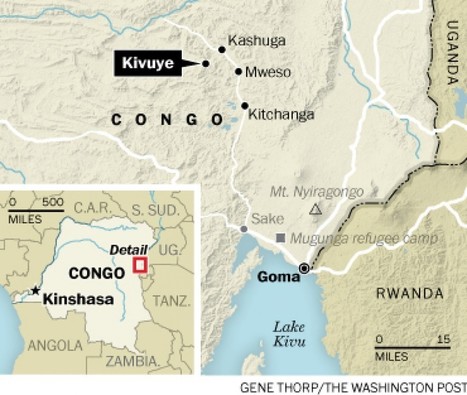
The village in eastern Congo lies at the epicenter of one of Africa’s most brutal and longest-running wars. It is both military base and refugee camp, both killing field and sanctuary, a place woven from chaos and resilience. Civilians trapped in relentless violence struggle to live. Death arrives in many forms — guns, machetes, disease and hunger.
Scoop.it!

“Provides a study of contemporary politics in Ethiopia through an empirical focus on language policy, citizenship, ethnic identity and gender.”
Scoop.it!

“Why Girls Get Better Grades Than Boys DoThe AtlanticLess of a secret is the gender disparity in college enrollment rates. The latest data from the Pew Research Center ...”
Scoop.it!
In an all-day debate in the Security Council, over 60 speakers urged accelerated action to prevent and ensure accountability for the killing, recruiting and other abuse of children in situations of armed conflict that continued despite greater awareness of the scourge.
Scoop.it!

...It shouldn't take so many deaths -- more than 1,200 at the time of this writing -- to realize how attention to gender dynamics might help save lives (in this case through, among other things, targeted messaging to women about the importance of using protective measures at home or allowing loved ones to be cared for by trained professionals)... ...Data show that many infectious diseases affect one gender more than another. Sometimes it's men, as with dengue fever. Sometimes it's women generally, as with E. coli, HIV/AIDS (more than half the people living with the virus are female), and Ebola in some previous outbreaks. Sometimes it's pregnant women and mothers, as with H1N1 (an outbreak in Australia is currently infecting women over men by a 25 percent margin). Yet when women are the primary victims of an epidemic, few are willing to recognize that this is the case, ask why, and build responses accordingly. Indeed, experts say that too little is being done to put even the small amount that is known about gender differences and infectious diseases into practice -- to determine in advance of outbreaks, for instance, how understanding gender roles might help in the development of a containment or prevention strategy. Not only that, but there is too little research being done to understand how infectious diseases affect the sexes differently on a biological level....
Scoop.it!
A new report released by the Alliance for a Green Revolution in Africa (AGRA) has found out that over the last five years, 1.7 million African farmers in 13 countries have embraced farming practices that have rejuvenated 1.6 million hectares and helped them double or even triple crop yields. This report, made available to Vanguard Agriculture, is coming against the background of a major threat to food security across the continent due to the steady drain of essential nutrients from African soils. The analysis from AGRA focuses on intensive efforts initiated five years ago to support smallholder farmers in sub-Saharan Africa, where a lack of agriculture extension services and a scarcity of basic soil supplements have contributed to severely depressed yields for crucial staples like maize, banana and cassava....
|




