Your new post is loading...

|
Scooped by
Robin Landis
August 13, 2013 2:56 AM
|
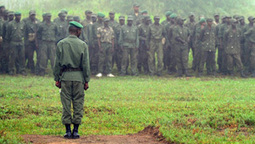
Stamping out human rights abuses by the army in the Democratic Republic of Congo (DRC) entails more than classroom training sessions, according to analysts, who recommend a wide range of ambitious reforms...These include better discipline, an efficient payroll system, the development of security policies, the prosecution of offenders, and better education and training to reform and professionalize the army, also known as FARDC... In a May report the UN Joint Human Rights Office accused members of 391 Commando Battalion (which in 2010 received US Africa Command training on respect for human rights, the prevention of sexual and gender-based violence, and the relationship between civilian and military authorities in a democratic society) of engaging in atrocities, including the mass rape of women and young girls in November 2012 in Minova, eastern DRC, as they fled Goma for M23-held areas... The abuses by the soldiers were committed “in a systematic manner and with extreme violence”, according to the report. At least 102 women and 33 girls, reportedly as young as six, were victims of rape or other acts of sexual violence perpetrated by government soldiers.
The soldiers were also responsible for the arbitrary execution of at least two people and the widespread looting of villages. The report contained details of victims, and eyewitness accounts of mass rape, killings, arbitrary executions and other gross violations of human rights.
|
|
Scooped by
Robin Landis
August 12, 2013 8:33 AM
|
In spite of the significant increase in girls’ enrolment in schools (and even at the tertiary level outside sub-Saharan Africa), the number of jobs held by women is not increasing. The low level of female employment is a cause for concern, observes the World Bank. Understanding their legal and reproductive rights could help empower girls and women.... ...As the number of women in executive positions continues to grow in Africa, they must find ways to translate their presence in politics into action and influence. Enlisting the support of men across government bodies is one way to effect reforms. Simply put, political gender quotas in Africa are not enough to amplify the voices of women.
|
|
Scooped by
Robin Landis
August 7, 2013 10:28 AM
|
As the Cash Consortium started to reflect on the impacts of these transfers on affected populations, the agencies involved recognised that there were numerous gaps in understanding around cash and gender in South Central Somalia; even programmes that appeared gender neutral may on closer analysis turn out to affect men and women differently. To address some of these gaps and contribute to future programming, the Cash Consortium commissioned a research study to better understand the impact of unconditional cash transfers on men and women in an emergency context. This article outlines some of the key findings of the study.
|
|
Scooped by
Robin Landis
August 7, 2013 4:15 AM
|
Huge sums have come to Africa, and yet we continue to have sad episodes of food shortages and malnutrition affecting both children and adults. Children and women continue to be the most vulnerable. As Gender in Agriculture begins to be taken seriously, and as nutrition too begins to be recognized as a key component of the equation by world leaders, including the G8, I am hopeful that we are headed in the right direction. Women farmers need extensive support more than ever before. Women need better information on how to increase the chances of child survival. Women need information on how to feed their families better, and they need credit to be able to progress in their small businesses.
|
|
Scooped by
Robin Landis
August 6, 2013 9:13 AM
|
Shea butter comes from the nuts of karité trees that grow in the Sahel region extending from West to East Africa, from Guinea and Senegal to Uganda and South Sudan. For centuries shea butter has been called "women's gold" not only for its rich golden color (although shea butter can also sport a deep ivory hue, depending on the region) but also because it primarily provides employment and income to millions of women across the continent... ...Cosmetics retailers often portray fair trade shea butter as an exotic, traditional, authentic and ethical product encouraging female solidarity. The butter is produced by women in Africa and consumed mainly by Europeans and North Americans in search of "ethical" products. Because of the high number of companies and small entrepreneurs claiming to use fair trade shea butter in their products, it can be difficult to separate marketing strategy from real engagement.
|
|
Scooped by
Robin Landis
August 6, 2013 3:59 AM
|
There is a strong relationship between gender-based discrimination and the different channels through which households and individuals access food—through own-production, access to waged employment, or social protection. The report shows that while equality of treatment between women and men and food security are mutually supportive, gender equality remains an elusive goal in many parts of Asia and the Pacific. A transformation of traditional gender roles is urgently needed. Such a transformation should build on improved information about the range of inequalities and specific constraints facing women. In addition, in order for gender equality strategies and food security strategies to complement each other and for their synergies to be maximized, a combination should be found between the recognition of the constraints women face, the adoption of measures that help relieve women of their burdens, and the redistribution of gender roles in the discharging of family responsibilities. The report explores how this combination can be achieved, identifying the best practices that have emerged both in the Asian and Pacific region and in other parts of the world.
|
|
Scooped by
Robin Landis
August 6, 2013 3:43 AM
|
‘Gender and Climate Change Research in Agriculture and Food Security for Rural Development’ Responding to civil society’s requests, the Food and Agriculture Organization of the United Nations (FAO), with support from the CGIAR Research Program on Climate Change, Agriculture and Food Security (CCAFS), has now-updated the introduction and developed a new infographic on the subject. All materials have also been translated into French and Spanish.
|
|
Scooped by
Robin Landis
August 6, 2013 3:33 AM
|
[Rwanda & South Sudan] Meeting under the theme, “A shared vision for promoting women’s leadership through higher educations,” the USAID project objectives are achieved by pairing the US higher education institutions with local institutions in each participating country. For instance, Michigan State University and National University of Rwanda are creating a gender-sensitive Masters of Science programme in agribusiness that will promote women’s leadership in agriculture. Also, the University of California, Los Angeles, and the Kigali Institute of Education are fostering strategies to promote gender awareness through targeted outreach and recruitment programmes, institutional capacity building and gender-sensitive curriculum and teaching approaches.
|
|
Scooped by
Robin Landis
August 6, 2013 3:22 AM
|
[Nigeria] Women scientists are better off in communicating with women farmers and processors, especially in some parts of the country where many of the women are secluded from men.” The role that women scientists can play in accelerating agricultural productivity in Africa cannot be over emphasized... ...The women are always open to receiving innovations to improve their incomes, as long as they are not complicated or difficult to learn, and are particularly glad to have women teach them.
|
|
Scooped by
Robin Landis
August 5, 2013 7:17 AM
|
Poor infant and young child feeding practices are among the most serious obstacles in attaining and maintaining their good health. Traditionally in many of our societies when it came to feeding, girls ended up with a raw deal. Meat, chicken and eggs were the reserve for men, who as adults did not need all that protein... Boys were treated better than girls. Through education and knowledge more girls have a more balanced diet but not enough of them. Generally speaking it is not so much that there is a scarcity of food but more of the fact that basic knowledge in nutrition is lacking. If families understand what it takes to have a balanced diet then it is easier to substitute foods through making informed decisions... ...Whatever the interventions it is very important that the girl child is not left out at any stage. At home or in schools are we feeding our children? For the latter the answer may be no. This is something that can be done and should be done. There is no point in preaching good nutrition if we cannot practice it in schools... Schools have land, but how much of that land is used to even start a simple vegetable patch? Not only will the pupils or students learn how to dig but at least they learn to know that they can produce their own healthy diets and transfer that knowledge to their homes...
|
|
Scooped by
Robin Landis
August 5, 2013 6:55 AM
|
...IDA’s support to gender equality in its projects and in the overall World Bank Group agenda has increased significantly since gender was identified as a special theme of its 16th replenishment (2011-2014, totaling US$49.3 billion for this period) and, in 2011, the Bank launched World Development Report 2012: Gender Equality and Development. In FY12, 100 percent of IDA Country Assistance Strategies and 86 percent of IDA projects were gender-informed; and, significant progress has been made in integrating and tracking gender dimensions in IDA’s support to education, reproductive health, safety nets, agriculture and rural development, and fragile and conflict-affected countries.... ****************** The IDA-funded US$150 million Water and Sanitation Service Improvement Project, approved in 2007, is supporting KENYA’s efforts to expand access to safe water and sanitation services. The project initiated a capacity building program targeting 24 utilities. One example of the project’s aim to improve access is the Githunguri Water Company which, following the utility training, changed its connection policy. It no longer requires women to provide title deeds to secure a connection or to register under their father’s or husband’s names. Meters can now be rented and connection payments made by installments. As a result, between January and May 2011 the company received 18 applications from women. Following the change of policy and awareness creation, within six weeks 50 women had signed up for new connections and 29 had been connected. Similar efforts were recorded with the Kiambu Water Company which reduced connection fees from US$93 to US$67 and made it payable by installments, targeting increased applications from women. The BURUNDI Health Sector Development Support Project (US$25 million), is a national results-based financing program which has helped to increase utilization of reproductive health services. It saw an increase in facility based births by 25 percent; an increase in prenatal consultations by 20 percent; a 35 percent increase in curative care consultations for pregnant women; and a 27 percent increase in family planning services obtained through health facilities during its first year of implementation (FY11). Knowledge efforts include Demographic Dividend in African Countries which focused on addressing the policy implications of population growth and economic development, identified country-specific factors for capturing the demographic dividend, and estimated the expected size and duration of the additional population and economic growth. A $50 million IDA operation in ETHIOPIA, the Women’s Entrepreneurship Development Project, promotes small and medium enterprises owned or part owned by women, through access to microfinance, developing entrepreneurial skills, technology and cluster development, training in project management, advocacy and outreach, monitoring and evaluation, and impact evaluations to provide lessons about what works.
|
|
Scooped by
Robin Landis
August 5, 2013 6:42 AM
|
Policy recommendations JONGLEI
The U.S. government should withhold a portion of its non-emergency foreign assistance to South Sudan until the Secretary of State certifies that South Sudan’s government has made progress on halting human rights abuses by the Sudan People’s Liberation Army (SPLA) in Jonglei State. UN Security Council members, collectively and individually, must condemn South Sudan’s violation of the Status of Forces Agreement (SOFA) for the UN Mission in South Sudan (UNMISS) and call on South Sudan to grant humanitarian actors unimpeded access to Jonglei State. The Special Representative of the UN Secretary-General (SRSG) in South Sudan and the Force Commander of UNMISS must make clear to all UNMISS troops and troop-contributing countries that sections of the UNMISS mandate pertaining to the protection of civilians, as contained in paragraph 3(b)(v) of Security Council Resolution 1996 (2011), must be enforced regardless of the competing political elements of the mandate. YIDA
The UN Refugee Agency (UNHCR) Country Representative should address the breakdown in the relationship between UNHCR and its implementing partners, and should strengthen communication in all areas, with a particular focus on funding.
UNHCR must provide supplemental, dedicated funding for child protection programming in Ajuong Thok refugee camp in order to ensure the programming meets UNHCR’s Minimum Standards of Child Protection in Humanitarian Action.
UNHCR should allocate a portion of its funds for Yida to the host community, and UN agencies, NGOs, and the local authorities should develop a coordinated plan for regularly assessing and addressing the needs of the host community.
|
|
Scooped by
Robin Landis
July 19, 2013 10:50 AM
|
National agriculture and land policies need to be gender responsive (acknowledging that gender differences exist) as well as gender transformative (committed to bringing about equity in gender relations). Governments also need to realize that development policies relating to agriculture are likely to influence men and women farmers differently. Therefore, agriculture policy recommendations aimed at improving the sector should ensure that women farmers are not disadvantaged and that there is gender equity between men and women farmers. At the program and project level, there should be greater attention to gender in the design, implementation and monitoring of development programs and projects aimed at improving livelihoods through agricultural interventions. There is also need for greater accountability in projects and programs with regard to the achievement of gender-related outcomes.
|
|
|
Scooped by
Robin Landis
August 12, 2013 9:17 AM
|
Looking for a career in development with a focus on gender? Here are ten ‘classic’ reads to add to your library
|
|
Scooped by
Robin Landis
August 9, 2013 3:13 AM
|
"...As the leading organization with a global mandate to promote gender equality, women's rights and women's empowerment, the United Nations entity for Gender Equality and the Empowerment of Women (UN Women) calls for a specific commitment to achieving gender equality, women's rights and women's empowerment, in the Post-2015 Development framework and sustainable development goals (SDGs) as well as robust mainstreaming of gender considerations across all parts of the framework." For more information and to read the paper: http://www.unwomen.org
|
|
Scooped by
Robin Landis
August 7, 2013 4:29 AM
|
"The World Food Programme, a UN food agency, found that eight out of ten people engaged in farming in Africa are women, and they are the sole breadwinners in one out of every three households."
|
|
Scooped by
Robin Landis
August 6, 2013 9:17 AM
|
...The World Food Programme, a UN food agency, found that eight out of ten people engaged in farming in Africa are women, and they are the sole breadwinners in one out of every three households. Also, more women than men operate in the informal sector. Businesses run by women, mainly informal commercial trading businesses, are increasing in Africa, although there is very little research on them, writes Maxwell Awumah for SciDev.Net, a news outlet about science and technology for global development. Even though the informal sector presents an opportunity for generating reasonable incomes, the African Development Bank says most workers are without secure incomes and lack social protection. In fact, the International Labour Organization has coined the term working poor for people in the informal sector, who are mostly women. In spite of the significant increase in girls' enrolment in primary and secondary schools (and even at the tertiary level outside sub-Saharan Africa), the number of jobs held by women is not increasing. The low level of female employment is a cause for concern, observes the World Bank. Understanding their legal and reproductive rights could help empower young girls and women...
|
|
Scooped by
Robin Landis
August 6, 2013 9:08 AM
|
Blog by Samer Abdelnour The UK will invest millions of pounds to reduce the rampant rates of sexual violence in war-affected countries. LSE’s Samer Abdelnour examines why it is simplistic to think that part of the solution will be to give women fuel-efficient stoves. ...Specialised stoves are an entrenched measure of rape prevention and many prominent people doing humanitarian work advocate their distribution. Lynne Featherstone (2013), the UK’s Under-Secretary for International Development, has stated that improved cooking technology will reduce a woman’s risk “of being assaulted, raped, and murdered”. Actor-advocate Angelina Jolie has expressed similar reasoning, noting it’s “a sad fact that when you ask how to reduce sexual violence the answer is to help them not have to go out” (Borger, 2013). The assumption among public figures is clear: women are safe inside camps. Sexual violence happens “out there”... ...The cold hard truth is that people warehoused in camps often suffer pervasive insecurity. In unstable situations, sexual violence is not confined to any particular location and it is not only used as a weapon of war. Gender-based violence is facilitated by the social vulnerabilities created by displacement, and can be exacerbated by aid-induced economies. It is heightened when the civilian population is heavily armed, and when marginalised youth turn to banditry. And so, SGBV occurs inside the camps and outside, while women search for fuel and water, but also when they seek work or attempt to reestablish livelihoods. For those displaced by war, gender violence is a part of everyday life...
|
|
Scooped by
Robin Landis
August 6, 2013 3:48 AM
|
UNHCR welcomes the High Court of Kenya's ruling which upholds the asylum right of urban refugees. The decision, reached on 26 July, relates to the "Petition number 19 of 2013" in which refugees challenged a directive issued by the Government of Kenya in December last year to transfer refugees from urban areas to the refugee camps at Dadaab and Kakuma. "...as a result of the directive Somali refugees and asylum seekers began to report increased police harassment, detention and extortion mainly in Nairobi. Many of them could not move about freely and fear of such treatment led hundreds of Somali refugees to return to Somalia or move to neighboring countries... As of December, there were a total of 51,000 mainly Somalia urban refugees in Kenya...Most of the refugees living in urban areas have developed coping mechanisms, and so do rely on humanitarian assistance. There are also large numbers of refugee children attending schools in urban areas whose education would have been compromised had the relocation order been carried out.
|
|
Scooped by
Robin Landis
August 6, 2013 3:37 AM
|
Women have been left behind on the technology ladder. Particularly in developing economies, they are trailing men, creating a digital gender gap... ...To catapult [South African] women into the ICT forefront and reap the benefit for women and for the country demands a concerted effort from everyone – from government, business, universities and schools through to families and individuals. Encouraging girls and women to become Internet-savvy and make the most of their online research, education and networking opportunities is a great place to start.
|
|
Scooped by
Robin Landis
August 6, 2013 3:29 AM
|
Blog by Henrietta Miers Despite being central to agricultural systems around the developing world, poor women face well-documented barriers to preventing food loss. They may lack knowledge about food standards so their produce is discarded at market, they may have limited access to tools for efficient processing, or they may be excluded from producer associations through which products can be stored.
|
|
Scooped by
Robin Landis
August 5, 2013 7:38 AM
|
[NOTE: Although this study, authored by U.N. special rapporteur on the right to food Olivier de Schutter, was conducted in the ASIA-PACIFIC region it has broader relevance. The following is excerpted from an interview with ADB senior social development specialist for gender, Imrana Jajal] *********************************** ...Food security strategies must also be developed to improve women’s access to childcare, farmer support mechanisms, and credit and agricultural services. Social protection programs, such as active labor market programs with targets for women’s employment should also be fine-tuned to incorporate women’s needs. How can the aid community improve its performance to better help knock down gender barriers to secure a food future? Multisectorality. Measures in different sectors must be combined and complement each another. Some of the most promising practices identified were successful because of such complementarities. For instance, school feeding programs that source local raw materials that are cooked by poor local women in school mid-day meal schemes at the same time improve girls’ school enrollment, support access to markets by small-scale farmers, and employ local women with few other sources of income. Women’s organizations. Gender-sensitive food and nutrition security strategies should identify how the emergence of women’s organizations can be facilitated and encouraged, whether in the form of unions, cooperatives, or NGOs. Getting organized is of great importance to women who are small-scale food producers. With effective organization, women can improve their access to land and credit using social collateral. Inclusive decision making. A shift from top–down, technocratically driven strategies and programs to bottom–up, participatory ones is urgently required. The arguments for such a shift go beyond the question of gender equality and women’s empowerment. The poor understand the obstacles they face and are generally hugely inventive in identifying solutions. Policy-makers that involve them in design and decision making will make choices that are better informed, better understood, and ultimately more effective. Phased approach. Gender-sensitive food and nutrition strategies should be phased, multiyear strategies, reflecting the reality that not all changes can be implemented at the same time. Rights-based strategy. Two characteristics distinguish a gender-sensitive food and nutrition security strategy that is rights-based. Such a strategy goes beyond a policy commitment by government authorities to implement certain plans. It is enforceable, and progress is monitored by use of indicators that are aligned with the normative components of the right to food and the rights of women.
|
|
Scooped by
Robin Landis
August 5, 2013 7:14 AM
|
Education is the best strategy to cushion refugees against all forms of abuse, the UN High Commission for Refugees Country Representative, Neimah Warsame...She said combating gender violence in camps remains a priority for all partners and reassured refugees of continued support.
|
|
Scooped by
Robin Landis
August 5, 2013 6:50 AM
|
East & Southern Africa
The research shows that about 34 percent of women aged 20 to 24 years in the two regions get married by the time they are 18. These marriages have had direct negative consequences on the health, education and social status of girls and young women. Entitled 'Young people today ready for tomorrow', the research focused on challenges facing young people like HIV, sexuality, sexual and reproductive health and policies that affect their future. It found that HIV knowledge levels among adolescents remain below 40 percent overall...
|
|
Scooped by
Robin Landis
August 5, 2013 4:34 AM
|
Invest and empower other women on the continent. This is the key message that came from former South African first lady and head of the Graca Machel Foundation, Graca Machel. Her inspiring words were delivered during her keynote address at the Women Inspiration and Enterprise (WIE) symposium in Cape Town, South Africa - attended by some of the continent's most powerful women... ...Invest and empower other women on the continent. This is the key message that came from former South African first lady and head of the Graca Machel Foundation, Graca Machel. Her inspiring words were delivered during her keynote address at the Women Inspiration and Enterprise (WIE) symposium in Cape Town, South Africa - attended by some of the continent's most powerful women... ...It was also a move to showcase that there are successful women in Africa and to change the stereotype often seen in Western countries depicting a rural African disenfranchised woman.
|