Your new post is loading...

|
Scooped by
egta
March 30, 3:39 AM
|
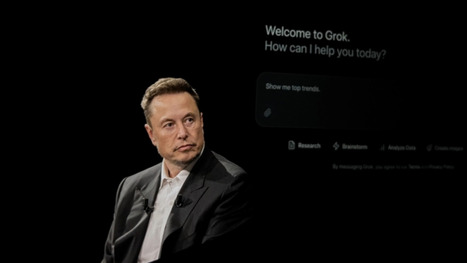
An Amsterdam court has ordered X to block access to its Grok AI system in the Netherlands following a ruling on 26 showing that the tool can be used to generate non-consensual deepfake nude imagery, including of minors, in violation of GDPR and Dutch child protection laws. The court found X liable as the intermediary, on the grounds that xAI controls Grok's functionalities and has the capacity to prevent the generation of unlawful content. Failure to comply could result in fines of €100,000 per day. The ruling comes as the European Commission has separately opened a DSA investigation into Grok.
|
|
Scooped by
egta
March 26, 8:53 AM
|
The European Commission has published a second draft Code of Practice on the marking and labelling of AI-generated content, which narrows the scope of the first version to better align with the AI Act's "deep fake" perimeter. Still, key definitions, including what constitutes a "deep fake" and an "evidently creative work," remain unresolved. While the Code is set to be finalised by late May or early June, the first draft of the Commission guidelines will come by late April/early May, meaning that guidelines will likely be adopted later than the Code of Practice. As such, disclosure obligations could be locked in before the definitions determining their exact scope are officially confirmed.
|
|
Scooped by
egta
March 26, 8:50 AM
|
Meta and Google have been found liable in two separate US court cases over the harm their platforms cause to young users. On 24 March, a Santa Fe court ordered Meta to pay $375 million for child endangerment, with New Mexico's Attorney General stating that the company knowingly ignored internal warnings (with Meta has planning to appeal). The following day, a Los Angeles jury ordered Meta and Google to pay a combined $6 million to a young woman who argued that Instagram, Facebook, and YouTube had made her addicted to social media as a child through features like infinite scroll and algorithmic recommendations, a ruling experts say could open the floodgates to further litigation against the industry.
|
|
Scooped by
egta
March 16, 5:54 AM
|
Elon Musk's X has submitted proposed remedies to the European Commission to overhaul its blue checkmark verification system, following the €120 million fine issued under the EU's Digital Services Act. The Commission fined X in December 2025 for deceiving users, arguing that allowing anyone to pay for a verified badge misled audiences about account authenticity and failed to meet advertising transparency requirements. The Commission is now assessing the proposed changes, while X has simultaneously appealed the fine at the EU's General Court, calling the investigation flawed and procedurally biased.
|
|
Scooped by
egta
March 16, 5:51 AM
|
With Hungary's April 2026 election approaching, deepfake videos and misleading content targeting opposition leader Péter Magyar are spreading widely online, much of it amplifying narratives pushed by Prime Minister Viktor Orbán's allies. AI labelling rules have not been consistently enforced, and EU actors have largely avoided confronting Orbán on domestic disinformation. The situation puts Brussels in an uncomfortable position, with its own digital rulebook being tested in real time.
|
|
Scooped by
egta
March 2, 6:25 AM
|
The French Ministry of Culture has launched its own public consultation on the EU’s Audiovisual Media Services Directive (AVMSD), open until 15 April, to gather input from media and cultural stakeholders as France shapes its national position ahead of a possible 2026 revision. The AVMSD sets baseline rules for broadcasters, on-demand and video-sharing platforms, including protection of minors, and is currently under review at EU level, with the European Commission having launched its evaluation back in 10 February and running until 1 May.
|
|
Scooped by
egta
March 2, 6:23 AM
|
Belgium’s competition authority has formally opened proceedings against Google over suspected anti-competitive conduct in the online advertising market, citing serious indications of possible abuse of dominance and/or economic dependence. The probe, still at a preliminary stage, will examine the general terms of use for certain Google intermediation services and whether differences in treatment may disadvantage users and rivals. The move follows major sanctions elsewhere, including a €3 billion fine from the European Commission last year and the 2025 U.S. case, both of which the company is appealing.
|
|
Scooped by
egta
March 2, 6:20 AM
|
The European Commission’s Digital Omnibus proposal, aiming at simplifying/modifying some of the EU data protection rules, has hit early resistance, as Member States push back on key elements of the proposed GDPR tweaks. In a first Council compromise, the national governments scrapped plans to codify the SRB court ruling redefining personal data and rejected giving the Commission new powers over pseudonymisation criteria, siding instead with national data protection authorities who warned the changes went beyond mere clarification. Ministers also signaled that further guidance from the European Data Protection Board is needed on when a person is identifiable.
|
|
Scooped by
egta
February 16, 8:33 AM
|
On 10 February, the Court of Justice of the European Union ruled that companies can directly challenge binding decisions of the European Data Protection Board (EDPB) before EU courts. The case stems from a 2021 EDPB decision requiring Ireland’s regulator to fine WhatsApp Ireland €225 million under the GDPR for transparency failures. This decision strengthens companies’ procedural rights and effective judicial protection by confirming WhatsApp has standing at EU level against an act from an EU body that is binding against third parties and has a direct effect on the company.
|
|
Scooped by
egta
February 16, 8:30 AM
|
On 6 February, the European Commission adopted new guidelines under Article 18 of the European Media Freedom Act to protect professional journalistic content on major digital platforms. The guidelines require VLOPs (Very Large Online Platforms as defined by the DSA), to notify media outlets in advance of any intended content removal, provide clear justification, and allow 24 hours for a response before action is taken. They also set out declaration procedures for eligible media providers, consultation mechanisms with regulators and civil society, and aim to strengthen media pluralism, legal certainty, and cross-border operation in the EU’s digital media market.
|
|
Scooped by
egta
February 2, 8:10 AM
|
A US trial has put Meta and Google under scrutiny over allegations that Instagram, TikTok and YouTube were deliberately designed to be addictive and harmful to children, with a 19-year-old plaintiff linking platform use to depression and suicidal thoughts. TikTok reportedly settled just hours before jury selection, while the case argues that engagement-driven design choices prioritised profit over child safety. The issue is also gaining traction in Europe, where families in Italy and France have launched class actions against Meta and TikTok, and regulators, notably at the EU-level, are intensifying scrutiny of unlawful tracking of minors online.
|
|
Scooped by
egta
February 2, 8:00 AM
|
The European Commission has presented the results of the Digital Fairness Act (DFA) public consultation to the European Parliament’s IMCO committee on 26 January, revealing among others strong support for tougher rules on personalised advertising, addictive design and enhanced protection of minors online. The Commission is leaning toward a regulation to ensure harmonised EU-wide rules, potentially including age verification linked to the European digital identity if required. The Proposal is expected to be published in Q4 2026.
|
|
Scooped by
egta
February 2, 7:54 AM
|
The European Commission published its proposal for the Digital Networks Act (DNA) on 21 January. The Commission’s proposal confirms a voluntary mediation mechanism between telecom operators and tech players, a stance criticised by incumbent operators as insufficient while parts of the digital industry see it as unnecessary. The important provisions when it comes to the audio sector are contained in Articles 112 and 113, respectively on ‘Interoperability of car radio and consumer radio receivers and consumer digital television equipment’ and ‘Must carry obligations’.
|
|
|
Scooped by
egta
March 30, 3:38 AM
|
A US federal judge has dismissed X Corp's antitrust lawsuit against the World Federation of Advertisers and other major advertisers, who the platform had accused of conspiring to withhold billions of dollars in advertising revenue following Elon Musk's acquisition of Twitter in 2022. Judge Jane Boyle ruled that X had failed to demonstrate any harm under federal competition law, finding that the advertisers had acted independently in their spending decisions rather than as part of an illegal boycott. The dismissal is a significant blow to Musk's legal offensive against the advertising industry, which had seen X lose more than half its ad revenue within a year of his takeover amid sweeping content policy changes on the platform.
|
|
Scooped by
egta
March 26, 8:51 AM
|
egta and other European broadcasting associations (including ACT, EBU and AER) have jointly called on the European Commission to designate major connected TV operating systems (Android TV, Amazon Fire OS and Samsung's Tizen OS) and virtual assistants as gatekeepers under the Digital Markets Act, arguing that these platforms play an increasingly central role in how audiences discover and access media content. We warn that the Commission's current approach is overly fragmented, having so far limited OS designations to mobile and PC devices, and urge it to open market investigations where quantitative thresholds are not met. We also call for a broader definition of "business users" to cover all entities that rely significantly on virtual assistants to reach end users, ahead of the upcoming DMA review.
|
|
Scooped by
egta
March 16, 5:54 AM
|
The UK's junk food advertising ban, which came into force in January 2026 after eight years of delays, risks being a "paper tiger", according to Nesta agency, which finds that the regulations cover only around 8% of the £2.4 billion spent annually on food and drink advertising, and as little as 1% once companies shift budgets to unregulated channels. Key loopholes include exemptions for brand-only advertising, the exclusion of outdoor billboards and companies' own social media channels, and online restrictions limited to paid placements only.
|
|
Scooped by
egta
March 16, 5:53 AM
|
Germany's competition authority is weighing whether to fine Apple over its App Tracking Transparency tool, after publishers, advertisers and media agencies rejected the company's proposed amendments as insufficient. The industry groups argue that Apple would remain the sole gatekeeper over advertising-relevant data, and are calling on the watchdog to reject the proposals outright and order the tool to be discontinued. Apple has pushed back, insisting the tool is privacy-compliant and that most iOS users actively support it.
|
|
Scooped by
egta
March 16, 5:50 AM
|
France's Paris Commercial Court has ordered Google to pay nearly €23 million to broadcaster M6, finding the tech giant had favoured its own advertising platform at the expense of competing publishers. The ruling builds on a €220 million fine from France's competition authority in 2021 and a €2.95 billion EU fine, with harmful effects deemed to extend through 2026. Google plans to appeal, while several other French media groups have filed similar suits.
|
|
Scooped by
egta
March 2, 6:24 AM
|
Marking two years since the Digital Services Act came into effect, the European Commission reports that the regulation is driving greater accountability online, with platforms reversing nearly 50 million content moderation decisions after user challenges. In just the first half of 2025, independent out-of-court dispute bodies reviewed more than 1,800 cases involving major platforms like Facebook, Instagram, and TikTok, overturning 52% of them through quicker and more cost-efficient processes than conventional courts.
|
|
Scooped by
egta
March 2, 6:21 AM
|
Hungary’s 12 April election campaign has been marked by a surge in AI-generated disinformation and an orchestrated push on social media, with deepfake content and smear ads flooding Facebook as the ruling Fidesz party struggles in the polls. Analysts warn that pro-government networks are being used to mobilise supporters and boost online reach, while AI-enhanced videos and posts aim to discredit opposition figures and shape public perceptions. This blend of technology-driven tactics and coordinated online activity reflects rising tensions in Hungary’s political landscape, difficulties when it comes to enforcement of rules and the evolving role of digital platforms in electoral contests.
|
|
Scooped by
egta
February 16, 8:34 AM
|
The EU is targeting Google over concerns that its search advertising auction practices may unfairly inflate prices for advertisers, as regulators gather market feedback. The EC has contacted industry players and signalled it is prepared to open a formal antitrust investigation if evidence of anti-competitive conduct emerges, adding to broader scrutiny of Google’s dominance in digital advertising. Google maintains that its real-time auction model is fair and competitive, but the probe could further intensify regulatory pressure on its ad tech business in Europe.
|
|
Scooped by
egta
February 16, 8:31 AM
|
The debate over banning or strictly regulating social media access for minors is intensifying as the European Commission moves toward coordinated EU-wide age thresholds. A newly established panel of child protection experts will advise by this summer on potential minimum age limits, as part of a broader action plan against cyberbullying, exploring a possible legislative European approach alongside strengthened guidance on parental controls, platform responsibility and awareness campaigns.
|
|
Scooped by
egta
February 16, 8:29 AM
|
On 10 February, the European Commission launched a public consultation to evaluate and update the Audiovisual Media Services Directive (AVMSD), with results feeding into a Q3 review, supported by an ongoing study, focused on competitiveness and regulatory coherence. Key issues include the role of influencers, advertising rules, promotion of European works, the country-of-origin principle, stronger protections for minors on video-sharing platforms, and alignment with other legislations.
|
|
Scooped by
egta
February 2, 8:01 AM
|
Europe’s push to become a more competitive tech hub is gaining momentum with the proposed “EU-INC” framework, designed to cut through the 27 national corporate, tax and legal regimes that currently make it costly for startups to scale across the single market. Backing this direction, the European Parliament has endorsed the so-called 28th regime, calling for a Unified European Company, an EU-run digital portal, easier access to finance and better tools to attract talent, feeding into a Commission proposal due in early 2026. Together, the initiatives aim to reduce fragmentation, boost cross-border investment and unlock Europe’s innovation potential in the race with global tech hubs.
|
|
Scooped by
egta
February 2, 7:55 AM
|
European Parliament committees are gearing up work on the tech omnibus, with ITRE and LIBE as joint committee responsible (on the AI part, it will be under IMCO (Rapporteur Arba Kokalari, EPP) and LIBE (rapporteur Michael McNamara, Renew)). An ambitious timetable toward a mid-March plenary is being set. Early debates in LIBE have been combative, with MEPs from several groups warning that proposed changes to AI rules and GDPR risk weakening existing protections rather than simplifying them, while questioning the Commission’s motivations and legal reasoning. The Commission, for its part, is holding firm on keeping the omnibus intact and is pressing Parliament and the Council to reach an agreement.
|