


Scientists outline eight steps for recovering soil carbon stocks, which they believe could mitigate climate change and boost soil fertility.


 Your new post is loading...
 Scoop.it! Scientists outline eight steps for recovering soil carbon stocks, which they believe could mitigate climate change and boost soil fertility. 
No comment yet.
Sign up to comment
Scoop.it!

When right-wing Congressman Jair Bolsonaro was elected president of Brazil in October, environmental groups raised concerns about what his presidency could mean for the future of the Amazon rainforest and the global fight against climate change. Now, Bolsonaro's choice for environment minister appears to justify those concerns.
Scoop.it!

As week-long deliberations of the Food and Agriculture Organization’s Council came to a close, its director-general stressed that actions must be taken globally to overcome all the challenges. “Nobody must be left behind,” said José Graziano da Silva. He also praised participants for making decisions by consensus with a focus “on substantive issues rather than micromanagement.” Innovation is needed because Sustainable Development Goals cannot be achieved with traditional agricultural approaches.
Scoop.it!

Le poumon vert de la planète" est plus que jamais menacé par les ambitions du nouveau président brésilien, Jair Bolsonaro. Europe 1 s'y est rendu afin de constater à quel point l'équilibre de la forêt amazonienne est fragile.
Scoop.it!

From
capx

Are we running out of resources? That’s been a hotly debated question since the publication of Paul Ehrlich’s The Population Bomb in 1968. The Stanford University biologist warned that population growth would result in the exhaustion of resources and a global catastrophe.
Scoop.it!

An environmental group has issued a new report to answer the most important question hanging over the global food system today: how to feed the nearly 10 billion people that will populate the earth in 2050 in a way that doesn’t completely wreck the planet?
Scoop.it!

The co-led UNDP and FAO Integrating Agriculture in National Adaptation Plans (NAP-Ag) Programme is a multi-year (2015-20), USD 17 million initiative funded by the International Climate Initiative (IKI) of the German Federal Ministry for the Environment, Nature Conservation and Nuclear Safety (BMU). The Programme supports 11 countries in Africa, Asia and Latin America to identify and integrate climate change adaptation measures into relevant national planning and budgeting processes, with a focus on the agricultural sectors.
Scoop.it!

“It’s something I’ve talked about with my dad and grandad many times,” says fifth-generation corn farmer Brandon Hunnicutt. Along with his father and brother, the 45-year-old lives in the 400-person village of Giltner and grows about 2,000 acres of corn each year. From above, the area looks like a blip of homes surrounded by an expansive grid of circular fields. Though Brandon’s grandfather is retired, he takes an active interest in the business.
Scoop.it!

Trois ans après l'accord de Paris, le monde économique a progressé dans ses efforts contre le dérèglement climatique, mais trop lentement pour tenir l'objectif d'un réchauffement limité à 2°C, et a fortiori 1,5°.
Scoop.it!

Leading scientists call for action to increase global soil carbon, in advance of the annual climate summit of the United Nations Framework Convention on Climate Change (COP24) and World Soil Day (December 5).
Scoop.it!

When it comes to long-term transport decarbonisation, the European Commission has a short attention span, writes Emmanuel Desplechin. It should be encouraging solutions that work today, like sustainable biofuels.
Scoop.it!

The current approach to food, nutrition, agriculture, and the environment is unsustainable and must change. There is no time to waste, say the 130 national academies of science and medicine across Africa, Asia, the Americas and Europe that compose the InterAcademy Partnership
Scoop.it!

An indicator to measure plant conservation shows a wide range of wild plants used for food, medicine, shelter, fuel, livestock forage and other valuable purposes are at risk. These include wild populations of firs used for Christmas trees, the original types of kitchen-cupboard staples like vanilla, chamomile, cacao and cinnamon, wild relatives of crops like coffee, and non-cultivated plants used by bees to make honey.
|
Scoop.it!

The world's top investors have called upon governments to phase out fossil fuels and bring in significant carbon taxes or face a financial collapse.
Scoop.it!

While the world's political leaders attempt to write a new rulebook for mitigating global temperature rise, entrepreneurs should pay attention to another urgent challenge: climate change adaptation.
Scoop.it!

Climate change’s negative impacts on agriculture are already being felt around the world, in the form of more frequent extreme weather events that affect crops and livestock and disrupt food production. Agriculture is also a major part of the climate problem, currently generating 19–29% of total GHG emissions.
Scoop.it!

Experts have found that "two countries engaged in active water cooperation" will "not go to war, for any reason."
Scoop.it!

Upgrading the national housing stock to make it more energy-efficient and help drive down emissions will cost up to €50bn, Climate Action Minister Richard Bruton has revealed.
Scoop.it!
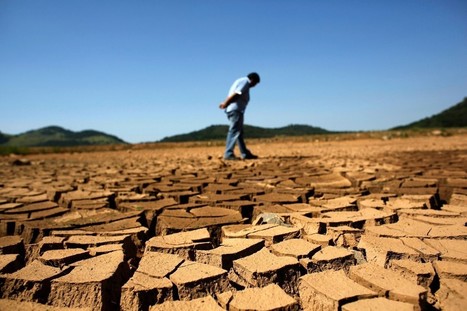
Climate change impacts in Eastern Europe and Central Asia currently cost billions of dollars in lost productivity and could keep mounting over the next few years, according to a new report released at the climate summit.
Scoop.it!

A report launched by the International Center for Tropical Agriculture and the World Bank at COP24 analyses efforts to transform farming with climate-smart agriculture
Scoop.it!

Living peatlands sequester carbon-dioxide, drawing it down from the atmosphere through plants and trapping it underground as carbon
Scoop.it!

Take these eight steps to make soils more resilient to drought, produce more food and store emissions, urge Cornelia Rumpel and colleagues.
Scoop.it!

Tout le monde s’accorde à dire que l’agriculture productiviste et intensive est dépassée par les enjeux écologiques. Montré du doigt pour sa pollution excessive des sols, les enjeux se tournent désormais vers une agriculture à haute performance environnementale associant les besoins économiques et écologiques. L’agriculture moins polluante est rendu possible en modifiant les pratiques. Agrizone s’associe à cette démarche vertueuse.
Scoop.it!

Leaders of the largest economies meeting in Buenos Aires need to face the urgency of global food security.
Scoop.it!

This week in Brussels, Belgium and Dubrovnik, Croatia, two decisions were made, which will cause great concern for the future of the sea and fish populations. On Monday, EU ministers of agriculture and fisheries decided on catch limits for economically relevant deep-sea fish stocks for 2019 and 2020, while the International Commission for the Conservation of Atlantic Tunas (ICCAT) increased the authorized catch quotas of bluefin tuna by 20%. Slow Food is concerned that by favoring the interests of various players in the market, marine ecosystems are put at risk.
|




