Your new post is loading...

|
Scooped by
Energy Cities
July 13, 2023 10:16 AM
|
As part of the European Green Deal, the European Union is supporting regions that face particularly demanding challenges in the transition to a climate-neutral economy: So-called Coal+ regions, which are heavily dependent on fossil fuel extraction – such as coal, peat or shale oil – need to transform their economies and substitute their carbon-intensive business models.
|
|
Scooped by
Energy Cities
April 18, 2023 7:30 AM
|
Japan’s plans for ammonia and coal use challenged but Tokyo resists setting firm timeline for wind-down
|
|
Scooped by
Energy Cities
February 27, 2023 9:27 AM
|
Limiting climate change requires tackling emissions from all three fossil fuels. However, our research suggests that a greater focus on cutting oil-and-gas use would not only be more equitable, but also more realistic.
|
|
Scooped by
Energy Cities
October 20, 2022 4:08 AM
|
Copenhagen will start supplementing its natural gas supply with biogas produced domestically from locally generated food waste. This approach can alleviate the Nordic country’s reliance on fossil ener..
|
|
Scooped by
Energy Cities
October 19, 2022 10:28 AM
|
The EU as a whole is aiming for 82 per cent clean power by the end of the decade but some member states are looking to go one step further.
|
|
Scooped by
Energy Cities
May 17, 2022 10:35 AM
|
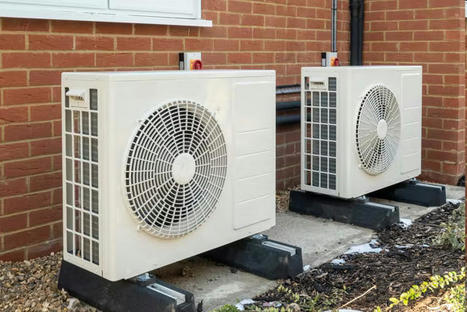
Ground and air source heat pumps are expected to play a major role in cutting the use of gas for heating. But one major problem with them is that they need a lot of space. For those living in dense housing it’s just not practical. District heat networks are the usual alternative, but the dense urban areas they serve need to be near a large source of waste heat like power stations or other industrial units. David Barns at the University of Leeds looks at Shared Ground Heat Exchanges as another solution. Here, a set of shared boreholes draw heat from the ground, sufficient for a single street. Each house would only need a small heat pump similar in size to a conventional gas boiler. The business model will need service providers to coordinate with the street householders and the local authorities, and get their consent before making the investment in the shared system.
|
|
Scooped by
Energy Cities
May 9, 2022 4:09 AM
|
Viennese authorities have said that they will invest over 1 billion euros in sustainable energy in the next five years. The funds will go towards renewable projects with an increased focus on hydrogen and especially geothermal energy.
|
|
Scooped by
Energy Cities
November 4, 2021 2:14 PM
|
Slovenian firm HTZ Velenje, subsidiary of lignite producer Premogovnik Velenje, is the contractor in a challenging solar power project. The country’s last coal mine is exploring options for methane extraction, a gravity power plant, underground energy storage and farming.
|
|
Scooped by
Energy Cities
November 4, 2021 12:49 PM
|
The Swedish city is one of the exemplary models in terms of climate action
At the start of this week, Malmö’s authorities informed the public about the city’s achievements and future plans in terms of achieving climate neutrality. Although it is one of the best performing European cities in that regard, its administration (which uses 98% of fossil-free energy) seeks new ways to continue the acceleration at local, national and international levels.
|
|
Scooped by
Energy Cities
November 4, 2021 7:03 AM
|
Despite the targets from the Paris Agreement and their commitments to reach net zero emissions, fossil fuel producers are on track to significantly boost output in the next 20 years, the Production Gap Report reveals.
According to the new Production Gap Report, plans and projections for fossil fuel production show the volumes would be increased by 2030, except for a slight decline in coal. Instead of working on climate goals from the 2015 Paris Agreement, the governments will allow companies to churn out 110% more than the limit for holding global warming at a maximum of 1.5 degrees Celsius, and 45% more than consistent with two degrees.
|
|
Scooped by
Energy Cities
October 25, 2021 3:07 AM
|
Oil firms have been banned from taking an active role in the upcoming COP26 summit.
The news is a seismic victory for climate activists.
It stops Big Oil companies from sponsoring the conference and steering the narrative away from their culpability in the climate crisis.
|
|
Scooped by
Energy Cities
September 8, 2021 5:35 AM
|
How much does natural gas benefit from its name, which includes the word “natural”? To answer this question, we conducted an experiment to investigate the public’s emotions and associations regarding the terms “natural gas” and “methane.” We randomly assigned respondents to one of four conditions in which each respondent was asked to rate their positive and negative feelings (affect) about one of the following four terms: “natural gas,” “natural methane gas,” “methane,” or “methane gas.”
|
|
Scooped by
Energy Cities
July 2, 2021 6:21 AM
|
The European Union is considering tightening rules on whether wood-burning energy can be classed as renewable and count towards green goals, according to a draft document seen by Reuters on Wednesday (16 June).
|
|
|
Scooped by
Energy Cities
April 18, 2023 8:42 AM
|
2023 will mark the beginning of the decline in fossil fuels, following the peak of global electricity emissions in 2022, according to a new report released on Wednesday (12 April) by energy think-tank Ember.
|
|
Scooped by
Energy Cities
February 27, 2023 9:58 AM
|
Despite the ongoing energy crises, the use of coal and gas over this winter has not increased as much as some feared. Europe is on the verge of breaking its addiction to fossil fuels
|
|
Scooped by
Energy Cities
October 20, 2022 4:16 AM
|
Greece has been able to meet the entire county’s energy demand with renewable sources on 7 October 2022. Renewables now make up the biggest share in the country’s energy mix, overtaking natural gas, a..
|
|
Scooped by
Energy Cities
October 19, 2022 10:32 AM
|
68% of the world’s population is projected to live in urban areas by 2050, according to the UN, a significant increase on the 56% who did in 2020, but the rates at and success with which cities are incorporating digital technologies into their fabrics vary substantially.
|
|
Scooped by
Energy Cities
October 19, 2022 10:20 AM
|
Helsinki is tapping an unexpected source of energy to heat its homes: cold water extracted from deep in the Baltic Sea.
The Finnish capital is joining Europe’s rush to find new sources of energy and reduce its reliance on imported fossil fuels with a new, carbon-neutral heating system.
|
|
Scooped by
Energy Cities
May 12, 2022 5:27 AM
|
Similar to the two navigational hazards mythologized as sea monsters in ancient Greece—Scylla and Charybdis—which gave rise to sayings such as, “between the devil and the deep blue sea” and “between a rock and a hard place,” modern energy policy has its own Scylla and Charybdis. On the one hand is the requirement to maintain sufficient energy flows to avoid economic peril. On the other hand is the need to avert climate catastrophe resulting from such activities. Policymakers naturally want all the benefits of abundant energy with none of the attendant climate risks. But tough choices can no longer be put off.
|
|
Scooped by
Energy Cities
May 4, 2022 3:52 AM
|
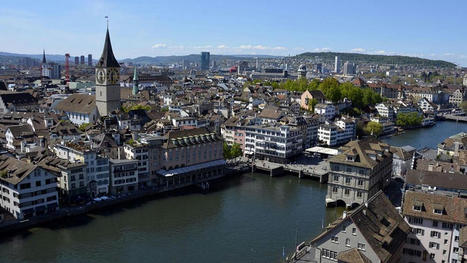
Zurich is shutting down its natural gas network in whole sections of the city to fight climate change - and save money.
Switzerland’s biggest city started the plan a decade ago as part of its environmental strategy. Residents are being encouraged to install alternatives to natural gas heating and, where this is already taking off, Zurich’s city-owned utility company is now shutting down gas supply networks.
|
|
Scooped by
Energy Cities
November 4, 2021 1:52 PM
|
Spain is on track to phase out nuclear power and coal power and to decommission several oil-fired plants between 2025 and 2035, and replace them with renewables. However, the country will need to invest in energy storage technologies to strengthen the security of supply.
|
|
Scooped by
Energy Cities
November 4, 2021 12:12 PM
|
The City Council’s ban will come into effect from June 2023, offering a transitional period to change the legislation and heating method
Judging by WHO guidelines, the air quality in Lithuania is considered moderately unsafe, with fine particulate matter (PM2.5) concentrations exceeding the recommended maximum, especially in the summer (June to August) and winter (December to March). The main culprits are thermal power plants and vehicle emissions, but also a growing number of households that find burning coal and peat for heating cheaper than using gas or electricity.
|
|
Scooped by
Energy Cities
November 2, 2021 4:27 AM
|
The UK government has published its Heat and Buildings Strategy, a plan to replace fossil-fuelled heating like gas boilers with low-carbon technologies such as heat pumps.
First the good news. This is a comprehensive and groundbreaking strategy that flags a range of complex issues involved in solving a problem like decarbonising heat. These include insulating buildings to reduce energy demand, renewable heating systems that are cheaper to run as well as to install, the benefits of boosting local manufacturing, and how the sector will provide thousands of jobs over the next 25 years.
|
|
Scooped by
Energy Cities
October 4, 2021 4:07 AM
|
The energy crisis will be painful for many Europeans and emergency measures are needed to ensure gas keeps flowing to keep people warm for the next few months. But the EU must also recognise that this is good money thrown after bad.
Gas is not reliable now, cannot be relied on in the future if we are to tackle the climate emergency, and we must abandon it as rapidly as possible.
|
|
Scooped by
Energy Cities
August 16, 2021 9:44 AM
|
Serbia’s decision to halt the construction of thermal power plant Kolubara B is the country’s first serious step in the energy transition. The move, however, does not mean that coal-fired power plants and mines will be closed down overnight, but rather marks the beginning of a process that will take decades. If the transition is prepared and carried out prudently, it will result in a cleaner environment and cheaper energy. However, if this is not done in a timely manner, the transition will be painful, first and foremost for those employed in the coal sector, but also for all citizens and the economy as a whole.
|