Your new post is loading...

|
Rescooped by
Edwin Rutsch
from Empathy Movement Magazine
September 8, 2015 11:07 PM
|
By listening to your child reflectively, you are helping him or her define emotions and minimize acting out. This teaches your child that he or she can choose to control and manage emotions.
Empathize
By listening to your child reflectively, you are helping him or her define emotions and minimize acting out. This teaches your child that he or she can choose to control and manage emotions.
Try to empathize with your child’s feelings without making it about you. What is his or her perspective? Though your child may have broken a house rule or even hurt your feelings by lashing out at you, try to be nonjudgmental for a moment. Connect with your child’s feelings. We can easily empathize with anger and frustration because we have all been in situations where we have those feelings.
You might say, “Wow, Allison. You seem really angry,” or, “I can see your frustration.” These statements are more disarming in nature and send a signal to your child that you see him or her, not just the behavior.
by Kathleen Scott
|
|
Rescooped by
Edwin Rutsch
from Empathy Movement Magazine
July 30, 2015 2:52 PM
|
Recently, a friend with young children asked how my husband and I ‘grew such well-behaved kids’ (now age 10 and 15). My mind immediately went to the moments when they aren’t so well behaved, the moments when we, as parents, have the option of telling our children what to do and asserting our power as the heads of our houses by giving consequences when requests aren’t met.
My husband and I work best when we approach situations with empathy, work collaboratively and hold a consistent set of expectations. We attempt to actualize these values when parenting.
Jen Cort
|
|
Rescooped by
Edwin Rutsch
from Empathy Movement Magazine
July 28, 2015 11:09 AM
|
Yet the Aurora Theater and Sandy Hook shootings hit forensic psychologist Max Wachtel especially hard, driving him to try to figure out what made these killers and other male criminals do what they do. In doing research, one common element arose—a lack of empathy—which led Wachtel to write The One Rule for Boys.
A lack of empathy can manifest itself in a variety of ways. “Almost always, it comes out as problems with anger because anger is a very easy emotion to access, but it’s a very surface emotion,” Wachtel explains. “Usually there’s something else going on like sadness, frustration, anxiety or a feeling of unfairness.”
If boys can be empathic, it helps in nearly every area of their lives, says Wachtel. He found research showing that empathic boys do better in school, have more high-quality friends, are seen as leaders and deal better with bullies. As they get older, he found empathic males tend to get better jobs and report higher satisfaction in romantic relationships and life in general. “I figured it was a good thing but it was surprising to see how much stuff it helped with.”
Courtney Drake-McDonough
|
|
Rescooped by
Edwin Rutsch
from Empathy Movement Magazine
July 28, 2015 11:09 AM
|
If you teach your children to be empathic, they will understand why so-called mean kids do what they do. It does not give those kids a free pass, and it does not require your children to pity anyone.
But, research shows that kids who are empathic are seen as leaders by their peers and are more assertive. They do better in school (and in work later on), and they better understand how to appropriately confront a school bully. Empathic kids are not pushovers--in fact, they are able to better handle conflict than non-empathic children. I cover all of this information in my book, The One Rule For Boys,
|
|
Scooped by
Edwin Rutsch
July 5, 2015 9:50 PM
|
Many people believe that gentle parenting is a form of unparenting, but nothing could be further from the truth. Gentle parenting is involved parenting ~interactive, engaged, active parenting.
It takes focused attention, planning, participation, research, and so much more to be an empathetic, responsive parent who is in tune with their child’s needs and who is prepared to make whatever sacrifices are necessary to meet those needs.
|
|
Scooped by
Edwin Rutsch
June 24, 2015 12:11 PM
|
It’s sort of the same with teaching empathy to our children – especially to the under 5 crowd, who tends to be a bit more spirited, as I like to call it, than the rest of us.
Nothing wrong with spirit, nothing at all. As parents and caregivers though, our own actions are often what make a toddler go from “spirited” to “unruly” or “mean”.
Empathy is a tool. It is one that doesn’t come easy for young children, but can be taught. We must model it. When a toddler hits his parents or another toddler, and we respond lovingly and patiently, we are giving that child a tool.
|
|
Rescooped by
Edwin Rutsch
from Empathy Movement Magazine
June 24, 2015 11:55 AM
|
Positive parenting educators and mental health therapists talk a lot about empathy. When when parents want to know how to respond when their kids are angry or anxious, I suggest responding with empathy first.
I tell parents to think of empathy as “finding the feeling” in what their child is saying or experiencing.
If your child is upset, you could say, “You’re so mad that Sophie took the marker without asking!” When you respond with empathy, you help your child put their feelings into words and make them feel that you understand.
Here are some empathy tips: - Be Present:
- Wait for Calm:
- Connect:
by Nicole Schwarz
|
|
Rescooped by
Edwin Rutsch
from Empathy Movement Magazine
June 22, 2015 3:57 PM
|
If you want to learn the building blocks of empathy and a sense of justice, just look to the nearest 3-year-old.
While these two traits seem like they might require years of experience and observation to acquire, a new study published in Current Biology reveals that children as young as 3 have a strong sense of restorative justice.
Researchers in Germany observed individual 3- and 5-year-olds in a situation in which they sat at a round table with puppets and a few items, such as cookies or toys. The children had the ability to pull a rope to turn the table. One section of the table was dubbed "the cave," which was inaccessible and could hide the items....
Origins of empathy
What are the origins of this intuitive sense of empathy? Family environment and cognitive development, according to Dr. Norma Feshbach. There must be a family context that allows and encourages empathy for it to flourish. And cognitively, children must have a physiological readiness that allows them to see someone in an emotional state and elicit a similar response. This also enables them to see the world from another perspective, and feel and experience those emotions.
By Ashley Strickland
|
|
Rescooped by
Edwin Rutsch
from Empathy Movement Magazine
June 12, 2015 1:21 PM
|
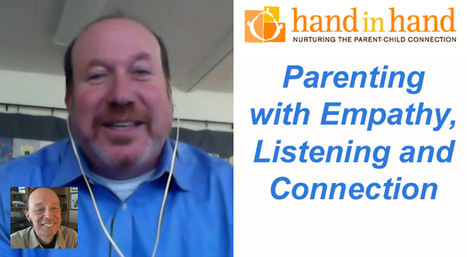
Charles Fay, Ph.D. is a parent, internationally recognized author, consultant and highly skilled public speaker. He is, President of the Love and Logic Institute, Inc. The Love and Logic Institute is dedicated to making parenting and teaching fun and rewarding, instead of stressful and chaotic. They provide practical tools and techniques that help adults achieve respectful, healthy relationships with their children. All of their work is based on a psychologically sound parenting and teaching philosophy called Love and Logic.
In this interview we discussed the role of empathy in family life, parenting and the Love and Logic parenting model.
"So, that's the limit's part of it. Now the other end of this has to do with, how do we do this without losing their love? That comes down to empathy. Remember that word. When you hear Love and Logic, you think empathy. "
Sub Conference: Empathic Family
|
|
Scooped by
Edwin Rutsch
May 28, 2015 7:14 PM
|
New for 2015, FHC of California comes to Peaceful Pines Eco-Retreat Center, a "unique blend of Zen design, green living and comfort in a secluded creek-side sanctuary." We are excited to bring FHC to the West Coast!
To make it easier for more people to attend, we have extended Early Bird pricing for this camp until June 1. Won't you join us?
|
|
Scooped by
Edwin Rutsch
May 26, 2015 10:03 PM
|
The good news is that there's a skill we can all develop which can be a big help: empathy. Empathy is the imaginative act of stepping into the shoes of another person and looking at the world through his or her eyes.
Ninety-eight percent of us have the ability to empathize wired into our brains. But we're not always great at putting our latent empathic abilities into practice.
1. Practice empathic listening... 2. Teach them about the Golden Rule and the Platinum Rule... 3. Recognize that we often don't understand our kids..
by Roman Krznaric
|
|
Scooped by
Edwin Rutsch
May 23, 2015 1:26 PM
|
When was the last time you made an effort to teach empathy or kindness to your child? Sudha Subramanian says it’s about time parents got their act together.
A recent study suggested that parents are happy only if their kids are high achievers. We are all too wired and focused about our children getting top grades and excelling in activities. We don’t pay any attention to whether our kids are kind or not. We don’t take that extra effort to teach our children empathy or encourage them to do any community service.
Which means our kids may become high achievers in terms of grades, but may not have much to show by way of being a caring human being. And this brings us to the big question – are we raising mean kids?
|
|
Scooped by
Edwin Rutsch
May 21, 2015 6:23 PM
|
A second important determinant of a child’s empathy and flexibility in play is how much TV and video programming he is exposed to. TV and videos offer free “baby sitting” for harried parents who are overburdened with work and the stresses of parenting. But the breather the parents get is a very mixed blessing indeed.
|
|
|
Rescooped by
Edwin Rutsch
from Empathy Movement Magazine
August 10, 2015 8:14 PM
|
While we may struggle with delivering and exacting justice here in the adult world, it seems that children as young as 3 have the concept down pat.
In a new study published in the journal Current Biology researchers from Germany are finding that toddlers are not only surprisingly empathetic, but that concepts like restorative justice may come intuitively to them.
When examining children between the ages of three and five, researchers found their subjects focused strongly on carrying out justice and punishment for those who “deserved” it. Not only did the children prefer to give missing items back to rightful owners, but if returning the item was not an option, the participants would protect the item, and ensure another party would not take what did not belong to them. Even more interesting was the fact children of this age were just as willing to respond to the needs of another individual — even if that individual was a puppet — as they were to their own. Researchers believe these findings may give us insight into the core of justice in relation to human nature.
Kristin Magaldi
|
|
Rescooped by
Edwin Rutsch
from Empathy Movement Magazine
July 28, 2015 11:23 AM
|
Yet the Aurora Theater and Sandy Hook shootings hit forensic psychologist Max Wachtel especially hard, driving him to try to figure out what made these killers and other male criminals do what they do. In doing research, one common element arose—a lack of empathy—which led Wachtel to write The One Rule for Boys.
A lack of empathy can manifest itself in a variety of ways. “Almost always, it comes out as problems with anger because anger is a very easy emotion to access, but it’s a very surface emotion,” Wachtel explains. “Usually there’s something else going on like sadness, frustration, anxiety or a feeling of unfairness.”
If boys can be empathic, it helps in nearly every area of their lives, says Wachtel. He found research showing that empathic boys do better in school, have more high-quality friends, are seen as leaders and deal better with bullies. As they get older, he found empathic males tend to get better jobs and report higher satisfaction in romantic relationships and life in general. “I figured it was a good thing but it was surprising to see how much stuff it helped with.”
Courtney Drake-McDonough
|
|
Rescooped by
Edwin Rutsch
from Empathy Movement Magazine
July 28, 2015 11:09 AM
|
Psychologist Dr. Max Wachtel recommends having empathy for the bully to combat their behavior.
Having empathy for a bully actually helps the child affected in many ways. Dr. Wachtel offered these examples:
- They have more (and better quality) friends
- They do better in school
- They feel more in control and are more assertive
- They are more likely to confront inequality when they see it without resorting to violence
- Others see them as leaders
Kyle Dyer, KUSA
|
|
Rescooped by
Edwin Rutsch
from Empathy Movement Magazine
July 28, 2015 11:08 AM
|
“These findings show how a mother’s ability to tune-in to her baby’s thoughts and feelings early on helps her child to learn to empathize with the mental lives of other people,” says Elizabeth Kirk, lecturer in the psychology department at University of York.
“This has important consequences for the child’s social development, equipping children to understand what other people might be thinking or feeling.”
“These results are significant as they demonstrate the critical role of conversational interaction between mothers and their children in infancy,”
by Saskia Angenent-York
|
|
Scooped by
Edwin Rutsch
June 24, 2015 12:13 PM
|
Using acceptance and empathy as the first step to overcome a challenging moment can go such a long way. If a child has a tantrum, throws something, bangs, breaks or otherwise does something that we may view as unwantted or unaceptable behavior we can: - Accept that children have limitations
- Empathize that our child is having a hard time
- Accept that children have needs
- Empathize that our child’s needs, in that moment, are not being met.
- Accept that children will at times be frustrated, angry, mad, sad.
- Empathize that such strong feelings can be difficult to manage alone.
- Accept that children will at times be exuberant, loud, annoying.
- Empathize that our child in that moment has big emotions.
- Accept that children should and will at times challenge our reasons.
- Accept that children have their own thoughts and feeling.
- Empathize that our children often have no control over what is going on in their lives.
- Accept that children need an outlet for their thoughts and feelings.
- Accept that many such “mis”-behaviors are a developmentally appropriate.
by Ariadne Brill
|
|
Scooped by
Edwin Rutsch
June 24, 2015 12:07 PM
|
When Mom was able to model calm behavior, the child’s mirror neurons (specialized neurons responsible for empathy and understanding of what another person is feeling) were activated and she was therefore able to “mirror back” the calm she was observing in and feeling from her mother.
If you want to be “listened to,” first, try listening to your child.
Consider asking for what you want versus telling what you want and empathize with the fact that it’s hard to stop doing an enjoyable activity, to hear the word “no” etc.
by Debbie Zeichner
|
|
Rescooped by
Edwin Rutsch
from Empathy Movement Magazine
June 23, 2015 2:53 PM
|
As a parent, you want to see your child act with compassion and show empathy to others. They may need a bit of a push and some guidance, though, to learn how to show others these qualities.
Teaching compassion and empathy to children can start when children are very young. However, if you haven't discussed these ideas and values with your children until the teen years, it's not too late. While the sooner you start mentioning these qualities as a family value, the better; you can still give your...
Provide Scenarios... Discuss Current Events.... Turn the Tables... Role Model Behavior...
|
|
Rescooped by
Edwin Rutsch
from Empathy Movement Magazine
June 12, 2015 1:21 PM
|
Craig Appel is the Executive Director of Parenting by Connection that uses the Hand in Hand Parenting approach. They say, "Our mission is to provide parents with insights, skills, and support they need to listen to and connect with their children in a way that allows each child to thrive. We do this through easy-to-access support, classes, and literature. We offer vital information to help parents deal with issues from children biting and kids' temper tantrums to learning issues and bullying on playgrounds and in schools."
"I started to see that helping parents and changing the dynamic in the family and how children are raised is a huge leverage point for changing the world. Raising empathic children... has huge butterfly rippling effects in terms of changing the world...
We model the behaviour of listening with empathy, and that is how we help them grow into social and emotionally intelligent children."
Sub Conference: Empathic Family
|
|
Scooped by
Edwin Rutsch
May 29, 2015 2:07 PM
|
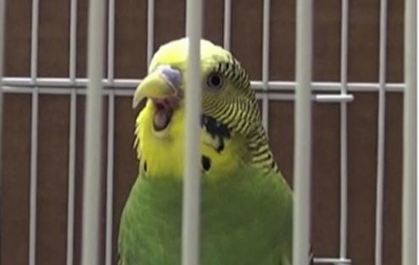
Budgerigars, also known as parakeets, are susceptible to catching the urge to yawn from watching other budgies do it.
[What yawning bonobos can teach us about empathy]'
Some researchers, including Gallup, believe that contagious yawning behavior in different species could be connected to a primitive form of empathy.
Frans de Waal of Emory University in Georgia told the New Scientistthat "contagious yawning by itself is not exactly empathy, but it hints at the tendency to mimic and synchronize with the bodies of others" and that the "process is probably the basis of mammalian empathy."
Although Gallup's experiments don't tell us everything about the contagious yawning behavior among budgies, it has potentially interesting implications for future experiments. "Since contagious yawning may represent a primitive form of empathy,"
|
|
Rescooped by
Edwin Rutsch
from Empathy Movement Magazine
May 28, 2015 6:13 PM
|
Robin Grille is an "empathy farmer", father, a psychologist in private practice with twenty years' experience, and a parenting educator. His articles on parenting and child development have been widely published in Australia and overseas.
Robin's first book: 'Parenting for a Peaceful World' has received international acclaim and led to speaking engagements around Australia, USA and New Zealand. 'Heart to Heart Parenting' is Robin's second book.
A passionate speaker and social change activist, Robin's extensive research has led him to feel that improved attention to babies' and children's emotional needs is the most powerful way to move societies toward sustainability and peace.
"The human brain and heart that are met primarily with empathy in the critical early years cannot and will not grow to choose a violent or selfish life."
"Building of human empathy is one brick at a time and sometimes the bricks come down in the building process."
|
|
Rescooped by
Edwin Rutsch
from Empathy Movement Magazine
May 26, 2015 9:51 PM
|
|
|
Rescooped by
Edwin Rutsch
from Empathy Movement Magazine
May 22, 2015 8:22 PM
|
“The children who had a greater awareness of how badly one feels when others fail to share with one were more generous in a subsequent resource allocation task,” said researchers Markus Paulus (Professor of Developmental Psychology and the Psychology of Learning in Early Childhood) and Professor Chris Moore of Dalhousie University (Halifax, Nova Scotia)....
Paulus’ latest work shows how one can foster children’s readiness to share with others: “It helps if one makes clear to them what someone else feels when left out.”
|