Listening is the beginning of understanding. Stephen Covey, in his book, 7 Habits For Highly Effective People, states “highly effective people spend an inordinate amount of time and energy listening.”
It is estimated that we spend 55% of our time listening yet it is one of the least taught skills in school. Some psychologists believe to empathize with and understand a person’s point of view is one of the highest forms of intelligent behavior. Good listeners put aside their own thoughts to listen to the ideas of others and try to understand what other people are saying. They are often regarded as respectful, focused, tuned in, caring and attentive. ...
A common listening sequence is to pause, paraphrase and probe.
Dara Feldman is Director of Education and a Master Facilitator for The Virtues Project, offering keynotes, workshops and retreats transforming school culture and empowering students, educators and families to thrive.
Noble Kelly from Education Beyond Borders, a non-profit NGO devoted to closing the education divide through teacher professional development and community education.
Managing Director of the Compassionate Listening Project and founder of the Free Listening Project of Puget Sound. Compassionate Listening Project is a non-profit organization dedicated to empowering individuals and communities to transform conflict and create powerful cultures of peace.
After yesterday’s robust discussion (a hearty thank you to all that participated), I started thinking about empathy. As I pointed out in my comments, empathy was a close runner up to the ability to communicate effectively for what I believe is the most important characteristic for a leader. After reading your comments, I started to think that we were all pretty much in agreement on both characteristics being extremely important for leaders.
How can we foster empathy in the education system? Check out this interview with Joan Duffell. She had a lot of wonderful insights, built on a wealth of experience, to share on this question.
Joan Cole Duffell is Executive Director of Committee for Children, an international nonprofit organization dedicated to the safety, well-being and social development of children through the provision and support of research-based educational programs for educators, families and communities.
Empathy may be the most valuable yet underrated attribute of a successful innovator. Steve Jobs—despite his well-deserved reputation for being surly and insensitive—had oodles of it. How else do you design and create so many products that people don’t realize they want until they see them? He understood his customers better than they understood themselves! That’s empathy. It’s being able to get inside people’s hearts and minds so deeply that you know their desires before they do...
Empathy is a huge factor in entrepreneurial success. Without it, a start-up is unlikely to identify an appropriate customer, market niche or even business model. A deep understanding and empathy for the customer should guide virtually every decision an entrepreneur makes.
Empathy is a radical concept. Sometimes the word radical is unnecessary, it's embedded in the notion. Empathy, as a working concept, if we actually put it into practice in our lives, would be among the most radical things we could do in this world.
Radical Empathy - A Starting Point science is catching up interesting that science lags behind common sense it's the cutting edge of science thinking of ethics from a different point relationships individualization of our struggles - our own pursuits healing and renewal - we need to socialize our burdens
John Fea, one of my former history professors, recently blogged about the concept of "intellectual empathy" and I would like to share some thoughts that he passed along from Michael Jinkins, president of Louisville Presbyterian Theological Seminary. I recommend reading Dr. Fea's original post here; additionally, you can see the entirety of Michael Jinkins' post here...
This capacity for intellectual empathy is essential to those who wish to live generously and with integrity in a pluralistic society. Perhaps it is even more essential today than in times past, given the social and cultural forces that presently foster division and encourage peremptory dismissal of opposing views -- not to mention our enhanced capacities to destroy one another.
HumaneSpot.org is the world's most comprehensive resource for attitude and behavior research relating to animal and environmental protection issues.
This literature review examines past studies on empathy in animals. It discusses evidence for empathy in non-human primates, other mammals, and birds. The authors argue that researchers need to develop a more nuanced method of measuring empathy in non-human animals.
Article Abstract: "Domestic animals may be frequently exposed to situations in which they witness the distress or pain of conspecifics and the extent to which they are affected by this will depend on their capacity for empathy. Empathy encompasses two partially distinct sets of processes concerned with the emotional and cognitive systems. The term, empathy, is therefore used to describe both relatively simple processes, such as physiological and behavioural matching; and more complex interactions between emotional and cognitive perspective taking systems. Most previous attempts to measure empathic responsiveness in animals have not distinguished between responses primarily relevant to the situation of the observer and those primarily relevant to the situation of the conspecific.
“Can’t Buy Me Love” might be the headline of the Super Tuesday primaries: Mitt Romney prevails on electability, but in terms of a personal connection with voters’ concerns, it’s another matter.
Then consider Tennessee, otherwise a very different state, with, for example, far more evangelical and very conservative voters than Ohio – but a similar story on electability vs. empathy.
There’s a bit of a shift in these preliminary results from Florida, the only state where the empathy question was asked previously this year. There Romney did prevail on empathy, but by less of a margin than his vote total. Thirty-four percent picked him as best understanding average people’s problems, vs. 27 percent for Newt Gingrich – a 7-point gap in a state Romney won by 14.
It has a fair claim to be the ugliest philosophy the postwar world has produced. Selfishness, it contends, is good, altruism evil, empathy and compassion are irrational and destructive. The poor deserve to die; the rich deserve unmediated power. It has already been tested, and has failed spectacularly and catastrophically. Yet the belief system constructed by Ayn Rand, who died 30 years ago today, has never been more popular or influential.
Will the presidential election be decided by how compassionate voters feel this year? The publication last week in the Proceedings of the National Academy of Sciences of “Higher Social Class Predicts Increased Unethical Behavior” provided fresh fodder for the liberal critique of the Republican Party and the corporate ethic.
A third scholarly essay, “Power, Distress, and Compassion: Turning a Blind Eye to the Suffering of Others,” produced similarly striking findings. In a test measuring empathy, each participant was assigned to listen, face to face, from two feet away, to someone else describing real personal experiences of suffering and distress...
Republicans recognize the political usefulness of objectification, capitalizing on “compassion fatigue,” or the exhaustion of empathy, among large swathes of the electorate who are already stressed by the economic collapse of 2008, high levels of unemployment, an epidemic of foreclosures, stagnant wages and a hyper-competitive business arena.
This has made me think again about mirror neurons, sometimes referred to in Japanese as “monomane saibo” [“mimic cells”].
There is a hypothesis that these nerve cells are involved in empathy enabling us to understand the actions, intentions and emotions of other people, and may also have become the trigger for our acquisition of language.
Empathy is essential to communication. So what do these unique cells suggest to us humans today?
Stan Davis has worked for human rights in many different ways. In the 1960s he worked in the US Civil Rights movement. As a social worker and child and family therapist in the 1970s and 1980s, he worked with abused, traumatized, and grieving children and trained Child Protective Workers.
Bridget Cooper is Professor of Education at the University of Sunderland in the UK. Bridget has taught for 31 years in schools, adult education and Higher Education in various capacities across the age and attainment range.
Author: Empathy in Education: Engagement, values and achievement
'The mission of the Empathy Factory is to instil a sense of empathy and a philanthropic spirit in Nova Scotia’s youth. To build a generation of generous, conscientious humanitarians. To empower children to effect the world and be socially conscious global citizens'
By now you have probably already suspected that your super-high empathy is what got you in trouble in this pathological relationship. But, did you know there is hard science behind what we suspected about what is going on in your relationship with your super-trait of high empathy? It really IS all in your head - and your genes.
In fact, these genes influence the production of various brain chemicals that can influence just 'how much' empathy you have. These brain chemicals include those that influence orgasm, and it's effect on how bonded you feel, while also inPublishfluencing some aspects of mental health
The neuropeptide oxytocin functions as a hormone and neurotransmitter and facilitates complex social cognition and approach behavior. Given that empathy is an essential ingredient for third-party decision-making in institutions of justice, we investigated whether exogenous oxytocin modulates empathy of an unaffected third-party towards offenders and victims of criminal offenses.
Healthy male participants received intranasal oxytocin or placebo in a randomized, double-blind, placebo-controlled, between-subjects design. Participants were given a set of legal vignettes that described an event during which an offender engaged in criminal offenses against victims...
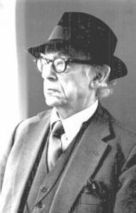
Isaiah Berlin argued that genuine intellectual empathy requires creativity and commitment -- a commitment and a willingness to imagine others’ ideas from within, even if you disagree.
This capacity for intellectual empathy is essential to those who wish to live generously and with integrity in a pluralistic society. Perhaps it is even more essential today than in times past, given the social and cultural forces that presently foster division and encourage peremptory dismissal of opposing views -- not to mention our enhanced capacities to destroy one another.
Practicing intellectual empathy is a kind of spiritual discipline, because it necessitates that we put aside our belief that the lens through which we view the world is the only right one (see Rom 12:3).
This study investigated the relations between altruism, empathy, and spirituality in a sample of 186 university students. Zero-order and partial correlations controlling for age, sex, and social desirability indicated that, although altruism and empathy are related to each other in a manner consistent with previous research, the association of both of these to spirituality is complex and multidirectional.
In particular, empathy was found to be significantly positively related to nonreligious spiritual cognitions, religiousness, and spiritual experiences and negatively associated with existential well-being. Altruism, on the other hand, was most strongly linked to spiritual experiences, followed by spiritual cognitions. Regression analyses revealed that nonreligious spiritual cognitions and spiritual experiences are the most potent predictors of both empathy and altruism, respectively.
does that mean psychopaths will not contagiously yawn like the rest of us??
I believe the answer is no (i.e., psychopaths will demonstrate contagious yawning). It's important to note that we can't answer this with certainty as a direct study of this hasn't been done, but let me walk you through some logic based on the available scientific knowledge of psychopathy.
Studies of contagious yawning suggest that patient populations with impaired social awareness (autism spectrum, etc.) do NOT demonstrate contagious yawning. Some researchers have posited that the key differing variable is empathy, however I disagree as elaborated later on. The other thing to note, are theories of contagious yawning that involve mirror neurons. The ability for social awareness, to understand and interpret human behavior, feel a social connection, etc. has been linked to this mirror neuron system (still a huge area of research; FAR from well understood).
Designed primarily for the classroom and initially used to train professional counselors, the practical exercises for acquiring empathy skills contained in this book can be used for the benefit of students, couples, families, and people in counseling and in the workplace. Why teach and learn empathy?
The ability to have empathy for others is important as a foundation for caring and compassion and contributes to positive relationships in all areas of life, from the classroom to the living room and the boardroom. Empathy builds a sense of community and reduces the tendency to discriminate against or exclude others.
A person who is insensitive, abusive, or who bullies others can benefit from an awareness of the emotions of those who are being hurt. Children, youth, and adults will be positively impacted by learning empathy with the ten practical exercises clearly described in this book. As empathy skills are acquired by increasing numbers of individuals, beginning with the youngest, relationships and communities can become more caring as a result.
Dogs, cats birds, fish and even horses are increasingly being used in settings ranging from hospitals and nursing homes to schools, jails and mental institutions. ....studies have been focusing on the fact that interacting with animals can increase people's level of the hormone oxytocin.
"That is very beneficial for us," says Johnson. "Oxytocin helps us feel happy and trusting." Which, Johnson says, may be one of the ways that humans bond with their animals over time.
... "Oxytocin has some powerful effects for us in the body's ability to be in a state of readiness to heal, and also to grow new cells, so it predisposes us to an environment in our own bodies where we can be healthier."
To get content containing either thought or leadership enter:
To get content containing both thought and leadership enter:
To get content containing the expression thought leadership enter:
You can enter several keywords and you can refine them whenever you want. Our suggestion engine uses more signals but entering a few keywords here will rapidly give you great content to curate.


 Your new post is loading...