


DIY Music & electronics
218.1K views |
+1 today
Everything about diy, instruments, device schematics, and free vst FX
Curated by
efabric
 Your new post is loading...
 Scoop.it! 
From
www

Le Châtelet - das Tonstudio in Hamburg Altona wird betrieben von Gregor Hennig
efabric's insight:
Large collection of free cabinets impulse responses including Vox, Highwatt, Mesa, Marshall, etc. 
Scoop.it!
|


|
Scooped by
efabric
July 18, 2013 9:18 AM
|
Scoop.it!

efabric's insight:
Guitar Amp simulations Freeware plugins.
Audiofanzine's users favourite guitar freewares !
|
|
Scooped by
efabric
July 9, 2013 5:49 AM
|
Scoop.it!
efabric's insight:
Awesome collection of free VST plugins.
|
|
Scooped by
efabric
July 2, 2013 11:23 AM
|
Scoop.it!

efabric's insight:
Loads of how-to's for the recording artist.
|
|
Scooped by
efabric
June 24, 2013 3:43 AM
|
Scoop.it!

efabric's insight:
Nice touch of vintage character !

|
Suggested by
Surce Beats
June 17, 2013 3:26 AM
|
Scoop.it!

Free download of FL Studio Fruity Loops MUSCLE 1.0.2 FL Studio DrumKit, SoundFonts, Presets, Audio FX by Surce Beats


|
|
Scooped by
efabric
May 15, 2013 10:34 AM
|
Scoop.it!

efabric's insight:
Nice and simple DIY electret overheads build.
|
|
Scooped by
efabric
May 6, 2013 10:21 AM
|
Scoop.it!
All 33+ Voxengo AudioUnits, VST plugins and pro audio software, sorted by release date, with direct download links.
efabric's insight:
Some great free svt mastering and phase linear eq to download...
|
|
Scooped by
efabric
July 29, 2013 3:25 AM
|
Scoop.it!

KX77FREE, download free VST plugins and electronic music, téléchargement de plugins VST gratuits et de musique électronique
efabric's insight:
Nice modular routing options

Mike Fink's curator insight,
December 12, 2021 1:07 PM
Here's a cool emulation of the Yamaha CS-70 synthesizer. Download now!
Mike Fink's curator insight,
December 12, 2021 1:16 PM
The Yamaha CS series is a renowned physical synthesizer. From it's use in classic hits to it's effectiveness in modern music, this free VST gives you the range of excitement granted with the real Yamaha CS-70 in a digital medium. Check this out.
|
|
Scooped by
efabric
July 22, 2013 5:28 AM
|
Scoop.it!

God's cab is a collection of high quality MESA OS impulses responses. They are provided for free download by SignalsAudio.com. Great Educational tool.
efabric's insight:
Free Mesa cabinet Impulse resonses files. Nice with LePou Cab simulator vst plugin previously scooped.
|
|
Rescooped by
efabric
from Art et Culture, musique, cinéma, littérature, mode, sport, danse
July 18, 2013 9:20 AM
|
Scoop.it!

Accorder sa guitare arrive sur iOS ! Cet accordeur précis et gratuit est le petit frère de l’accordeur qui se trouve sur le site et qui est utilisé plus de 40’000 fois par mois. L’application est compatible avec l’iPhone 4, 5 et l’iPad. Elle détecte toutes les notes de la gamme chromatique, ce qui permet de s’en servir pour tous les accordages.
...
Via David Vergnon, Augustin
efabric's insight:
Always useful pocket tuner...

Frank Klomp's comment,
September 7, 2013 4:23 PM
Hello Mr. Efabric! I recently bought an AKG 120 USB microphone to improve recordings of my acoustic guitar. I am using NCH's Debut Video Capture, to do the recording. It sounds a lot better now. Yet I wonder how I can optimize further, taking simple steps. Seems to me you are knowledgeable about the subject. And I thought I might ask for your advice. Many thanks. Best, Frank

efabric's comment,
September 9, 2013 3:27 AM
Hi, Thanks for comment. You can enhance your guitar sound by experimenting with mic placement and tilt : not too close and not in front of the soundhole : neck junction is the best spot. Try taming the room ambiance with furnitures, cushions, etc. Unless you can record in a big good sounding room, try to tame the reflections and add a nice convolution reverb later. Happy recording !
|
|
Scooped by
efabric
July 18, 2013 8:57 AM
|
Scoop.it!

efabric's insight:
Nice Guitar VST amp sims and FX freewares
|
|
Scooped by
efabric
July 5, 2013 3:27 AM
|
Scoop.it!
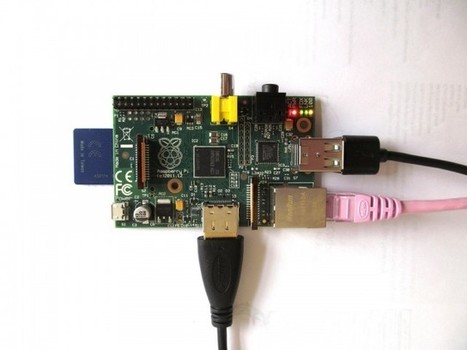
efabric's insight:
Great multi-loops videos, full of korg monotron, guitars, and serious trippy drone muisc ! Great project !

Keorro Lounier's curator insight,
October 18, 2021 9:44 PM
This is pretty interesting, because these new Raspberry Pi & other such small devices can do so much while being so small. You could come up with so many different kind of instruments imaginable. The only problem with these is that you would most likely need to know how to program. Of course you could go even further if you wanted to not make it just digital.
|
|
Scooped by
efabric
June 27, 2013 7:40 AM
|
Scoop.it!

efabric's insight:
Free samples packs for Kontakt
|
|
Scooped by
efabric
June 17, 2013 7:40 AM
|
Scoop.it!

efabric's insight:
Nice DIY synth modules, with schematics !
|
|
Scooped by
efabric
June 13, 2013 8:07 AM
|
Scoop.it!
efabric's insight:
Mid/side electret mic circuit
Continuous variable polar response microphone circuit
Simple effective headphone amp
|
|
Scooped by
efabric
May 29, 2013 3:07 AM
|
Scoop.it!

efabric's insight:
Arduino reviens sous la forme d'une manette de jeux !

|
|
Scooped by
efabric
May 7, 2013 10:39 AM
|
Scoop.it!

Every Operational Amplifier needs a dual-voltage power supply. If you don't have one at hand, build a voltage divider for a "virtual ground". But nothing is perfect and virtual grounds come with their own issues...






Un magnifique convertisseur midi to CV/Gate programmé à partir d'un Arduino, avec un minimum de composants additionnels : Ecran, DAC, Optocoupleur, et quelques potentiomètres et connecteurs.
De nombreuses fonctions : séquenceur, arpégiateur, filtre midi, split, etc.
Beau boulot !