


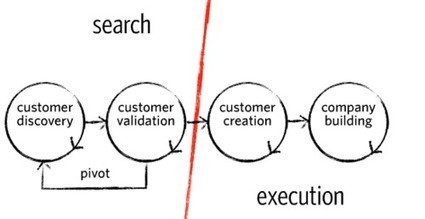
I previously blogged about and summarized the Lean Startup methodology. In this blog post I will go deeper into its first phase, which is "customer discovery".

 Your new post is loading...
 Scoop.it! I previously blogged about and summarized the Lean Startup methodology. In this blog post I will go deeper into its first phase, which is "customer discovery". 
No comment yet.
Sign up to comment
Scoop.it!
Learn everything you need to know about Customer Strategy by McKinsey Alum. Includes personas, segmentation, case studies, examples, and how-to guides.
Mickael Ruau's insight:
The right target customers can unlock the growth potential of a business. Most companies need to focus their target customers, by better defining and evangelizing their existing target customer, or by reducing the number of customer targets they are pursuing. In some instances, a business has the growth option to expand into new target customers, typically after most other growth options have been exhausted (e.g., new products and services, go-to-market, geographies), since expanding into new customer segments can be one of the most expensive and risky strategic growth options.
Scoop.it!

Customer development, the process of using customer feedback to help you define and develop your product, is an often times overlooked, yet critical business strategy that is an imperative process to include in any product development roadmap.
Mickael Ruau's insight:
A great example of an entrepreneur leading a customer development strategy, was Scott Cook, the founder and long-time of CEO of Intuit.
Before Scott even began to define the product requirements for Quicken, the popular personal finance software, Scott cold-called neighbors and consumers to validate his hypothesis ("Customer Discovery") that consumers hated balancing their checkbook and that a software program would be able to solve their problem with personal finance management. Scott didn't race into developing a product with out first validating his assumptions with customers and understanding the customer's problem in detail and verifying that the features he wanted to include in Quicken would solve the customer's problem ("Customer Validation").
Quicken positioned itself in the market as an easy to use solution for managing personal finances ("Customer Creation") and grew rapidly due to positive word of mouth.
Scott and his team at Intuit knew they had a success and continued to leverage their customer development process leading to the development of several new versions of Quicken ("Company Building Phase") that eventually lead to their IPO.
Intuit for a long time managed a "follow me home" strategy where they would follow customers home (with their approval of course) and watch them install and use Quicken to see first hand how customers used their product.
Intuit has for a very long time been a company that has successfully leveraged and focused on customer development processes to develop industry leading software.
The core principle here is that focusing on the customer, and not the product, is a strategy that can lead you to develop the "right" product. Rather than make assumptions about the features that should be added, validate assumptions with potential customers and let customers be your product development guide. Understanding first hand your customer's problems will allow you as an entrepreneur to develop a product that will not only meet your customer's needs, but exceed them.
Scoop.it!

Digital marketing is a sub-set of marketing which uses the Internet, and online platforms to drive a marketing strategy. Digital marketing channels offer opportunities to reach small audiences with a high degree of personalization, thus growing businesses even with lower budgets and a better understanding of those audiences.
Scoop.it!
When you purchase an iPhone, you’re not buying a piece of hardware, you’re buying an ecosystem and an innovative business model, all packaged together. You might not be realizing that companies that create a lasting advantage also innovated their business model. But when Apple is selling you an iPhone at a very high-profit margin, it’s … Continue reading The Business Models Books You Should Be Reading In 2021
Scoop.it!

I previously blogged about and summarized the Lean Startup methodology and requesting customer interviews. Lean Startup literature make it sound as if customer development is hard work, but manageable. Well, even that is an understatement: even requesting customer interviews is hard! I spent the past month contacting 40 people by phone, email and LinkedIn. Here are the biggest issues I ran into and the biggest lessons I learned while doing customer development in the Netherlands, in a B2B context.
Scoop.it!

Développer une application sans coder ? C’est possible ! Grâce à ce guide, découvrez tous les outils no-code mis à disposition pour mener à bien votre projet !
Scoop.it!

Startups are not smaller versions of large companies, but interestingly we see that companies are not larger versions of startups. I’ve been spending some time with large companies that are interested in using Lean methods. One of the conundrums is why does innovation take so long to happen in corporations? Previously Hank Chesbrough and I have…
Scoop.it!

Business development comprises a set of strategies and actions to grow a business via a mixture of sales, marketing, and distribution. While marketing usually relies on automation to reach a wider audience, and sales typically leverage on a one-to-one approach. The business development's role is that of generating distribution.
Scoop.it!
From
habr

You may take advantage of this collection and dedicate about 30 minutes every day to study every link, working your own way through the whole collection. Once you act this way, you will definitely have a deep understanding of the project manager role and what it takes to be a great professional.
Scoop.it!

Customer development is a methodology for building businesses that is applicable to startups and existing companies. It is one of three pillars required for a lean startup: In brief words, customer…
Scoop.it!
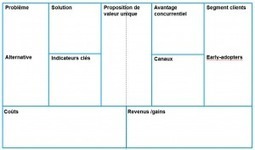
En 2009, le Business Model Canvas s’élève en exterminateur de business plan : 1 business = 1 page. Cet outil est tellement brillant qu’Ash Maurya s’en inspire, le croise avec les principes du Lean Startup et PAF ! ça donne le Lean Canvas. La messe est dite : nous sommes aujourd’hui en 2016, le Lean Startup est largement adopté et, avec lui, son acolyte. Le Lean Canvas présente de formidables qualités : pratique et synthétique, il met problème utilisateur et création de valeur au centre de tout. Mais ne vous laissez pas abuser. Car mesdames, messieurs les jurés, le Lean Canvas est un outil à plantage, et c’est même pour cela qu’il a été créé ! Or qui dit adoption rapide, dit souvent oubli des principes fondateurs. Et c’est cet oubli qui dirige l’entrepreneur vers d’autres types de plantage, souvent définitifs.
Mickael Ruau's insight:
Rappelez-vous le fondement du Lean Startup : tout n’est qu’hypothèse. Il s’agit donc de tester la bonne chose au bon moment. Le Lean Canvas permet de souligner les éléments les plus risqués afin de prioriser les expérimentations qui vont permettre de lever ces risques. Or le risque numéro 1, c’est faire un produit dont personne ne veut car il est inutile. Un Lean Canvas complet bâti sur un problème non vérifié est un château de cartes. Arrêtez donc de remplir à tout prix votre Canvas : commencez par remplir Segments et Problèmes. D’ailleurs, tant qu’à faire, utilisez des post-its : vous vous attacherez moins à votre création. Moins vous investirez de temps, plus il sera facile de mettre à la poubelle vos idées et de repartir sur d’autres. Car, évidemment, vous devez I-TE-RER. Vous êtes comme un journaliste : vous cherchez des pistes à suivre, et quand vous en tenez une, vous devez creuser. Vous allez affiner grâce au terrain le ou les segments que vous visez, comprendre leurs problèmes et les émotions négatives associées, les comportements distinctifs entre segments, le type de relation qu’ils aimeraient entretenir avec vous… C’est cette compréhension profonde qui vous permettra de construire une solution et une proposition de valeur qui feront mouche, et autour desquelles vous pourrez construire votre produit et votre marque. En termes de ciblage, il vaut mieux commencer par le segment où la douleur est la plus aigüe (à condition qu’il soit accessible) : il vous fournira vos « early-adopters ». Votre défi n’est pas d’avoir des milliers d’utilisateurs, mais d’en avoir suffisamment pour tester. Attention cependant à l’autre extrême : ne vous enfermez pas à construire une solution hyper spécialisée pour 5 personnes dans le monde. Tout l’intérêt d’avoir affiné vos segments est de comprendre ce qui différencie vos segments, mais aussi ce qui les rapproche. Un outil de com’ à utiliser avec des pincettesDans certains cas, vous pouvez avoir à remplir les cases autrement qu’avec l’avancée de vos expérimentations. Par exemple, vous pouvez ressentir le besoin de poser votre vision pour échanger au sein de l’équipe. Attention : le but n’est pas d’avoir raison mais d’apprendre si chacun n’a pas des idées préconçues qui pourraient biaiser la recherche. Ne cherchez donc pas à arriver à un consensus : sortez vos idées de vos têtes en les écrivant sur des post-its, puis jetez-les. Si vous devez utiliser votre Canvas pour communiquer à des parties prenantes, évitez le plus possible de donner l’impression que les choses sont fixées. Les gens se rappellent surtout de ce qui les arrange ; ils peuvent donc tenir comme une « promesse » ce que vous inscrivez dans le Canvas. Distinguez donc clairement ce que vous savez de ce que vous ignorez. Faites ressortir les éléments les plus risqués et présentez une « roadmap » des expérimentations que vous aimeriez mener. Enfin, n’oubliez pas de creuser les retours qui vous sont faits pour comprendre quels éléments de votre Canvas séduisent. Et surtout ne prenez pas les gens pour des oracles : seul le terrain vous donnera des retours qualifiés.
|
Scoop.it!

BATNA WATNA ZOPA Read Next: BATNA, WATNA, ZOPA. Main Free Guides: Business Models Business Strategy Business Development Digital Business Models Distribution Channels Marketing Strategy Platform Business Models Tech Business Model What Is Entrepreneurship More ResourcesA Simple Growth Strategy Framework To Get Your…Nine Simple Strategy Frameworks To Grow Your BusinessHow To Improve Emotional IntelligenceHow To Improve … Continue reading Three Simple Negotiation Strategies To Improve Your Negotiation Skills
Scoop.it!

Discover how 10 big players are leveraging the power of co-creation to market new products and create growth.
Mickael Ruau's insight:
Customer co-creation refers to inviting stakeholders (usually customers) to participate in a design or problem-solving process to produce a mutually valued outcome. These outcomes can include things like new product ideas, ways to overcome delivery chain problems, or even technical solutions to complex manufacturing questions. Co-creation also includes plenty of fun, light exchanges, like musicians using Twitter to take fan suggestions regarding album titles, or football clubs asking for feedback on their rebranding efforts. Customer co-creation can lead to some great innovations, such as Etihad Airways' customizable cabin interiors. However, co-creation can also produce some real head-scratchers, like 'Boaty McBoatface', the crowdsourced name for a UK environmental research vessel.
Scoop.it!

Below listed are some of the best tried and tested methods of acquisition. 1. Landing Pages The first step to all of this should be designing a perfect landing page. It should be pretty, attractive and should invite your potential customer to buy your product or service. Different ways you can use landing pages for customer acquisition are-
All types of businesses can take advantage of this strategy. You can market your brand by providing eBooks, videos, images, and blog posts. Amateurs, professionals, and consumers continually search for products like these. Also, you can project your brand authority by sharing your knowledge and expertise. This way, you can boost lead generation as the potential customers casually enter your website in search of information. If they get valuable and useful content here, they will most certainly think about buying your product or service. The different content marketing strategy you can use for customer acquisition is-
3. Live Chat Live chat is the most effective and interactive way to communicate with your potential customers, know what they want, and deliver it to them. If the customers are impressed by your service, skill, and knowledge, they will most certainly consider buying your product or service. A better option for this is an automated live chat by a live chat software program. This is efficient, as well as cost-effective. One to one interaction with the customers increases their engagement with your brand on a personal level. Some of the top live chat tools you can incorporate in your customer acquisition strategy are-
4. Social Media Marketing Social media has the power to spread your content like fire. It is the most effective tool as of now because of its ease of use and popularity. Almost every person using the internet uses some of the other social media websites. It remains your responsibility to make the most out of this handy advertising tool. Some of the key ways to use social media marketing for optimizing your customer acquisition strategies are-
5. Email Marketing Email marketing might only seem an outdated option but is still highly relevant. It is the most non-intrusive way of marketing. Emails have a touch of formality that modern-day social media websites lack. So, the customer retention rate in this strategy is higher. Also, you get to contact the customer directly through their inbox. Unlike social media websites, you do not remain dependent on algorithms and online behavior of the customer. Best email marketing practices for customer acquisition are-
6. Referral Programs It is a common human tendency that a person will believe another person rather than any image, book, video, or website. Referral programs will help your brand grow by generating word of mouth publicity. These will bring a lot of customers to the site and product page. A simple trick of rewarding the referrer as well as the purchaser will help you generate a lot of extra traffic. Everybody wants to get paid, and you can use this tendency for your benefit. 7. Advancement By using the above strategies, your page will finally start getting traffic. But maintaining this traffic is also essential. So, always keeping your website updated and optimized will further help to convert the visitor traffic into paying customers. 8. Analytics It is crucial to understand which of your strategies are working correctly and which are not. That way, you can focus on the best ones and discard the useless ones. Utilizing analytics to the full extent will help you funnel your resources towards effective strategies and increase the business manifold.
Mickael Ruau's insight:
Tools to Support Customer Acquisition Strategies
Now, to convert all of the above strategies into reality, you will need a lot of tools. Luckily, a wide range of tools is available in the market. Since the industry experts meticulously design these tools, they will surely help to turn your potential customers into paying customers. Some of the best ones are listed below. 1. Drift Cost- Pricing starts from $0 per month. What does it do- turns conversations into conversions 2. Unbounce Cost- Pricing starts from $79 per month What does it do- It is landing-page development software. It will help you website pages, landing pages, and popups quickly. It comes equipped with a drag and drop mechanism. 3. Referral Candy Cost- Pricing starts from $49 per month It is a customer acquisition tool and a referral marketer. The device will provide incentives to its customers if they promote your product within their network.
Scoop.it!
The insights developed as part of the customer validation process, can in turn be used to populate your Business Model Canvas.
Mickael Ruau's insight:
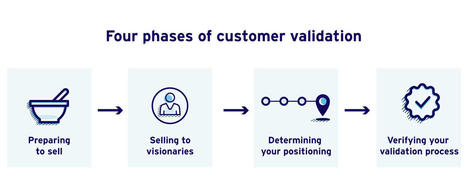
Phase 1 of customer validation: Preparing to sellThis first phase is about using the insights generated in the customer discovery process, starting with your value proposition. Make sure you prepare:
Phase 2: Selling to visionariesThe purpose of this phase is to land a handful of deals that validate your value proposition and sales road map. At this stage, your target customers are those Blank calls “Earlyvangelists”; Geoffrey Moore describes them as “Visionaries” in his book, Crossing the Chasm. It is important to bear in mind that just a few deals will provide sufficient validation at this stage. Regard any failures as an opportunity to learn more and improve the process. Phase 3: Determining your positioningThe validation achieved in phase 2 will provide you with information that can be used to develop your positioning statement. Test your positioning statement on industry insiders for comments and constructive criticism. Phase 4: Verifying your validation processAs in the customer discovery process, the final phase in the customer validation process is designed to incorporate learning from the first three phases and have you examine the progress made so far. The main question to answer at this point is the extent to which you achieved your objectives for customer validation. The following will help you gauge your response:
The outcome of phase 4 can take you in one of three directions:
The output of the customer validation process is a sales roadmap that has been validated. The sales roadmap answers questions such as:
The insights developed as part of the customer validation process, can in turn be used to populate your Business Model Canvas.
Scoop.it!
In my previous post I detailed how I typically go about documenting the initial set of product/market fit hypotheses for an early stage startup and each of the key elements that are important to capture as part of it. Once you've done that, then the far more interesting work begins: validating whether there is in fact truth to each of your most uncertain hypotheses and iterating upon them to eventually find product/market fit.
Mickael Ruau's insight:
Scoop.it!

I previously blogged about and summarized the Lean Startup methodology and requesting customer interviews. But what do you do once you're in an interview? In this article I will discuss what to do and what to ask in order to get the most insights out of an interview session, as well as what sorts of things you should probe for.
Scoop.it!
The latest volume of TACTICS uncovers insights from 15 product leaders from across the world.
Mickael Ruau's insight:
LEVEL-UP WITH THE LATEST PRODUCT MANAGEMENT TACTICS The latest volume of Product Management TACTICS uncovers insights from 15 product leaders from throughout North America and Europe. LEARN MORE Product Principles Using Customer Data Product Roadmaps Avoid Becoming a 'Feature Factory' When Moving Fast Helps Managing Products at Scale Product Management TACTICS is packed full insights from the most highly respected product leaders around today.Each book features contributions gleaned from presentations made at INDUSTRY: The Product Conference, held each year in Cleveland, Ohio in the Fall and Dublin, Ireland in the Spring. We've captured the highlights, dissecting the most critical points just for you. In most cases, we even include links to the live presentations so you can continue the learning. Get eBook
Scoop.it!
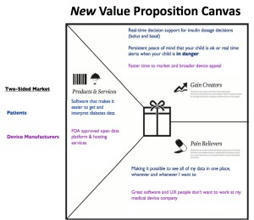
We talk a lot about Customer Development, but there’s nothing like seeing it in action to understand its power. Here's what happened when an extraordinary Digital Health team gained several critical insights about their business model. The first was reducing what they thought was a five-sided market to a simpler two-sided one. But the big…
Scoop.it!

Open image in a new tab There has been plenty written over the last year about the need to shift from the world of projects to product-based development. These people – some of whom I provide links to in the further reading below – give compelling reasons for teams and businesses to begin to think…
Scoop.it!
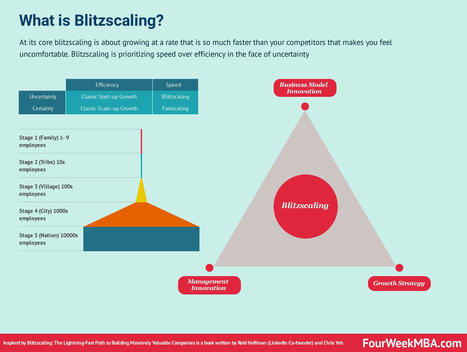
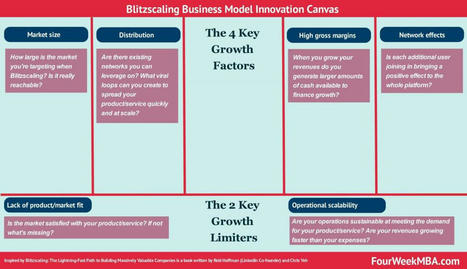
Blitzscaling is a business concept and a book written by Reid Hoffman (LinkedIn Co-founder) and Chris Yeh. At its core, the concept of Blitzscaling is about growing at a rate that is so much faster than your competitors, that make you feel uncomfortable. In short, Blitzscaling is prioritizing speed over efficiency in the face of uncertainty.
Scoop.it!
The Tactics ofConducting Customer DiscoveryPhase I
Scoop.it!
*Before you dive in, be sure to bookmark our Customer Discovery Toolkit
Mickael Ruau's insight:
The phrase “Customer Discovery” traces its roots back to two serial entrepreneurs: Steve Blank and Eric Ries. These two men are most widely known for their contribution to the “Lean Startup” methodology (Ries is the author of The Lean Startup (2010); Blank wrote “Why the Lean Startup Changes Everything” as the cover story for the Harvard Business Review in 2013). At the heart of the Lean Startup is the process of utilizing customers very early on in the business development process–and that is precisely the theory behind Customer Discovery. Brant Cooper, author of The Lean Entrepreneur, puts it simply: Customer Discovery “is all about questioning your core business assumptions.” Performed correctly, Customer Discovery is a customer-centric, scientific process that puts evidence behind an assumed product-market fit.
|





Wrap-up
Here are some tips for when you update your business model hypotheses at the end of this step:
In order to help you understand customer reactions better, it is a good idea to segment customers by enthusiasm. This will make it easier to discuss things during the second evaluation.