Devops for Growth
120.7K views | +37 today
Devops for Growth
For Product Owners/Product Managers and Scrum Teams: Growth Hacking, Devops, Agile, Lean for IT, Lean Startup, customer centric, software quality...
Curated by Mickael Ruau
Your new post is loading...

Popular Tags

Current selected tag: 'customer development'. Clear
Scooped by Mickael Ruau
November 17, 2021 12:46 AM
Scoop.it!

6 Guiding Principles for Effective Product Discovery

6 Guiding Principles for Effective Product Discovery | Devops for Growth | Scoop.it
Have you heard? My new book Continuous Discovery Habits is now available. Get the product trio's guide to a structured and sustainable approach to continuous discovery. I’m co-teaching a design course at Northwestern with my friend Jeff Merrell. We are teaching business leaders and change agents how to prototype their way to viable solutions. In […]
No comment yet.
Scooped by Mickael Ruau
November 16, 2021 12:49 AM
Scoop.it!

Innovators and Early Adopters: Who they are and why you need them

Innovators and Early Adopters: Who they are and why you need them | Devops for Growth | Scoop.it
Identifying Innovators

Think of the people you know who had an iPhone 10 years ago, who were the first in your circle of friends to stay in someone’s spare room, via Airbnb, or booked a ride with Uber while others warned against it and used taxis. Representing 2.5% of the population, these are the Innovators. A small segment, but a vital one – they’re engaged, interested, and active.

Innovators are not only eager to try something new, they’re actively seeking out the next “best” thing. They have a problem they are trying to solve – an easier/better/faster way of banking, super that provides them with greater flexibility and visibility, or a way of investing their spare change. They’re constantly seeking – reading, researching, signing-up to be the first to try before there’s even a product on the market. Innovators are the first to know.

A 2015 EY survey of 10,131 digitally active consumers across Australia, Canada, Hong Kong, Singapore, the U.K. and U.S. identified two key ways to identify Innovators – they’re younger and richer. As published in the Winter 2015 edition of The Journal of Financial Perspectives: FinTech, “…one in every four respondents aged 25 to 34 has used at least two FinTech products in the last six months”. And 21.3% of 34 to 44 year olds responded that they had used at least two Fintech products in the six months before the survey.

This segment is more likely to live in urban areas, and have a greater disposable income, with over 44% of study participants who indicated they used two or more Fintech products earning over US$150,000 p.a., and another 24% earning between US$70,000 and $150,000 p.a.

No comment yet.
Scooped by Mickael Ruau
November 13, 2021 3:31 AM
Scoop.it!

How the Customer Development Methodology Can Save Your Startup | Lucidchart Blog

How the Customer Development Methodology Can Save Your Startup | Lucidchart Blog | Devops for Growth | Scoop.it
The customer development methodology will help you succeed where other startups fail: you have to pay attention to the customer. Learn how!
Mickael Ruau's insight:
Process for Customer Discovery (Click on image to modify online)

1. Customer discovery

Every business starts with a hypothesis, but customer development methodology focuses on figuring out how to make your proposed product or service cater best to customer needs. During this phase, you’ll put together a business strategy and then test both your “problem” hypothesis, or your understanding of customer pain points, and your “product” hypothesis, the solution you have developed to solve those pain points.

Answer the following questions to test both of these hypotheses:

  • What are your customer’s most significant pain points?
  • How much will they pay to solve them?
  • Does your product or service solve those pain points?
  • Do potential customers believe that your concept will solve their pain points?

Talk to potential customers to back up your own assumptions with real feedback. By listening to real needs, pain points, and opinions about existing products, you’ll ensure your product or service has real value. As Steve puts it, “Stop selling, start listening.”

You can use Lucidchart to document customer responses and research, make notes, and catalog the information you gather in one easy-to-access place that will remain a resource for you and your team as you move forward.

Process for Customer Validation (Click on image to modify online)

2. Customer validation

Now that potential customers have verified your concept, you can prepare to sell. During this second phase, you’ll develop a repeatable, scalable sales process as you sell to “earlyvangelists,” or visionary customers who immediately understand the need for your product or service. Use the insight you gathered from customer discovery to develop the materials you need, including a business model canvas, value propositions, sales collateral, and product positioning.

If you look to other startups for guidance, keep in mind that sales, marketing, and business development will radically change depending on which of the three market types you go after:

  • Existing market
  • Resegmented market
  • New market

According to Steve Blank, this is the step of the customer development process that shows you whether your business has a future. That decision is always for the business owners and stakeholders to make—after all, other factors like capital and overhead will also affect your business’s viability.

However, failure at this stage doesn’t necessarily mean it’s the end of the line. For startups entering the marketplace with just one product or service, this is the time to turn around if there isn’t enough demonstrable customer interest in what you’re selling. Revisit the first step if needed to make sure you have the necessary buy-in.

No comment yet.
Scooped by Mickael Ruau
November 12, 2021 2:40 AM
Scoop.it!

The Ultimate List of Customer Development Questions

The Ultimate List of Customer Development Questions | Devops for Growth | Scoop.it
The Ultimate List of Customer Development Questions
Mickael Ruau's insight:


Some quick notes before I get on with the list:

Ask why or why not with many of these. I didn’t want to list it each time. Usually people will say why or why not without being prompted if you’re interviewing them live. But if not, ask them.

A lot of these will yield similar responses to each other. Pick 1 or more from each group that you think would be best given your situation.

In addition to the questions below, many products seem to require specific questions that aren’t “template-able,” especially in the product discover-validation phases.

No comment yet.
Scooped by Mickael Ruau
November 9, 2021 12:23 AM
Scoop.it!

How to Find Core Product Features With a Kano Survey (Complete Guide)

How to Find Core Product Features With a Kano Survey (Complete Guide) | Devops for Growth | Scoop.it
There are 3 types of product features required to develop a product people want to use: Mandatory, Linear and Exciter. A Kano survey helps you find them.
Mickael Ruau's insight:

A Kano survey can be done online, face to face, or with a paper survey. With 20 to 30 respondents in homogeneous segments, you can usually determine 90% of all possible product requirements.

To perform a Kano survey, you have to list all possible requirements. Then, for each requirement, the objective is to test both the positive and negative forms of the question, trying to capture a respondent’s perception of the feature.

Kano Survey – Question Pairs

The question pairs allow you to validate how your prospect would feel if a feature were present or absent in the product. For example, a prospect may like that your product has a responsive layout, but they may be able to live without it, making this feature a nice-to-have.

Collecting every respondent’s positive- and negative-form answers allows you to use the following Kano evaluation table to understand individual perceptions of the features.

Kano Survey – Evaluation Table

Mandatory (M), linear (L) and exciter (E) features quickly stand out, but the survey also provides insight into three other types of answers:

  • Indifferent (I): The customer is neither satisfied nor dissatisfied about whether the product has this feature.
  • Reversed (R): The customer does not want this product feature. The prospect would prefer if it were not included.
  • Questionable (Q): There is a contradiction in the customer’s answers to the questions. This typically signifies that the question was phrased incorrectly or that the customer misunderstood the question.
No comment yet.
Scooped by Mickael Ruau
November 6, 2021 3:22 AM
Scoop.it!

How to Get Startup Ideas: The Meat Grinder Approach

How to Get Startup Ideas: The Meat Grinder Approach | Devops for Growth | Scoop.it

How will I get the first 25 customers? Then the next 250?

Viral word of mouth or put it up in the Apple App Store are not valid answers here. If I can’t think of an easy way to find and get in front of the first 25 customers, the idea is toast. Good answer: I’m building an app for construction companies so I will go on Yelp, find 50 of them, call them and go to their office to pitch them the business. Bad Answer: I’ll launch my music app for tween girls in the App Store and tell my friends to tell their younger sisters. Then it will go viral!

Then I start to think about the next 250 customers. Is there at least one scalable way to reach large groups of potential customers. Do they hang out in places online or in physical places. If your product is for traveling vacuum salesmen… ditch it! How are you ever going to find them and literally get your idea in front of their eye balls?

By the way, these numbers are geared towards B2B businesses. If you want to sell direct to consumers, multiply them both by 10x.
No comment yet.
Scooped by Mickael Ruau
November 5, 2021 1:27 AM
Scoop.it!

Early Adopters: Who They Are, And Why They Matter for Your Startup | by Etienne Garbugli | B2B SaaS

Early Adopters: Who They Are, And Why They Matter for Your Startup | by Etienne Garbugli | B2B SaaS | Devops for Growth | Scoop.it

Note that the people you’ll interview can’t be friends or family members, and that if you can’t find early adopters, you can’t build a business.

If you can’t find early adopters, you can’t build a business. — Trevor Owens, Lean Startup Machine CEO

Mickael Ruau's insight:


We typically recognize early adopters by these signs:

  • They’re actively looking for a competitive edge;
  • They have the ability to find new uses for a technology;
  • They seek out and sign up for early trials and betas;
  • They like to be unique and share new products (it makes them feel good);
  • They exert some kind of technological leadership in their companies (although they may not be in a leadership position);
  • They will use a product which isn’t complete.

You’ll want to define a common profile of organizations.

The subtleties and differences in profiles will emerge as you learn and move forward doing customer interviews.

To get consistent data points, you’ll want to target a specific role within organizations.

As a rule of thumb, the founders are typically the best point person for companies under 100 employees. They act a bit like quarterbacks, forwarding requests, projects and assignments to other team members.

The best entry points for organizations between 100 to 250 people are at director-level. At this stage, functional leaders tend to have their own budgets and greater operational independence.

For larger organizations, you’ll need to uncover the start points via customer discovery.

Your target profile will be a hypothesis (maybe CEOs are the wrong place to start for your startup). We’ll refine these hypotheses as we move forward.

No comment yet.
Scooped by Mickael Ruau
October 30, 2021 2:25 AM
Scoop.it!

How Do I Find My Early Adopters? —

How Do I Find My Early Adopters? — | Devops for Growth | Scoop.it
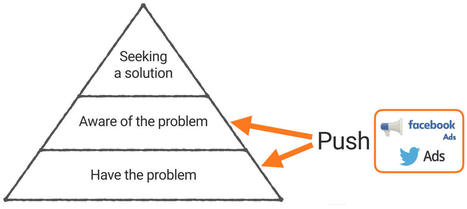
An introduction to push vs pull based customer acquisition.
No comment yet.
Scooped by Mickael Ruau
October 29, 2021 2:01 AM
Scoop.it!

Lean and low-cost tools for customer validation

Lean and low-cost tools for customer validation | Devops for Growth | Scoop.it
One of the burning questions for startups is how to validate their market assumptions. Have you ever asked yourself why so many products fail to create
Mickael Ruau's insight:


Use available free tools for Prototyping:

  • QuickMVP Tool to test your ideas
  • Optimizely Optimization platform for websites and mobile apps (A/B testing etc.)
  • Marvel APP a free prototyping and collaboration tool that lets designers transform their files into interactive, sharable prototypes viewable on any device
  • Instapage Build fully functional landing pages on the fly
  • Proto.io enables users to create fully interactive mobile app prototypes
  • UI Faces Generate sample avatars for user interfaces
  • Balsamiq Wireframing tool
  • Moqups A webapp to create and collaborate on mockups, diagrams and prototypes.


Choose a (catchy) name: Also, you should make sure to find a company/product name that resonates with your customers. Find an available name for your brilliant idea by using services like The Name App, Naminum, Wordoid , Lean Domain Search. These tools can help you narrow down the options.

No comment yet.
Scooped by Mickael Ruau
October 27, 2021 1:45 AM
Scoop.it!

Epic Alignment - How the best Product Managers work...

Epic Alignment - How the best Product Managers work... | Devops for Growth | Scoop.it
As part of our own product development at Delibr, we interviewed over 300 Product Managers to understand how they work and collaborate around feature development, what problems they face, and the many approaches to solving those problems.
Mickael Ruau's insight:
Epic Alignment

How the best Product Managers work with feature documents

"This book will focus on some of the most critical skills. You’ll learn specific practices for building and maintaining alignment across team and stakeholders."

- Jeff Patton

No comment yet.
Scooped by Mickael Ruau
October 26, 2021 1:13 AM
Scoop.it!

What is Customer Development? Describe Customer Development Process

What is Customer Development? Describe Customer Development Process | Devops for Growth | Scoop.it
The above diagram shows the customer development process and how a customer is brought forward from the suspect stage to the prospect stage and finally converted to a customer and he can also progress through to other levels of the customer development programme. The customer development starts with sales funnel.
Mickael Ruau's insight:

The customer development process revolves around different steps involved in identifying potential customers and figuring out befitting ways to fulfill their needs. Along with spending money on the product or service, it is inevitable for different business models to know the needs of their target customers. Some of the key steps involved in customer development are-

1. Customer Discovery Process

In this phase, a business designs its strategy to test and understand two hypotheses proposed earlier. One of them is the ‘problem hypothesis’ where it tries to identify and interpret its customers’ pain points. The other one is the ‘product hypothesis’ where it deals with the solutions it needs to clear up those significant pain points.

To get the feedback, the business needs to get in the field and talk to its customers. This is where the importance of listening is most realized. To know whether its product generates value, it needs to listen to its customers’ opinions, needs, and pain points about the already existing product.

2. Customer Validation Process

Customer validation is one of the most significant phases in the customer development process. This is where a business needs to be ready to make the sales. What is required of it a sales process that is feasible and scalable.


In other words, this is the testing stage for evaluating the viability of the product. If the product does not invoke enough customer interest, the business must go back to the first step to ensure that those significant pain points are being solved.

3. Customer Creation Process

This is the phase where the execution or implementation of the project truly begins. When a business reaches this stage, it means that it has successfully triggered the market demand for its product.

Its chief goal must be to find out ways to raise that demand and ensure scalability, profit, and business growth. The only way to succeed is to show consistency, listen to customer feedback, look out for the trends in the industry, and adapt to the changing times.

4. Company Building Process

Company building is the last phase in the entire process which involves a shift in the mindset of the business. It is all about building the company into a well-functioning unit. To make this transition happen, a business needs to define specific roles, introduce more departments within the organization, and hire more staff.

No comment yet.
Scooped by Mickael Ruau
October 25, 2021 6:23 AM
Scoop.it!

The Power of Selling

The Power of Selling | Devops for Growth | Scoop.it


The Power of Selling is the perfect textbook to teach students about the proven process of selling. More important, it teaches students how to apply the tenets of selling to how to sell themselves and get the job they want, with the same process professional sales people learn (or brush up) on their own selling skills.

What makes someone successful in sales? Are great sales people born or made? Is there one magic selling process, or does the process change based on the business‚ or the customer? How can the selling process really come alive for students in the classroom? How do students learn how to sell for life, not just for a course? The Power of Selling by Kim Richmond answers these questions and makes the principles of selling come alive.

Kim looks at the topic of selling through a different lens, and provides inspiration and ideas. The Power of Selling provides an exciting and interactive experience for both professors and students through the use of 4 unique elements:

1. Content The content is based on the core selling tenets so instructors will find the familiar principles of selling. In addition, the impact of Sales 2.0 is addressed at every stage including how to use interactive tools such as Twitter, LinkedIn, Facebook, blogs, and wikis effectively.

2. Selling U: The last section of each chapter is called Selling U. It applies the concepts covered in the chapter to a student's job search. Selling U topics include how to think about yourself as a brand, how to create a powerful cover letter and resume, how to create your personal elevator pitch, how to use networking and informational interviews to get the word out about your brand, how to prepare and dress for an interview, and how to negotiate and accept the right job offer. What makes The Power of Selling different is that Selling U is integrated into every chapter, which makes this text the ultimate guide to selling yourself.

3. Video Resources:Videos are used throughout the book. Additional videos that are not included in the text are available for instructor use. Here are videos that are available:

… Video Ride-alongs — One of the best ways to learn about sales is by going on ride-alongs. So every chapter starts with an exclusive feature called a Video Ride-along. These short videos feature seven different sales professionals — one that starts each chapter. Each one talks about how he or she applies one of the key concepts covered in the chapter in their job. These videos are designed to be ”virtual ride-alongs“ so the students can actually feel as though they are getting insights first hand from selling professionals.

… Over 50 videos are included featuring the sales professionals who are highlighted in the Video Ride-alongs. About half of the videos are used in the textbook. The balance are available for instructor use. Several are included in Video Learning Segments (see below). These videos are excellent resources for use in the classroom, exercises, and assignments.

… Video Learning Segments In addition to the traditional supplements of Instructor Manual, PowerPoints, and Test Bank, there are also Video Learning Segments. These are PowerPoint slides embedded with videos designed to supplement the course PowerPoints and focus on one concept, like an ethical dilemma, pre-call preparation, or effective presentations, how to use email effectively. Each segment includes slides, videos, discussion questions, or exercises.

4. The Power of Selling LinkedIn Group.
This group was created on LinkedIn.com expressly as a resource for the faculty and students who use this textbook. The group includes sales professionals from across the country and from different industries. This is a great tool for faculty and students alike to network, participate in discussions, ask questions, and connect with ”real world“ selling professionals.

Kim Richmond's The Power of Selling is a fresh, interactive, and applied textbook intended for all introductory and sales, selling and salesmanship courses. If you're ready to prepare your ”students of selling“ for all that lies ahead in their professional career—you're ready for this book. Check it out.
No comment yet.
Scooped by Mickael Ruau
October 23, 2021 5:21 AM
Scoop.it!

What is Customer Creation? Customer Development model

What is Customer Creation? Customer Development model | Devops for Growth | Scoop.it
What is Customer Creation? What is the process of Customer Creation? The main goal of customer Creation is to create demand with th
No comment yet.
Scooped by Mickael Ruau
November 16, 2021 1:12 AM
Scoop.it!

5 Types of Adopters: Innovators, Early Adopters, Early Majority, Late Majority, Laggards.

5 Types of Adopters: Innovators, Early Adopters, Early Majority, Late Majority, Laggards. | Devops for Growth | Scoop.it
Different people try new products at varying speeds. For each product, we find consumption pioneers and early adopters. Other consumers adopt new products
Mickael Ruau's insight:

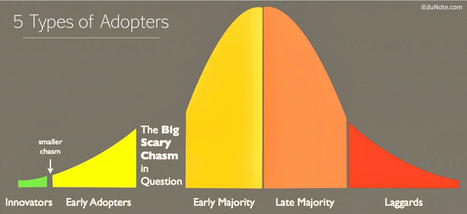
After a slow start, an increasing number of people adopt the new product. The number of adopters reaches a peak and then drops off as fewer nonadopters remain.

Innovators are defined as the first 2½ of the buyers to adopt a new idea (those beyond two standard deviations from mean adoption time); the early adopters are the next 13½ percent (between one and two standard deviations); and so forth.

The five adopter groups describe above differ in values.

Innovators take venture who try new ideas at some risk. Early adopters are influenced by respect from opinion leaders in their communities and adopt new ideas early but carefully. The early majority act deliberately.

No comment yet.
Scooped by Mickael Ruau
November 13, 2021 3:45 AM
Scoop.it!

Lean Startup Don't Seek Publicity Too Soon

Lean Startup Don't Seek Publicity Too Soon | Devops for Growth | Scoop.it
In a leanstartup, don't seek publicity too soon. You can, just not yet until you get to product market fit.
No comment yet.
Scooped by Mickael Ruau
November 13, 2021 3:25 AM
Scoop.it!

Chapter 3: Finding Micro-SaaS Business Ideas

Chapter 3: Finding Micro-SaaS Business Ideas | Devops for Growth | Scoop.it

Repeatable freelance and consulting work

SaaS, and software more generally, has been stealing work from freelancers since the beginning. Nobody wants to be in the business of reinventing wheels, so if you see a specific type of job that businesses are paying contractors to do over and over again from scratch, there may be an opportunity to build a SaaS solution. This was the method that generated the idea for Storemapper. There was no good plug-and-play solution for a store locator app on the market and several of my own clients asked me to build them one. I could have made something from scratch and sent them a bill for $1,000 – $2,000 each but it was a broad enough need to warrant investigation as a Micro-SaaS. Another thing to look for is a big change in complexity. I did some research into other store locators and found that companies with a store locator would have a relatively simple site, something easily built without a developer on Squarespace, WordPress or Shopify, but the store locator would be a big step change in complexity. So I reasoned that you might have a lot of customers who could launch their entire site without a developer, except for the store locator. Great opportunity.

The best way to sniff out these kinds of opportunities is to actually become a consultant in a particular field and really learn what customers need.
No comment yet.
Scooped by Mickael Ruau
November 12, 2021 12:28 AM
Scoop.it!

How to find early adopters for your product | by ashish sinha

How to find early adopters for your product | by ashish sinha | Devops for Growth | Scoop.it
Where do I find my early adopters?

Simply put, you gotta be where they are.

Do not run ads. Do not run paid campaigns in the early days. Get off your comfort zone and be where your potential early adopters are.

A lot many founders/product teams often hide behind the world of paid ads, PR, etc. In the early days, I’d rather say that be the face of your product.

Face all the rejections, questions and even indifference (helps in your entrepreneurial journey).

Mickael Ruau's insight:


How Tinder did it.

In order to get early users to the product, Tinder cofounder, Whitney Wolfe printed a few thousand flyers and paid students $20 to help her put it on car windshields, hand it to people and throw it into dorm mailboxes.

She repeated that process with several universities. That process got her around 300 users. One week later the number increased to 1.000 (via).

That is, fish where the fishes are.

That’s the shortest path to find early adopters of your product.

No comment yet.
Rescooped by Mickael Ruau from LEAP EntrepreneurshiԀPassion - lasting enterprise action practices
November 13, 2021 4:27 AM
Scoop.it!

Why Product Market Fit Isn't Enough —

Why Product Market Fit Isn't Enough — | Devops for Growth | Scoop.it
I’ve been lucky to have been part of building, advising, or investing in 40+ tech companies in the past 10 years. Some $100M+ wins. Some, complete losses. Most end up in the middle. One of my main observations is that there are certain companies where growth seems to come easily, like gui
Via Oliver Durrer swissleap.com
No comment yet.
Scooped by Mickael Ruau
November 5, 2021 1:44 AM
Scoop.it!

The power of early adopters: how to get the right first 1,000 users for your product

The power of early adopters: how to get the right first 1,000 users for your product | Devops for Growth | Scoop.it
When you’re launching a new product, your first set of users can make or break your project. Here’s how to get these early adopters right.
Mickael Ruau's insight:

Create a lead capturing landing page

Even if your logo is not ready, you can start with text as your logo. How easily you can convey your product to your end user will matter a lot. It will help you capture some email addresses even before you launch your product/service. Sending emails beforehand lets you share your product with those who are already interested.

You can contact your designer or developer to help you with this landing page. Also, you can use services like Launchrock, Lead pages, and Wix to create a quick landing page. But be sure to keep some key points in mind while designing the page:

  • Easily convey what your app is all about.
  • Keep an email address capturing field.
  • Keep your social accounts linked on your website from the beginning.

Identify the early adopter communities for your product

Identify your customers well. The product UX/UI depends on it, along with the marketing/brand strategy. If your app is a product targeted at college students, you must discover where those students hang out. If your target is school students, you might want to consider where the parents will get the maximum visibility for your product.

Knowing your early adopters well from the beginning will help you identify niche online communities to target for marketing your product. Online platforms to keep in mind to push circulation of your app include Reddit, Hacker News, Product Hunt, BetaList, AngelList, Betabound, Facebook groups, and Google+ communities.

Once your landing page is ready you can circulate it to the prospective online communities. It will help you understand your prospective users’ mindsets. Sometimes you might even get questions to help you sharpen your product. Keep the following points in mind when checking out early adopter communities:

  • The audience.
  • Finding a niche community must be your top priority. For example, in Reddit, find niche SubReddits, and in Google+, find niche communities.
  • Read and behave according to community guidelines. Don’t get carried away.
  • Keep the email addresses or phone numbers handy in a CRM or an excel sheet.
  • If you use MailChimp or a similar service, remember your user data will be in the database of that service. For safety, you might want to keep an additional backup of the data elsewhere.
  • You can send your product link to the same email addresses later once it is launched.
No comment yet.
Scooped by Mickael Ruau
October 30, 2021 3:02 AM
Scoop.it!

MLP - Minimum Lovable Product

MLP - Minimum Lovable Product | Devops for Growth | Scoop.it
Dans l'univers des startups, il existe de nombreux termes complexes à comprendre qui peuvent se compléter ou parfois se... MLP - Minimum Lovable Product
No comment yet.
Scooped by Mickael Ruau
October 30, 2021 2:05 AM
Scoop.it!

How to Grow a Startup in 7 Steps: Lessons From a €15M Startup | Hotjar Blog

How to Grow a Startup in 7 Steps: Lessons From a €15M Startup | Hotjar Blog | Devops for Growth | Scoop.it
Hotjar co-Founder Marc Von Brockdorff shares 7 main lessons he learned while growing a tech startup from beta to €15M+ ARR.
Mickael Ruau's insight:
Contents
  • Lesson #1: don't try to solve somebody else's problem. Create a product you would love and use yourself.

  • Lesson #2: don't assume a great idea can easily become a great business. Take the time to assess business feasibility.

  • Lesson #3: build a product that's easy enough for a kid to use. Give users an experience that keeps them coming back.

  • Lesson #4: don't think of support as a stand-alone function. Build a truly customer-centric company that cares about its users.

  • Lesson #5: building a product and running a business are very, very different. Learn as much as you can about running a business.

  • Lesson #6: build a startup you love working at. Company culture is way more important than you think.

  • Lesson #7: surround yourself with people who adapt well to change. A team open to experimentation moves faster.


No comment yet.
Scooped by Mickael Ruau
October 27, 2021 1:59 AM
Scoop.it!

Product Managers: 12 Great Customer Interview Questions

Product Managers: 12 Great Customer Interview Questions | Devops for Growth | Scoop.it
Product managers can improve the quality of their customer insights by asking the right questions. Here is a list of 12 great customer interview questions.
No comment yet.
Scooped by Mickael Ruau
October 27, 2021 1:11 AM
Scoop.it!

Customer Development Case Studies

© Shutterstock.com | Max Griboedov

Reading about the Customer Development model is all well and good. Blank’s book is full of valuable case studies that illustrate his points well. However, it is just as helpful to learn about how some of today’s most successful startups have employed the Customer Development model successfully. In this article, you will learn how two of today’s most successful startups used customer development – Dropbox and Groove.

No comment yet.
Scooped by Mickael Ruau
October 26, 2021 1:09 AM
Scoop.it!

Building Your Customer Development Plan

Building Your Customer Development Plan Cindy Alvarez The Experience is the …
No comment yet.
Scooped by Mickael Ruau
October 25, 2021 6:22 AM
Scoop.it!

Principles of Marketing

Principles of Marketing | Devops for Growth | Scoop.it


Principles of Marketing teaches the experience and process of actually doing marketing – not just the vocabulary. It carries five dominant themes throughout in order to expose students to marketing in today's environment:

Service dominant logic — This textbook employs the term "offering" instead of the more traditional First "P" — product. That is because consumers don't sacrifice value when alternating between a product and a service. They are evaluating the entire experience, whether they interact with a product, a service, or a combination. So the fundamental focus is providing value throughout the value chain, whether that value chain encompasses a product, service, or both.

Sustainability — Increasingly, companies are interested in the impact they are having on their local community as well as the overall environment. This is often referred to as the "triple bottom line" of financial, social, and environment performance.

Ethics and social responsibility — Following on the sustainability notion is the broader importance of ethics and social responsibility in creating successful organizations. The authors make consistent references to ethical situations throughout chapter coverage, and end of chapter material in most chapters will encompass ethical situations.

Global coverage — the authors deliberately entitled Chapter 1 "What is Marketing?" Whether it is today's price of gasoline, the current U.S. presidential race, or Midwestern U.S. farming, almost every industry and company needs strong global awareness. And today's marketing professionals must understand the world in which they and their companies operate.

Metrics — Firms today have the potential to gather more information than ever before about their current and potential customers. That information gathering can be costly, but it can also be very revealing. With the potential to capture so much more detail about micro transactions, firms should now be more able to answer "well, what this marketing strategy really worth it?" And "what is the marketing ROI?" And finally, "what is this customer or set of customers worth to us over their lifetime?"
Mickael Ruau's insight:

Table of Contents

  • Chapter 1: What is Marketing?
  • Chapter 2: Strategic Planning
  • Chapter 3: Consumer Behavior: How People Make Buying Decisions
  • Chapter 4: Business Buying Behavior
  • Chapter 5: Market Segmenting, Targeting, and Positioning
  • Chapter 6: Creating Offerings
  • Chapter 7: Developing and Managing Offerings
  • Chapter 8: Using Marketing Channels to Create Value for Customers
  • Chapter 9: Using Supply Chains to Create Value for Customers
  • Chapter 10: Gathering and Using Information: Marketing Research and Market Intelligence
  • Chapter 11: Integrated Marketing Communications and the Changing Media Landscape
  • Chapter 12: Public Relations, Social Media, and Sponsorships
  • Chapter 13: Professional Selling
  • Chapter 14: Customer Satisfaction, Loyalty, and Empowerment
  • Chapter 15: Price, the Only Revenue Generator
  • Chapter 16: The Marketing Plan
No comment yet.