Devops for Growth
117.3K views | +2 today
Devops for Growth
For Product Owners/Product Managers and Scrum Teams: Growth Hacking, Devops, Agile, Lean for IT, Lean Startup, customer centric, software quality...
Curated by Mickael Ruau
Your new post is loading...

Popular Tags

Current selected tag: 'management'. Clear
Scooped by Mickael Ruau
July 6, 2020 10:08 AM
Scoop.it!

Signaux faibles — Wikipédia

Signaux faibles

Le concept de "signaux faibles" a été conçu dans les années 1970 par Igor Ansoff. Cet ancien consultant pour Lockheed et la Rand Corporation développe ce concept comme dans le cadre des ses enseignements sur management stratégique à l'Université Vanderbilt.

No comment yet.
Scooped by Mickael Ruau
July 1, 2020 3:18 AM
Scoop.it!

80 théories utilisées en management des systèmes d’information

80 théories utilisées en management des systèmes d’information | Devops for Growth | Scoop.it
No comment yet.
Scooped by Mickael Ruau
May 4, 2020 11:15 AM
Scoop.it!

Lead your team with clarity and purpose.

Lead your team with clarity and purpose. | Devops for Growth | Scoop.it
Join a growing community of managers who share their expectations - so their teammates don't have to do the guesswork!
No comment yet.
Scooped by Mickael Ruau
November 18, 2019 6:00 AM
Scoop.it!

Management — Wikipédia

Management

Le management est la mise en œuvre des moyens humains et matériels d'une entreprise pour atteindre ses objectifs. Il correspond à l'idée de gestion et de pilotage appliquée à une entreprise ou une unité de celle-ci. Lorsqu'il concerne l'entreprise tout entière on peut généralement l'assimiler à la fonction de direction (la " fonction administrative " de H.

Mickael Ruau's insight:

Sommaire

No comment yet.
Scooped by Mickael Ruau
October 23, 2019 5:07 AM
Scoop.it!

The Matrix of Principles –

The Matrix of Principles – | Devops for Growth | Scoop.it

The Matrix of Principles is a reflection tool to capture how stakeholders understand Deming’s 14 Management Principles.

Reflecting on the management principles enables the team to share their beliefs on management, to share their views on where the organization is, and to identify areas for improvement.

Mickael Ruau's insight:

Follow the few steps below

  • Take a blank sheet of paper, or use a whiteboard,
  • Draw a 2×2 matrix,
  • The horizontal axis represents your agreement with the principle. On the right, you agree; on the left, you disagree,
  • The vertical axis represents how the principle is applied to your organization. “Applied” at the top, “not applied” at the bottom,
  • You will now position Deming’s 14 Management Principles by placing their numbers on a 2×2 matrix. Each team member uses a different color.
  • After placing each principle, the facilitator asks the outliers to explain their position.
  • The facilitator asks the group if it inspires some ideas for the team.

You can use the tool as a self-reflection one. As a facilitator, it is useful to try the exercise first by yourself to be able to pick the principles that will most resonate with your team.

There is one assignment per chapter in the book Changing Your Team From The Inside. The Matrix of Principles is the assignment from the chapter two.

The practice is available in the Open Practice Library. You can find other great practices in the library and you can even contribute to it!

No comment yet.
Scooped by Mickael Ruau
August 12, 2019 2:38 AM
Scoop.it!

Accidentally Manager – A Survival Guide for First-Time Engineering Ma…

This session is about your career perspective as an engineer, especially when the path may take an “unexpected” turn from technical lead to first-time engineer…
No comment yet.
Scooped by Mickael Ruau
July 18, 2019 3:35 AM
Scoop.it!

The Most Important Rule in UX Design that Everyone Breaks

There is one principle of organization that every human should adhere to, particularly people who design products. Day after day, I see companies break this rule, and it is 100% of the time to their detriment. In this article I will explain what that rule is, and what it means to product and service design. I’ll also raise the possible implications of this phenomenon on organizational management, collaboration, and general performance. The psychological phenomenon I will be discussing in this article is known as Miller’s Law. Rather than just tell you what Miller’s Law is, I ask you to take part in this exercise for a more immersive learning lesson.

No comment yet.
Scooped by Mickael Ruau
July 15, 2019 4:48 AM
Scoop.it!

Reinventing Organizations : Vers des communautés de travail inspirées — Wikipédia

Reinventing Organizations : Vers des communautés de travail inspirées - Wikipédia

Reinventing Organizations : Vers des communautés de travail inspirées (en anglais, A Guide to Creating Organizations Inspired by the Next Stage of Human Consciousness) est un ouvrage de Frédéric Laloux publié en 2014 sur l'évolution des modèles organisationnels.

No comment yet.
Scooped by Mickael Ruau
July 15, 2019 4:07 AM
Scoop.it!

SNAFU principle

[from a WWII Army ac�ro�nym for ‘Situation Normal, All Fucked Up’] “True communication is possible only between equals, because inferiors are more consistently rewarded for telling their superiors pleasant lies than for telling the truth.:” — a central tenet of Discordianism, often invoked by hackers to explain why authoritarian hierarchies screw up so reliably and systematically. The effect of the SNAFU principle is a progressive disconnection of decision-makers from reality. T

No comment yet.
Scooped by Mickael Ruau
June 25, 2019 5:58 AM
Scoop.it!

From Scrum Master to VP of Engineering: why job titles matter

by Marco Massenzio

Over the past 20 years I’ve been a Senior Engineering Manager at Google. I’ve been a VP of Engineering at a couple of startups and Director of Engineering at a couple more. And I’m now a Senior Architect at Apple.

As a consequence, in the last ten years I have directly hired more than 100 people in various technical functions, at various levels of seniority, for teams of all sizes.

Additionally, I’ve had decisive influence over whether to take senior executives on board (or not).

And I can tell you one thing for sure: your job title matters. A lot.

No comment yet.
Scooped by Mickael Ruau
December 21, 2018 1:44 AM
Scoop.it!

Three Questions to Ask When Being Micromanaged

Anticipate and Eliminate

If you can anticipate micromanaging behavior by noticing when it occurs, work to eliminate the trigger. Often you can do this by proactively providing information to the micromanager.

No comment yet.
Scooped by Mickael Ruau
July 18, 2018 11:25 AM
Scoop.it!

Emancipons les managers de la machine à reporting !

Emancipons les managers de la machine à reporting ! | Devops for Growth | Scoop.it
Tout change – sauf la manière de manager ? Le monde change…  L’entreprise change… Les expressions « innovation permanente», « agilité organisationnelle» ou « adaptation à un monde globalisé » sont partout présentes. Mais si on parle volontiers des transformations des structures, de l’environnement ou des technologies, les discours sont moins clairs pour ce qui concerne l’évolution …
No comment yet.
Scooped by Mickael Ruau
May 5, 2018 12:55 AM
Scoop.it!

Les cinq fondements du management du XXIe siècle

Les cinq fondements du management du XXIe siècle | Devops for Growth | Scoop.it
Dans un monde qui change, le cadre managérial de l’entreprise traditionnelle apparaît de moins en moins adapté. Critiqué pour son caractère infantilisant et excessivement contraignant, il se révèle contre-productif au regard des enjeux actuels. Pour rendre l’entreprise plus efficace collectivement et épanouissante individuellement, de nouveaux modèles de management émergent, comme …
No comment yet.
Scooped by Mickael Ruau
July 6, 2020 9:37 AM
Scoop.it!

Théorie du cygne noir — Wikipédia

Théorie du cygne noir

La théorie du cygne noir ou théorie des événements cygne noir, développée par le statisticien Nassim Nicholas Taleb, notamment dans son essai Le Cygne noir , est une théorie selon laquelle on appelle cygne noir un certain événement imprévisible qui a une faible probabilité de se dérouler (appelé " événement rare " en théorie des probabilités) et qui, s'il se réalise, a des conséquences d'une portée considérable et exceptionnelle.

Identifier un cygne noir

Les 3 critères définis par l'auteur sont :

  1. l'événement est une surprise (pour l'observateur) ;
  2. l'événement a des conséquences majeures ;
  3. après le premier exemple de cet événement, il est rationalisé a posteriori, comme s'il avait pu être attendu. Cette rationalisation rétrospective vient du fait que les informations qui auraient permis de prévoir l'événement étaient déjà présentes, mais pas prises en compte par les programmes d'atténuation du risque. La même chose est vraie pour la perception des individus.
Mickael Ruau's insight:

Résumé

Un cygne noir est l'illustration d'un biais cognitif13,14. Si l'on ne croise et n'observe que des cygnes blancs, on aura vite fait de déduire par erreur que tous les cygnes sont blancs. C'est ce qu'ont longtemps cru les Européens avant de faire la découverte de l'existence des cygnes noirs en Australie. En réalité, seule l'observation de tous les cygnes existants pourrait nous donner la confirmation que ceux-ci sont bien toujours blancs. Cependant, prendre le temps et les moyens d'observer tous les cygnes de la Terre avant de confirmer qu'ils sont tous blancs n'est pas envisageable. Il paraît préférable de faire la supposition hâtive qu'ils sont blancs, dans l'attente de voir la théorie infirmée par l'observation d'un cygne d'une autre couleur. Ainsi construisons-nous des raisonnements à partir d'informations incomplètes, ce qui nous conduit à aboutir à des conclusions erronées.

Cette expression proviendrait de David Hume. Il est difficile de conclure à partir de faits observables seulement, il suffirait d'une seule observation contraire pour tout infirmer : « […] Hume se demande combien de cygnes blancs il faut observer avant d'en inférer que tous les cygnes sont blancs et qu'il n'existe aucun cygne noir. Des centaines, des milliers ? Nous l'ignorons. »15.

Paradoxalement, plus nous accumulons d'informations sujettes à ce biais, plus nous sommes susceptibles de voir ces informations infirmées par l'apparition d'un « cygne noir » totalement imprévisible. Dès lors, toute prévision du futur et projection de probabilités apparaissent comme une supercherie, et ne font que renforcer l'impact de ces « cygnes noirs ».

Dans Le Cygne noir, Taleb illustre son propos par l'exemple tiré des travaux de Bertrand Russell d'une dinde (dite inductiviste) que l'on nourrit chaque jour de son existence dans le but de la manger à Noël. De son point de vue, la dinde se fait une idée de la vie qui se résume à « on va me nourrir tous les jours jusqu'à ma mort naturelle, et cela ne changera jamais. » Chaque jour qui passe semble confirmer cette prévision mais la rapproche paradoxalement du « cygne noir » de son exécution la veille de la fête.

No comment yet.
Scooped by Mickael Ruau
June 10, 2020 2:18 AM
Scoop.it!

Seven Traits of Elite Team Captains

Seven Traits of Elite Team Captains | Devops for Growth | Scoop.it
What can a Scrum team learn from the World’s Greatest Sports Teams? In this the second of 3 blogs I'm sharing the character traits of an Elite Team Captain.
No comment yet.
Scooped by Mickael Ruau
November 20, 2019 9:52 AM
Scoop.it!

Les différents types de managers et comment travailler avec

Les différents types de managers et comment travailler avec | Devops for Growth | Scoop.it
Un bon manager s'adapte aux situations et aux personnalités de ses équipes, même si chacun a son style de prédilection. Voici les 4 profils types de managers.
No comment yet.
Scooped by Mickael Ruau
November 4, 2019 3:50 AM
Scoop.it!

Agile Tour de Bordeaux 2019

Shakeup and Speedup de Jurgen APPELO

Une keynote impressionnante, très riche, et à ma porté malgré mon niveau en anglais.

Par contre, pour ce qui est de ma capacité à assurer un live-tweet … je dois admettre que pour le moment, une conférence en anglais me demande encore trop de concentration pour me le permettre .

Je vais donc me rattraper ici en léger différé.

Jurgen commence par un cadeau : une version ebook de son best-seller “How to change the world”. Pour cela, il suffit de souscrire à sa mailling-list via jurgenappelo.com/free (et si vous le souhaitez, il vous propose même de vous désinscrire après avoir récupéré l’ouvrage … c’est vraiment gratuit).

En se basant dans un premier temps sur l’évolution du marché de la musique, Jurgen nous invite à nous poser la question :

Comment être toujours plus innovant ?

No comment yet.
Scooped by Mickael Ruau
September 18, 2019 11:20 AM
Scoop.it!

The Five Steps of CRISP Decision-Making | Jesse Lyn Stoner

The Five Steps of CRISP Decision-Making | Jesse Lyn Stoner | Devops for Growth | Scoop.it
Manage The Challenges of Working In a Matrix Organization Are You Creating Our Future or Just Trying to Survive? Chris, the leader of the planning committee for the next District Managers Meeting, sent an email to the company’s leadership team describing two possible venues. Emails flew around as people weighed in.  Someone wrote that it …
Mickael Ruau's insight:

C  R  I  S  P

C = Clarity 

Step 1  Clearly describe the decision required.

    • Anyone affected by the decision should have an opportunity to have input into the wording of the decision.
    • If there is uncertainty or disagreement about how to describe the decision, the leader of the area affected by the decision will describe it.
R = Responsibility  

Step 2  – Determine who will be responsible to “steward” the decision through the CRISP decision-making process.

    • Usually the decision steward should be the person who is leading the project or has proposed the decision.
    • If there is uncertainty about who it should be, the leader of the area affected by the decision will appoint the steward.

I = Involvement

Step 3  – Determine who should be involved in the decision.

    • The decision steward should take the lead in deciding who to involve in the decision, based on the guidelines of involving those who:
      • Are substantially affected by the decision.
      • Have a desire to be involved.
      • Represent the “whole system” relating to the particular issue.
    • The decision steward will often need to ask individuals or groups if they want to be involved.  Sometimes, for practical reasons, representatives of a group rather than the whole group will be involved.
    • Any staff members can involve themselves or others in a decision by requesting that they be involved.
S = Specify the level

Step 4 – Specify their level of involvement in the decision.

    • For each person or group involved in the decision, the decision steward will propose their level of involvement.
    • The leader of the area affected by the decision will make the final determination about the levels of involvement.
    • The decision steward ensures that everyone knows their level of involvement. (As a practical matter, most decisions will be at the Inform or Consult level of involvement).

The 4 levels of involvement are:

Inform   You are kept informed in a timely way regarding what is going on but not asked to give input into the decision.

Consult    You are consulted before the decision is made to get your input, so that you feel that you’ve been heard even if the decision goes against your advice.

Consent You see sufficient reasonableness and thoughtfulness in the decision to “live with it,” even though they might decide differently if they were making the decision alone.

Consensus  Consensus has been reached when every person involved at this level can say: “I believe that this is the best decision we can arrive at for the organization at this time and I will support its implementation.”

P = Publicize

Step 5 – Publicize the decision.

    • The decision steward facilitates the decision-making process.
    • Once a decision has been made, the decision steward will communicate the decision in a timely manner to all who have been involved.
    • The leader of the area affected by the decision is responsible for making sure that the decision steward has followed the five steps.
No comment yet.
Scooped by Mickael Ruau
July 30, 2019 4:07 AM
Scoop.it!

Organizing: People, Power, Change

Organizing: People, Power, Change | Devops for Growth | Scoop.it
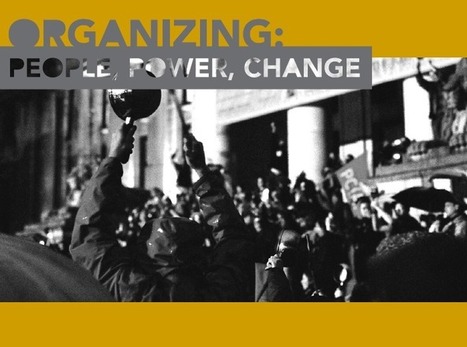
This handbook, Organizing: People, Power, Change based on the work of Marshall Ganz, aims to support you in developing your capacity for effective community organizing.
No comment yet.
Scooped by Mickael Ruau
July 17, 2019 6:21 AM
Scoop.it!

How to Have Difficult Conversations

How to have successful dialogue when stakes are high, opinions vary, and emotions run strong. Whether it's with a friend, a co-worker, or a loved one, how can you be 100% honest and yet 100% respectful?

No comment yet.
Scooped by Mickael Ruau
July 15, 2019 4:42 AM
Scoop.it!

Reinventing Organizations, la fiche de lecture

Reinventing Organizations, la fiche de lecture | Devops for Growth | Scoop.it

J’ai croisé plusieurs fois ces derniers mois des références au livre « Reinventing Organizations » de Frederic Laloux, présentant apparemment de façon limpide et inspirante une révolution douce en cours dans les modes d’organisation du travail.

Jusqu’à ce que je découvre il y a peu que son auteur rendait son ouvrage accessible à prix libre (et en deux versions distinctes, en plus !). Plus de prétexte : version « enfant » (celle avec les dessins) téléchargée, et récapitulatif du bouquin ici.

Mickael Ruau's insight:

Le but évolutionnaire (Evolutionary purpose)

Poursuivre un noble but fait disparaitre la compétition

Les nouvelles organisations parviennent à domestiquer les peurs et les ego de leurs membres, ce qui leur permet de ne plus être dans la recherche de leur propre préservation, et laisse l’espace pour explorer vraiment la question du sens et du but. (ok, je pensais être une irréductible bisounours, mais y’a encore plus ché-per).

En se concentrant sur le noble but de l’entreprise (faire en sorte que les patients reçoivent les meilleurs soins possibles, qu’ils soient prodigués par notre entreprise ou une autre, par exemple), la notion de compétition ou de concurrence disparait. Voir l’exemple du fondateur de Buurtzorg qui prodigue gratuitement des conseils à ses concurrents.

Une organisation evolutive s’adapte aux changements (internes et externes)

Aux maximes « Prédire et contrôler » ou « Stratégie et Exécution », les dirigeants des organisations évolutives préfèrent « Sentir et répondre ».

Stratégie

Les organisations évolutives prônent le « self-management », qui permet à chacun d’être un « capteur », de sentir les besoins ou opportunités, et d’initier des changements.

Cf Buurtzorg : 2 soignantes ont testé de faire un peu de prévention, et souhaitaient que ça se généralise à l’entreprise. Le dirigeant n’a pas évalué le pour et le contre, puis lancé une cellule pilote avant de généraliser peu à peu, région après région, non. A la place, il a suggéreé aux soignantes de décrire leur expérience, en donnant le maximum de d’éléments pour qu’elle soit reproductible, et de la partager aux autres équipes. N’importe quelle équipe que ça branchait avait alors la latitude pour commencer à faire à son tour de la prévention.

Le but n’est pas que chacun ait le même pouvoir, mais que chacun ait du pouvoir.

Des méthodes permettent de sentir collectivement où l’organisation veut aller : technique de la chaise vide (représentant l’organisation pendant les réunions), Theory U (par Otto Scharmer), Appreciative Inquiry, Open Space, Future Search, and World Café.

Budget

Pas de budget ni d’objectifs chiffrés.

our goal is to be profitable not knowing how, instead of losing money knowing exactly why. (FAVI)

Conduite du changement

Le changement se fait naturellement en interne, donc il n’y a pas à accompagner le changement

No comment yet.
Scooped by Mickael Ruau
July 8, 2019 7:52 AM
Scoop.it!

The cobra effect The story goes something like... | Sketchplanations - A weekly explanation in a sketch

The cobra effect The story goes something like... | Sketchplanations - A weekly explanation in a sketch | Devops for Growth | Scoop.it

The story goes something like this. Back in colonial India the top Brit in charge decided there were too many cobras around Delhi.

Mickael Ruau's insight:

. The Freakonomics podcast on the cobra effect discusses some excellent examples (with references), including:

  • A bounty on rats in French colonial Hanoi — where the bounty was earned by bringing in a rat tail — which went the same way as the cobra story
  • Removing wild pigs at Fort Benning, Georgia, at $40 a pigs tail that didn’t make a dent. It could be the hunters would bait the pigs with all sorts of tempting scraps. Many pigs learned to avoid the hunters and instead bred like crazy while well-fed on scraps.
  • The capital of Colombia, Bogotá, tried to reduce traffic congestion by restricting each car from driving one day during the week. The result: people started buying more than 1 car and did more driving on weekends.
  • Publication of proposed areas of habitat to be protected for endangered species meant land developers responded by building in those areas before the land was protected.

People are smart. Incentives work, in the sense that you tend to get what you incentivise. So be careful what you are incentivising.

Also see: Goodhart’s Law and What gets measured gets better.

No comment yet.
Scooped by Mickael Ruau
March 30, 2019 3:52 AM
Scoop.it!

How to Run Inclusive Meetings · Franklin Hu

Peer review and feedback season is well upon us, and one of the most frustrating pieces of feedback I’ve received (and regrettably given) is “you should talk more in meetings.”

$PERSON should speak up more. They alway have good, thoughtful input, and I think that $PERSON would be more impactful if they contributed more in meetings.

I got something along these lines when I was starting out as a developer. This feedback insidiously conflates a mix of external factors (how the meetings are run) with internal ones (I am, admittedly on the quieter side) and puts the blame entirely on the individual.

For managers who see this feedback for their direct reports and notice that they’re quiet in meetings, take a moment to step back and reflect on why this individual isn’t participating. There are a lot of reasons why individuals may not effusively express their thoughts or feedback, and telling someone to just “talk more” often isn’t useful feedback.

No comment yet.
Scooped by Mickael Ruau
November 28, 2018 8:32 AM
Scoop.it!

Manager la motivation : 10 clés [2/2]

Manager la motivation : 10 clés [2/2] | Devops for Growth | Scoop.it
Suite de l'article sur l'art de favoriser la motivation de son équipe pour un manager. Ecoute, assistance technique et autres clés.
No comment yet.
Scooped by Mickael Ruau
July 17, 2018 12:22 AM
Scoop.it!

Reporting : et si vous arrêtiez d’ennuyer vos collaborateurs ?

Reporting : et si vous arrêtiez d’ennuyer vos collaborateurs ? | Devops for Growth | Scoop.it
Reporting, rapport d’activité, communication sur les chiffres sont autant d’occasions ratées pour motiver vos équipes. Qu’elles soient collectives ou en face à face, ces réunions suscitent aujourd’hui au mieux de l’intérêt, au pire de l’ennui. Il est évidemment nécessaire de valider l’alignement entre les résultats et les objectifs, voire la …
Mickael Ruau's insight:

Et si vous passiez des « Key Performance Indicators » aux « Key Progression Indicators » ?

No comment yet.